Image to help understand the article
Production groups warn of a shrinking industry
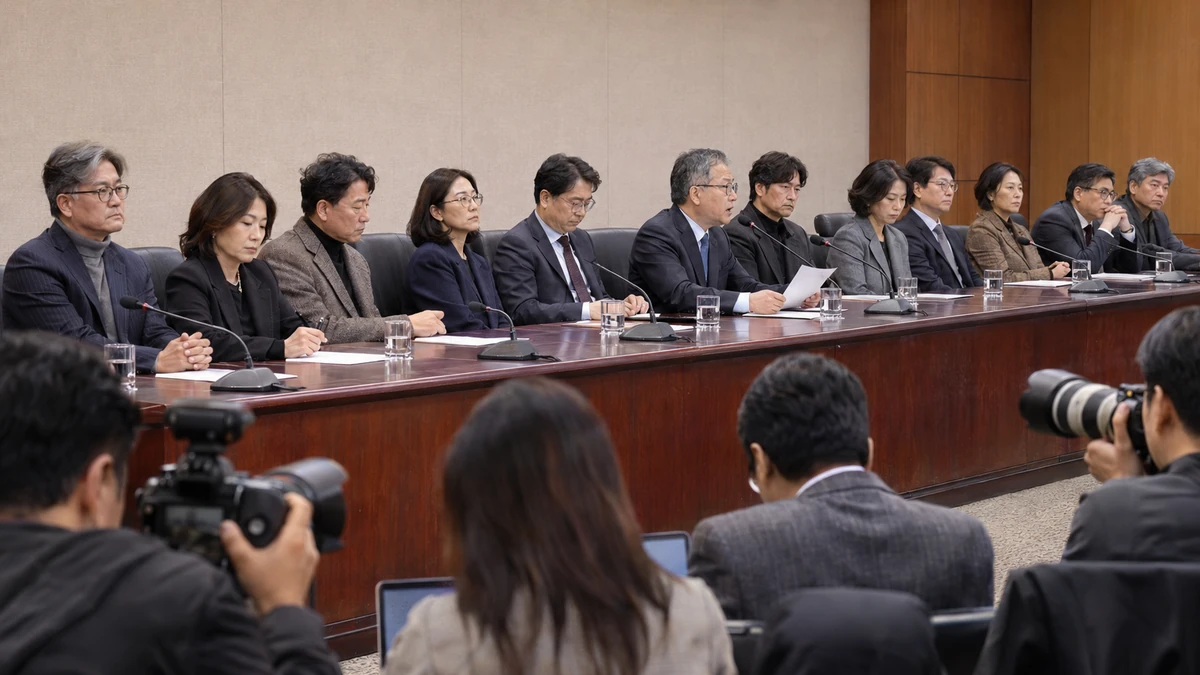
SEOUL, South Korea — Twelve organizations representing South Korea’s television drama industry called on the government and National Assembly to establish a long-term support program, warning that the production system behind the global Korean Wave is at risk of collapse.
The groups, including associations representing drama producers, broadcasters and television writers, held a joint news conference Nov. 4 at the Korea Press Center in central Seoul. Song Byung-joon, chairman of the Korea Drama Production Association, led the event.
Industry figures presented by the groups show that the number of Korean dramas produced domestically has fallen about 30% in two years, from 141 titles in 2022. Drama programming on South Korea’s three major terrestrial broadcasters — KBS, MBC and SBS — fell from 91 titles in 2012 to 32 in 2023, while some channels have stopped scheduling weekday dramas.
The groups blamed soaring production costs associated with global streaming platforms, declining advertising revenue and reduced investment by broadcasters. They also said production companies often struggle to retain intellectual property rights and secure revenue after a show’s initial release.
“When the number of productions falls, jobs disappear, and once a production site collapses, it is extremely difficult to rebuild,” Song said. He added that the industry must focus on the next decade rather than its past success.
Writers, actors and crews describe lost work
Writers, performers and production workers said the downturn is already pushing experienced people out of the business. Park Hae-young, the writer of acclaimed series including “My Mister” and “My Liberation Notes,” said no domestic producer or broadcaster can now finance a drama entirely with its own money.
Park, who chairs the copyright committee of the Korea TV and Radio Writers Association, said all the assistant writers on her team are out of work and that story creators are moving into other fields, including webtoons and video games.
Song Young-woong, a director of an association representing broadcast performers’ rights, said its annual copyright royalty collections dropped by about 13 billion won, from roughly 47 billion won in 2024 to about 34 billion won the following year. Representatives of cinematographers and drama producers also said hundreds of skilled workers are facing threats to their livelihoods as they leave production sets.
Industry proposes 1 trillion-won support system
The organizations asked the government to make restoring annual drama output a national policy goal. They proposed a 1 trillion-won investment and support system spread over five years, along with a coordinated response involving the Culture Ministry, the country’s broadcasting and communications regulator, and the National Assembly.
Under the proposal, the government would provide 200 billion won a year for five years. The industry estimates that producing about 40 mid- and lower-budget dramas annually at roughly 10 billion won each would cost about 400 billion won. Public funding would cover half, with broadcasters and streaming platforms sharing the remainder.
The groups said they would also work to bring production costs under control and promote fairer business practices.
Netflix dispute highlights streaming tensions
The debate reflects friction between South Korea’s domestic entertainment industry and global streaming services, which have helped bring Korean series to American and other international audiences while reshaping how productions are financed and distributed.
Song Byung-joon called for a system in which global streaming platforms and Korean producers share intellectual property revenue and divide profits according to a show’s success. Song Young-woong said Netflix has avoided industry requests for talks by pointing to its legal classification in South Korea as a value-added telecommunications provider rather than a broadcaster. He urged global streaming companies to enter formal negotiations over performers’ rights.
Industry leaders argued that sustaining the production system matters more than generating a small number of international hits. “More important than one global success out of 100 productions are the other 99 that bring talent together and guarantee jobs,” Song Byung-joon said. Maintaining a steady annual production slate, he added, is essential to protecting locally controlled Korean content from dependence on global capital.
Comments
Post a Comment