South Korea’s Content Industry Welcomes Breakthrough in China Trade Talks, but Cautious Optimism Remains
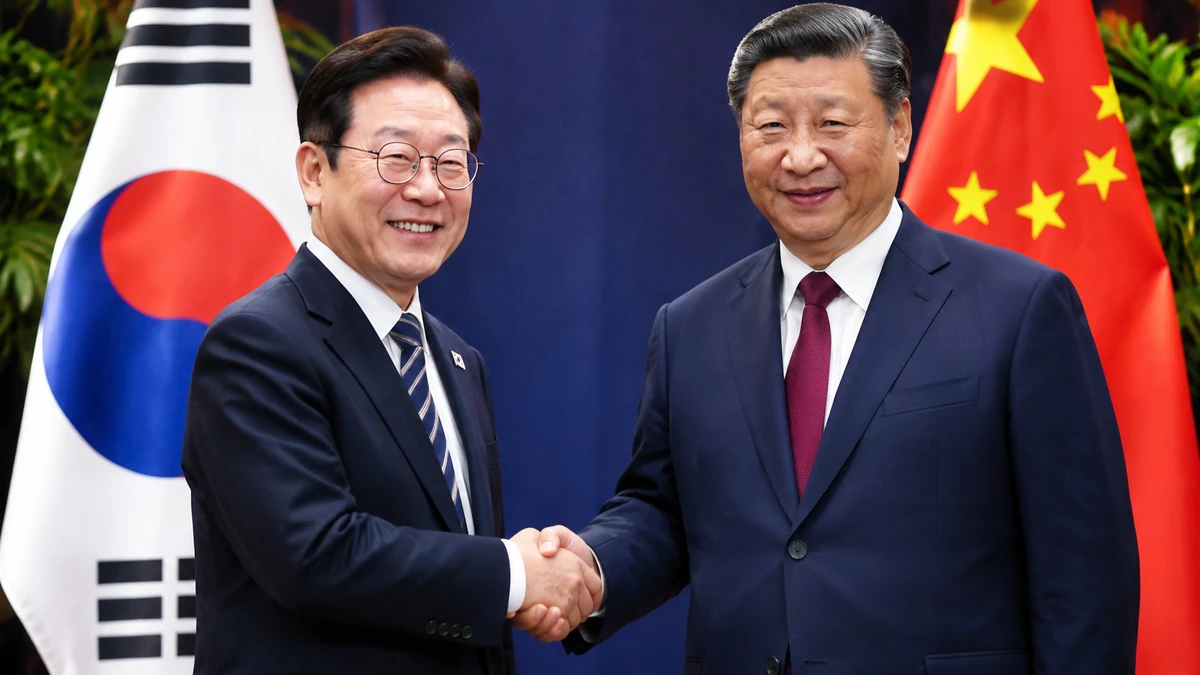
Image to help understand the article
South Korea’s entertainment, publishing and gaming industries are welcoming a breakthrough in long-stalled trade negotiations with China, hoping it could ease barriers that have restricted the global expansion of Korean cultural content for nearly a decade. But industry groups are urging caution, emphasizing that the agreement must be formally signed and implemented before businesses can count on meaningful changes.
The K-Content Industry Council, a coalition of 11 South Korean industry associations representing sectors including publishing, gaming, television dramas and music, issued a joint statement Nov. 20 welcoming the substantive conclusion of follow-up negotiations on services and investment under the South Korea-China Free Trade Agreement. The council called on the government to accelerate ratification and introduce industry-specific measures to help companies take advantage of the deal.
What the agreement could change
The breakthrough was announced Nov. 18 during a meeting between South Korean President Lee Jae Myung and Chinese President Xi Jinping in Shenzhen, held on the sidelines of the Asia-Pacific Economic Cooperation summit. The negotiations took eight years and eight months to conclude.
The broader South Korea-China FTA took effect in December 2015, but further opening of services and investment markets was left for subsequent negotiations. Talks began in March 2018 but made little progress for years amid differences between the two governments. Discussions accelerated following a presidential summit in January, eventually producing an agreement after five rounds of formal negotiations.
Under the new commitments, China will extend most-favored-nation treatment to South Korean companies in cultural sectors, including film and gaming. The principle means Korean businesses should receive treatment no less favorable than companies from other countries. China also agreed to apply nondiscrimination principles to preliminary content reviews, meaning Korean films and online games should not be treated less favorably than those from third countries.
The agreement also expands opportunities for international co-productions. Previously limited to films, the framework will extend to television dramas, animation, variety shows and documentaries.
Beyond entertainment, the deal includes provisions affecting travel and retail businesses. South Korean travel agencies established in 23 designated Chinese regions, including Beijing and Shanghai, will be allowed to arrange overseas trips for Chinese residents and foreign nationals. South Korea's Ministry of Trade, Industry and Energy also said China had agreed to allow Korean companies seeking to operate more than 30 stores in the country to do so independently, without forming joint ventures with Chinese companies.
Industry groups demand concrete implementation
The K-Content Industry Council described the agreement as a step toward reducing uncertainty in the Chinese market, which has long complicated business planning for South Korean content companies. However, it said the benefits would depend on detailed implementation.
The council outlined four priorities for the government: completing the signing and entry-into-force process quickly; clarifying the agreement's implications for individual industries and genres, including popular music, live performances and publishing; establishing a joint public-private monitoring mechanism to ensure that most-favored-nation and nondiscrimination commitments are respected; and reviewing existing regulations and policies to encourage more cross-border co-productions.
The council also plans to organize a Korea-China content industry exchange with the China Audio-Video and Digital Publishing Association. It intends to survey market conditions and business challenges across different content sectors, hold corporate briefings and explore cooperation on co-productions and copyright protection.
Could the agreement signal an end to China's Korean culture restrictions?
The announcement has revived hopes that China could ease restrictions commonly known in South Korea as the Hallyu ban, or Hallyu restriction order. The informal term refers to measures introduced after South Korea's 2016 decision to deploy the U.S. Terminal High Altitude Area Defense missile defense system, known as THAAD.
A senior official at South Korea's presidential office said after the summit that there had been some progress on issues associated with the restrictions. A South Korean content production executive said expectations for a possible easing were particularly high this time because the two governments had formally announced regulatory commitments, unlike previous episodes that generated speculation without clear policy changes.
Film industry representatives see the most-favored-nation provision as a potential opening for South Korean movies to return to Chinese screens. Television producers also hope improved access to China's extensive digital platform market could create new distribution and investment opportunities.
However, industry executives warn that the agreement does not automatically lift all restrictions. Previous rumors of a Hallyu policy reversal have repeatedly failed to produce lasting changes. The deal also does not immediately authorize South Korean singers to hold concerts in China. Analysts expect it could take time for large-scale performances to materialize and generate revenue, particularly because the agreement still requires formal procedures before taking effect.
China's market offers major commercial incentives
The potential prize is substantial. According to the Korea Creative Content Agency, China's content market was valued at $339.395 billion in 2024, making it the world's second-largest. Yet South Korean film exports to China totaled just $15 million that year, while television content exports reached only $7 million.
South Korean financial markets responded positively to the announcement. During the Nov. 16-20 trading week, cosmetics, travel, retail and entertainment stocks posted notable gains. Shares of Korea Cosmetics rose 25.19%, while Jeju Air gained 25.11%. Other gainers included TonyMoly, Kolmar Korea, Hana Tour, Shinsegae and Hyundai Department Store. HYBE, the entertainment company behind K-pop acts, rose 17.92%, with renewed hopes for access to China's mainland concert market cited as a contributing factor.
The cosmetics sector is already seeing stronger exports. South Korea's Ministry of Trade, Industry and Energy reported that cosmetics exports reached $12.4 billion in the first 10 months of 2026, up 32.3% from a year earlier and already exceeding the previous full-year record of $11.4 billion.
Exports of Korean cosmetics to China totaled $1.66 billion during the same period, up 2.9%, with increases recorded for five consecutive months beginning in June. Growth accelerated to 31.6% in October. However, preliminary figures for Oct. 1-25 showed China's growth rate at 23.4%, below the overall cosmetics export growth rate of 32.3%, leaving questions about the strength of a broader recovery.
Beauty and fashion companies also see potential benefits if expanded cultural exchanges make Korean celebrities more accessible for local advertising and marketing. But the agreement does not directly authorize celebrity appearances in Chinese television programs or advertising campaigns. Fashion retailer Musinsa said businesses would need to wait for concrete policy changes and implementation dates.
Food companies are watching developments as well. Samyang Foods, which is preparing to begin operations at a factory in Jiaxing, China, in January 2027, said wider exposure to Korean cultural content could increase interest in Korean food and create additional opportunities for the sector.
Business opportunities will depend on political follow-through
For South Korean companies, the agreement represents a potentially important reopening of commercial opportunities in a market that has remained difficult to navigate since the THAAD dispute. Its provisions cover entertainment, retail, travel and other services, extending the significance beyond the Korean Wave itself.
But the distinction between a negotiated commitment and an actual market opening remains critical. Until the agreement enters into force and China demonstrates that its commitments are being applied consistently, expectations of a full return for Korean cultural businesses will remain tempered by the political and regulatory risks that have shaped the relationship since 2016.
Comments
Post a Comment