A chart milestone that means more than a big debut
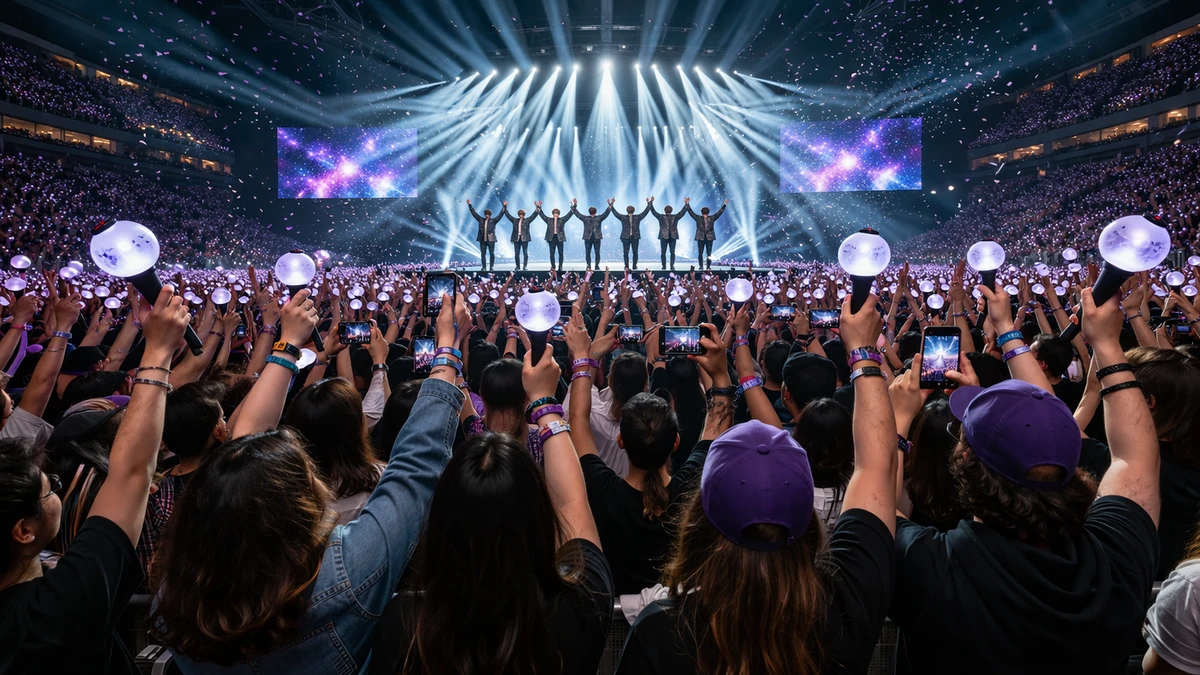
BTS has landed at No. 1 on the Billboard 200 again, this time with an album titled “Arirang,” and the headline-making feat carries more weight than a routine chart victory. According to Korean media reports published March 30, the group’s latest release became its seventh album to top Billboard’s main albums chart in the United States. On the same day, reports also noted that “Arirang” reached No. 1 on the United Kingdom’s major album chart, giving BTS simultaneous chart-topping albums in the two most influential English-language music markets.
For American readers, the obvious comparison is to the way a superstar winning both the Super Bowl and an Olympic gold medal in the same year would signal not just popularity, but dominance across different systems of measurement. Billboard’s album rankings are not simply tallies of fans buying CDs. The Billboard 200 blends physical album sales, digital downloads and streaming-equivalent units, making it one of the clearest snapshots of how deeply a release is penetrating the U.S. music marketplace. Reaching No. 1 there suggests not only a powerful fan base willing to spend money, but also a level of listening activity broad enough to matter in the mainstream.
The U.K. chart matters for a related reason. Britain has long served as one of the world’s cultural gatekeepers in pop music, from the Beatles era to the rise of Adele, Harry Styles and Ed Sheeran. Topping both the U.S. and U.K. album charts at the same time is difficult for any act, especially one whose roots are outside the Anglo-American music industry. For BTS, it is not merely another successful week. It is evidence that the group has moved beyond the “international breakout” phase and into something closer to institutional power within global pop.
That is especially true because this was not a first-time surprise. One No. 1 album can come from a perfect storm: a tightly organized fandom, aggressive preorders, social media frenzy and curiosity from the broader public. Seven No. 1 albums is something else entirely. Repeating that kind of result over multiple releases requires an artist to maintain brand trust, a label to execute at a high level, digital platforms to respond to the release strategy, and fans to keep showing up in ways that translate into chart impact. In business terms, it is not a one-off product launch. It is proof of a durable franchise.
In that sense, “Arirang” is significant not because it adds another trophy to BTS’ already crowded shelf, but because it shows how K-pop’s most powerful act keeps reproducing success in a music economy that has become more fragmented, more data-driven and more competitive than ever. The modern challenge is no longer just getting noticed. It is sustaining cultural relevance while the audience is split across Spotify, YouTube, TikTok, Apple Music, vinyl collectors, deluxe physical editions and a constant flood of new content. BTS appears to have done that again.
Why the title “Arirang” carries unusual cultural weight
The album’s title alone makes this release stand out. “Arirang” is not just a catchy Korean word. It is one of the most recognizable symbols in Korean culture, often described as a kind of unofficial national song. There are many regional versions of “Arirang,” but broadly speaking, it carries associations of longing, resilience, separation, memory and national identity. For many Koreans, it is the sort of cultural touchstone Americans might compare, imperfectly, to the emotional place occupied by songs like “America the Beautiful,” “This Land Is Your Land” or “Amazing Grace” — music that can feel historical, communal and almost bigger than any individual performance.
That does not mean BTS has simply turned a folk tune into a pop album, and it would be too simplistic to assume the full musical content from the title alone. But as a cultural gesture, calling a major global release “Arirang” is meaningful. It suggests confidence. Earlier generations of Korean pop acts often faced explicit or implicit pressure to tailor themselves to Western expectations: more English lyrics, more familiar sonic references, more obvious collaboration with American or European songwriters, and marketing built around being “accessible” to non-Korean listeners. Those strategies have not disappeared, but the center of gravity is changing.
By using a title so deeply tied to Korean identity, BTS appears to be signaling that global success no longer requires sanding off cultural specificity. In fact, that specificity may now be part of the appeal. In Hollywood terms, this resembles the shift that allowed projects like “Parasite” or “Squid Game” to succeed internationally not by disguising their Korean-ness, but by leaning into it and trusting that audiences would come along. The export model has matured. Instead of asking, “How can this be made less Korean?” the better question has become, “How can something distinctively Korean be presented in a form the world wants to engage with?”
That shift matters because culture travels differently now than it did a decade ago. Streaming platforms have trained audiences to cross borders more casually. Younger listeners are less intimidated by subtitles, multilingual lyrics or unfamiliar visual symbols than earlier generations might have been. The success of Latin music in the U.S. helped normalize the idea that a song does not need to be in English to become essential listening. K-pop benefited from that broader transformation, but BTS has also helped accelerate it. A title like “Arirang” landing at the top of American and British charts tells the industry that local cultural references are no longer commercial liabilities by default. They can be assets.
From localization to reasserting identity
Within the K-pop business, there is a growing idea that the genre has entered a new stage. Earlier, the challenge was localization: learning how to package Korean acts for overseas markets, especially in the United States, where radio, playlisting, late-night TV appearances and social media visibility all interact in distinct ways. That meant studying global release timing, engineering English-language interviews, building fandom infrastructure abroad and designing content that could travel fast across platforms.
Now, after years of learning those rules, top-tier K-pop companies seem to be doing something more ambitious. Rather than merely adapting to the global market, they are reasserting cultural identity within it. In other words, once they learned how to enter the room, they began rearranging the furniture. “Arirang” appears to fit that pattern. The strategic sophistication is still there — the release schedule, the likely preorder planning, the streaming rollout, the media ecosystem around the album — but it is paired with a title that foregrounds Korean heritage instead of treating it as background texture.
For American readers, there is a useful analogy in the rise of filmmakers, chefs and fashion designers who first succeed by proving they can operate within an established elite system and then gain real influence when they stop imitating the center and begin redefining it. In food, that might look like a chef no longer toning down flavors to suit perceived mainstream tastes. In film, it might mean telling culturally specific stories without overexplaining them. In music, it means trusting that identity itself can be part of the global pitch.
This may sound abstract, but it has concrete commercial implications. K-pop’s first global breakthroughs often depended on the novelty factor: sleek choreography, highly synchronized visuals, devoted fandom culture and internet-native promotion. Those elements still matter. But they are no longer enough on their own, because the field is crowded. What differentiates a release now is how convincingly it turns music, visuals, storytelling, performance and cultural symbolism into one coherent campaign. The title “Arirang” suggests BTS is not only competing on production quality or fandom strength, but also on narrative depth.
That is one reason this chart result may resonate well beyond a single album cycle. If the project demonstrates that explicitly Korean symbolism can coexist with major commercial performance in the U.S. and U.K., other companies will study it closely. Not all of them will be able to replicate it. BTS occupies a singular position, built over years of global fan engagement, personal storytelling and brand credibility. Still, the lesson for the wider industry is clear: cultural self-confidence is no longer a niche strategy. Under the right conditions, it can be the mainstream play.
What a U.S.-U.K. double No. 1 says about the modern music market
The fact that “Arirang” reportedly topped the album charts in both the United States and Britain on the same day is not just symbolic. It also says something about how music campaigns are built in 2026. No artist gets a double No. 1 in major markets through fandom enthusiasm alone. Fans can provide an enormous first-week push, especially through physical sales and organized buying. But in today’s chart environment, especially in the U.S., longevity and reach depend on a more complex mix: streaming volume, playlist visibility, media coverage, release timing, retail coordination, exclusive editions and constant conversation online.
That complexity is why industry executives pay attention to results like this. It suggests that the team behind BTS has developed a genuinely global operating model, not just an export strategy. That distinction matters. An export strategy is what a company uses when it takes a domestic product and tries to sell it abroad. A global operating model is what a company uses when it treats multiple markets as core from the start and plans the release accordingly. The latter requires synchronized distribution, local media relationships, multilingual messaging, platform-specific content and a deep understanding of how listeners in different countries discover and consume music.
It also requires balancing physical sales and streaming, a challenge that has become more important as the album market keeps evolving. K-pop acts often excel at physical sales because of collector culture: multiple versions, photo books, limited editions and other merchandise-like features that turn an album into an object. American pop has also seen a vinyl boom, but K-pop’s physical market is unusually sophisticated and fandom-driven. Yet physical sales alone rarely explain sustained chart power. Streaming remains essential because it reflects repeat listening and access to casual audiences who are not collecting anything. BTS has long been viewed as one of the few acts able to move strongly on both fronts.
That two-track strength is rare. Plenty of artists have massive fans but limited mainstream penetration. Others dominate streaming but do not sell many albums in the traditional sense. The biggest stars can do both, and doing both in multiple countries is rarer still. “Arirang” reaching the summit in the U.S. and U.K. reinforces the idea that BTS now functions less like a regional phenomenon with foreign reach and more like a full-fledged global major act whose center of gravity happens to be Korean.
For the broader industry, that changes expectations. A decade ago, a Korean group topping the Billboard 200 might have been treated as an extraordinary anomaly. Today, the accomplishment is still notable, but the conversation has shifted toward repeatability, strategy and market structure. That is a sign of maturation. K-pop is no longer being assessed mainly as a curiosity or as the beneficiary of internet hype. It is increasingly being judged by the same standards used for any serious global music business: brand durability, campaign execution, cross-platform performance and monetization potential.
The ripple effects across K-pop and global entertainment
One immediate effect of a chart run like this is investor confidence. When a company can point to repeated top-tier performance in the world’s most visible music markets, it becomes easier to justify spending on large-scale projects. That can mean bigger budgets for albums and music videos, more aggressive overseas marketing, expanded licensing strategies, documentary production, exhibition tie-ins, branded content and more elaborate live events. In entertainment industries, success stories do not just generate revenue. They shape what executives believe is worth funding next.
That is especially important in K-pop, where the business extends far beyond songs themselves. A chart-topping album can elevate the value of intellectual property tied to the group: concert films, behind-the-scenes series, games, fashion collaborations, museum-style exhibits, books, pop-up retail and branded merchandise. In American terms, the music is often just the beginning of the commercial universe. A hit album is both a product and a platform.
There is also a negotiating effect. An act that has demonstrated it can deliver in the U.S. and U.K. has more leverage with streaming services, global brands, broadcasters, concert promoters and technology companies. That leverage can translate into bigger deals and more favorable terms, not only for BTS but for the ecosystem around K-pop. Once a market proves it can generate premium-value artists at scale, more institutions want in. In practical terms, that can lead to more serious partnerships, better placement opportunities and less condescending treatment from industries that once viewed K-pop as a passing trend.
Then there is the psychological effect on newer Korean artists. One of the lasting impacts of BTS has been to expand what seems possible. Their achievements make it harder for younger groups and their management companies to believe that success abroad requires abandoning Korean-language storytelling or flattening cultural identity into something generic. That does not mean every rookie group should imitate BTS, and in fact many should not. But it does mean the range of viable strategies has widened. Instead of chasing a vague idea of Western approval, artists may feel more freedom to sharpen their own concepts and trust that distinctiveness can travel.
That could influence how future albums are planned from the earliest stages. Titles, visuals, choreography, teaser campaigns, interview strategy, short-form content and fan engagement may be conceived as parts of a single global narrative rather than as disconnected promotional tasks. BTS has helped set that standard over time: each release can operate like a coordinated campaign rather than a standalone product drop. If “Arirang” becomes a case study in how heritage-inflected symbolism can drive both meaning and sales, expect others in the industry to borrow from that playbook.
How fandom itself has changed in the streaming era
The story of “Arirang” is also a story about how fan culture works in 2026. In older models of pop fandom, success was often measured in visible bursts: opening-week sales, concert attendance, magazine covers and perhaps radio requests. Today, fandom is more continuous and more data-literate. Fans do not just buy an album once and move on. They stream tracks strategically, create short-form videos, organize social media campaigns across time zones, translate content, monitor chart rules and generate interpretive conversation that keeps a release alive online.
BTS fans, known as ARMY, have long been among the most organized in the world, and that organizational strength helps explain why the group remains so formidable. But the key point is that fandom now functions as part audience, part promotional network and part interpretive community. A title like “Arirang,” loaded with cultural meaning, almost invites this kind of participation. Fans will dissect why that title was chosen, how Korean imagery is reflected in styling and visuals, what historical or emotional references may be embedded in lyrics or performances, and how those elements connect to BTS’ broader artistic story.
That kind of engagement matters because it transforms consumption into circulation. Every explanation thread, reaction video, fan-made essay, dance cover or cultural breakdown becomes another point of entry for casual audiences. It is not marketing in the old top-down sense, but it has marketing effects. In digital media terms, fandom helps create the context that makes a project easier to discover, easier to understand and harder to ignore.
For general consumers, this also reflects a broader change in how people encounter music. Following a major artist today is not limited to buying a CD or attending a concert. It can involve streaming platforms, YouTube content, social media, merchandise, tour films, documentaries and real-time fan discourse. Chart success therefore represents more than a number. It points to a sprawling consumption ecosystem in which music, storytelling and community reinforce one another. BTS has become unusually adept at operating inside that system, and “Arirang” appears to show that those skills remain intact.
What comes next, and why the bigger question is sustainability
For all the excitement around the latest No. 1, the most important question is what happens after the opening surge. Can “Arirang” stay on the chart for a long stretch? Can it continue drawing listeners beyond the most committed fan circles? Will the momentum translate into tour demand, licensing deals, branded collaborations or additional cultural visibility in the West? In the modern music business, the first week gets headlines, but the afterlife of a release is often what determines its true weight.
That caution matters because not every K-pop act can replicate what BTS has done. The group’s position is the result of years of audience building, consistent narrative framing, individual member recognition, major-company execution and a rare level of emotional loyalty from fans around the world. It would be a mistake to treat “Arirang” as proof that all Korean acts can now automatically claim the same lane. The more useful approach is to ask what conditions made this result possible and which of those conditions can be reproduced elsewhere.
Even so, the broader direction seems unmistakable. The significance of “Arirang” lies less in the number seven than in what the album symbolizes. K-pop is no longer simply a genre trying to fit itself into Western markets on Western terms. At its highest level, it is increasingly capable of entering those markets with its own symbols, its own storytelling instincts and its own cultural confidence — and still winning by the usual commercial metrics.
For American audiences, that is worth paying attention to not just as a fan story, but as a map of where global entertainment is heading. The old center-periphery model — where cultural products were validated mainly by how successfully they imitated Anglo-American norms — is weakening. In its place is a more fluid, more competitive environment where local identity, if presented with enough sophistication, can become global currency. BTS did not create that transformation on its own, but it has become one of its clearest examples.
If Korean reports are correct, March 30, 2026, will likely be remembered not simply as another day when BTS added a chart record. It may also be remembered as a moment that confirmed a larger trend: that the future of global pop may belong not to artists who erase where they come from, but to those confident enough to bring it with them.
Comments
Post a Comment