BTS’ ‘ARIRANG’ returns to Billboard’s Top 10, showing K-pop’s staying power goes far beyond opening week
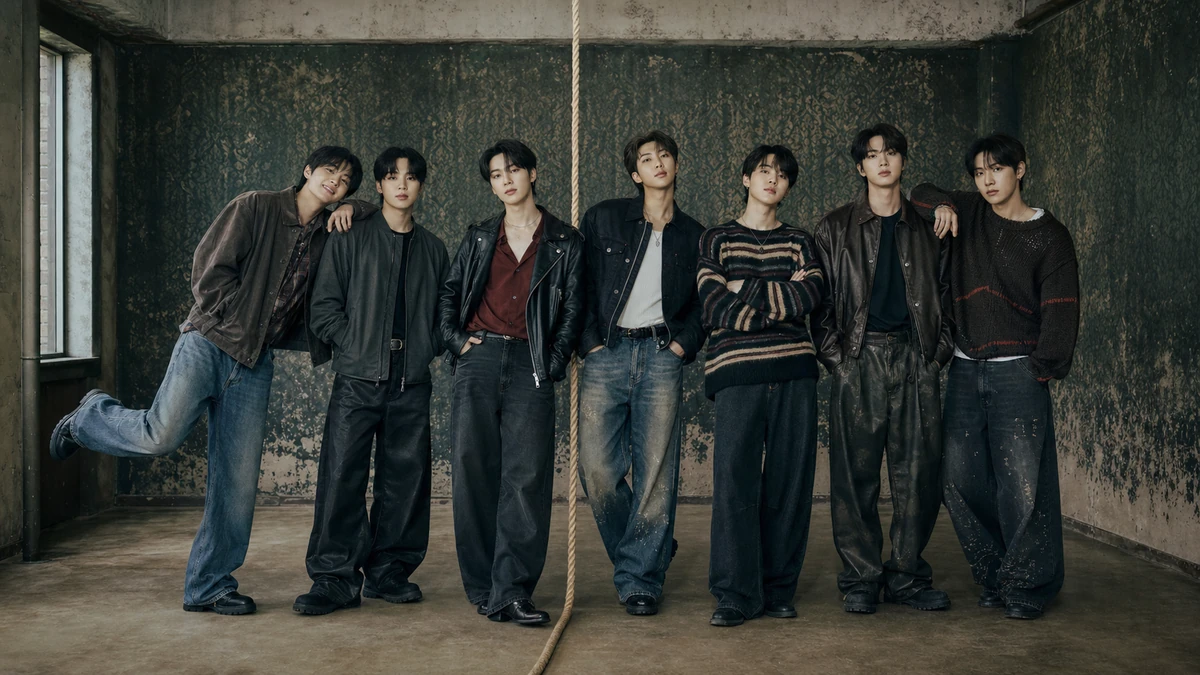
BTS climbs back into the Billboard 200’s Top 10
BTS has returned to the Top 10 of the Billboard 200 with its fifth album, ARIRANG, a rebound that says as much about the group’s enduring reach as it does about the changing shape of the global music business. As of June 22, the album sits at No. 10 on Billboard’s main albums chart after posting 34,000 album units during the latest tracking week, according to Billboard’s chart preview published Saturday.
In one sense, a one-spot rise may sound modest in the churn of weekly chart movement. In another, it is the kind of result the industry watches closely. ARIRANG, released in March, has now spent 13 consecutive weeks on the Billboard 200. For any album, that kind of run matters. For a K-pop release, it adds another piece of evidence to a larger shift: Korean pop acts are no longer being measured only by how loudly fans mobilize on release week, but by how steadily listeners keep coming back after the first burst of excitement fades.
That distinction is important in the United States, where music charts are often treated like sports standings — a quick, easy way to determine who is “winning” at a given moment. But albums that keep resurfacing near the top, especially months after release, typically indicate something deeper than hype. They suggest a durable listener base, repeat plays, continued purchases and a catalog that remains part of the weekly cultural conversation. BTS, which has repeatedly broken records in the American market, appears to be doing that again.
The latest milestone also lands in a crowded field. Olivia Rodrigo’s third album, you seem pretty sad for a girl so in love, holds the No. 1 spot this week, placing BTS alongside one of the most recognizable names in contemporary American pop. That matters because it underscores where K-pop now sits in the hierarchy of the U.S. music market: not as a novelty category off to the side, but as a regular participant in the same competitive space occupied by major Western pop stars.
For American readers who may only encounter K-pop through viral performances, fan cams or awards-show headlines, the chart return of ARIRANG offers a more revealing story. This is not simply about fandom volume. It is about longevity, cross-platform consumption and the growing normalization of Korean-language and Korean-branded music in mainstream U.S. listening habits.
Why a return to the Top 10 matters more than a splashy debut
In the streaming era, first-week chart performance can be dramatic but misleading. High-profile releases often arrive with coordinated fan campaigns, pre-orders, bundles, media appearances and social-media momentum that can push an album to the top immediately. The harder test comes later. Does the music stay in rotation once the headlines move on? Do casual listeners, not just core supporters, keep playing it? Does the album continue to feel current after new releases flood the market?
By that measure, ARIRANG is showing unusual strength. The album had already made history earlier this year by spending three consecutive weeks at No. 1 on the Billboard 200, the first K-pop album ever reported to do so. A return to the Top 10 after that initial peak suggests the project did not simply burn hot and disappear. Instead, it has remained embedded in the listening ecosystem.
That is significant because the Billboard 200 is designed to capture several forms of consumption at once. The chart does not reflect only old-fashioned album sales. It combines physical and digital album purchases with streaming equivalent albums, known in industry shorthand as SEA, and track equivalent albums, or TEA, which convert digital song downloads into album value. In plain English, the chart rewards albums that people buy, stream repeatedly and revisit track by track.
So when Billboard says ARIRANG earned 34,000 album units in the latest week, that number represents more than boxes shipped or CDs sold. It points to a broad pattern of engagement: fans collecting physical copies, listeners replaying songs on streaming platforms and consumers continuing to interact with the album in the digital marketplace. That mix is particularly meaningful in K-pop, where physical albums remain culturally and commercially important, often functioning as both music products and collectible objects.
For years, critics in the American music industry sometimes dismissed K-pop chart performance as an outsized reflection of organized fandom purchasing rather than broad public listening. That argument has never fully captured the complexity of how pop fandom works — American acts from Taylor Swift to Harry Styles also benefit from intense fan loyalty — but it has persisted. What ARIRANG’s 13-week run suggests is that BTS’ chart power cannot be reduced to one-week enthusiasm. Sustained placement requires repeat behavior over time, and that points to a larger audience than any stereotype about fan buying alone can explain.
What “Arirang” means in Korean culture
The album’s title carries cultural weight that may not be immediately obvious to English-speaking audiences. “Arirang” is one of the best-known songs in Korean culture, often described as Korea’s unofficial anthem. There are many regional versions of it, and its melody and lyrics have long been associated with longing, resilience, separation and emotional endurance. For many Koreans, the word evokes something more than a tune; it conjures national memory.
Americans looking for a rough comparison might think of the cultural place occupied by songs such as “This Land Is Your Land,” “Amazing Grace” or “Auld Lang Syne” — not because they sound alike, but because they carry a shared emotional vocabulary that stretches across generations. “Arirang” has been sung in moments of celebration, mourning, protest and reflection. It appears in school music lessons, state events, historical documentaries and contemporary reinterpretations. Its familiarity in Korea is deep and hard to overstate.
That makes BTS’ use of the title symbolically potent. K-pop’s global expansion is often described in the United States as a process of adaptation: Korean artists learning to navigate English-language media, Western award shows and U.S. touring circuits. But the globalization of K-pop is not only about fitting into the American market. It is also about seeing how distinctly Korean language, references and cultural memory travel outward without being stripped away. An album titled ARIRANG landing at No. 1 for three weeks and then returning to the Top 10 on America’s biggest album chart illustrates that point clearly.
That does not mean U.S. listeners need to understand every cultural layer in order to enjoy the music. Pop has always crossed borders before full explanation catches up. Millions of Americans sing along to reggaeton, Afrobeats or K-pop hooks without fluency in Spanish, Yoruba or Korean. But context matters because it helps explain why certain titles resonate so strongly at home while also projecting identity abroad. In this case, the name ARIRANG signals that BTS is not merely exporting generic pop from Korea. The group is packaging a work that, at least in title, is anchored in a symbol many Koreans immediately recognize.
For American readers accustomed to the idea that global pop success often depends on smoothing out local specificity, that may be the more interesting development. The album’s performance suggests that cultural particularity is not a barrier to mass circulation. In many cases, it may now be part of the draw.
How the Billboard 200 measures success in the streaming age
To understand why this week’s No. 10 showing matters, it helps to understand what the Billboard 200 is actually measuring. Unlike the Billboard Hot 100, which focuses on individual songs, the Billboard 200 is meant to capture the total commercial footprint of an album in the United States. It blends different modes of listening and buying into a single ranking.
That can make the chart more revealing than a simple sales tally. Physical album sales still matter, especially in genres with strong collector cultures. Digital album sales matter too, though less than they once did in the iTunes era. But streaming now dominates American music consumption, and Billboard translates those streams into album-equivalent units. Downloads of individual tracks also contribute through TEA metrics, though that part of the formula has become less central as the market has shifted toward subscription platforms.
For K-pop acts, this framework creates both opportunities and scrutiny. The genre has been especially effective at mobilizing album purchases, with fans often buying multiple editions for different photo books, packaging or collectible inserts. But staying on the Billboard 200 for 13 weeks demands more than a one-time shopping spree. It requires songs to remain in playlists, circulate on social platforms and continue drawing listeners after the initial release campaign. In other words, the chart rewards not just loyalty but habit.
That is why ARIRANG’s current total of 34,000 album units is a useful benchmark. It indicates that the album is still alive across the full range of modern music consumption. People are not only owning it; they are using it. And in an industry where attention is fragmented by constant new releases, that kind of consistency is difficult to manufacture.
For American labels and artists, the lesson is familiar but increasingly unavoidable: the old divide between “sales acts” and “streaming acts” is breaking down. The most powerful releases now function across formats. BTS has spent years proving it can operate in that environment, and ARIRANG appears to be another example of the group’s ability to turn an album into a sustained cultural event rather than a one-week chart headline.
BTS and the new normal of global chart competition
There was a time when a Korean act appearing near the top of a major U.S. chart was treated as an exception, an anomaly or a curiosity requiring explanation. That era is effectively over. BTS, Blackpink, Stray Kids, NewJeans and other Korean artists have changed the baseline expectations for what international pop can do in America. The larger story now is not whether K-pop can compete, but what kind of staying power it can achieve once it arrives.
BTS occupies a special place in that trajectory. The group’s rise coincided with a broader transformation in how Americans discover music. Streaming platforms weakened radio’s gatekeeping power. Social media allowed fan communities to coordinate globally in real time. YouTube and TikTok helped performances travel faster than language barriers could stop them. In that environment, BTS emerged not simply as Korean celebrities exporting content, but as world-scale pop figures with a highly organized and highly visible global audience.
Even so, longevity remains the hardest test. New albums debut every week. The Billboard 200 is crowded with blockbuster pop, rap, country and soundtrack releases, all competing for the same finite attention. That is what makes a Top 10 return notable. It means ARIRANG has managed to reassert itself in a field where most albums slide down quickly once fresher products arrive.
The week’s chart configuration reinforces that point. Olivia Rodrigo’s latest project claiming the No. 1 position illustrates the level of competition at the top of the market. BTS’ return to No. 10 is not happening in a vacuum or during a quiet week. It is happening while major global pop stars continue to release new material and command heavy streaming traffic. That makes the rebound feel less like a holdover from an old peak and more like a fresh confirmation of relevance.
For industry observers, this has implications beyond one group. If a Korean-language album with a culturally specific title can debut huge, sustain momentum for 13 weeks and then climb back into the Top 10, that expands the playbook for other K-pop acts. It suggests that international success is not just about engineering an explosive debut. It is about building albums that hold up as repeat-listening experiences in a market that gives audiences endless alternatives.
From fan mobilization to long-term listening
No honest account of BTS’ success can ignore the role of fandom. The group’s supporters, known collectively as ARMY, have become one of the most studied fan communities in contemporary music. They are organized, digitally fluent and highly effective at turning enthusiasm into measurable outcomes, from streaming parties to coordinated purchasing. Their presence has helped redefine what modern pop fandom can look like on a global scale.
But it would be too simplistic to attribute ARIRANG’s chart endurance solely to fan coordination. Fandom can generate an opening-week surge; sustaining a 13-week run on the Billboard 200 requires a broader ecosystem of listening. Fans can help keep an album visible, but they cannot single-handedly fake cultural relevance over months in one of the world’s most competitive music markets.
What appears to be happening with ARIRANG is a blend of concentrated fandom and durable digital consumption. That combination is increasingly important for K-pop as the genre matures internationally. Early narratives about K-pop in the U.S. often focused on spectacle — synchronized choreography, elaborate visuals, online fandom intensity. Those remain part of the story. But the next stage of legitimacy comes when albums behave like long-life releases rather than event products.
In practical terms, that means listeners return to tracks after the promotional cycle has cooled. Songs find a place in workout playlists, driving playlists, study playlists and recommendation feeds. Albums become familiar rather than merely fashionable. When that happens, chart performance starts to reflect integration into everyday listening habits, not just moments of collective mobilization.
That shift matters beyond BTS. It offers a clue about where the global K-pop business is headed. Labels can no longer rely exclusively on release-day excitement, collectible packaging or intense social media campaigns. Those tactics still matter, but long-term chart survival depends on an album’s ability to function in the streaming mainstream. ARIRANG’s return to the Top 10 suggests that BTS remains among the few acts able to command both immediate attention and extended shelf life.
Why this moment resonates beyond the charts
There is a temptation, especially in entertainment coverage, to treat chart milestones as self-contained trivia: a ranking, a record, a talking point for fans and publicists. But the performance of ARIRANG points to a wider cultural reality. American listeners are increasingly comfortable inhabiting a shared pop environment that is multilingual, cross-border and shaped by recommendation algorithms rather than national radio silos.
That does not mean cultural differences disappear. If anything, they are more visible than before. The success of an album called ARIRANG shows that Korean cultural markers can circulate globally without being fully translated out of existence. For decades, the assumption in much of the U.S. entertainment business was that international artists needed to minimize local identity to maximize American reach. The streaming era has complicated that premise. Today, specificity often travels better than generic imitation.
For BTS, the result is another reminder that the group remains a central force in that transition. A No. 10 placement would be respectable for almost any act. For BTS, after three straight weeks at No. 1 earlier in the album’s run, it is something more precise: evidence that the project remains active in the market rather than merely remembered. The comeback into the Top 10 says listeners are still choosing this album now.
That is why the news is resonating globally on June 22. Fans see it as proof that BTS still occupies the center of the international pop conversation. Industry executives see it as a model of how a K-pop release can sustain value over time. And casual observers can see, in one chart statistic, how much the music landscape has changed. A Korean album named after one of Korea’s most enduring cultural symbols has not only reached America’s premier albums chart. It has stayed there, competed with the biggest names in pop and climbed back into the Top 10 months after release.
In the weekly churn of the Billboard race, those numbers can look fleeting. But they point to something lasting: K-pop’s position in the global market is no longer built only on novelty, and BTS’ influence is no longer measured only by first-week shock. ARIRANG’s resurgence shows the group still has what every artist wants in the streaming era — not just attention, but repeat attention. And in today’s music business, that is the clearest sign of staying power there is.
Comments
Post a Comment