NCT 127 Sets New Album for August and Sells Out Seoul Tour Launch, Framing a 10th-Anniversary Year Around What Comes Next
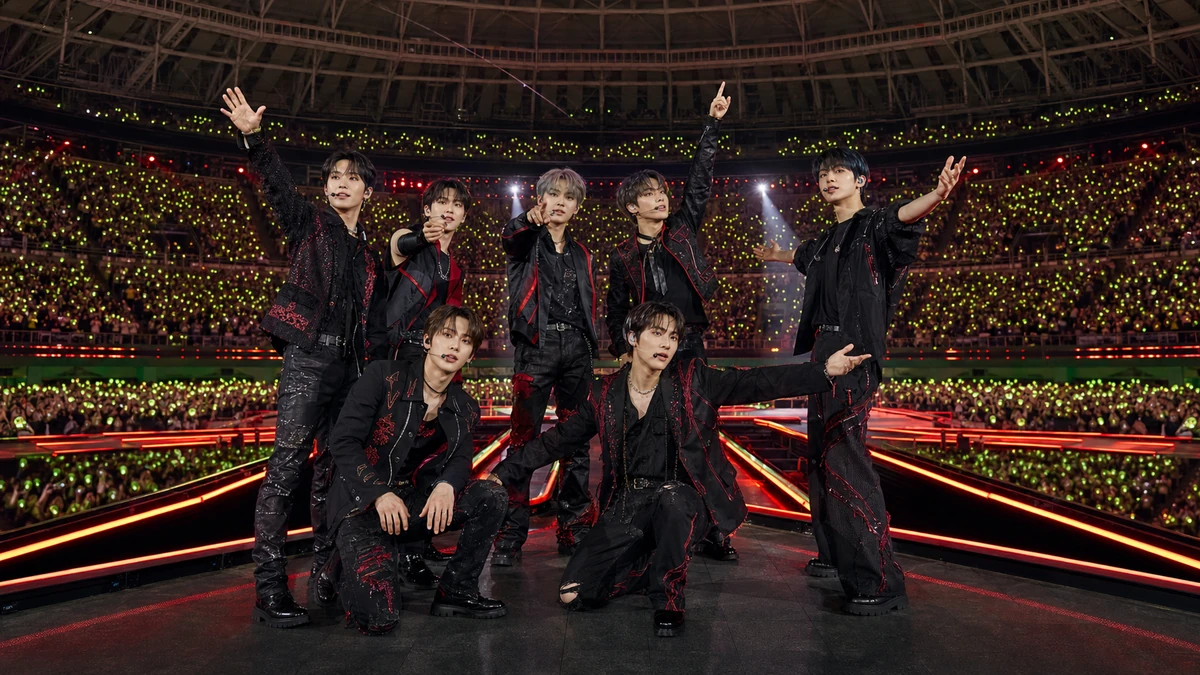
A milestone year, but not a nostalgia act
NCT 127, one of the most commercially successful acts in modern K-pop, is preparing to release its seventh full-length studio album on Aug. 24, then open a new world tour less than a month later with three sold-out shows in Seoul. For an American audience, that schedule may sound like the standard rhythm of a major pop act: drop a new record, then take it on the road. In the K-pop industry, though, the sequencing matters. It signals not just a comeback in the literal sense of returning with new music, but a carefully staged statement about the group’s future.
SM Entertainment, the powerhouse agency behind the group, said NCT 127 will return with its seventh full album before launching the fifth edition of its ongoing “NEO CITY” tour franchise, this time under the subtitle “THE REDLINE.” The tour begins Sept. 18 and runs through Sept. 20 at Seoul’s KSPO Dome, one of South Korea’s marquee indoor concert venues. All three dates are already sold out, underscoring the group’s continued drawing power in its home market even before fans have heard the new album.
That combination of events would be notable for any long-running boy band. It carries extra weight for NCT 127 because the group is heading toward its 10th anniversary in 2026, a moment that often becomes a referendum on longevity in the idol business. Pop groups everywhere face questions about how long they can stay together. In K-pop, where contracts, military service, shifting subunits and demanding release cycles complicate careers, reaching a decade with momentum intact is especially significant.
What makes this moment stand out is that NCT 127 is not using the anniversary runway simply to look backward. Instead of centering the conversation on commemorative retrospectives or greatest-hits nostalgia, the group is putting new material first. That may be the clearest message in the entire rollout: NCT 127 is framing its next chapter as an active one, not a ceremonial one.
For U.S. readers less familiar with the group, NCT 127 is a Seoul-based unit of the larger NCT brand, a modular K-pop project created by SM Entertainment. The “127” refers to the longitude coordinate of Seoul, anchoring the unit’s identity to the South Korean capital even as its popularity has spread internationally. Over the years, NCT 127 has built a reputation for polished performance, experimental production and an aggressive stage style that has helped distinguish it in an overcrowded global pop market.
That identity helps explain why the sold-out Seoul concerts matter beyond raw ticket numbers. In the language of pop touring, these shows are not just another stop. They are the launch point, the first full reveal of a new era, the place where fans will see how the album’s themes translate into choreography, visuals and the larger spectacle that has become a defining feature of K-pop concerts.
Why the album-tour timing matters in K-pop
In American pop, artists often release singles for months before an album arrives, then announce a tour well in advance, sometimes with an arena run set for the following year. K-pop operates differently. A “comeback” is not necessarily a comeback from absence in the everyday English sense; it is the industry term for a new promotional cycle, often built around tightly scheduled teaser campaigns, music show performances, video releases and fan events. Every detail is scrutinized by fandoms, and timing becomes part of the story.
That is why NCT 127’s schedule is so revealing. Fans will hear the new full-length album on Aug. 24, then encounter those songs live in Seoul roughly three weeks later. That is a short enough gap to preserve momentum but long enough for listeners to absorb the material before seeing it staged. In practical terms, it gives the group the chance to turn the album into an immersive event rather than a stand-alone streaming release.
That strategy also reflects one of K-pop’s biggest advantages as a global export: its integration of music and performance. In this system, an album is rarely just audio. It is the starting point for choreography, styling, concept photography, stage design, fan discourse and online interpretation. A full-length album, especially, carries greater prestige because it offers a broader canvas than a single or mini-album. It suggests range, cohesion and a larger creative argument about where a group is headed.
For NCT 127, that matters. A seventh full-length record is not a small milestone. It signals staying power in an industry where release schedules are intense and attention spans are short. It also arrives with a detail fans have already seized on: seven members are participating, and this is the group’s seventh studio album. That numerical overlap has not been officially presented as a symbolic concept, but in K-pop, numbers have a way of becoming emotional shorthand. Fans often read patterns as signs of unity, continuity or destiny, even when companies avoid making explicit claims.
Whether or not that “seven” symmetry is intentional, it lands at a useful time. It reinforces a simple image that is easy to understand across languages and markets: the full team is here, and it is releasing a major body of work together. In a genre where lineup uncertainty can overshadow music, that kind of clarity has real value.
The meaning of the sold-out Seoul shows
The three sold-out concerts at KSPO Dome say at least two things at once. First, they show that NCT 127 remains a powerful ticket seller in South Korea after nearly a decade in the business. Second, they show that fans are buying into the group’s stage reputation as much as, if not more than, any specific unreleased song. The album has not arrived yet, but the seats are already gone.
For readers who do not track Korean venues closely, KSPO Dome is one of the country’s signature indoor arenas for top-tier acts. Formerly known to many fans as the Olympic Gymnastics Arena, it occupies a place in K-pop culture similar to the way Madison Square Garden, Crypto.com Arena or Nashville’s Bridgestone Arena can function as shorthand in the United States. Playing there is not simply a logistics matter; it is a status marker. Launching a major tour there gives the opening shows extra symbolism.
The sold-out run is also significant because it marks NCT 127’s first domestic solo concert in about one year and eight months. That gap has likely intensified demand. Long waits are common in K-pop for a range of reasons, including overlapping solo schedules, label strategy, international touring and, for male artists, South Korea’s mandatory military service system, which often disrupts group activity in ways American audiences may not immediately anticipate. Even when a group remains active, its ability to gather all members for a major hometown concert can become a meaningful event in itself.
That sense of reunion matters emotionally. K-pop fandoms are structured around sustained engagement, with fans following not just songs but livestreams, variety appearances, behind-the-scenes content and public milestones. A concert after a lengthy gap is not just a chance to hear hits. It is often treated as proof that the relationship between artist and fandom remains intact and that the group’s identity still holds under pressure.
There is another reason the sellout stands out: these are the first performances of the new tour. In tour culture, the opening nights often function like a premiere. Fans want to be the first to see the staging, costume direction, visual motifs and set-list logic. In the social media era, that first weekend can shape global perception of an entire era. Clips spread instantly. Fan cameras circulate on X, TikTok, Instagram and YouTube. A Seoul opener in 2025 is not just a local event; it is content that helps define how international fans imagine the tour before it reaches their city.
In that sense, selling out the first three nights of “NEO CITY - THE REDLINE” is not merely evidence of popularity. It is evidence of anticipation for a reveal.
Contract renewals and the question of stability
The comeback carries additional significance because all seven participating members — Johnny, Taeyong, Yuta, Doyoung, Jaehyun, Jungwoo and Haechan — recently renewed their contracts with SM Entertainment. In any pop industry, contract renewals can be dry business news. In K-pop, they are often emotionally charged, because fans know that renewal periods can reshape or even end group activity.
For American readers, the closest comparison might be the moment when a veteran band re-ups with a label, confirms its lineup and immediately follows that business decision with a new album and a major tour. It tells fans the paperwork was not simply about preserving a catalog. It was about continuing the project in a visible, active way. That is the story here. The renewals matter not because contracts are glamorous, but because what came next was concrete: a full album and a new tour.
That sequence gives fans a kind of reassurance that press releases alone rarely provide. Anyone can promise more activity down the line. Scheduling an album and a major arena kickoff is a stronger statement. It shows the group’s future in operational terms, not just hopeful language.
There is also an industry-wide context. K-pop’s first generation established the model. Its second generation proved that Korean groups could build devoted followings across Asia. The third and fourth generations pushed the genre into the global mainstream, with acts appearing on U.S. charts, at Coachella, on major television programs and in brand campaigns once reserved for Western stars. But the challenge of longevity remains. Can a group keep its identity intact as members mature, pursue solo work and navigate institutional pressures?
NCT 127’s current moment suggests one answer. Stability does not necessarily mean freezing a group in place. It can mean giving fans enough continuity to trust the brand while allowing the act to keep evolving musically and theatrically. A seventh album and fifth tour suggest not stasis, but refinement: the confidence of an act that knows what it does well and is still trying to push the concept further.
That is especially relevant for NCT 127, whose sound has often leaned toward what fans describe as “neo” experimentation — sleek, high-impact pop that can pivot between aggressive rap passages, layered harmonies, electronic textures and meticulously drilled choreography. The group’s durability depends in part on maintaining that edge without becoming predictable. The new era will test whether it can do that again.
What “THE REDLINE” suggests about the new era
SM Entertainment has described “THE REDLINE” as representing the moment of pushing beyond limits. That phrasing is broad enough to avoid spoiling the tour’s finer details, but it offers a strong clue about the intended mood. In American pop language, “redline” evokes speed, pressure and crossing the point where a machine is operating at its extreme. It suggests risk and adrenaline. For a performance-oriented group like NCT 127, it is a fitting metaphor.
K-pop tour branding often works this way. A recurring franchise name gives continuity, while a new subtitle signals the thematic update. Here, “NEO CITY” remains the umbrella identity, tying the new concerts to the group’s established touring legacy. “THE REDLINE” adds the specific dramatic frame for this installment. That allows SM to preserve brand recognition while telling fans this is not merely a rerun of past staging.
It is worth noting that K-pop concerts are often closer to full-scale theatrical productions than to stripped-down band performances. That does not mean they are less musical. It means the experience is designed as a total package, with synchronized choreography, cinematic interludes, custom visual content, stylized costume changes and audience-participation rituals. American readers who have seen the elaborate touring machinery behind a Taylor Swift stadium date, a Beyoncé production or a top-tier Las Vegas residency will recognize the basic idea. K-pop simply compresses that kind of visual ambition into a format that is often even more tightly choreographed.
SM has said audiences can expect a fusion of music, performance and dramatic production. That description leaves plenty unspecified, but it fits both the company’s history and NCT 127’s strengths. The group has long been associated with high-concept stagecraft and exacting dance execution. If “THE REDLINE” truly centers on crossing limits, fans will likely expect a concert that emphasizes intensity, precision and emotional escalation rather than a purely retrospective victory lap.
That distinction matters because of where the group stands in its career. Acts approaching a major anniversary often lean heavily on sentiment. There will almost certainly be sentimental moments here too, especially in Seoul, where the domestic audience has waited more than a year and a half for a solo concert. But the theme suggests that NCT 127 is resisting the idea of becoming a museum piece. The branding implies strain, movement and forward thrust.
That is a shrewd choice in a music economy driven by constant novelty. It also aligns with the broader K-pop logic that each “era” should feel distinct enough to energize fandom participation. Fans do not simply consume the music. They decode it, dress for it, make memes from it, build theories around it and carry it into online culture. A title like “THE REDLINE” gives them a language for that process.
From Seoul to Asia, and the global logic of K-pop touring
After the Seoul launch, NCT 127 is set to take “NEO CITY - THE REDLINE” to Jakarta, Hong Kong, Singapore, Bangkok and Taipei. On paper, that itinerary may look regional. In practice, it reflects the transnational foundation that helped make K-pop a global force in the first place. Long before U.S. institutions fully embraced Korean pop, the genre built dense touring circuits and media networks across Asia, where fans in different languages and markets participated in the same cultural conversation.
That model remains central today. K-pop succeeds internationally in part because it can create a shared experience across linguistic boundaries. A fan in Seoul, Bangkok or Taipei may not engage with every lyric in exactly the same way, but choreography, stage imagery, visual concepts and the emotional architecture of a live show travel remarkably well. For a performance-driven act, that can be just as important as verbal fluency.
This is one reason American observers sometimes misunderstand K-pop’s appeal when they focus too narrowly on whether listeners speak Korean. Pop music has always crossed language lines. Many Americans danced to “Despacito” without speaking Spanish. Opera, reggaeton, Afrobeats and Eurovision all demonstrate that feeling, rhythm, image and star power can outrun translation. K-pop adds a hyper-developed visual and fan-engagement system to that equation.
By beginning in Seoul and then moving through major Asian cities, NCT 127 is following a playbook that combines hometown legitimacy with regional scale. Seoul establishes the narrative. Other cities deepen it and expand it. Each stop adds its own local memory while remaining part of a unified tour identity. For fans, that creates the sense of participating in something both intimate and transnational.
There is also a symbolic hierarchy to the route. Opening at home signals respect for the domestic base that helped build the group. Extending outward soon after shows confidence that the new material and stage concept can carry across markets. The result is a touring structure that feels less like simple repetition and more like a rolling expansion of the same story.
And while this initial list centers on Asia, the international implications are obvious. NCT 127 has long had a global following, and its activities are watched closely well beyond the markets currently announced. In the contemporary pop business, sold-out Seoul openers and a well-received regional run can quickly feed expectations for additional dates elsewhere. Even when tour announcements are staggered, fans know the first shows often serve as a barometer for what could come next.
What this moment says about NCT 127’s place in K-pop
NCT 127’s upcoming album and sold-out Seoul tour opener arrive at a time when K-pop is increasingly normalized in the American pop landscape. Korean acts now chart on Billboard, collaborate with Western artists, headline festivals and dominate online fandom spaces that once treated Asian pop as niche. Yet mainstream U.S. coverage still tends to flatten the genre into a few obvious names or viral moments.
That is why NCT 127’s current chapter deserves attention on its own terms. This is not just another idol comeback. It is a case study in how a veteran K-pop act manages continuity, scale and reinvention. The group is approaching a symbolic 10-year marker, has secured member renewals, is releasing a major studio album and is launching a tour strong enough to sell out three arena-sized homecoming dates before the record drops. That is a substantial achievement by any standard.
It also suggests that NCT 127 has moved into a different phase of its career: established enough that fans trust the live product in advance, but still ambitious enough to present the new material as the main event. In other words, the group appears to be resisting the trap that catches many long-running acts. It is not relying solely on catalog comfort, but neither is it abandoning the performance identity that built its audience.
For American readers who may be encountering this story from outside K-pop fandom, that balance is worth noticing. The genre is often caricatured as youth culture moving at impossible speed, with acts rising and fading before outsiders can learn their names. There is some truth to the industry’s relentless pace. But there is another story too: the emergence of durable careers built through world-class performance, disciplined branding and unusually intense fan relationships. NCT 127 belongs to that story.
If the group’s strategy works, the next several weeks will function as a tightly connected narrative. The album introduces the themes. The Seoul concerts embody them. The regional tour spreads them. The contract renewals quietly sit underneath it all, turning abstract optimism into visible continuity. That makes the comeback feel less like an isolated release date and more like a coordinated argument about who NCT 127 is now.
And perhaps that is the clearest takeaway. As the group moves toward its 10th anniversary, the headline is not simply that it has lasted. It is that NCT 127 appears determined to prove longevity in K-pop does not have to mean slowing down. It can mean arriving at a moment of consolidation and using it as a launchpad. The three sold-out Seoul nights suggest fans are ready to follow that idea wherever it goes next.
Comments
Post a Comment