
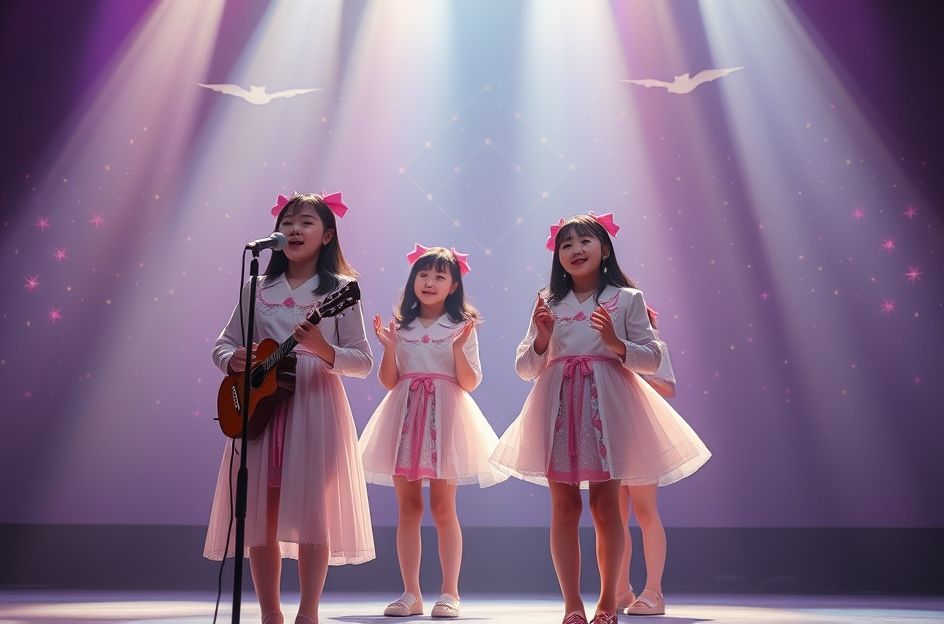
First-Generation K-Pop Group Baby V.O.X. Returns with Solo Concert After 23 Years as New Girl Group USPEER Debuts: Generational Bridge in Korean Pop Music Industry
September 26, 2025 - The Korean entertainment industry showcases its unique capacity to simultaneously honor legacy acts while launching new talent through major announcements spanning K-pop's historical evolution from late-1990s first generation through contemporary fourth generation, with legendary pioneering girl group Baby V.O.X. announcing their first solo concert in 23 years since disbanding in 2002 when Korean pop music remained primarily regional phenomenon without current global reach, while WM Entertainment's new girl group USPEER approaches debut targeting international markets with multilingual members and globally-oriented concept—dual developments demonstrating K-pop's enduring cross-generational appeal, nostalgia-driven reunion trend capitalizing on millennial audiences' emotional attachments to adolescent-era musical favorites, and industry's sustainable talent pipeline continuously introducing new acts replacing retired predecessors rather than depending on handful of superstar groups whose eventual disbandment or military service could crater industry revenues if adequate successors weren't systematically cultivated through entertainment company training systems and strategic debut timing filling market niches vacated by senior generation transitions.
Baby V.O.X.'s return and USPEER's debut illustrate K-pop industry's maturation into self-sustaining ecosystem with multiple active generations coexisting rather than newer acts completely displacing predecessors as occurs in some entertainment industries where only current trending artists maintain commercial viability while yesterday's stars fade into obscurity—Korean model instead resembles Japanese idol industry's multigenerational structure where veteran groups maintain fan bases alongside newer acts, or American hip-hop scene where elder statesmen like Jay-Z and Nas continue commanding respect and commercial success while newer artists dominate streaming charts, creating rich musical landscape accommodating diverse audience preferences across age cohorts rather than forcing zero-sum competition where older artists' continued activity supposedly prevents younger talents' emergence (empirically false assumption contradicted by K-pop's explosive growth accommodating hundreds of active groups spanning all generational cohorts simultaneously).
For American readers, Baby V.O.X. holds position in Korean pop culture analogous to groups like Destiny's Child, TLC, or Spice Girls in Western music history—pioneering female groups that defined era's musical aesthetics, fashion trends, and performance standards while achieving mainstream cultural penetration transcending narrow musical genre appeal to become generational touchstones whose songs evoke powerful nostalgia among audiences who experienced adolescence during groups' commercial peaks, with Baby V.O.X.'s late-1990s/early-2000s dominance establishing girl group format and performance-oriented K-pop paradigm that subsequent generations refined and internationalized but fundamentally inherited from first-generation pioneers who created blueprints enabling today's global K-pop phenomenon through their experimental innovations, audience cultivation, and industry infrastructure development laying foundations for contemporary success.
Baby V.O.X.'s Historic 'Back to VOX' Concert and First-Generation K-Pop Legacy
Baby V.O.X. announced solo concert "Back to VOX" scheduled for Kyung Hee University's Peace Hall (capacity 5,000) on September 26-27, 2025, marking group's first dedicated concert since disbanding in 2002 following six-year active career (1997-2002) that established them as first-generation K-pop's preeminent girl group through string of hit songs including "Coincidence" (1998 breakthrough establishing sexy-cute concept balancing mature sensuality with youthful energy), "Killer" (1999 darker aggressive concept pioneering girl crush aesthetic later popularized by groups like 2NE1 and Blackpink), "Get Up" (2000 dance anthem with intensive choreography showcasing synchronized formations), and "Betrayal" (2001 emotional ballad demonstrating vocal capabilities beyond dance-pop specialization)—catalog representing stylistic diversity and musical evolution rather than repetitive formula, demonstrating artistic development that contemporary K-pop groups emulate through varied concept explorations across album cycles preventing creative stagnation and fan boredom.
The five-member lineup of Kim E-Z (main vocalist known for powerful vocal technique), Lee Hee-jin (lead dancer and visual center), Sim Eun-jin (lead vocalist contributing emotional depth), Kan Mi-youn (rapper providing hip-hop influence), and Yoon Eun-hye (dancer who subsequently became successful actress starring in popular Korean dramas including "Princess Hours" and "Coffee Prince," achieving rare idol-to-serious-actress transition that most idol group members attempt but few successfully accomplish) achieved top-tier popularity during their active years, regularly appearing on major music shows, variety programs, and commercial endorsements while selling hundreds of thousands of albums in era before digital streaming revolutionized music consumption patterns and physical album sales plummeted except for K-pop's unique collector-driven market where hardcore fans purchase multiple copies obtaining randomized photo cards and supporting chart performance through bulk buying demonstrating devotion intensity rarely seen in Western music markets where streaming dominates and physical purchases limited to vinyl collectors and hardcore audiophiles.
The concert will feature 2025 reinterpretations of Baby V.O.X.'s signature songs with updated arrangements reflecting contemporary production aesthetics while preserving original melodies and emotional cores that trigger nostalgic responses among fans who associate these songs with specific life periods, adolescent experiences, and cultural moments from late-1990s/early-2000s Korea when economic recovery from 1997 Asian Financial Crisis coincided with nascent digital culture, early internet adoption, and generational optimism following traumatic economic collapse—historical context giving Baby V.O.X.'s music additional significance beyond mere entertainment as soundtrack accompanying Korea's transition from developing nation recovering from crisis toward confident developed country embracing globalization and cultural production.
Notably, Yoon Eun-hye will participate specifically for this concert despite primarily focusing on acting career since group disbandment, adding special meaning for fans who view reunion as rare opportunity to experience complete original lineup after 23-year separation—participation decision likely involved substantial negotiation and schedule coordination given Yoon's acting commitments and typical reluctance of successfully-transitioned actors to revisit idol pasts that might undermine serious artistic credibility they've cultivated through dramatic performances, though nostalgia wave and fan demand apparently sufficient to overcome concerns about potential career image conflicts between idol and actress identities.
New Girl Group USPEER Enters Competitive K-pop Market
WM Entertainment's new girl group USPEER released third concept photo set for debut single album "SPEED ZONE" on September 26 via official social media accounts (Instagram, Twitter/X, TikTok, YouTube community posts), building anticipation through systematic teaser content rollout following K-pop industry's established pre-debut marketing playbook where entertainment companies release member profile photos, concept images, video teasers, track previews, and choreography snippets across several weeks generating buzz and social media engagement before official music video premiere and digital music release—calculated strategy maximizing initial chart impact and first-week sales critical for determining commercial success and establishing market position among dozens of competing debuts annually where only minority achieve sustained visibility beyond initial promotional cycle.
The "Spot C: Plan" concept version photos showed seven members holding conductor's batons, newspapers, and notebooks conveying strategic planning imagery with confident determined expressions suggesting control, leadership, and calculated ambition rather than typical cute or sexy concepts that dominate girl group marketing—differentiation strategy attempting to carve distinctive identity in oversaturated market where most groups employ variations on established formulas (innocent/cute, girl crush/powerful, elegant/mature, retro/nostalgic) with subtle variations in styling, music production, and performance presentation but fundamental adherence to proven commercial templates minimizing risk but also limiting distinctive memorability that separates breakout successes from forgotten also-rans whose careers end after initial contracts expire without renewal due to insufficient commercial traction.
USPEER represents WM Entertainment's second girl group following Oh My Girl (debuted 2015, achieved consistent commercial success and longevity rare in competitive girl group market), featuring multinational member composition targeting global market penetration from debut rather than sequential international expansion after establishing Korean domestic base—strategic evolution reflecting K-pop industry's globalization where new groups increasingly debut with multilingual capabilities (English, Chinese, Japanese, Thai fluency among various members), culturally diverse concepts, and international market awareness rather than purely Korean-focused approach subsequently adapted for overseas audiences through translated content and localized marketing that often feels awkward or inauthentic compared to groups genuinely conceived with global audiences and multicultural identities from inception.
The group name combines "US (we)" and "PEER (companion)" symbolizing their stated intention to grow together with fans worldwide through participatory relationship rather than traditional hierarchical celebrity-fan dynamic—rhetoric common in K-pop marketing emphasizing intimate bonds between idols and supporters who feel personal investment in groups' success and emotional connection transcending typical celebrity worship, though cynics note these proclaimed egalitarian relationships still occur within commercial framework where fans spend money on albums, concerts, merchandise, and various monetized interactions while companies profit and idols work under restrictive exclusive contracts limiting personal freedoms and career autonomy in exchange for stardom opportunities and financial rewards (if commercially successful, though many idol group members never recoup training costs and disband without achieving financial security despite years of intensive preparation and promotional activities).
Source: Korea Trendy News


0 Comments