Influenza Outbreak Intensifies: Weekly Cases Reach 8.0 per 1,000 Patients, Vaccination Campaign Underway
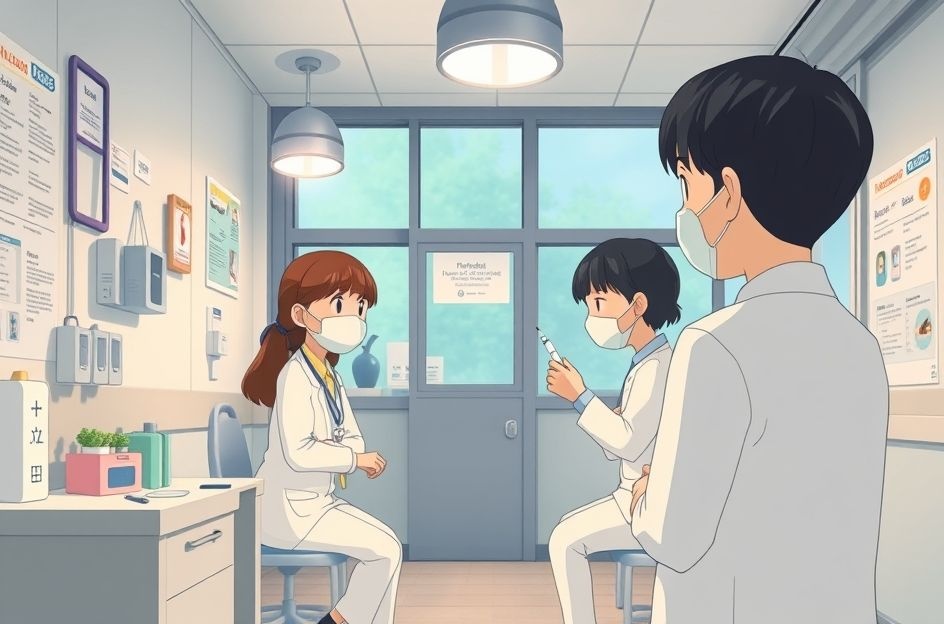
Korea's Influenza Outbreak Reaches Epidemic Threshold with 8.0 Cases per 1,000 Patients as A(H3N2) Subtype Dominates Seasonal Circulation
The Korea Disease Control and Prevention Agency (KDCA) announced on September 27, 2025, that influenza-like illness (ILI) surveillance for epidemiological week 38 (September 15-21, 2025) recorded 8.0 influenza cases per 1,000 outpatient visits across sentinel surveillance sites—officially exceeding Korea's epidemic threshold of 7.1 cases per 1,000 for the first time in the 2025-2026 influenza season and representing a 1.2-case increase from the previous week constituting the fastest early-season influenza growth rate observed in three years, prompting public health officials to emphasize vaccination urgency for high-risk populations including young children, elderly individuals, pregnant women, and persons with chronic conditions who face disproportionate risks of influenza complications including pneumonia, exacerbation of underlying cardiac or pulmonary diseases, and potential mortality from severe respiratory infections that healthy adults typically survive with minimal medical intervention beyond symptomatic treatment and rest.
For American readers familiar with Centers for Disease Control and Prevention (CDC) FluView surveillance reports tracking U.S. influenza activity through similar sentinel provider networks monitoring influenza-like illness proportions and virologic surveillance confirming influenza virus types and subtypes, Korea's surveillance system operates analogously using approximately 200 sentinel clinics distributed nationwide that report ILI proportions weekly while submitting respiratory specimens for laboratory confirmation through reverse transcription polymerase chain reaction (RT-PCR) testing and viral culture—methodologies allowing health authorities to distinguish true influenza from other respiratory viruses causing clinically similar symptoms but requiring different public health responses given influenza's specific vaccine availability, antiviral treatment options, and seasonal epidemic patterns differing from continuously circulating respiratory syncytial virus (RSV), rhinoviruses, and coronaviruses including endemic human coronaviruses unrelated to SARS-CoV-2.
Viral Subtype Distribution and Epidemiological Characteristics
Virologic surveillance data indicate that 19.2% of all respiratory specimens tested positive for influenza viruses during week 38, with Type A influenza comprising 87.3% of positive specimens and Type B influenza accounting for the remaining 12.7%—distributions typical of early influenza season patterns where Type A viruses typically dominate initial epidemic waves before Type B viruses potentially increasing proportionally during later season phases, though some seasons demonstrate Type A predominance throughout with minimal Type B circulation depending on previous season immunity patterns, vaccine-induced protection levels, and stochastic factors affecting which viral lineages successfully establish epidemic transmission chains in specific geographic regions.
Among Type A influenza viruses, the A(H3N2) subtype represented 82% of characterized isolates, with A(H1N1)pdm09 (the 2009 pandemic H1N1 strain that has circulated seasonally since its original emergence) comprising the remaining 18%—subtype distributions carrying clinical and public health significance because H3N2 influenza historically associates with more severe disease particularly among elderly populations whose immune systems demonstrate reduced capacity to mount effective responses against H3N2 viruses that exhibit greater antigenic drift rates compared to H1N1 viruses, accumulating mutations more rapidly through error-prone viral replication and immune selection pressures that generate antigenic variants partially escaping vaccine-induced immunity and previous infection-acquired immunity, necessitating more frequent vaccine updates and causing reduced vaccine effectiveness against H3N2 compared to typically higher H1N1 vaccine effectiveness.
For American public health officials and clinicians, H3N2-predominant seasons historically correlate with elevated hospitalization rates, higher mortality, and greater healthcare system burdens compared to H1N1-predominant seasons, particularly affecting long-term care facility residents, persons aged 65+ with multiple chronic conditions, and immunocompromised individuals whose reduced immune function limits their capacity to control viral replication and clear infections before complications develop—population vulnerability patterns explaining public health emphasis on ensuring high-risk group vaccination coverage achieves targets of 75%+ among elderly populations and 60%+ among other priority groups through free vaccination programs, public awareness campaigns, and healthcare provider education emphasizing vaccination importance despite imperfect effectiveness that still provides substantial individual protection and generates population-level benefits through reduced transmission intensity and epidemic duration.
Pediatric Transmission Dynamics and School-Based Interventions
Children and adolescents demonstrate particularly rapid influenza spread reflecting age-specific behavioral patterns including close physical contact during play and educational activities, lower baseline immunity in younger children with limited previous influenza exposure compared to adults with decades of accumulated infection-induced immunity against related viral strains, and immature immune systems less capable of rapidly mounting protective responses upon initial viral exposure—factors explaining why elementary schools and childcare facilities frequently serve as epidemic amplification sites where initial introductions generate clusters affecting 20-40% of classrooms before spreading to household contacts including parents and grandparents who may suffer more severe disease outcomes despite higher baseline immunity because of age-related immune senescence or chronic diseases compromising infection resistance.
Reported school absenteeism exceeding 30% in some classrooms reflects both direct influenza infections and precautionary absences where parents voluntarily keep children home despite mild or absent symptoms to prevent potential transmission or avoid exposure—behavioral responses that reduce transmission but create childcare challenges for working parents unable to secure alternative childcare arrangements, potentially forcing parental work absences that reduce productivity and create economic impacts extending beyond direct medical costs to include lost work time, reduced economic output, and disrupted business operations particularly in sectors employing parents of school-age children who lack flexible work arrangements or sufficient paid leave to accommodate extended childcare responsibilities during prolonged epidemic periods lasting 8-12 weeks.
Educational institutions implemented enhanced infection control measures including increased classroom ventilation through opening windows despite cooler autumn temperatures creating thermal comfort challenges, installation of hand sanitizer stations throughout facilities encouraging frequent hand hygiene, and recommendations that symptomatic students remain home until fever-free for 24 hours without antipyretic medications—protocols balancing infection control against educational continuity recognizing that excessive absenteeism disrupts learning particularly for disadvantaged students lacking resources for remote learning or tutorial support compensating for missed instruction.
Vaccine Campaign Logistics and Coverage Targets
Korea's government-funded influenza vaccination program launched September 20, 2025, targeting high-risk populations including children aged 6 months through 13 years (representing approximately 5.2 million individuals), adults aged 65 and older (approximately 9.2 million), pregnant women (estimated 250,000 annually), and healthcare workers (approximately 500,000 across hospitals, clinics, long-term care facilities, and emergency medical services)—coverage targets totaling roughly 15 million persons representing 29% of Korea's 51.7 million population, prioritizing groups at elevated risk for influenza complications or occupational exposure while limiting government expenditures compared to universal vaccination programs offering free influenza vaccine to entire populations as some countries implement despite higher costs.
This year's vaccine formulation, developed according to World Health Organization (WHO) recommendations based on global influenza surveillance identifying circulating strains most likely to cause epidemic transmission, targets four influenza strains including two Type A viruses (A/Victoria/4897/2022 H1N1-like virus and A/Thailand/8/2022 H3N2-like virus) and two Type B viruses (B/Austria/1359417/2021 Victoria-lineage virus and B/Phuket/3073/2013 Yamagata-lineage virus)—strain selections representing educated predictions about which variants will circulate during upcoming seasons based on recent circulation patterns, antigenic characterization, and epidemiological modeling though imperfect matching between vaccine strains and circulating wild-type viruses occasionally occurs when unexpected variants emerge or when Southern Hemisphere surveillance data informing Northern Hemisphere vaccine formulations fails to accurately predict subsequent evolution, reducing vaccine effectiveness during mismatched seasons but typically maintaining partial protection through cross-reactive immunity against related strains.
Vaccination effectiveness typically achieves 70-80% protection against laboratory-confirmed influenza among vaccinated individuals during well-matched seasons when vaccine strains closely correspond to circulating viruses, though effectiveness varies substantially by age group, underlying health status, vaccine type (inactivated vs. live-attenuated), and viral subtype with H3N2 vaccines historically demonstrating lower effectiveness than H1N1 vaccines—performance levels substantially exceeding zero protection and providing meaningful individual and population benefits despite imperfection that sometimes generates public confusion about vaccine value when vaccinated individuals experience breakthrough infections, not recognizing that vaccines reduce both infection probability and disease severity even when infections occur.
The KDCA recommends vaccination completion by late October before anticipated epidemic peaks during November-December when transmission intensity typically maximizes due to cooler temperatures favoring viral survival in respiratory droplets and aerosols, reduced ventilation in heated indoor environments where people congregate during cold weather, and holiday gatherings facilitating transmission across age groups and geographic regions—seasonal patterns observed globally across temperate climates though with timing variations reflecting hemisphere-specific seasons and regional climate differences affecting optimal vaccination timing recommendations that balance achieving immunity before epidemic onset against vaccine-induced immunity waning over 6-8 month periods suggesting that excessively early vaccination might reduce protection during late-season waves, though this consideration typically proves less important than ensuring timely vaccination before major transmission commences.
Source: TrendyNews Korea
Comments
Post a Comment