
Korean Opposition Party Clashes with Special Prosecutor in Dramatic Headquarters Raid
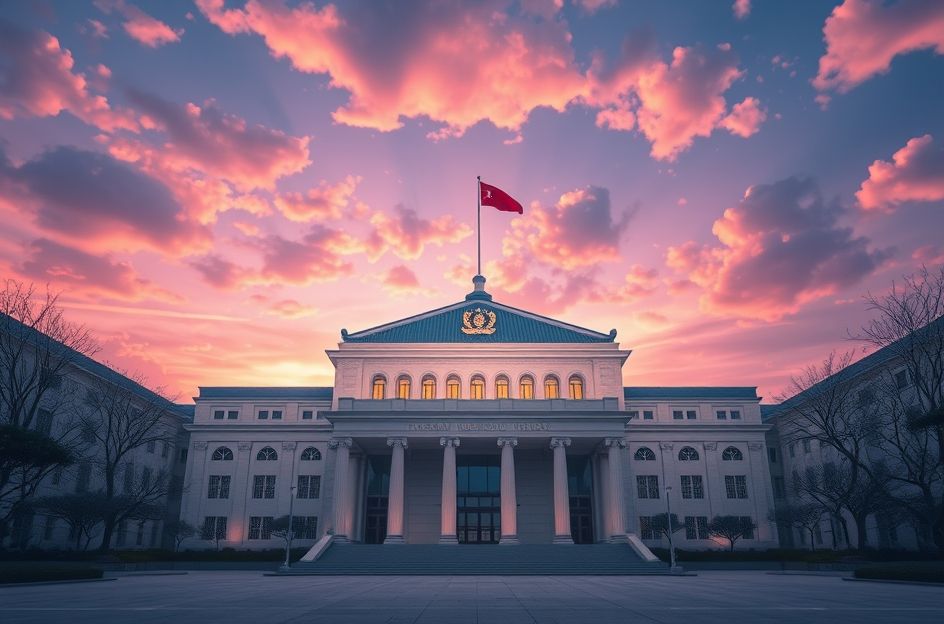
A dramatic eight-hour standoff unfolded at the headquarters of South Korea's main opposition People Power Party (PPP) on September 18, as special prosecutors investigating First Lady Kim Keon-hee attempted their third raid to seize crucial membership records. The confrontation highlights escalating tensions over allegations that the controversial Unification Church infiltrated Korean politics through mass membership enrollment.
Understanding Korea's Political System and Special Prosecutor Role
For American readers, Korea's special prosecutor system operates differently from U.S. special counsels. Korean special prosecutors are appointed by parliament to investigate high-profile cases involving government officials, often when the ruling party faces conflict-of-interest accusations. These prosecutors have sweeping powers comparable to independent counsels in American political scandals like Watergate or the Clinton investigations.
The People Power Party, currently led by Kim Gi-hyeon, serves as Korea's main conservative opposition party, similar to how Republicans function when Democrats control the White House. However, Korea's multi-party system means political dynamics often involve complex coalition-building that differs from America's two-party dominance.
The investigation centers on explosive allegations that Kim Keon-hee, wife of former President Yoon Suk-yeol, requested the Unification Church to enroll approximately 120,000 followers as PPP members to influence the March 2023 party leadership election. To put this in American context, imagine if a First Lady was accused of coordinating with a religious organization to pack Democratic or Republican party membership rolls to influence internal leadership contests.
The Unification Church Connection and American Parallels
The Unification Church, founded by the late Sun Myung Moon, has deep historical ties to American politics dating back to the 1970s and 80s. American readers may remember Moon's influence during the Reagan era and his ownership of The Washington Times newspaper. In Korea, however, the church's political influence operates through different mechanisms, primarily through membership manipulation in political parties.
According to prosecutors, Kim Keon-hee allegedly made the request through Jeon Seong-bae (known as "Buddhist monk Geonjin") to a former Unification Church world headquarters director in early November 2022. The goal was reportedly to support Representative Kwon Seong-dong's bid for party leadership, demonstrating how religious organizations can potentially manipulate democratic processes.
This differs significantly from American political influence, where religious groups typically operate through lobbying, campaign donations, and voter mobilization rather than party membership manipulation. Korean political parties allow relatively easy membership enrollment, creating vulnerabilities that would be less common in America's more regulated party structure.
Parliamentary Resistance and Constitutional Questions
When special prosecutors arrived at the PPP headquarters on September 18, Floor Leader Song Eon-seok immediately sent messages to all party lawmakers requesting they gather to "protect the membership list." Within hours, approximately 40 PPP members of parliament, including party leader Kim Gi-hyeon, assembled at headquarters to physically block the investigation.
This creates a constitutional crisis similar to situations American readers might remember from the Nixon era, when questions arose about executive privilege versus congressional oversight powers. The PPP argues that releasing membership lists containing personal information violates members' privacy rights and constitutes political persecution, while prosecutors maintain they need this evidence to verify mass enrollment allegations.
The standoff lasted eight hours, with prosecutors warning they would consider obstruction of justice charges if cooperation was not forthcoming. However, unlike American law enforcement situations, Korean prosecutors ultimately withdrew without obtaining the records, highlighting the complex balance between political party autonomy and law enforcement authority.
Simultaneous Multi-Front Investigation Strategy
Demonstrating sophisticated investigative tactics, the special prosecutor team simultaneously raided a database management company in Seoul's Yeouido district that handles PPP's membership records. This parallel approach mirrors strategies American federal investigators might use when facing resistance from primary targets - seeking alternative sources for the same information.
This marks the third failed attempt since August 13, when prosecutors first tried to obtain the membership records. The repeated failures suggest either exceptional political resistance or potential evidence destruction, scenarios familiar to American observers of high-stakes political investigations.
Representative Kwon Seong-dong has now been officially named as a suspect in the search warrant, facing charges under Korea's Political Fund Act. This is equivalent to being named as a target in an American federal investigation, significantly escalating the legal jeopardy for one of the PPP's prominent figures.
Political Ramifications and Electoral Impact
The confrontation has intensified political warfare between President Lee Jae-myung's Democratic Party government and the opposition PPP. Democratic Party officials compare the situation to American scandals where religious or special interest groups attempted to manipulate electoral processes, arguing that PPP resistance suggests guilt.
PPP leadership, however, frames the investigation as political retaliation similar to how American parties often characterize opposing investigations as "witch hunts." Party leader Kim Gi-hyeon stated, "We will not succumb to political oppression aimed at dismantling the People Power Party," echoing language familiar to American political discourse during contentious investigations.
The implications for Korea's upcoming parliamentary elections could be substantial. If Unification Church mass enrollment allegations prove true, it would undermine PPP legitimacy similar to how electoral manipulation scandals have affected American political parties historically. Conversely, if the investigation appears politically motivated, it could generate sympathy for the PPP, much like how aggressive prosecutions sometimes backfire in American politics.
Legal Precedents and Future Scenarios
Legal experts note this case presents unprecedented challenges in Korean jurisprudence, balancing law enforcement authority against political party autonomy. The situation parallels American legal battles over congressional subpoena power versus executive privilege, but with the added complexity of involving a religious organization's potential political manipulation.
Special prosecutors are reportedly considering alternative legal strategies, including modified search warrant applications or pursuing criminal contempt charges for obstruction. This mirrors tactics American special counsels have employed when facing resistance from political targets, such as pursuing cooperation through alternative legal pressure.
The case's resolution will likely establish important precedents for Korean democracy, particularly regarding religious organizations' political activities and law enforcement access to political party records. These precedents could influence Korean politics for decades, much like how American campaign finance and ethics investigations have shaped subsequent political conduct standards.
As this political drama continues, both Korean democracy and the rule of law face critical tests that will determine whether institutions can withstand politically motivated influence operations, regardless of their religious or ideological origins.
Source: Original Korean Article


0 Comments