
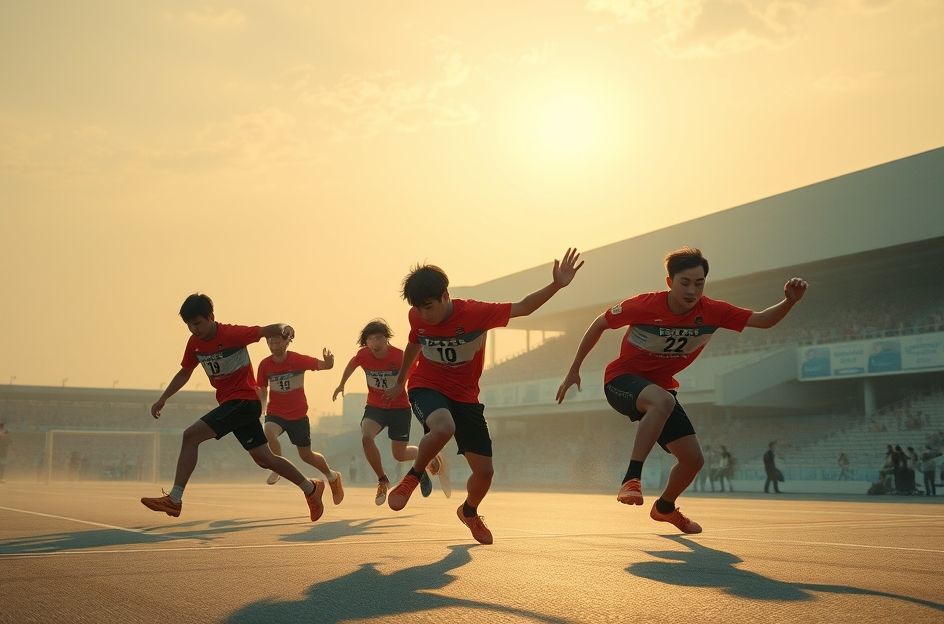
Korean Sports: Soccer Team's Unbeaten Streak Contrasts with Baseball's Strategic Rest
September 21, 2025 - Korean sports presents a fascinating study in contrasts as the national soccer team under Hong Myung-bo maintains an impressive unbeaten streak in World Cup qualifying while the KBO league enters a strategic rest period designed to optimize player performance for the season's final stretch. For American sports fans familiar with baseball's grueling 162-game schedule, Korea's approach to managing player fatigue offers interesting insights into alternative scheduling philosophies.
Hong Myung-bo's Tactical Revolution Delivers Results
South Korea's national soccer team has achieved a remarkable 6-game unbeaten streak in 2026 FIFA World Cup Asian qualifiers under head coach Hong Myung-bo, positioning the team at the top of Group B with 4 wins and 2 draws. This performance represents a significant tactical evolution from previous coaching approaches and has restored confidence in Korean soccer's international competitiveness.
For American soccer followers, Hong's system can be compared to Gregg Berhalter's USMNT approach but with more emphasis on defensive stability. The team has conceded only 3 goals in 6 qualifying matches, demonstrating the kind of defensive organization that historically successful World Cup teams possess. This contrasts sharply with the US's more attack-minded philosophy that sometimes leaves them vulnerable in crucial moments.
The key to Hong's success lies in his integration of European-based players like Son Heung-min and Lee Kang-in with domestic K-League talents. This blend mirrors successful national team models like Belgium's golden generation, where overseas experience combines with domestic tactical discipline. Korean fans are now talking about automatic World Cup qualification for the first time in over a decade.
Hong's tactical setup typically features a 4-2-3-1 formation that emphasizes quick transitions and defensive compactness. The system is similar to how Antonio Conte approached international management with Italy, prioritizing structure over individual brilliance. This approach has particular resonance for American audiences who watched their own team struggle with tactical cohesion in recent tournaments.
KBO's Strategic Rest Period: Player Welfare Meets Competitive Balance
Meanwhile, the Korean Baseball Organization (KBO) league has implemented a 3-day rest period from September 21-23, a scheduling decision that reflects growing awareness of player fatigue management in professional sports. This approach differs significantly from Major League Baseball's relentless schedule, where teams play almost daily from April through September with minimal breaks.
For American baseball fans, the KBO's 144-game season (compared to MLB's 162 games) already represents a more player-friendly approach. The mid-September rest period allows teams to manage injured players and optimize their rosters for the crucial final weeks of the regular season and upcoming playoffs. This is particularly important given that the Korean season runs from March through October, with teams playing in significantly hotter conditions than most MLB markets.
The timing of this rest period is strategic, coming just as playoff races intensify. Korean teams from 3rd through 6th place are separated by minimal game differentials, making every remaining contest crucial. The break allows teams to address minor injuries that might otherwise become major problems in the playoffs, similar to how NBA teams sometimes rest key players during the regular season to preserve them for the postseason.
Hanwha Eagles, currently experiencing their best season in franchise history, exemplifies how the rest period benefits teams with legitimate championship aspirations. Their approach to the break - focusing on conditioning while allowing key players like Ryu Hyun-jin to fully recover from minor ailments - mirrors how successful MLB teams manage September call-ups and roster expansion.
Conditioning Philosophy: Korean vs American Approaches
The KBO's approach to player conditioning during rest periods reflects broader differences between Korean and American sports culture. While American teams often emphasize maintaining rhythm through continuous play, Korean teams prioritize peak physical condition for crucial moments. This philosophy extends to individual player management, where Korean coaching staffs are more willing to rest players proactively rather than reactively.
This difference is particularly evident in how Korean teams handle veteran players. Ryu Hyun-jin's management by Hanwha, for example, involves careful monitoring of his workload throughout the season, with strategic rest periods built into his schedule. This contrasts with MLB's tendency to push veteran pitchers through full rotations even when showing signs of fatigue.
The Korean approach also reflects cultural attitudes toward long-term planning versus immediate results. While American sports often prioritize winning today, Korean teams are more willing to sacrifice short-term advantages for better positioning in crucial games. This is evident in how teams use the September rest period to experiment with roster configurations and give younger players experience.
Impact on International Competition and Player Development
Both Korean soccer's success under Hong Myung-bo and the KBO's player welfare initiatives reflect broader trends in how Korean sports organizations approach international competition. The soccer team's success demonstrates how tactical discipline and player management can compensate for individual talent gaps against stronger opponents.
For Korean baseball, the rest period management philosophy has implications for player development and international competition. Korean players who eventually sign with MLB teams often comment on the different conditioning approaches, with many noting that Korean baseball's emphasis on preventing fatigue translates well to the longer American season.
The success of both approaches - Hong's tactical soccer revolution and the KBO's player welfare focus - suggests that Korean sports organizations are finding effective ways to compete internationally while maintaining their own cultural values around athlete care and strategic planning.
Looking Ahead: Lessons for Global Sports
As Korean sports continue to gain international recognition, the contrast between soccer's current success and baseball's innovative scheduling offers lessons for sports organizations worldwide. The emphasis on tactical preparation in soccer and player welfare in baseball represents a holistic approach to athletic competition that prioritizes both immediate success and long-term sustainability.
For American sports fans, Korean approaches offer alternative perspectives on familiar challenges. Whether it's managing player fatigue in a long season or integrating international talent into national team systems, Korean sports demonstrate that success can be achieved through various philosophical approaches.
As we move toward the final quarter of 2025, both Korean soccer and baseball will test their respective strategies under pressure. The national team's remaining World Cup qualifiers will determine whether Hong's tactical approach can deliver automatic qualification, while the KBO's playoff race will show whether the rest period strategy translates to postseason success.
This analysis reflects the current state of Korean sports as of September 21, 2025, based on official league data, team reports, and international competition results.
Source: TrendyNews Korean Original




0 Comments