
Lee Jae-myung Administration Takes Proactive Stance on Labor Rights
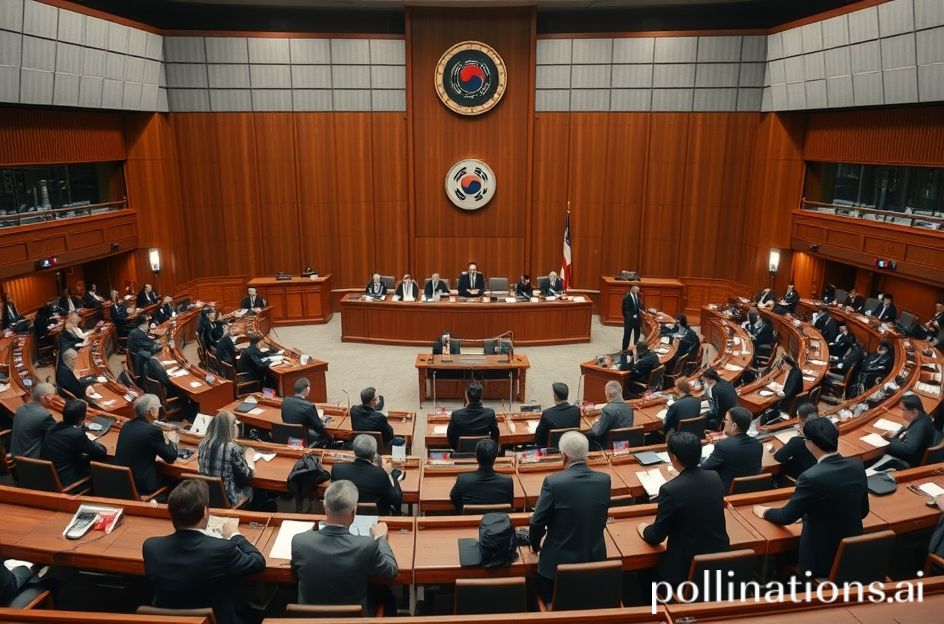
President Lee Jae-myung issued decisive orders to his cabinet on September 10, 2025, demanding immediate improvements to foreign worker rights protections ahead of the National Assembly's critical September parliamentary audit. This proactive directive comes as Korea faces mounting international scrutiny over labor practices affecting its approximately 850,000 foreign workers, who represent a vital component of the nation's manufacturing, agriculture, and service sectors. The timing of this announcement—just days before parliamentary questioning—signals the administration's awareness that foreign worker treatment has become a politically sensitive issue with both domestic and international ramifications.
For American readers familiar with U.S. immigration debates, Korea's foreign worker situation presents interesting parallels and contrasts. Like the United States, Korea depends heavily on foreign labor for industries that domestic workers increasingly avoid, yet lacks comprehensive legal frameworks to protect these essential workers. However, Korea's Employment Permit System (EPS), which channels foreign workers through government-managed programs rather than private recruitment, represents a fundamentally different approach from America's H-2A and H-2B visa systems. The Lee administration's reform efforts aim to address systemic flaws in this government-managed system that have allowed exploitation to persist despite official oversight.
Background: Foreign Workers in Korea's Economy
South Korea's transformation into a developed economy created an unprecedented labor shortage in so-called "3D jobs" (dirty, dangerous, and difficult work) that Korean workers increasingly reject in favor of white-collar positions. This labor gap, exacerbated by Korea's rapidly aging population and one of the world's lowest birthrates (0.72 in 2024), has made foreign workers indispensable to key economic sectors. Manufacturing facilities, particularly small and medium enterprises (SMEs) in provinces outside Seoul, depend on foreign labor for up to 40% of their workforce. Agriculture, facing an existential crisis as young Koreans abandon rural areas, relies heavily on migrant workers from Southeast Asia for harvesting and processing operations.
The Employment Permit System, established in 2004, was designed as a progressive alternative to Korea's previous "industrial trainee" program, which labor rights groups condemned as legalized exploitation. Under EPS, foreign workers theoretically enjoy the same labor rights as Korean workers, including minimum wage protections, health insurance, and workplace safety standards. However, implementation has fallen dramatically short of these ideals. Structural features of the system—particularly restrictions on workplace mobility and the threat of deportation—create power imbalances that employers routinely exploit. Workers who complain about abusive conditions risk losing their jobs and legal status, effectively silencing most grievances.
Recent Incidents Exposing Systemic Problems
President Lee's directive follows several high-profile incidents that exposed Korea's foreign worker protection failures to international scrutiny. In August 2025, over 300 Korean construction workers employed at a Hyundai Motor plant expansion in Georgia were detained by U.S. Immigration and Customs Enforcement (ICE) for visa violations. The workers, recruited through Korean labor agencies, had been promised legal work status but arrived on tourist visas—a scheme that American authorities characterized as human trafficking. The incident created diplomatic tensions between Seoul and Washington while highlighting how Korean labor practices can create international complications.
Domestically, a series of workplace deaths involving foreign workers sparked public outcry and labor rights activism. In July 2025, a Cambodian worker died from heat exhaustion in an agricultural facility where temperatures exceeded 40°C (104°F) and water breaks were prohibited. In June, a Vietnamese factory worker lost his hand in machinery that lacked required safety guards, with subsequent investigation revealing the employer had disabled safety features to increase production speed. These incidents, widely reported in Korean media and amplified by civil society organizations, created political pressure that the Lee administration could no longer ignore.
International human rights organizations including Human Rights Watch and Amnesty International have published critical reports documenting systematic abuses in Korea's foreign worker system. These reports detail patterns of wage theft, excessive working hours (often exceeding 70 hours weekly), dangerous working conditions, confiscation of passports, and physical abuse. The United Nations' International Labour Organization (ILO) has placed Korea on its monitoring list for potential forced labor violations, a designation that carries reputational costs for a country positioning itself as a developed democracy and potential leader in global governance.
Administration's Proposed Reforms
President Lee's September directive outlined several specific reforms designed to address structural vulnerabilities in the foreign worker system. First, the administration will strengthen workplace inspection protocols, tripling the number of labor inspectors dedicated to facilities employing foreign workers and implementing mandatory quarterly inspections for industries with documented abuse patterns. These inspectors will have authority to immediately shut down operations where life-threatening violations are discovered, representing a significant increase in enforcement power compared to current practices where violations typically result in minor fines.
Second, the government will establish a multilingual hotline system enabling foreign workers to report abuses anonymously without fear of retaliation or deportation. This hotline, staffed by speakers of all major languages represented in Korea's foreign workforce (including Khmer, Vietnamese, Thai, Nepali, and others), will connect directly to labor ministry enforcement teams rather than routing through local governments where employer influence is stronger. Workers who report serious violations will receive temporary protective status preventing deportation during investigations, addressing one of the system's most significant structural flaws.
Third, the Lee administration plans to ease workplace mobility restrictions that currently trap workers in abusive situations. Under existing rules, foreign workers can only change employers with their current employer's permission—a requirement that obviously enables exploitation. The proposed reforms would allow workers to change jobs after documenting specific violations without requiring employer consent, though details about what constitutes sufficient documentation remain unclear. Labor rights advocates argue this doesn't go far enough, calling for complete freedom of movement similar to domestic workers' rights, but even limited mobility improvements would represent significant progress.
Fourth, the government will increase criminal penalties for employers who confiscate passports, withhold wages, or physically abuse foreign workers. Current penalties—typically fines of 5-10 million won ($3,800-$7,600)—are insufficient deterrents for employers whose cost savings from exploitation far exceed these amounts. Proposed reforms would increase maximum fines to 50 million won ($38,000) and include potential prison sentences of up to three years for repeat offenders or cases involving serious bodily harm. Whether prosecutors will actually pursue these harsher penalties remains to be seen, given Korea's historically lenient treatment of labor law violations.
Political Context and Parliamentary Audit
The timing of President Lee's directive reflects sophisticated political calculation ahead of the National Assembly's September parliamentary audit, an annual event where opposition lawmakers aggressively question government ministers about policy failures and scandals. Conservative opposition parties have seized on foreign worker issues to attack the Lee administration's competence, arguing that the Georgia detention incident damaged Korea's international reputation and that domestic abuse incidents reveal regulatory failures. By announcing reforms before the audit, Lee aims to demonstrate proactive leadership rather than appearing reactive to opposition criticism.
However, opposition lawmakers have already signaled they will question whether proposed reforms are genuine policy changes or merely symbolic gestures designed to deflect criticism without substantive impact. Conservative People Power Party representative Kim Young-hwan stated: "President Lee announces grand reforms every time a scandal emerges, but implementation consistently falls short. We will demand specific timelines, budget allocations, and accountability mechanisms, not just rhetoric." This skepticism reflects broader partisan divisions in Korean politics, where even widely supported policies become battlegrounds for political advantage.
Progressive civil society organizations and labor unions have cautiously welcomed the administration's announcements while emphasizing that implementation will determine whether reforms succeed. The Korean Confederation of Trade Unions (KCTU), Korea's largest labor federation, released a statement praising the directional shift while noting: "Foreign workers' fundamental problem is their classification as temporary guests rather than permanent members of Korean society. Until we address this underlying framework, even well-intentioned reforms will have limited impact." This perspective highlights how foreign worker issues connect to larger questions about Korean national identity, immigration policy, and the country's demographic future.
Implications for Korea's International Standing
Foreign worker treatment has become increasingly important to Korea's international reputation as the country seeks greater influence in global governance institutions. Korea's bid for permanent membership on the UN Security Council, its leadership roles in climate negotiations, and its positioning as a democratic model for developing countries all depend partly on demonstrating commitment to human rights and labor standards. Reports of systematic worker exploitation undermine these aspirations by suggesting that Korea's democratic development remains incomplete and that its commitment to human rights is selective rather than universal.
Trade relationships also create pressure for labor rights improvements. The United States' recent emphasis on worker rights in trade policy, including provisions in the Indo-Pacific Economic Framework that condition benefits on labor standards compliance, gives Korea economic incentives to address foreign worker issues. European Union human rights due diligence requirements, which hold companies accountable for labor practices throughout their supply chains, increasingly affect Korean exporters who must demonstrate ethical labor practices to maintain market access. These international pressures complement domestic activism in pushing the Lee administration toward meaningful reform.
Challenges Ahead
Despite presidential directives and proposed reforms, significant obstacles impede genuine improvement in foreign worker conditions. First, Korea's small and medium enterprise sector—where most foreign workers are employed and where abuse is most common—operates on extremely thin profit margins that make compliance with labor standards economically challenging without government subsidies or enforcement mechanisms that currently don't exist. Many SME owners argue that strict labor law enforcement would force them out of business, creating political resistance to aggressive implementation of new regulations.
Second, xenophobic attitudes toward foreign workers remain widespread in Korean society, complicating efforts to build public support for expanded worker protections. Public opinion surveys consistently show that majorities of Koreans view foreign workers as necessary economic inputs rather than potential permanent residents or citizens, an attitude that limits political incentives for politicians to prioritize their rights. This contrasts sharply with Korea's enthusiastic embrace of skilled foreign professionals and international students, revealing how class and economic utility shape attitudes toward immigrants.
Third, bureaucratic capacity to implement and enforce new regulations remains questionable. Korea's Ministry of Employment and Labor is chronically understaffed relative to its responsibilities, and labor inspectors often lack language skills necessary to effectively communicate with foreign workers. Cultural factors also impede enforcement, as many Korean officials view their role as mediating between workers and employers rather than protecting workers' rights, an approach that systematically favors employers who can navigate bureaucratic processes more effectively.
Looking forward, the success of President Lee's foreign worker reforms will depend less on rhetorical commitments and more on concrete implementation details including budget allocations, staffing decisions, and sustained political will to confront employer resistance. The September parliamentary audit will provide an early test of whether the administration's proposals represent substantive policy change or merely political positioning, but the real evaluation will come months and years later as workers either experience improved conditions or continue facing exploitation despite official promises. For Korea's international partners and civil society organizations, maintaining pressure for accountability while supporting genuine reform efforts represents the most productive path forward.
Original Korean Article: 한국어 원문 보기


0 Comments