South Korean political parties are actively engaging in policy discussions as they prepare for the upcoming National Assembly session, marking a critical juncture that will shape the country's legislative direction.
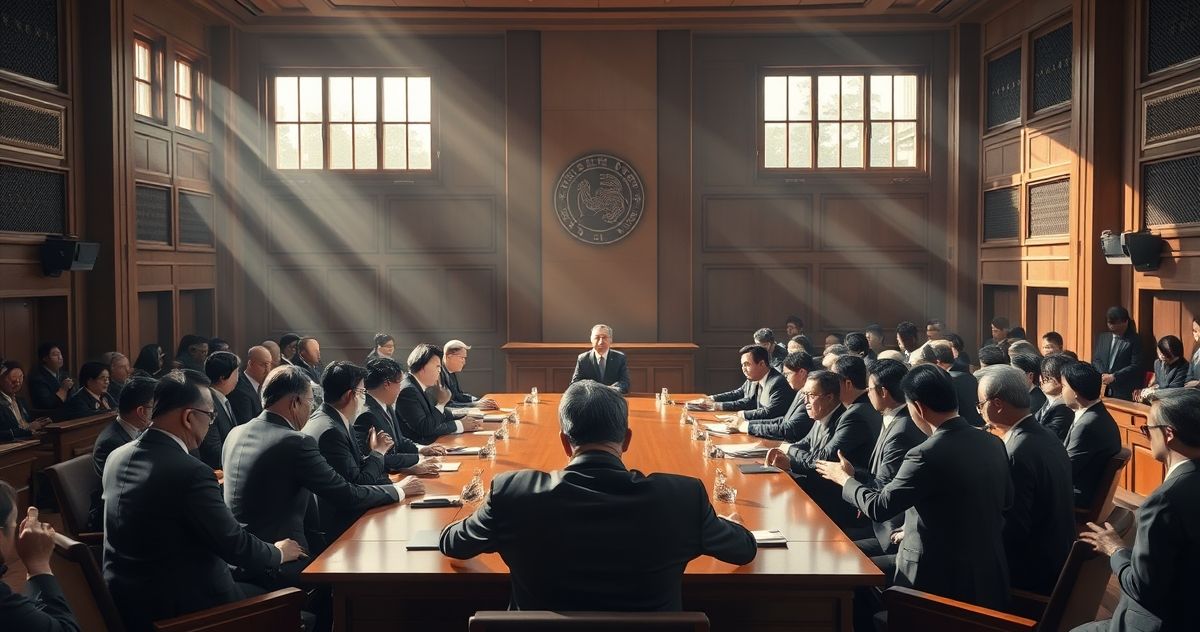
Korean Political Parties Intensify Policy Dialogue
Key Policy Agenda Items
Recent political discourse has centered around essential policy priorities including social and economic reforms, administrative efficiency improvements, and enhanced transparency in public sector operations. The discussions represent a significant effort by major parties to establish common ground on critical national issues.
Economic recovery and public welfare have emerged as primary concerns, with political leaders focusing on inflation control, job creation, and small business support. The divergent approaches between ruling and opposition parties highlight the complexity of achieving consensus on economic policy directions.
Additionally, the rapid advancement of digital innovation and AI technology has prompted discussions about establishing new legal frameworks. Data protection, platform regulation, and digital education have become central topics, with political parties recognizing the urgent need for comprehensive IT policy reforms.
Inter-Party Dynamics and Cooperation Prospects
The ruling party emphasizes policy continuity and stability, advocating for gradual reforms to ensure social development without disruption. In contrast, opposition parties call for more aggressive policy transitions and structural reforms, creating clear ideological divisions.
However, there are promising signs of bipartisan cooperation on issues directly affecting citizens' daily lives. Healthcare reform, housing stability policies, and educational inequality reduction have shown potential for cross-party agreement, suggesting that pragmatic collaboration remains possible.
Parliamentary floor leaders have been conducting regular meetings to coordinate positions on contentious issues, while policy research institutes are hosting expert forums to develop practical policy alternatives that could bridge partisan divides.
Administrative Reform and Transparency Enhancement
Improving public sector transparency and administrative efficiency has become another focal point of political discussions. Government restructuring, public enterprise management optimization, and regulatory reform are being proposed as core initiatives.
The effectiveness of parliamentary oversight mechanisms and citizen participation expansion are actively being debated. Proposals include enhanced communication channels with civil society, increased transparency in policy-making processes, and strengthened professional capabilities of public servants.
Local autonomy and decentralization policies are also receiving significant attention. The redistribution of authority between central and local governments, fiscal decentralization, and regional balanced development represent key challenges that require careful consideration from all political stakeholders.
Public Opinion and Political Challenges
Recent polls indicate that citizens expect substantial policy achievements from the political establishment. There is particularly strong demand for economic recovery and strengthened social safety nets, with voters expressing preference for collaborative problem-solving over partisan conflict.
The political community faces mounting pressure to respond to these public expectations through more constructive dialogue and compromise. Critics argue that moving away from traditional confrontational politics toward a spirit of cooperative governance is essential for meaningful progress.
Civil society organizations are increasingly vocal in demanding political change, using policy debates, public hearings, and citizen proposals to strengthen communication with political leaders and influence policy directions.
Future Outlook and Remaining Tasks
The policy dialogue preceding the next National Assembly session carries exceptional significance, as its outcomes will likely determine the direction of national governance for years to come. Political parties must demonstrate their commitment to long-term national development rather than short-term political gains.
Experts emphasize the need for strategic thinking to address rapidly changing international circumstances and social transformations. Building trust between ruling and opposition parties is identified as a prerequisite for ensuring policy implementation effectiveness and sustainability.
Whether this policy dialogue will serve as a genuine starting point for cooperative governance or become another source of political conflict depends largely on the attitude and approach adopted by political leaders. The establishment of a mature political culture that meets citizens' expectations and trust has never been more crucial.
Original article: https://trendy.storydot.kr/politics/politics-policy-dialogue-national-assembly
Comments
Post a Comment