South Korea Implements Stricter Loan Regulations: Stress DSR Stage 3 Reduces Real Estate Loan Limits by Over 100 Million Won
South Korea's real estate market faces significant changes as the Stress DSR Stage 3 policy took effect on July 1, 2025. The new regulations have dramatically tightened loan approval criteria, substantially reducing housing loan limits for prospective buyers and reshaping the real estate market landscape.
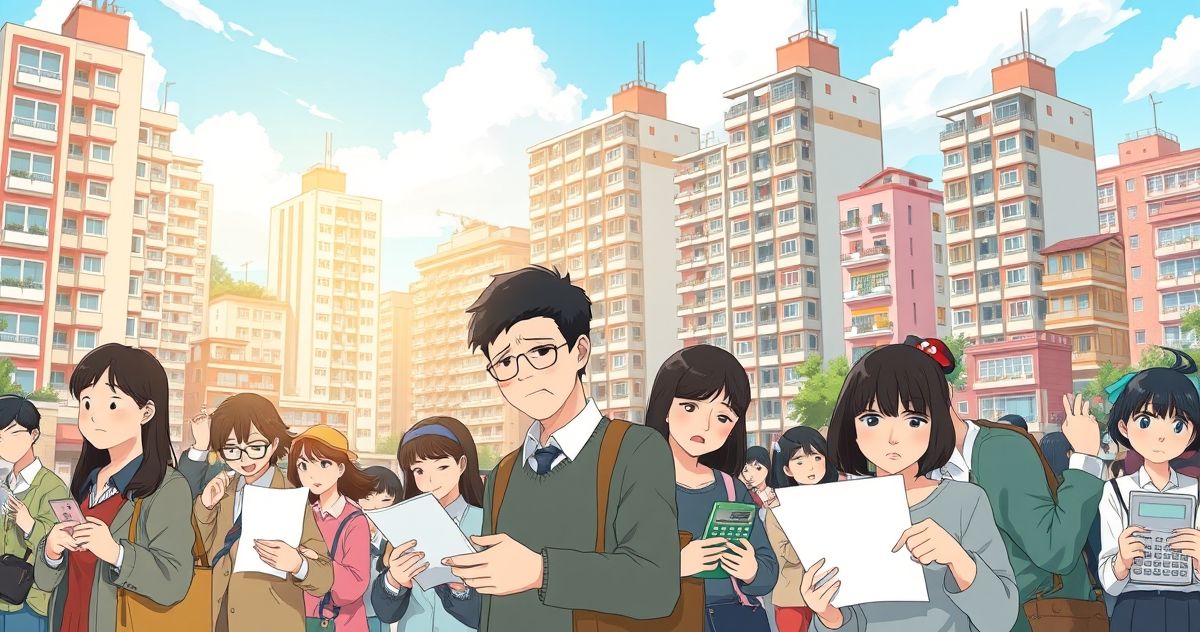
South Korea Implements Stricter Loan Regulations - Stress DSR Stage 3
Expanded Application Across All Financial Institutions
The Financial Services Commission confirmed during a household debt monitoring meeting on May 20 that Stress DSR Stage 3 would be implemented as scheduled on July 1. This stage applies a 1.5% stress interest rate to virtually all household loans across banks and non-bank financial institutions, including mortgage loans, credit loans, and other loans.
While Stage 2 applied only 50% of the 0.75% stress rate, Stage 3 implements 100% application of the 1.5% rate, making loan approvals significantly more stringent. However, regional mortgage loans outside Seoul, Gyeonggi, and Incheon will maintain the Stage 2 stress rate of 0.75% until the end of 2025.
Loan Limits Drop by Over 100 Million Won for High Earners
According to Financial Services Commission simulations, Stage 3 implementation has resulted in substantial loan limit reductions. For borrowers earning 100 million won annually applying for a 30-year variable-rate mortgage, the maximum loan amount dropped from 658 million won (pre-regulation) to 556 million won under Stage 3.
This represents a decrease of 102 million won compared to pre-regulation levels. For borrowers earning 50 million won annually, limits decreased from 329 million won to 278 million won, a reduction of 51 million won. Higher-income borrowers face proportionally larger reductions in loan limits.
Pre-Implementation Loan Demand Surge
Anticipating the stricter regulations, loan demand surged before Stage 3 implementation. April saw household loans across all financial institutions increase by 5.3 trillion won, significantly up from the previous month's 700 billion won increase. Mortgage loans alone increased by 4.8 trillion won, up from 3.7 trillion won the previous month.
A commercial bank official noted, 'Our front-line staff report many consultations from people worried about difficulty obtaining loans once DSR Stage 3 takes effect in July. While demand hasn't visibly spiked yet, there's potential for gradual increases.'
Stricter Jeonse Loan Screening
Alongside Stress DSR Stage 3, jeonse (key money deposit) loan screening has also tightened. SGI Seoul Guarantee and Korea Housing & Urban Guarantee Corporation (HUG) reduced jeonse loan guarantee ratios from 100% to 90%, aligning with Korea Housing Finance Corporation (HF)'s current 90% guarantee ratio.
Previously, banks could provide 100% guarantee ratio jeonse loans without collateral when guarantee insurance was available, but borrowers now must bear 10% of the burden.
Enhanced Fixed-Rate Loan Incentives
The government has strengthened policies to encourage pure fixed-rate loans alongside Stage 3 implementation. Stress rate application ratios for hybrid and periodic mortgage loans have been increased above current levels, emphasizing the risks of variable-rate loans.
This aims to reduce borrowers' repayment burdens from interest rate volatility and enhance financial stability. Financial institutions are expected to focus more on developing and marketing fixed-rate products.
Real Estate Market Impact
Stage 3 implementation is expected to bring several changes to the real estate market. Reduced loan limits will likely decrease demand for high-priced housing, particularly affecting expensive apartment markets in Seoul's Gangnam district and similar areas.
Conversely, relatively affordable regional real estate may benefit from stress rate relief measures. The decision to maintain Stage 2 criteria for regional areas until year-end, considering sluggish regional construction economies, is expected to help regional real estate market recovery.
Future Outlook and Response Strategies
Financial Services Commission Secretary-General Kwon Dae-young evaluated that 'implementing Stage 3 of the Stress DSR system as part of the government's consistent and firm household debt management approach has established an advanced household debt management system.'
He emphasized that 'now is the time for related ministries and financial institutions to maintain high vigilance and proactively manage household debt,' urging 'all financial institutions to strengthen household debt management.'
Real estate experts advise that those planning home purchases must develop more careful financial plans. They recommend strategies such as increasing self-capital ratios or adjusting purchase budgets to account for reduced loan limits.
The implementation of Stress DSR Stage 3 appears to mark a new turning point for Korea's real estate market. Finding the balance between the policy goal of household debt stabilization and ensuring genuine buyers' home ownership opportunities will be a key challenge ahead.
Original Korean Article: https://trendy.storydot.kr/real-estate/stress-dsr-stage3-real-estate-loan-limit-decrease-100-million-won
Comments
Post a Comment