Trump Tariff Ultimatum Creates Crisis and Opportunity
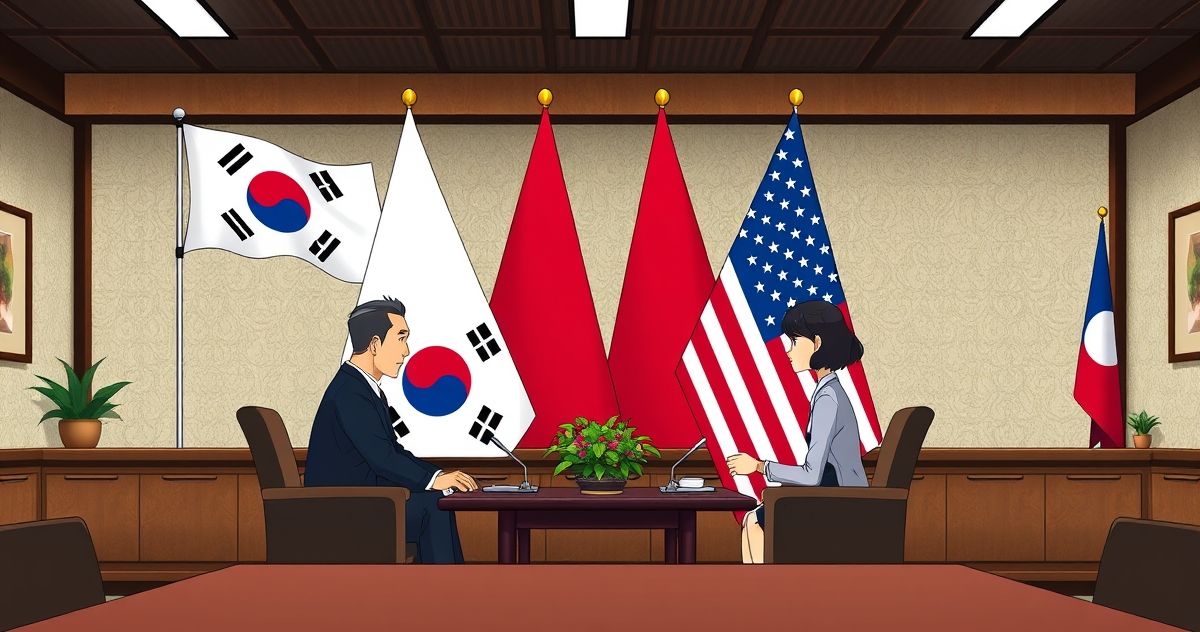
President Donald Trump sent an official letter to the Korean government in mid-July 2025 announcing a comprehensive 25% mutual tariff on all Korean imports, scheduled to take effect on August 1st. This dramatic development marks a significant escalation in U.S. trade policy under Trump's second presidential term, affecting Korea along with Japan, Vietnam, and at least 12 other countries that Trump's administration considers to have unfair trade advantages. The tariff threat, while creating immediate economic uncertainty, also opens a short but critical negotiation window that could fundamentally reshape the U.S.-Korea economic relationship for years to come.
For American readers, this tariff policy represents Trump's longstanding "America First" trade philosophy applied with renewed vigor after his 2024 electoral victory. Throughout his first presidency (2017-2021), Trump frequently criticized what he characterized as unfair trade relationships where American consumers bought foreign goods while foreign markets remained closed to American products. Korea, despite being a crucial U.S. ally and hosting over 28,000 American military personnel, has not been exempt from Trump's trade critique due to Korea's substantial trade surplus with the United States—approximately $44 billion in goods trade in 2024, meaning Korea exported $44 billion more to the U.S. than it imported.
Extended Deadline Provides Breathing Room
The tariff implementation date was extended from the original July 9th deadline to August 1st, providing Korea with approximately three weeks to negotiate a revised trade framework that might reduce or eliminate the threatened tariffs. This extension, announced via Truth Social and confirmed through official diplomatic channels, came after intensive lobbying by Korean government officials, business leaders, and even U.S. companies whose supply chains depend on Korean components. Trump stated that the 25% rate is "actually a low number considering the massive trade deficit the United States has experienced with Korea for decades," suggesting he views this tariff level as restrained relative to the perceived problem.
The extension represents a tactical concession that serves multiple purposes for the Trump administration. First, it deflects criticism that Trump was acting rashly without giving allies opportunity to respond. Second, it creates pressure on Korean negotiators to make substantial concessions quickly rather than allowing protracted negotiations that might allow domestic opposition to the tariffs to build within the United States. Third, it provides political cover by demonstrating Trump's willingness to negotiate while maintaining his tough stance on trade deficits. For Korea, the extension is simultaneously a relief and a challenge—relief that immediate economic disruption was avoided, but challenge to formulate comprehensive responses within an extremely compressed timeframe.
Korean officials privately expressed cautious optimism that the extension indicated Trump's tariff threat might be primarily a negotiating tactic rather than a final policy position. Historical precedent supports this interpretation—during Trump's first presidency, threatened tariffs on Mexico were withdrawn after Mexico agreed to stricter immigration enforcement, and tariffs on various countries were reduced following bilateral negotiations. However, Korea cannot assume the same outcome, as Trump has proven willing to implement tariffs when he judges negotiations unsatisfactory, as occurred with China during the extensive 2018-2020 trade war that severely disrupted global supply chains and contributed to inflation worldwide.
Korean Government Response Strategy
The Korean presidential office, led by President Lee Jae-myung's administration, assessed that they had avoided the worst-case scenario in tariff negotiations by securing the deadline extension and establishing that negotiations remained possible. Policy Chief Kim Yong-beom, speaking to reporters at the Blue House, emphasized that while prompt consultation with the United States is important, protecting national interests remains the higher priority and Korea will not accept agreements that fundamentally undermine Korean economic sovereignty or disadvantage key industries.
Korea's negotiation strategy appears to involve multiple elements designed to address U.S. concerns while minimizing damage to Korean interests. First, Korea has proposed expanding purchases of American goods, particularly in sectors like energy (liquefied natural gas), defense equipment (fighter jets, missile systems), and agricultural products (beef, pork, grains). These purchases would directly reduce the bilateral trade deficit that Trump emphasizes while creating jobs in American exporting sectors—a politically valuable outcome for Trump as he positions himself for the 2026 midterm elections and looks ahead to the 2028 presidential race.
Second, Korea has highlighted existing and planned investments by Korean companies in American manufacturing facilities. Samsung Electronics recently announced plans to invest $17 billion in a new semiconductor fabrication plant in Texas, creating approximately 3,000 direct jobs and thousands more indirect positions in construction and supporting industries. Hyundai Motor Group is expanding its Georgia manufacturing complex with $7.4 billion in electric vehicle production investments. LG Energy Solution is building multiple battery factories across the United States to serve the growing electric vehicle market. Korean negotiators emphasize that these investments represent Korea's commitment to American economic prosperity and should be considered when evaluating the bilateral economic relationship.
Third, Korea has argued that the trade deficit statistics Trump cites are misleading because they don't account for services trade (where the U.S. maintains a surplus with Korea) or the value-added economics of global supply chains. For example, Korean semiconductor exports to the United States often use American-designed chip architectures, American manufacturing equipment, and American software—meaning substantial value in "Korean" exports actually accrues to American companies. However, this technical economic argument faces political realities: Trump's base responds to simple messages about trade deficits and manufacturing job losses, making nuanced economic explanations less politically relevant than headline trade numbers.
Economic Impact Assessment and Industry Vulnerability
The Korean government is conducting detailed analysis of how these 25% tariffs would affect major export sectors, with particular focus on semiconductors, automobiles, petrochemicals, steel, and consumer electronics—categories that collectively represent over 70% of Korean goods exports to the United States. The impact would be severe and multifaceted, affecting not only Korean companies' profitability but potentially disrupting American industries that depend on Korean components as well.
Samsung Electronics and SK Hynix, which together control approximately 45% of the global memory chip market, face potentially existential challenges if 25% tariffs are fully implemented. Memory chips represent Korea's single largest export category to the United States, with annual shipments exceeding $15 billion. A 25% tariff would make Korean chips substantially more expensive than competing products from Taiwan, Japan, or China (though China faces its own tariff complications due to ongoing U.S.-China trade tensions). American technology companies including Apple, Dell, HP, and major data center operators depend heavily on Korean memory chips for their products—meaning the tariff would ultimately be paid by American consumers through higher device prices or by American companies through reduced profit margins.
The automotive sector faces similarly severe disruption. Hyundai and Kia, which have rapidly gained U.S. market share over the past decade through competitive pricing and improved quality, would struggle to maintain their market position with a 25% price increase. While both companies manufacture vehicles in the United States (Hyundai in Alabama and Georgia, Kia in Georgia), they also import vehicles from Korean facilities to fill product lineup gaps and meet demand fluctuations. The tariff would particularly impact electric vehicle imports, where Korean manufacturers have technological advantages but haven't yet built sufficient U.S. manufacturing capacity. This could ironically undermine U.S. climate goals by making affordable electric vehicles less accessible to American consumers.
Korean petrochemical exports, including plastics, synthetic rubbers, and chemical intermediates used in American manufacturing, would also face substantial impact. These materials flow into countless American industrial processes, meaning tariffs would ripple through U.S. manufacturing supply chains, potentially increasing costs for American producers and reducing their global competitiveness. The integrated nature of modern supply chains means that protecting American jobs through tariffs in one sector can inadvertently cost American jobs in downstream industries—a complexity that tariff advocates often minimize but that economists and business leaders emphasize.
Market Reactions and Investor Sentiment
U.S. stock markets showed mixed and volatile reactions to the tariff extension news, with initial relief that immediate implementation was avoided giving way to anxiety about long-term trade policy uncertainty. The S&P 500 and NASDAQ indices, which include many technology companies dependent on Korean semiconductors, experienced particular volatility as investors struggled to assess probability-weighted outcomes for various negotiation scenarios. Selling pressure temporarily eased following Trump's comments suggesting flexibility on the August 1st deadline, but underlying volatility remains elevated as markets price in substantial tail risk of trade war escalation.
Korean stock markets experienced even more dramatic reactions, with the KOSPI index declining sharply on initial tariff news before partially recovering on the deadline extension announcement. Samsung Electronics stock fell 7% at one point before recovering to a 3% decline, while Hyundai Motor shares dropped 9% before stabilizing at a 5% loss. These movements reflect investor concerns about earnings impacts and the broader uncertainty that trade policy unpredictability creates for long-term business planning and investment decisions. Currency markets also reacted, with the Korean won weakening substantially against the U.S. dollar—a movement that paradoxically helps Korean exporters by making their products cheaper in dollar terms, partially offsetting some tariff effects but creating other economic complications through imported inflation.
Market analysts suggest the tariff measure may ultimately prove less severe than initially feared, noting Trump's pattern of threatening maximum pressure while settling for negotiated compromises. Goldman Sachs economists estimated a 60% probability that U.S.-Korea negotiations would result in tariff reductions or exemptions in exchange for Korean policy adjustments, versus a 40% probability of tariff implementation at levels approaching the threatened 25%. However, even reduced tariffs or targeted sectoral tariffs would create substantial costs and business uncertainty. The mere threat of tariffs forces companies to develop alternative supply chain strategies, incurring costs even if tariffs are never implemented—a reality that gives Trump's negotiation strategy its economic leverage.
Geopolitical Context and Alliance Implications
The tariff threat against Korea occurs within a broader geopolitical context that complicates both countries' calculations. Korea faces direct security threats from North Korea, which possesses nuclear weapons and sophisticated missile capabilities that could strike South Korean and Japanese cities within minutes. The U.S.-Korea alliance, formalized through a mutual defense treaty and symbolized by the American troop presence, represents Korea's ultimate security guarantee against this existential threat. This security dependence creates asymmetric leverage in economic negotiations—Korea cannot risk fundamentally damaging its relationship with the United States over trade disputes, even when Korea believes American demands are unreasonable or economically damaging.
However, this leverage cuts both ways. The United States values its Korean alliance for multiple strategic reasons beyond Korea itself. The Korean Peninsula represents a critical geographic position in great power competition with China, providing forward military bases and demonstrating American commitment to defending treaty allies. Undermining this alliance through purely transactional trade demands would send concerning signals to other American allies including Japan, Australia, and NATO members about the reliability of American security commitments. Additionally, American military operations in Korea and Japan depend on sophisticated supply chains that include Korean manufacturers—meaning economic disruption in Korea could create logistical complications for American military readiness in the region.
The China factor further complicates U.S.-Korea trade dynamics. American policymakers increasingly view economic policy through the lens of strategic competition with China, seeking to reduce American and allied dependence on Chinese manufacturing and technology. Korea represents a crucial alternative supplier for critical technologies including semiconductors, batteries, and displays where China either competes directly or seeks market dominance. Imposing tariffs on Korean technology products while simultaneously trying to reduce Chinese technology dependence creates policy contradictions that Korean negotiators can potentially exploit by positioning Korean companies as essential partners in American technological and economic security strategy.
Negotiation Pathways and Possible Outcomes
Korea now faces a critical three-week period to negotiate the best possible outcome with the United States, though the compressed timeline creates asymmetric pressure favoring American demands. Several potential pathways exist, each with different probabilities and implications:
Full Tariff Implementation (Probability: 15-20%): If negotiations fail or Korea refuses concessions Trump demands, the full 25% tariff could be implemented as threatened. This outcome would severely damage Korea's economy in the short term but might prove unsustainable in the medium term due to supply chain disruptions affecting American companies and consumers. Historical precedent from U.S.-China trade war suggests that even implemented tariffs can be partially rolled back through subsequent negotiations, though not without substantial economic costs incurred during the interim period.
Sectoral Tariffs (Probability: 25-30%): A compromise might involve targeted tariffs on specific sectors where Trump's administration believes Korea has particular trade advantages, while exempting sectors where American companies depend heavily on Korean inputs. This approach would allow Trump to claim victory on addressing trade imbalances while minimizing disruption to American supply chains. Automobiles and certain steel products might face tariffs, while semiconductors and specialized chemicals receive exemptions. This outcome would require Korea to accept some economic pain while preserving its most critical export sectors.
Quota and Purchase Agreements (Probability: 35-40%): Korea might avoid or substantially reduce tariffs by committing to specific purchase volumes of American goods and establishing import quotas that limit Korean exports in sensitive categories. This approach mirrors agreements Trump negotiated during his first presidency with various countries. Korea would commit to purchasing specific dollar amounts of American energy, defense equipment, and agricultural products annually, while voluntarily limiting exports in categories like automobiles or steel. This allows both sides to claim success—Trump demonstrates action on trade deficits, while Korea maintains market access for its most critical exports.
Investment-Based Deal (Probability: 20-25%): The most mutually beneficial outcome would emphasize Korean investment in American manufacturing capacity rather than trade flow restrictions. Korea would commit to substantial additional investments in American factories, research facilities, and job creation, while receiving tariff exemptions in exchange. This approach aligns with economic logic by creating American jobs and technological capability while maintaining efficient global supply chains. However, such deals require longer implementation timelines than simple tariff or quota agreements, potentially creating political vulnerability for Trump if critics argue he settled for promises rather than immediate action.
Long-Term Implications for Global Trade Architecture
Beyond the immediate U.S.-Korea bilateral relationship, this tariff episode reflects and contributes to the broader erosion of the post-World War II multilateral trading system built around institutions like the World Trade Organization. Trump's approach treats trade policy as a series of bilateral power relationships rather than a rules-based system where disputes are resolved through neutral arbitration. This paradigm shift has profound implications for global economic governance and particularly affects middle-power countries like Korea that benefited from rules-based systems that constrained raw power politics.
If tariff threats and bilateral negotiations become the dominant mode of international trade policy, countries will need to develop new strategies emphasizing geopolitical leverage, domestic market size, and essential supply chain positions rather than simply competitive excellence. Korea, despite its economic sophistication and technological capabilities, is geographically small and politically constrained by security dependence on the United States—creating structural vulnerabilities in a might-makes-right trade environment. This may accelerate Korean efforts to diversify trade relationships, strengthen regional economic integration through frameworks like RCEP (Regional Comprehensive Economic Partnership), and develop technological capabilities that make Korea indispensable to global supply chains across multiple critical sectors.
The three-week negotiation window will likely produce some agreement that avoids worst-case tariff implementation while requiring Korean concessions that Trump can present as a trade policy victory. However, the underlying tensions—American concerns about trade deficits and manufacturing job losses versus Korean need to maintain export-driven growth—will persist regardless of any short-term deal. Future U.S. administrations may take different approaches to these tensions, but the Trump tariff episode will likely accelerate Korean strategic thinking about reducing economic dependence on any single market, however important that market currently appears. The final outcome of these negotiations will shape not just bilateral trade flows, but the broader structure of economic and security relationships across the Pacific for years to come.
Original: https://trendy.storydot.kr/politics/trump-korea-25-percent-tariff-negotiation
Comments
Post a Comment