
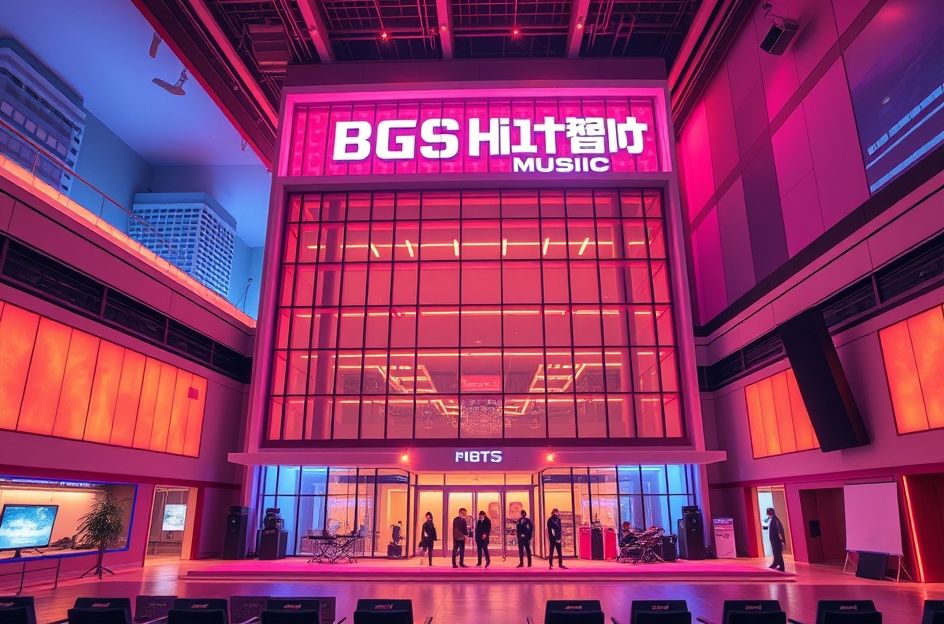
Big Hit Music, the powerhouse behind global superstars BTS, is preparing to debut its first new boy group in six years, sending ripples of excitement through the international K-pop community. The upcoming showcase scheduled for September 8th will introduce the new group's album 'Color Outside,' marking a significant milestone for the company that has become synonymous with K-pop's worldwide success.
For American readers unfamiliar with Big Hit Music's significance, think of it as the Korean equivalent of a major American label like Columbia Records, but with a laser focus on the unique K-pop genre that has taken the world by storm. The company, now part of the larger HYBE Corporation (valued at approximately $8 billion), transformed from a small Seoul-based agency into a global entertainment powerhouse primarily through BTS's unprecedented success.
This debut represents more than just another K-pop group entering the scene. Industry experts are viewing it as a potential turning point for the Korean entertainment industry, which has grown into a $12.3 billion market—comparable to the entire Broadway industry's annual revenue. The new group will be the first boy group launched by Big Hit Music since BTS debuted in 2013, carrying enormous expectations and the weight of following in the footsteps of artists who have achieved what no other Korean act has managed: sustained mainstream success in the United States.
Big Hit Music's headquarters, representing the epicenter of Korea's global K-pop industry
K-pop's Expanding Global Footprint
The timing of this debut coincides with continued evidence of K-pop's global dominance. BLACKPINK's Rosé recently won Song of the Year at the 2025 MTV VMAs for her viral hit "APT," demonstrating the "APT syndrome" that has captivated audiences worldwide. This victory is particularly significant for American audiences to understand—it represents Korean artists not just breaking into Western markets, but actually dominating them on equal footing with American pop stars.
To put this achievement in context, imagine if a French pop group consistently topped American charts and won major American music awards—that's essentially what Korean artists are accomplishing in reverse. The cultural and linguistic barriers that would typically prevent such crossover success have been shattered by K-pop's unique combination of high-production values, synchronized choreography, and strategic social media engagement.
Perhaps even more impressive is the performance of the Netflix animated movie "K-pop Demon Hunters" soundtrack, which has maintained simultaneous positions on the Billboard Hot 100 for five consecutive weeks. This eight-track collection showcases K-pop's versatility and global appeal, proving that Korean music can successfully integrate with various media platforms—a strategy that American entertainment companies are now studying and attempting to replicate.
For American readers, this multimedia approach represents a significant shift from traditional American music marketing. While American artists typically focus on album releases followed by touring, K-pop acts integrate their music with dramatic storylines, intricate visual content, and cross-platform narratives that create immersive experiences for fans. This approach has proven so successful that American labels are increasingly adopting similar strategies.
Industry Trends and Cultural Context
Beyond music, the Korean entertainment industry is experiencing significant personal and professional developments. Kim Jong-kook, a variety show personality comparable to someone like Ryan Seacrest in American media, recently announced his marriage to a non-celebrity on September 5th in Seoul. This news has generated substantial buzz within Korean entertainment circles, particularly because Jong-kook has been a prominent bachelor figure in Korean media for years, similar to how a long-time bachelor American TV host getting married would create headlines.
The Korean television landscape is also evolving significantly. tvN, one of Korea's premium cable networks (think HBO or Showtime), has announced its major 2025 drama lineup following successful series like "Queen of Tears" and "Lovely Runner." The network's programming strategy for 2025 focuses on "true happiness," "cheerful humanism," and "vicarious romance"—themes that reflect Korean audiences' preference for healing and comfort content, a trend that emerged strongly during and after the pandemic.
This shift toward "healing content" represents a broader cultural movement in Korea that American audiences might recognize as similar to the increased popularity of feel-good shows like "Ted Lasso" or "The Great British Baking Show." However, in Korea, this preference has become so pronounced that it's driving major programming decisions across multiple networks.
The webtoon-to-drama adaptation trend continues to gain momentum, with popular webtoon "The One Who Loses Becomes First Lady" being adapted for television. For American readers, webtoons are Korean digital comics that have become a massive industry—imagine if every major American TV show started as a successful webcomic series. This vertical integration of content creation represents a uniquely Korean approach that American media companies are beginning to study and implement.
This trend demonstrates the Korean content industry's sophisticated approach to intellectual property development. Unlike the American system where books, comics, and films often develop independently, Korea has created an integrated ecosystem where successful webtoons naturally evolve into dramas, which can then spawn additional merchandise, games, and even K-pop soundtrack opportunities.
The implications for American audiences extend beyond entertainment consumption. Korean content companies are increasingly targeting American markets, with Netflix investing billions in Korean content specifically for global audiences. This means American viewers are becoming part of a global entertainment ecosystem where content is created with international audiences in mind from the outset, rather than being adapted for international markets after domestic success.
Looking at the broader picture, September 2025 represents a convergence of three major trends in Korean entertainment: the debut of new artists with global ambitions, established stars achieving unprecedented international recognition, and content industry expansion into multiple platforms and formats. Big Hit Music's new boy group debut sits at the intersection of these trends, potentially serving as a catalyst for the next phase of Korean entertainment's global expansion.
As the Korean entertainment industry continues to innovate and expand globally, American audiences are witnessing the emergence of a truly international entertainment ecosystem. The success of this new Big Hit Music boy group will likely serve as a barometer for how Korean entertainment continues to evolve and compete in the global marketplace over the next several years.
Read the original Korean article: Big Hit Music, 6년 만의 신인 보이그룹 데뷔 임박... K-pop 글로벌 영향력 재확인


0 Comments