
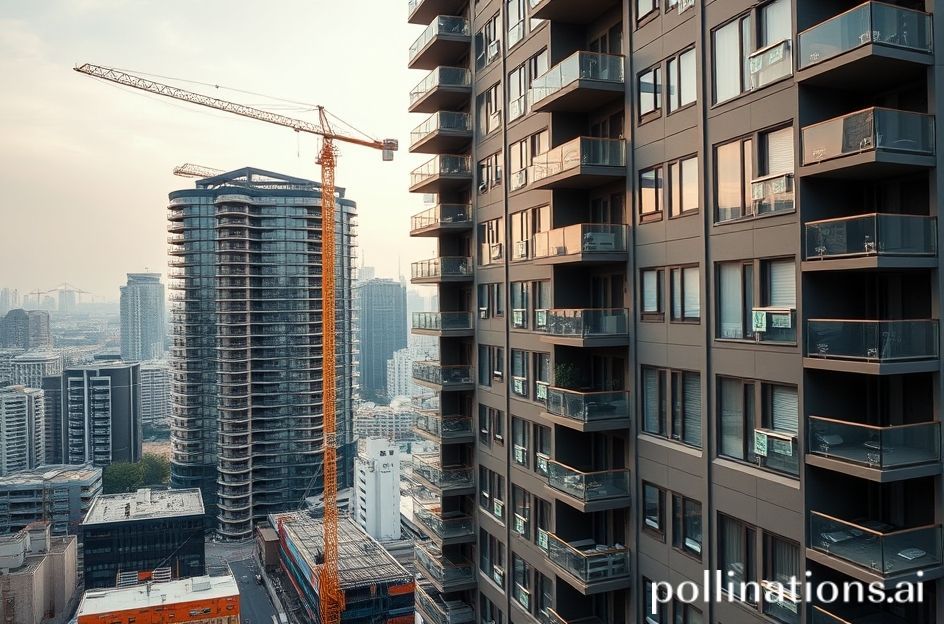
As South Korea's capital grapples with skyrocketing housing prices that rival those of Manhattan or San Francisco, Seoul's real estate market is undergoing a dramatic transformation in September 2025. New lending restrictions, including the implementation of Phase 3 stress DSR (Debt Service Ratio) regulations and a 600 million won ($450,000) loan cap, are fundamentally reshaping how Koreans buy homes in one of the world's most expensive housing markets.
For American readers, imagine if the Federal Reserve suddenly imposed a nationwide mortgage cap of $450,000 while simultaneously requiring lenders to calculate borrower capacity using interest rates 1.5 percentage points higher than actual rates. This is precisely what Seoul's housing market is experiencing, with profound implications for both buyers and the broader economy.
Understanding Korea's DSR System and Its American Parallels
The DSR (Debt Service Ratio) system functions similarly to America's debt-to-income ratio calculations but with more stringent government oversight. Unlike the U.S. where private lenders largely determine lending standards, Korea's government directly regulates maximum loan amounts through centralized DSR controls. The new Phase 3 stress DSR applies a 1.5% markup to actual interest rates when calculating borrowing capacity – imagine if American lenders had to qualify borrowers at 7% rates even when actual mortgage rates are 5.5%.
This regulatory tightening has slashed lending capacity dramatically. A borrower earning 100 million won annually ($75,000 – comparable to median household income in many American metropolitan areas) can now borrow only 556 million won ($417,000) compared to the previous limit of 658 million won ($494,000). That's a $77,000 reduction in borrowing power, equivalent to losing access to a modest three-bedroom home in many American suburbs.
The geographic scope of these restrictions mirrors how American housing regulations often target high-cost areas like the San Francisco Bay Area or Manhattan. Seoul's Gangnam district, Seocho, Songpa, and Yongsan – areas comparable to Beverly Hills or the Upper West Side in terms of prestige and prices – face the most severe lending restrictions.
Generational Divide in Housing Access
The lending restrictions have created a stark generational divide reminiscent of what American millennials experienced after the 2008 financial crisis. Young Korean adults in their 20s and 30s, who previously drove much of Seoul's housing market activity, have largely retreated to the sidelines. Meanwhile, buyers in their 50s and 60s – who possess greater cash reserves and are less dependent on financing – now account for 27.2% of Seoul apartment purchases as of July 2025.
This demographic shift reflects a broader trend seen in expensive American markets where cash buyers increasingly dominate. Just as Silicon Valley's housing market often favors older, established professionals with substantial equity from previous home sales, Seoul's market is tilting toward those with accumulated wealth rather than high current income.
The phenomenon of "ttol-ttol-han han-chae" – literally meaning "one smart home" – has gained traction among Korean buyers. This concept, similar to the American notion of "trading up" to a forever home, reflects how middle-aged Koreans are consolidating their real estate investments into single, high-quality properties in premium locations.
Jeonse System Crisis: A Unique Korean Challenge
Perhaps most challenging for American readers to understand is Korea's unique jeonse rental system, which has no direct parallel in the United States. In jeonse arrangements, tenants provide landlords with large deposits (often 60-80% of the property's value) in lieu of monthly rent, with the deposit returned at lease end. Think of it as if American renters had to deposit $400,000 to rent a $500,000 home, receiving no interest but paying no monthly rent.
The current crisis stems from a 11.2% decline in available jeonse properties, dropping from 27,461 units in July 2024 to 24,389 units in July 2025. As purchasing becomes more difficult due to lending restrictions, demand for jeonse has intensified, creating a squeeze that affects Korea's entire housing ecosystem. This would be equivalent to New York City suddenly losing 10% of its rental inventory while demand remained constant.
The jeonse shortage creates unique pressures absent in American markets. Unlike the U.S. where rental and purchase markets operate relatively independently, Korea's markets are deeply interconnected. Rising jeonse deposits often signal future purchase price increases, creating feedback loops that can rapidly accelerate housing inflation.
Regional Disparities and Market Polarization
The regulatory impact varies significantly by region, similar to how American housing policies often create different outcomes between states. While Seoul and the greater metropolitan area face the full 1.5% stress rate, provincial areas receive a reduced 0.75% markup until December 2025. This creates a two-tier system where a 4% actual interest rate translates to 5.5% for Seoul buyers but only 4.75% for those in smaller cities.
This geographic disparity mirrors American regional housing dynamics, where federal policies often have vastly different impacts in expensive coastal markets versus more affordable inland areas. Korean policymakers are essentially creating incentives for population dispersion, similar to how some American cities use zoning and tax policies to encourage suburban development.
Market Outlook and Economic Implications
Industry analysts predict Seoul's housing market will follow a "low first half, high second half" pattern through 2025, with current political uncertainties and economic slowdown concerns suppressing activity before potential rebounds driven by interest rate cuts and reduced housing supply. This cyclical pattern resembles American housing markets during election years, when policy uncertainty often creates temporary demand postponement.
The supply shortage adds another layer of complexity. National housing completions are expected to drop 40% compared to 2024, creating supply-demand imbalances that could persist regardless of regulatory changes. This supply constraint echoes challenges faced in American markets like California, where lengthy approval processes and construction bottlenecks limit new housing despite strong demand.
For global investors and policy observers, Seoul's experience offers insights into how aggressive lending restrictions interact with supply-constrained housing markets. Unlike American markets where regional mobility provides some pressure relief, Korea's concentrated economic activity in the Seoul metropolitan area creates unique vulnerabilities to policy-induced market disruptions.
Lessons for Global Housing Policy
Korea's current housing experiment provides valuable lessons for other nations grappling with housing affordability. The country's experience demonstrates how financial regulations, while effective at reducing speculative demand, can create unintended consequences including market segmentation and rental market disruptions.
As American cities like San Francisco, Seattle, and Boston continue debating housing policies, Seoul's experience highlights the complex interactions between lending regulations, demographic trends, and unique local housing institutions. The ultimate success or failure of Korea's approach will likely influence housing policy discussions globally, making Seoul's market developments relevant far beyond Korea's borders.
The coming months will reveal whether Korea's regulatory approach can achieve its goal of housing market stabilization without creating lasting disruptions to homeownership accessibility and rental market functionality.
Original Article (Korean): 서울 아파트 시장의 새로운 국면, DSR 3단계 규제와 전세난 심화


0 Comments