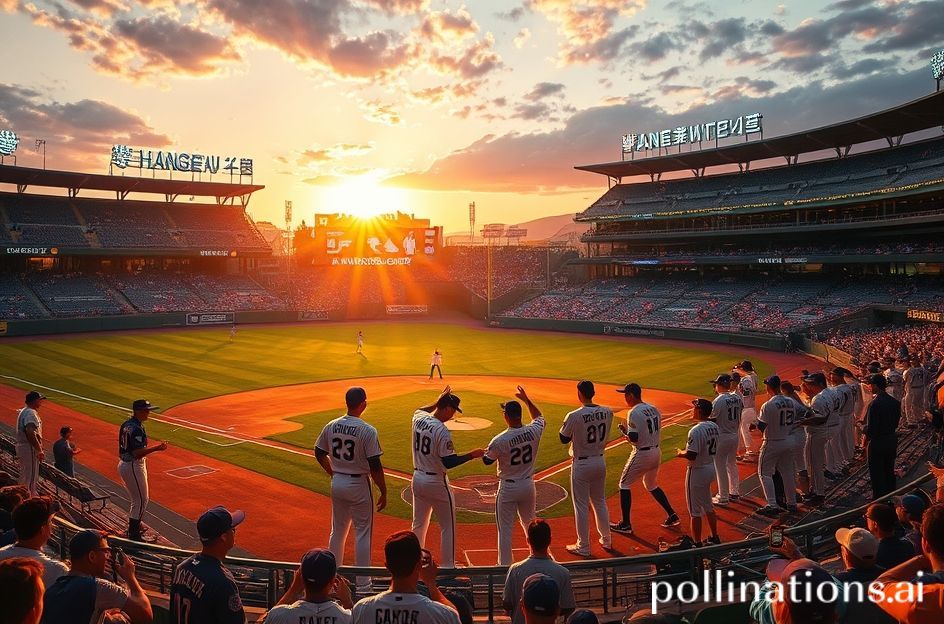
Hanwha Eagles celebrate their historic playoff berth after seven years
On September 19, 2025, the Hanwha Eagles made headlines across South Korea by securing their first playoff berth in seven years, marking a dramatic turnaround for one of the Korea Baseball Organization (KBO) League's most beloved underdogs. For American readers unfamiliar with Korean baseball, imagine if the Pittsburgh Pirates suddenly broke their playoff drought and earned a direct ticket to the Division Series – that's the magnitude of excitement surrounding Hanwha's achievement.
The Eagles' qualification for the semi-playoffs represents more than just a statistical milestone; it's a cultural phenomenon in South Korea. Korean baseball operates differently from Major League Baseball, with a 10-team league where only the top five teams advance to postseason play. The KBO playoff system resembles a combination of MLB's wild card format and Japanese baseball's climax series, creating intense competition for playoff spots that captivates the nation each fall.
What makes Hanwha's success particularly remarkable is the team's historic struggles. Since their last playoff appearance in 2018, the Eagles have been the Chicago Cubs of Korean baseball – a franchise with passionate fans who endured season after season of disappointment. The seven-year drought felt even longer in Korean baseball culture, where loyalty to struggling teams is considered a virtue, and fans often display unwavering support through elaborate cheering choreography unique to KBO stadiums.
Breaking Records While Breaking Playoff Droughts
The Eagles didn't just sneak into the playoffs; they dominated their way in. During their playoff-clinching campaign, Hanwha shattered the KBO single-season strikeout record, surpassing the 1,199 strikeouts set by the Lotte Giants in 2022. Their pitching staff recorded an impressive 1,208 strikeouts, a feat that would translate to approximately 1,940 strikeouts over a 162-game MLB season – a number that would challenge even the most dominant pitching staffs in American baseball.
For American readers, understanding Korean baseball's pitching philosophy helps contextualize this achievement. Unlike MLB, where power pitching often emphasizes velocity, KBO pitchers focus heavily on command, movement, and strategic pitch sequencing. The league plays 144 regular season games compared to MLB's 162, making Hanwha's strikeout record even more impressive when adjusted for pace. Their pitching staff's evolution mirrors the development seen in teams like the Tampa Bay Rays, who transformed from perennial losers to consistent contenders through innovative pitching strategies.
The Eagles' turnaround stems from a complete organizational overhaul that began three years ago. Following the model of successful American rebuilds, Hanwha invested heavily in player development, analytics, and coaching infrastructure. Their approach resembled the Houston Astros' transformation, combining traditional scouting with advanced metrics to identify undervalued talent and optimize player performance.
Cultural Impact Beyond Baseball Statistics
In Korean sports culture, baseball holds a position similar to football in Texas or basketball in Indiana – it's deeply woven into the social fabric. Hanwha's home city of Daejeon, with a population of 1.5 million (roughly the size of Phoenix, Arizona), has rallied around the team's success with celebration events reminiscent of championship parades. The team's Hanwha Life Eagles Park became a pilgrimage site for fans who traveled hundreds of miles to witness history in the making.
The significance extends beyond local pride. In Korean corporate culture, where Hanwha Group is a major conglomerate similar to Samsung or LG, the baseball team's success reflects on the parent company's brand image. For American readers, imagine if Amazon or Apple owned a baseball team – the corporate stakes involved in sporting success carry immense business implications in Korea's interconnected economy.
Korean baseball's unique fan culture also amplifies the Eagles' achievement. Unlike American ballparks where individual cheering dominates, KBO stadiums feature organized supporter sections with synchronized chants, choreographed movements, and team-specific songs. Hanwha's playoff clinching triggered elaborate celebration rituals that lasted well past midnight, with fans creating impromptu street festivals outside the stadium.
The timing of Hanwha's success coincides with increased international attention on Korean baseball. Following the success of Korean players in MLB – including stars like Shohei Ohtani's teammate Jung Hoo Lee and Padres shortstop Ha-seong Kim – American scouts and analysts are paying closer attention to KBO League talent. Hanwha's playoff run could serve as a showcase for several players with MLB aspirations, particularly their record-setting pitchers.
Ryu Ji-hyun, Korea's national baseball team manager, has been closely monitoring Hanwha's performance as he evaluates players for international competition. His attention mirrors how Team USA managers scout successful college programs, seeking players who perform under pressure and contribute to winning cultures. Several Eagles players are now considered prime candidates for Korea's national team, adding individual stakes to their playoff performance.
As the KBO regular season concludes in early October, Hanwha Eagles face the ultimate test of their seven-year rebuild. Their direct advancement to the semi-playoffs gives them a significant advantage, similar to earning a first-round bye in NFL playoffs. For a franchise that hasn't tasted postseason success since 2018, every game now carries the weight of redemption and the promise of October magic that American baseball fans know all too well.
The Eagles' story resonates beyond Korea's borders because it embodies universal sporting themes: perseverance through adversity, organizational rebuilding, and the joy of unexpected success. As Korean baseball continues gaining international recognition, Hanwha's playoff journey offers American fans a window into a baseball culture that combines familiar competitive elements with uniquely Korean traditions of loyalty, celebration, and collective achievement.
Source: Original Korean article
Comments
Post a Comment