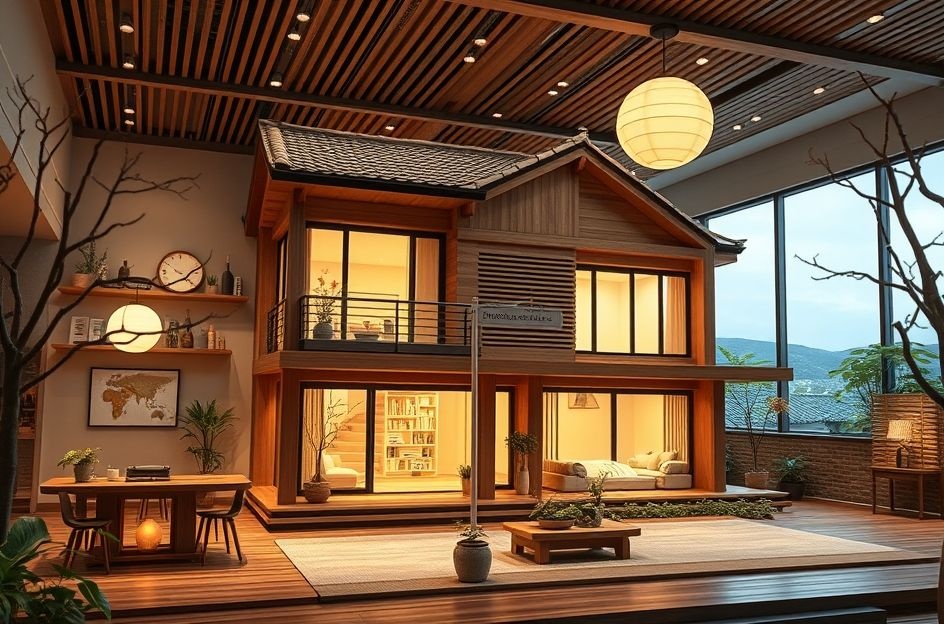
HDC Hyundai Development Opens 'Hoyeon Central I'Park' Model House in Dongtan2 New City: Prime GTX-A Location Triggers Pre-Sale Frenzy Despite Elevated Pricing
HDC Hyundai Development Company opened the model house for "HDC Hoyeon Central I'Park" on September 27, 2025, in Dongtan2 New City, Hwaseong, Gyeonggi Province—a 1,248-unit residential complex positioned as the premium beneficiary of South Korea's revolutionary GTX-A high-speed rail system that has fundamentally transformed Seoul's commuter geography by connecting previously distant suburban areas to Gangnam's business district in under 25 minutes, creating unprecedented demand for properties within walking distance of GTX stations where commute times that previously exceeded 90 minutes via conventional subway and bus networks have been compressed to 20-minute express journeys, driving property values in station-adjacent developments upward by 30-50% since the GTX-A line's operational launch in March 2024 despite broader real estate market cooling trends affecting Seoul's traditional residential neighborhoods.
For American readers, the GTX (Great Train eXpress) system represents Korea's equivalent to regional rail express services like New York's Metro-North or San Francisco's BART system, but with significantly higher maximum speeds (180 km/h vs. 80-110 km/h for most American commuter rail) and station spacing designed specifically to create super-commuter corridors connecting distant suburbs to central business districts—infrastructure investment patterns that mirror the transit-oriented development strategies employed in cities like Washington D.C. (Metro Silver Line to Dulles) or Los Angeles (Purple Line extension) where new rail connections trigger immediate property value appreciation and residential development concentration around station areas, though Korean implementation achieves greater speed and frequency advantages through dedicated express track infrastructure and aggressive station-area development coordination between national transportation planners and local municipal governments.
GTX-A System Impact on Greater Seoul Real Estate Dynamics
The GTX-A line, which became operational in March 2024 after nearly two decades of planning and construction, has revolutionized metropolitan Seoul's transportation infrastructure by creating high-speed rail connections that bypass the congested conventional subway network's multiple local stops, reducing travel times from outlying cities like Dongtan (located 40 kilometers south of Seoul's city center) to core business districts in Gangnam and Samsung-dong from 90-120 minutes via conventional transit routes requiring multiple transfers to 19-25 minutes on direct GTX express services, fundamentally altering residential location decisions for Seoul's office worker population who previously faced stark trade-offs between housing affordability in distant suburbs and grueling 3-4 hour daily commute times that left limited time for family life or personal activities outside working hours.
Hoyeon Central I'Park's positioning just 5 minutes walking distance from GTX-A Dongtan Station represents the ideal beneficiary profile for this transportation revolution, offering residents the ability to maintain professional careers in Seoul's Gangnam financial district (where average annual salaries exceed ₩60 million / $45,000 USD, approximately 40% higher than national averages) while residing in more spacious and affordable housing in Hwaseong's planned new towns where 84㎡ (903 square feet) three-bedroom apartments cost ₩1.5-1.8 billion ($1.1-1.35 million), roughly 40-50% less expensive than equivalent properties in Gangnam's residential neighborhoods where similar-sized units exceed ₩3 billion ($2.25 million) and frequently sell within days of listing due to constrained supply in Seoul's mature urban core where new residential construction faces severe land availability limitations and regulatory restrictions on high-density development in established neighborhoods.
An HDC Hyundai Development official stated: "GTX-A's opening fundamentally transformed Dongtan's positional value from a distant commuter suburb to a Seoul-adjacent residential destination. Particularly, ultra-proximity to Dongtan Station within 5-minute walking distance represents unparalleled competitiveness in the current market where station access time directly correlates with property values—apartments within 5-minute walking radius command 15-20% premiums over properties requiring 10-15 minute walks or bus connections to reach GTX stations." This location premium reflects buyer recognition that consistent daily commutes of 20-23 minutes versus 30-35 minutes (for properties requiring feeder bus connections to reach stations) accumulate to 40-60 hours annually of recovered time that can be allocated to family activities, exercise, or professional development rather than sitting in traffic or waiting for connecting bus services during Seoul's notorious rush hour congestion periods.
Complex Features and Unit Mix Strategy
HDC Hoyeon Central I'Park offers diverse unit configurations ranging from 59㎡ to 114㎡ (approximately 635-1,225 square feet), with 84㎡ three-bedroom units constituting the plurality at 520 units out of the total 1,248-unit inventory—unit sizing strategy that directly targets South Korea's dominant household demographic of married couples with 1-2 children who require three bedrooms (parents' bedroom, children's shared or separate bedrooms depending on gender composition, and flexible room for elderly parent housing or home office use) while seeking to maintain total housing costs below ₩2 billion ($1.5 million) including mortgage, maintenance fees, and property taxes that collectively consume 35-45% of typical dual-income household earnings in Seoul's expensive metropolitan housing market.
Premium architectural features include 2.4-meter ceiling heights (approximately 7.9 feet, roughly 20% higher than Korea's standard 2.0-2.2 meter residential ceiling heights), expansive bay windows providing enhanced natural lighting that reduces daytime electricity consumption while improving psychological well-being through increased exposure to natural light (particularly important in Korean residential culture where many office workers leave home before sunrise and return after sunset during winter months), and integrated air purification systems addressing Seoul metropolitan area's persistent fine dust pollution problems where PM2.5 concentrations frequently exceed WHO recommended limits during spring months when yellow dust storms from China's Gobi Desert combine with local industrial emissions to create hazardous air quality conditions requiring indoor air filtration to protect children and elderly family members from respiratory health impacts.
Community amenities designed to justify premium pricing include modern fitness centers with professional-grade cardiovascular and strength training equipment, libraries with dedicated children's reading areas and study rooms supporting Korea's education-intensive culture where elementary and middle school students routinely study 10-12 hours daily including after-school academy attendance, children's indoor playrooms with climate control allowing year-round use independent of seasonal weather variations, and golf practice ranges catering to Korea's business culture where golf serves as primary networking activity for corporate advancement with an estimated 30% of middle-management and executive-level business relationships initiated or maintained through golf club memberships and regular weekend golf outings at Korea's numerous public and private golf courses.
Pricing Strategy and Market Controversy
HDC's estimated pre-sale pricing of ₩6-9 million per 3.3㎡ (approximately $4,500-6,750 per 35.5 square feet, equivalent to $1,350-2,025 per square foot) positions Hoyeon Central I'Park at the upper end of Dongtan2's residential market, translating to total prices of approximately ₩1.5-1.8 billion ($1.1-1.35 million) for the popular 84㎡ three-bedroom units—pricing levels that significantly exceed surrounding complexes in Dongtan2 where similar-sized units in developments located 10-15 minutes from GTX stations have sold in the ₩1.2-1.4 billion range ($900,000-1.05 million), creating approximately 25-30% location premium attributable primarily to the 5-minute GTX station proximity that HDC is attempting to capture through elevated pricing that assumes buyers will pay substantial premiums to minimize daily commute friction and maximize time efficiency for Seoul's time-constrained professional workforce.
Real estate industry analysts express mixed perspectives on pricing sustainability. One industry source noted: "GTX premium is clearly factored into prices at levels that assume continued strong demand from Gangnam office workers seeking affordable family housing with minimal commute penalties. Whether market acceptance occurs depends on actual subscription competition during the pre-sale lottery process—if subscription rates exceed 5:1 (five applicants per available unit), pricing will be validated and likely set floor for future developments. However, if competition remains below 3:1, it suggests HDC has overestimated buyer willingness to pay GTX proximity premiums at current price points." This subscription ratio methodology represents Korea's standard market validation mechanism for new apartment pre-sales where developers gauge demand through competitive lottery processes rather than sequential unit sales, creating transparent price discovery moments that immediately reveal whether pricing aligns with market demand levels.
Prospective buyer sentiment reflects this pricing debate. While some potential purchasers criticize the pricing as "excessive profiteering from public infrastructure investment where taxpayers funded GTX construction but private developers capture all location value appreciation," others defend the pricing as "reasonable considering location value—when you calculate time savings of 60-90 minutes daily over a 30-year residence period, that's 1,800-2,700 hours of recovered life time worth significant premium payments, not to mention reduced transportation costs from shorter commutes and elimination of car ownership requirements that many distant suburb residents require for station access." This debate mirrors broader Korean housing policy discussions about how to distribute economic benefits from public transportation infrastructure investments between private landowners, property developers, and general taxpayers who fund construction but may not directly benefit from resulting property value appreciation.
Pre-sale registration is scheduled for early October 2025, with construction completion and resident move-ins planned for 2028—three-year construction timeline that reflects Korean construction industry's highly efficient apartment building processes utilizing modular construction techniques, standardized unit designs, and aggressive construction schedules that typically deliver large apartment complexes within 30-36 months from groundbreaking to occupancy, significantly faster than comparable residential developments in the United States where construction timelines for large apartment complexes typically extend 4-5 years due to different construction methodologies, labor practices, and regulatory approval processes.
Source: Korea Trendy News
Comments
Post a Comment