Private Consumption Shows Recovery Despite Sharp Construction Investment Decline: Q3 Growth Forecast at 2.1%
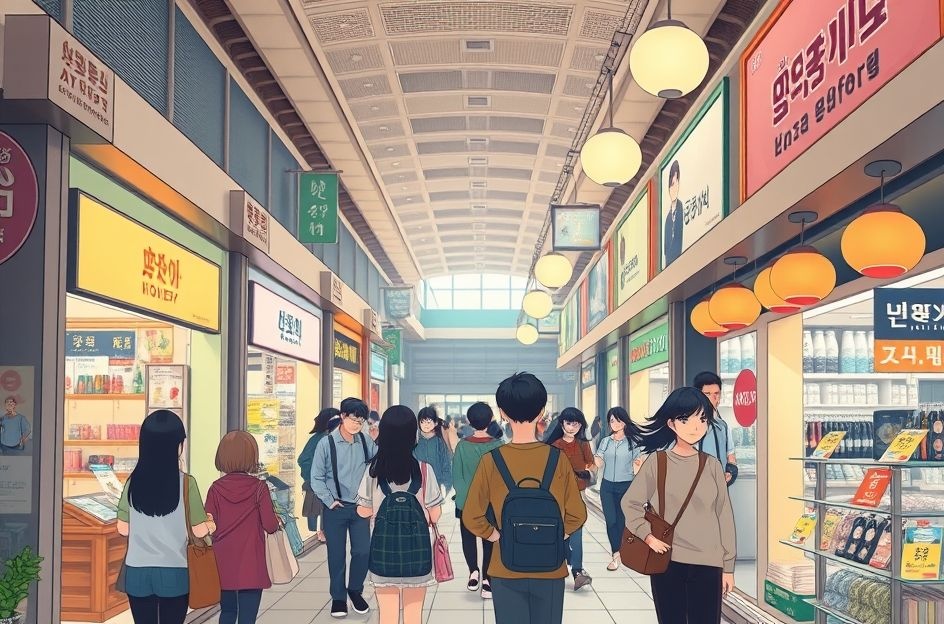
Private Consumption Shows Recovery Despite Sharp Construction Investment Decline: Q3 2025 Growth Forecast at 2.1% Quarterly Rate Driven by Tourism Surge, Government Stimulus, and Real Wage Growth
While South Korea's construction investment sector experiences severe contraction plummeting 1.8% quarter-over-quarter in Q3 2025 marking three consecutive quarters of decline driven by elevated interest rates suppressing housing demand and rising unsold inventory forcing developers to curtail new project initiations, private consumption demonstrates surprising resilience with the Bank of Korea and private research institutions projecting Q3 2025 private consumption growth at approximately 2.1% quarter-over-quarter, representing robust rebound from Q2's -0.2% contraction that had raised concerns about consumer spending weakness potentially dragging South Korea's economy into technical recession if consecutive quarterly GDP declines materialized—recovery pattern reflecting effectiveness of government consumption stimulus policies including ₩3 trillion ($2.25 billion) consumption voucher distribution program targeting low and middle-income households, improved performance in tourism and leisure sectors benefiting from post-pandemic revenge travel demand that continues driving exceptional growth in aviation, accommodation, and dining industries, and real wage growth expansion where nominal wage increases of 3.8% year-over-year are now substantially outpacing inflation rates that have moderated to 2.3% annually, expanding real purchasing power and consumption capacity for Korean households after two years (2023-2024) when inflation rates exceeding 4-5% eroded real wages and forced consumption cutbacks particularly among middle-income families facing pressures from rising food prices, utility costs, and education expenses for children's private tutoring academies that constitute significant portion of household budgets.
For American readers, this consumption-investment divergence mirrors patterns observed during the Federal Reserve's 2022-2024 interest rate hiking cycle where residential construction activity declined sharply (new housing starts fell 35% from peak levels) as mortgage rates exceeded 7% for 30-year fixed-rate loans, making homeownership unaffordable for marginal buyers and prompting builders to reduce construction activity in response to weakening demand, yet consumer spending remained relatively resilient supported by strong labor markets (unemployment rates below 4%), wage growth outpacing inflation after initial 2022 surge, and household savings accumulated during pandemic stimulus programs providing financial cushions allowing continued discretionary spending on travel, dining, and entertainment despite elevated interest rates increasing debt service costs for credit card balances and auto loans—economic dynamics reflecting modern developed economies' structural evolution toward service-dominated consumption (75-80% of GDP in U.S. and Korea) where construction and manufacturing investment volatility creates less direct impact on overall economic growth than historical periods when industrial production and housing construction comprised larger shares of national economic activity.
Three Primary Factors Driving Consumption Recovery
First, summer vacation season spending surged dramatically during July-August 2025 period as pent-up international travel demand accumulated during three years of COVID-19 pandemic restrictions (2020-2022) and subsequent cautious reopening phase (2023-2024) finally materialized into massive tourism outflows where Korean travelers are spending at unprecedented rates on overseas trips to Japan (weakened yen making Tokyo shopping and dining exceptionally affordable for Korean tourists with strong won), Southeast Asian beach destinations (Thailand, Vietnam, Philippines experiencing record Korean visitor numbers), and European cultural tours (Paris, Rome, Barcelona seeing substantial increases in Korean group tour bookings)—travel boom boosting South Korean aviation, accommodation, and dining sectors that capture spending both from outbound Korean travelers (domestic airport services, Korean Air and Asiana Airlines ticket purchases) and inbound foreign tourists attracted by Korean Wave cultural content including K-pop concerts, Korean drama filming location tours, and Korean cuisine experiences.
Low-cost carriers including Jeju Air and Jin Air, which dominate South Korea's budget airline market serving primarily price-sensitive leisure travelers on regional routes to Japan, China, and Southeast Asia rather than business travelers on intercontinental long-haul routes served by full-service carriers, reported preliminary Q3 2025 revenues exceeding 30% year-over-year growth driven by substantially increased passenger loads (average seat occupancy rates reached 87% compared to 75% in 2024 Q3 and 45% during pandemic-affected 2022 Q3), expanded route networks adding secondary Japanese cities and emerging Southeast Asian destinations beyond traditional Bangkok-Singapore corridors, and improved yield management allowing modest fare increases of 8-12% without demand destruction as consumers demonstrate willingness to accept higher ticket prices for long-awaited international travel opportunities after years of domestic-only vacation constraints.
Hotel occupancy rates surpassed 80% nationally during peak summer season (July 15 - August 31), substantially improving profitability for hospitality industry after devastating pandemic years (2020-2022) when occupancy rates fell below 30% and hundreds of small hotels and guesthouses permanently closed unable to sustain operations during extended period of domestic and international travel restrictions—recovery particularly pronounced in major tourist destinations including Jeju Island (Korea's primary domestic resort destination, often compared to Hawaii's Oahu for Americans), Busan's beachfront districts (Korea's second-largest city and primary summer beach destination), and Seoul's tourist-oriented neighborhoods (Myeongdong shopping district, Gangnam entertainment areas, Hongdae youth culture zone) where international visitors returned in substantial numbers reaching approximately 75% of pre-pandemic 2019 visitor levels and domestic travelers increased spending per trip by estimated 25% compared to pre-pandemic patterns as travel budgets accumulated during years of constrained mobility are now being deployed on upgraded accommodations, premium dining experiences, and luxury goods purchases.
Second, government consumption coupon distribution program implemented since July 2025 proved exceptionally effective stimulus mechanism, with government issuing ₩3 trillion ($2.25 billion) in consumption coupons to low and middle-income households (defined as households earning below ₩70 million / $52,500 annually, encompassing approximately 60% of Korean households), providing ₩300,000-500,000 ($225-375) per household depending on income level and household composition, with vouchers restricted to use in retail stores, restaurants, and cultural facilities rather than being redeemable for cash or usable for debt repayment, housing payments, or financial investments—design features intended to maximize direct consumption impact by preventing households from using stimulus funds to pay down existing debts or increase savings rather than stimulating immediate economic activity through retail purchases and service consumption that create revenue for businesses, preserve employment, and generate tax revenue through value-added taxes on transactions.
Convenience stores and large retailers including E-Mart (Korea's dominant hypermarket chain, comparable to Walmart in U.S. market), Lotte Mart, and Homeplus recorded double-digit sales growth during initial program months (July-September 2025) with particularly strong performance in categories including groceries, household goods, children's clothing, and small electronics—spending patterns indicating consumption coupon recipients are primarily using funds for essential household purchases and modest upgrades to durable goods (replacing aging kitchen appliances, upgrading smartphones, purchasing seasonal clothing for children) rather than luxury consumption, with visible impact concentrated in retail sectors serving middle-income consumers rather than premium luxury brands targeting wealthy households who did not qualify for consumption voucher distribution based on income thresholds.
Third, real wage growth acceleration contributed substantially to consumption recovery as nominal wage growth rates of 3.8% year-over-year (reflecting tight labor markets where unemployment rates remain below 3% and companies face recruiting difficulties for skilled positions requiring wage premium offers) now substantially exceed inflation rates that have moderated to 2.3% annually from 2023-2024 peaks of 4-5% when global energy price shocks, food commodity inflation, and supply chain disruptions drove broad-based price increases across consumer goods categories—2.3% inflation rate representing Bank of Korea's effective achievement of 2% inflation target mandate (within acceptable tolerance band) after two years of above-target inflation requiring aggressive monetary tightening through interest rate increases from 0.5% during pandemic stimulus period to current 3.5% policy rate that successfully moderated inflation pressures while avoiding recession or employment losses that often accompany restrictive monetary policy in historical tightening cycles.
Real wage expansion of approximately 1.5% (3.8% nominal growth minus 2.3% inflation) represents first sustained period of real wage growth since 2021, expanding purchasing power particularly for salaried middle-class workers who experienced real wage declines during 2022-2024 period when inflation outpaced nominal wage increases and eroded consumption capacity, forcing households to reduce discretionary spending, postpone durable goods purchases, and draw down savings to maintain essential consumption—purchasing power recovery now enabling resumption of postponed consumption including replacement of aging vehicles, upgrading household appliances and furniture, increasing dining out frequency, and expanding leisure activity participation including gym memberships, cultural event attendance, and hobby-related purchases that were curtailed during period of real wage decline and economic uncertainty.
Construction Investment Decline Reflects Structural Market Correction
Contrasting sharply with consumption recovery, construction investment contracted 1.8% quarter-over-quarter in Q3 2025 marking third consecutive quarterly decline (Q1: -2.1%, Q2: -1.5%, Q3: -1.8%) driven by housing market corrections where apartment construction starts plummeted over 40% year-over-year as elevated interest rates (mortgage rates averaging 5.5-6.5% for 20-year fixed-rate loans compared to 3-4% during 2020-2021 pandemic-era low rate environment) severely reduced housing affordability for first-time buyers and young families who constitute primary demand base for new apartment purchases, while rising unsold inventory levels exceeding 100,000 units nationally (including 35,000 units in Seoul metropolitan area alone) have prompted construction companies to dramatically curtail new project initiations and scale back ongoing construction activities to avoid further inventory accumulation that would require price reductions to clear excess supply, threatening developer profitability and potentially triggering financial distress among highly leveraged construction companies carrying substantial debt obligations incurred during previous expansion cycle when housing market boom conditions and low interest rates supported aggressive development activity.
Civil engineering construction, encompassing infrastructure projects including roads, bridges, railways, ports, and water treatment facilities that are primarily funded through government budgets rather than private developer investment, also struggles as fiscal austerity measures imposed by Ministry of Economy and Finance to control rising government debt levels (projected to reach 55% of GDP by 2026, exceeding 50% threshold that Korean policymakers view as prudent debt ceiling for maintaining fiscal sustainability) have reduced public sector construction contracts by estimated 15-20% compared to previous peak levels, postponing or canceling discretionary infrastructure projects including highway expansions, regional airport upgrades, and municipal sports facility construction while maintaining only essential infrastructure maintenance and critical safety-related projects that cannot be deferred without creating immediate public safety risks or service disruptions.
The Korea Construction Association warned in recent industry assessment: "Construction industry employment has decreased by 50,000 workers over the past year as companies reduce workforce in response to declining project volumes and deteriorating profitability, and without substantial policy support reversing current market conditions, the employment decline will accelerate potentially reaching 100,000-150,000 job losses by end of 2026 if housing market conditions do not stabilize and government infrastructure spending remains constrained by fiscal consolidation priorities"—employment warning reflecting construction industry's significant role in Korean economy where construction sector directly employs approximately 2 million workers (7-8% of total employment) with additional millions in related industries including building materials manufacturing, equipment rental, architecture and engineering services, and real estate sales and financing that depend on active construction activity for revenue generation, meaning prolonged construction downturn creates substantial ripple effects through broader economy beyond direct construction employment impacts.
Government announced emergency response measures including expanding public housing supply through Korean Land and Housing Corporation direct construction projects that bypass private developers, easing development regulations to reduce project costs and approval timelines, and providing financial support for small and medium construction companies facing liquidity pressures from reduced project pipelines—interventions designed to prevent construction market freefall while avoiding reignition of housing price inflation that policymakers successfully moderated through 2022-2024 tightening measures but now risk returning if stimulus measures prove excessive or poorly targeted, creating policy challenge of supporting construction industry employment and economic activity while maintaining housing market stability and affordability gains achieved through painful but necessary market correction from unsustainable 2020-2021 price appreciation when pandemic-era low interest rates and speculative investment demand drove Seoul apartment prices upward by 30-40% creating severe affordability crisis for younger generation attempting to establish independent households.
Source: Korea Trendy News
Comments
Post a Comment