Korea Contents Agency Operates Korean Pavilion at Tokyo Game Show 2025, Accelerating K-Game Global Expansion
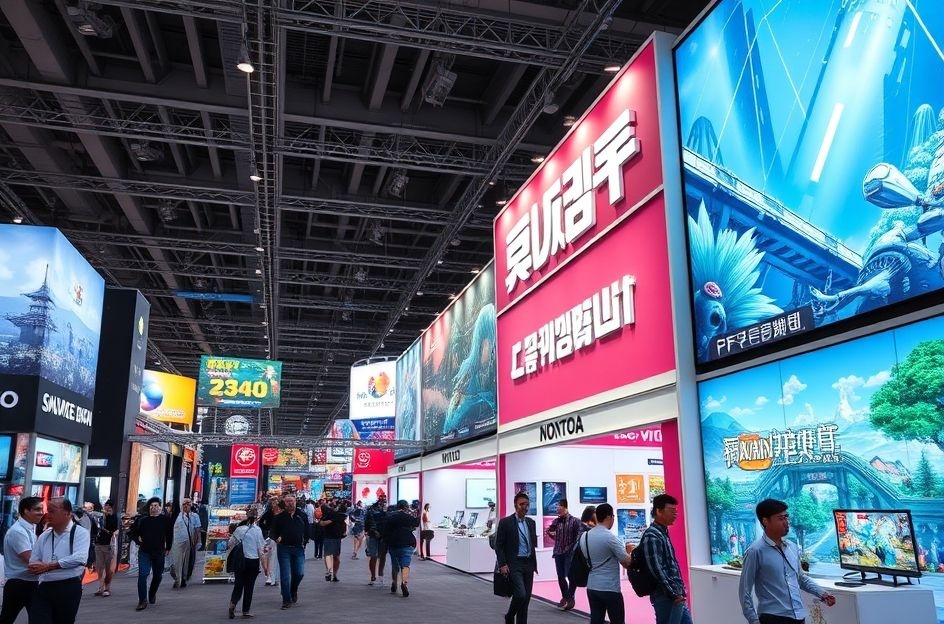
Korea Contents Agency Operates Korean Pavilion at Tokyo Game Show 2025: 35 Developers Showcase Next-Generation Games Integrating AI and Metaverse Technologies in Strategic Push for Japanese Market Dominance
The Korea Contents Agency (KOCCA), South Korea's government-affiliated cultural content promotion organization, is operating a comprehensive Korean pavilion at Tokyo Game Show (TGS) 2025, held September 25-28, 2025, at Makuhari Messe convention center in Tokyo, Japan, marking the third consecutive year of coordinated Korean industry presence at Asia's premier gaming exhibition where 35 domestic game developers are showcasing new titles and technological capabilities designed to penetrate Japan's strategically important $18 billion annual gaming market—the world's third-largest after the United States ($56 billion) and China ($45 billion)—through demonstrations of cutting-edge AI-powered gameplay mechanics, metaverse-integrated social features, and mobile gaming technologies that leverage Korea's established strengths in online multiplayer game design, free-to-play monetization strategies, and long-term player engagement systems that have generated global successes including PUBG Mobile (Krafton, $2.8 billion annual revenue), Lineage series (NCsoft, cumulative $12 billion lifetime revenue), and MapleStory (Nexon, 200 million registered users globally).
For American readers, Tokyo Game Show ranks among the world's three major gaming industry exhibitions alongside E3 (Electronic Entertainment Expo, historically held in Los Angeles though discontinued after 2021) and Gamescom (Cologne, Germany), annually attracting over 300,000 visitors including gaming enthusiasts, industry professionals, media representatives, and retail buyers—attendance figures comparable to San Diego Comic-Con (130,000) or major technology conferences like CES (170,000) but concentrated specifically on interactive entertainment showcasing, making TGS Asia's most important venue for game publishers to announce new titles, demonstrate upcoming releases, and conduct business-to-business negotiations with distributors, platform holders, and licensing partners across the Asia-Pacific region where mobile gaming dominates consumer spending patterns unlike Western markets' continued emphasis on console and PC gaming platforms.
Next-Generation Technology Integration: AI-Powered NPCs and Metaverse Gaming Platforms
The Korean pavilion's centerpiece features next-generation games integrating artificial intelligence and metaverse technologies that represent Korean developers' strategic differentiation from Japanese competitors' traditional strengths in narrative-driven single-player experiences (exemplified by franchises like Final Fantasy, Resident Evil, and Persona) by emphasizing persistent online worlds, social gameplay mechanics, and emergent narrative systems that generate unique player experiences through AI-driven character interactions rather than pre-scripted storylines—design philosophy reflecting Korea's competitive advantages in online infrastructure, multiplayer game operations, and data-driven gameplay balancing developed through two decades of dominant presence in PC bang (internet cafe) gaming culture and mobile gaming markets where player retention and monetization optimization require sophisticated real-time analytics and content update systems.
Nexon unveiled "Eternal Legacy," a new massively multiplayer online role-playing game (MMORPG) featuring AI-based non-player character (NPC) systems in a world-first reveal for the gaming industry, where traditional pre-scripted NPC dialogue trees with limited response options (typically 3-5 dialogue choices leading to predetermined outcomes) are replaced by natural language processing systems enabling players to conduct open-ended conversations with NPCs using AI chatbot technology similar to ChatGPT or Claude, with game storylines dynamically adapting based on player conversational choices, relationship-building patterns, and strategic alliances formed through dialogue rather than traditional quest acceptance/completion mechanics—innovation that potentially addresses long-standing MMORPG design limitations where NPCs function as static quest vendors rather than believable characters with agency and evolving motivations, though successful implementation requires solving significant technical challenges including response latency (AI inference must complete within 1-2 seconds to avoid breaking immersion), content moderation (preventing players from generating inappropriate NPC responses), and narrative coherence (ensuring AI-generated story developments remain consistent with established game lore and designer intentions).
NCsoft presented a gaming version of its "Universe" metaverse platform, offering immersive experiences through VR headset technology where global users can enjoy games and social activities in shared virtual spaces—concept similar to Meta's Horizon Worlds virtual reality social platform or VRChat but specifically optimized for gaming applications rather than general social interaction, with NCsoft's implementation focusing on seamless transitions between different game experiences within the persistent metaverse environment rather than treating games as isolated applications, allowing players to maintain consistent character identities, social relationships, and virtual possessions across multiple game titles and genres (action, role-playing, sports, puzzle) within the unified Universe platform, potentially addressing metaverse adoption barriers including limited content variety, social network fragmentation across platforms, and user friction from repeatedly creating new characters and rebuilding social connections when switching between different games or virtual worlds.
Pearl Abyss, developer of the critically acclaimed MMORPG Black Desert series known for its sophisticated character customization systems and action-oriented combat mechanics, showcased a new mobile title leveraging the Black Desert intellectual property and implementing Unreal Engine 5 to deliver PC-quality graphics on mobile devices through advanced rendering techniques including real-time ray tracing for realistic lighting effects, photogrammetry-based environmental assets providing film-quality visual fidelity, and dynamic global illumination systems that adapt lighting conditions based on time-of-day cycles and weather patterns—technical capabilities that typically require high-end gaming PCs with dedicated graphics cards but are being adapted for mobile chipsets through aggressive optimization, reduced rendering resolutions, and selective feature implementation, with Pearl Abyss employing famous Japanese voice actors for character dialogue and implementing intensive localization efforts customizing in-game events, marketing promotions, and user interface designs specifically for Japanese market cultural preferences including preference for established voice actor talent, detailed character background stories, and frequent limited-time collaboration events with popular anime and manga franchises that drive player engagement and social media buzz.
Strategic Importance of Japanese Gaming Market for Korean Developers
Korean game companies actively participate in Tokyo Game Show due to Japan's strategic market importance extending beyond its substantial $18 billion annual revenue scale to encompass critical factors including exceptionally high average revenue per user (ARPU) metrics where Japanese mobile gamers spend an estimated $330 annually on in-game purchases compared to $90 globally and $58 in the United States, making Japan the world's most valuable per-capita gaming market despite relatively modest population of 125 million compared to China's 1.4 billion or America's 335 million—spending patterns driven by cultural factors including strong consumer preference for "gacha" randomized item acquisition systems derived from traditional capsule toy vending machines, social pressure to obtain rare items and limited-edition characters to maintain status within gaming communities, and high disposable income levels among young urban professionals who comprise Japan's core mobile gaming demographic with minimal housing or transportation costs when living with parents (phenomenon known as "parasite singles") allowing extensive entertainment spending that would be impossible for American counterparts facing student loan obligations, rent payments, and car ownership costs.
Additionally, Japan's mobile gaming market demonstrates distinctive genre preferences favoring role-playing games (RPGs) that account for 65% of mobile gaming revenue compared to 35% in Western markets where action, strategy, and casual puzzle games dominate consumer spending, creating ideal market fit for Korean developers' established expertise in online RPG design, character progression systems, and long-term player retention mechanics developed through decades of PC MMORPG operation—expertise that translated effectively to mobile platforms through successful Japanese market entries including Krafton's PUBG Mobile (estimated 45 million Japanese users generating $800 million annual revenue from Japanese market alone), Nexon's Blue Archive (anime-styled RPG generating $200 million annual revenue primarily from Japanese players despite Korean development origin), and Netmarble's Seven Deadly Sins: Grand Cross (licensed manga adaptation generating $150 million annually from Japanese market), collectively demonstrating Korean developers' capability to adapt game designs, monetization systems, and live operation strategies to Japanese market preferences when culturally appropriate localization and marketing efforts are implemented rather than simply translating Korean versions into Japanese language while maintaining Korean-centric design assumptions and cultural references.
A KOCCA official stated: "Tokyo Game Show provides an optimal opportunity to showcase Korean gaming industry technological capabilities and creativity to Japanese consumers and global buyers conducting business in the Asia-Pacific region. We will continue supporting Korean companies' Japanese market entry through pavilion operation, business matchmaking services connecting Korean developers with Japanese publishers and platform holders, and promotional activities including press conferences, media demonstrations, and influencer partnerships that generate awareness and interest among Japanese gaming audiences." This government support reflects broader Korean cultural export strategy positioning gaming as core component of Korean Wave (Hallyu) alongside K-pop music, Korean dramas, and Korean cinema, with gaming industry generating $8.9 billion annual export revenue (approximately 40% of Korea's total cultural content exports) through combination of direct game service revenue from international players and intellectual property licensing to foreign publishers, platform fees from mobile app stores, and esports broadcasting rights sold to international media companies seeking competitive gaming content for sports-oriented audiences.
Source: Korea Trendy News
Comments
Post a Comment