
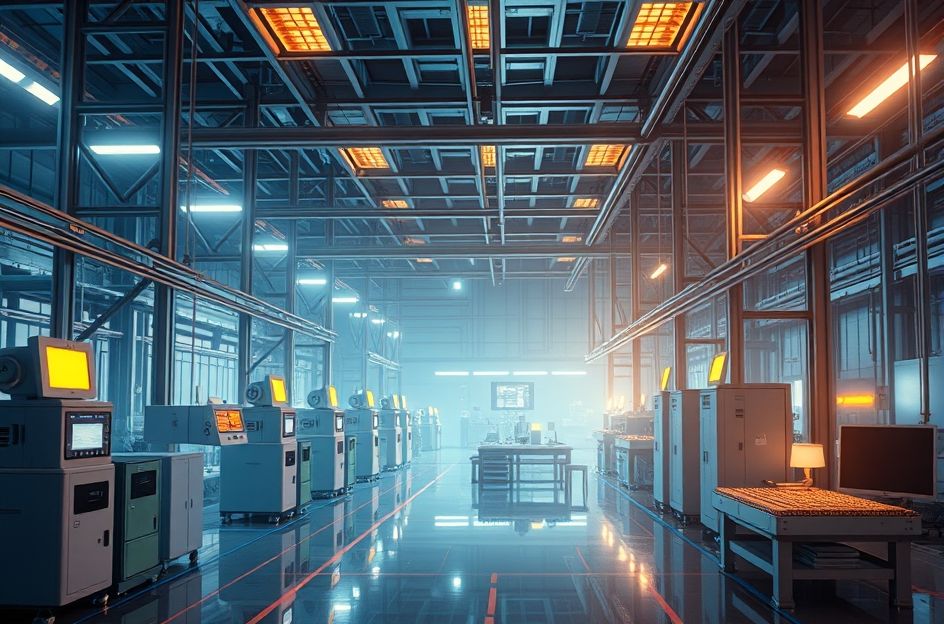
South Korean memory giant SK Hynix has announced a major strategic expansion into AI semiconductor packaging services, positioning itself to capitalize on the explosive growth in artificial intelligence hardware demand. This move represents a significant shift for the company, traditionally focused on memory chip manufacturing, as it ventures into the downstream packaging sector with a business model similar to foundry operations. For American readers, this is comparable to if Intel decided to offer custom packaging services alongside its chip manufacturing, creating a one-stop solution for semiconductor clients.
Understanding Korea's Semiconductor Ecosystem and SK Hynix's Position
To understand the significance of this development, it's important to recognize Korea's unique position in the global semiconductor industry. Unlike the United States, where companies like Intel, AMD, and NVIDIA focus primarily on design and high-performance processors, South Korea has dominated the memory semiconductor market through two major players: Samsung and SK Hynix. These companies control approximately 70% of the global memory market, making them critical suppliers to every major tech company worldwide, including Apple, Google, and Microsoft.
SK Hynix, the world's second-largest memory chipmaker after Samsung, has been particularly successful in the High Bandwidth Memory (HBM) segment, which is essential for AI applications. For American readers familiar with NVIDIA's AI chips, HBM is the ultra-fast memory that sits right next to the AI processors, enabling the rapid data processing required for machine learning operations. Think of it as the difference between having your important files on a slow external hard drive versus having them on your computer's fastest SSD.
The Yongin Semiconductor Cluster: Korea's Answer to Silicon Valley
The centerpiece of SK Hynix's expansion strategy is the development of a massive semiconductor cluster in Yongin, Gyeonggi Province, spanning over 10.2 million square feet – roughly equivalent to 180 football fields. This development represents one of the largest private sector investments in Korean history, with the company planning to build four state-of-the-art fabrication facilities alongside a collaborative complex housing approximately 50 domestic and international suppliers.
For American readers, this cluster concept mirrors the semiconductor ecosystems found in places like Austin, Texas, or Phoenix, Arizona, where multiple companies in the chip supply chain locate near each other to improve efficiency and collaboration. However, the Korean approach is more centralized and government-supported, reflecting the country's industrial policy philosophy that differs from the more market-driven approach typically seen in the United States.
The packaging business that SK Hynix is entering represents a critical but often overlooked part of semiconductor manufacturing. While Americans are familiar with chip design companies like Qualcomm or Broadcom, the packaging process – where individual semiconductor dies are assembled into final products – has traditionally been dominated by Asian companies. By bringing this capability in-house, SK Hynix aims to offer customers a vertically integrated service from memory chip production to final product assembly.
AI Memory Race Intensifies: HBM4 and Beyond
The timing of SK Hynix's expansion is closely tied to the explosive demand for AI memory, particularly HBM technology. Currently, SK Hynix has already sold out its HBM production capacity through 2025, highlighting the intense demand from companies like NVIDIA, which requires massive amounts of high-speed memory for its AI accelerators. The company plans to launch its next-generation HBM4 products by the end of 2025, aiming to maintain its technological edge over competitors.
This contrasts sharply with Samsung's recent struggles in the HBM market. While Samsung is the world's largest memory manufacturer overall, it has faced delays in obtaining approval from NVIDIA for its HBM3E products, resulting in a 68% quarter-over-quarter decline in its semiconductor division's operating profits. For American readers, this situation is somewhat analogous to how AMD struggled to compete with Intel in processors for many years despite having competitive technology – market timing and customer relationships proved equally important as technical capabilities.
Industry analysts project that global DRAM investment will increase by 54% year-over-year in 2025, with NAND flash investment rising by 14%. This massive investment surge is primarily driven by AI infrastructure demand, as data centers worldwide upgrade their systems to handle AI workloads. The scale of this growth can be understood by considering that major American cloud providers like Amazon Web Services, Microsoft Azure, and Google Cloud are all racing to build AI-capable infrastructure, requiring unprecedented amounts of high-performance memory.
Strategic Implications for the Global Semiconductor Supply Chain
SK Hynix's move into packaging services represents more than just business diversification – it signals a broader trend toward vertical integration in the semiconductor industry. Currently, much of the world's semiconductor packaging is handled by specialized companies in Taiwan, Malaysia, and the Philippines. By bringing these capabilities to Korea, SK Hynix is reducing supply chain dependencies while potentially offering faster turnaround times and better quality control.
The M15X facility in Cheongju, scheduled for completion in November 2025 with full production beginning in 2026, exemplifies this strategy. The facility's 63,000-square-meter double-story design represents cutting-edge semiconductor manufacturing, comparable to Intel's most advanced fabs in the United States. This facility will be crucial for meeting the anticipated surge in AI memory demand, particularly as the artificial intelligence revolution continues to accelerate.
For American companies and investors, SK Hynix's expansion has several implications. First, it could lead to more stable pricing and supply for AI memory, as increased production capacity typically moderates price volatility. Second, the company's integrated approach from manufacturing to packaging could set new industry standards for service delivery, potentially pressuring American companies to develop similar capabilities or strengthen partnerships with Asian suppliers.
Looking Ahead: Korea's Semiconductor Ambitions in the AI Era
The broader context of SK Hynix's expansion reflects South Korea's determination to maintain its semiconductor leadership in the AI era. While the United States has focused on advanced processor design and China has emphasized domestic manufacturing capabilities, Korea has chosen to deepen its expertise in the critical memory and packaging segments that enable AI systems to function effectively.
This strategy aligns with broader Korean industrial policy, which typically focuses on achieving global dominance in specific technology segments rather than attempting to compete across all areas. Similar to how Korean companies like Samsung and LG came to dominate global smartphone displays and batteries, SK Hynix's packaging expansion represents an attempt to control more of the semiconductor value chain.
The involvement of approximately 50 supplier companies in the Yongin cluster also demonstrates Korea's approach to industrial development, which emphasizes ecosystem building over individual company competition. This contrasts with the American model, where companies like Apple or Google often compete intensely while simultaneously collaborating with shared suppliers.
As the global AI revolution continues to unfold, SK Hynix's strategic expansion positions South Korea to remain a critical player in the semiconductor supply chain. For American technology companies increasingly dependent on AI capabilities, understanding and monitoring these developments in Asian semiconductor manufacturing will be crucial for maintaining competitive advantages and ensuring stable supply chains in an increasingly complex global technology landscape.
Source: Based on Korean IT industry reports and semiconductor market analysis from September 2025. Original Korean article available at https://trendy.storydot.kr/tech-skhynix-ai-packaging-cluster-sep19/



0 Comments