
Korean Original Title: 재활용 PET병 의무사용 제도 시행, 2030년까지 30% 목표
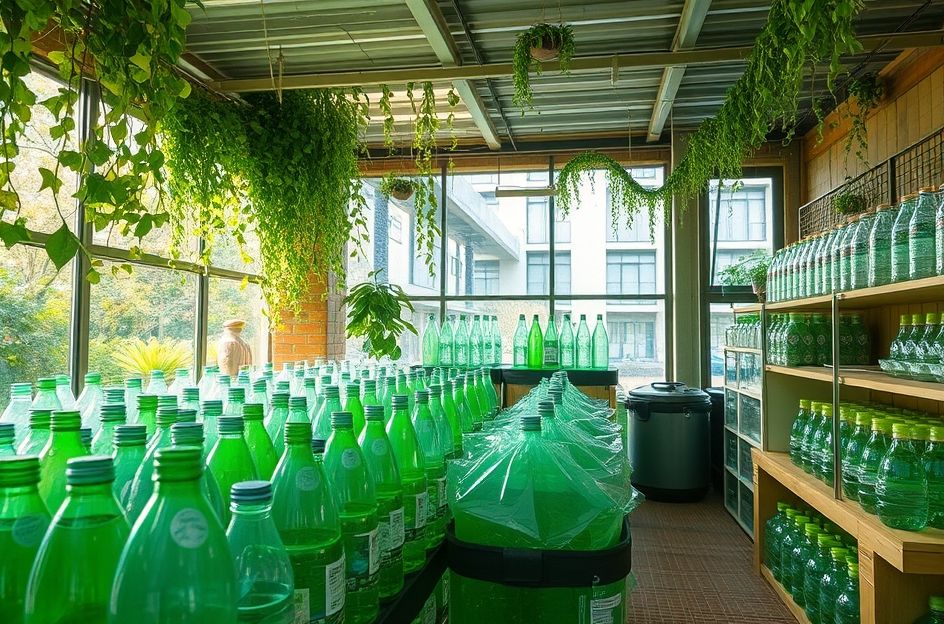
South Korea Mandates Recycled PET Use in New Environmental Policy Targeting Circular Economy
Starting September 26, 2025, South Korea implemented groundbreaking environmental regulations requiring PET bottle manufacturers to incorporate recycled materials into their production processes, marking a significant shift in the nation's approach to plastic waste management and circular economy development. The Ministry of Environment announced ambitious targets requiring manufacturers to use 3% recycled content in 2025, escalating to 10% in 2026, and reaching 30% by 2030—representing one of the most aggressive mandatory recycling programs in Asia and positioning Korea as a leader in addressing global plastic pollution challenges.
This policy represents Korea's response to mounting international pressure to reduce plastic waste and carbon emissions, while simultaneously addressing domestic concerns about environmental sustainability. For American readers, Korea's approach parallels discussions in the United States about Extended Producer Responsibility (EPR) programs and bottle deposit systems, though Korea's mandatory recycled content requirements go further than most current U.S. state-level initiatives. The policy reflects growing recognition that voluntary corporate commitments, while valuable, have proven insufficient to achieve the scale of plastic reduction necessary to meet climate goals and environmental protection standards.
The Scale of Korea's PET Bottle Challenge
Korea produces approximately 800,000 metric tons of PET bottles annually, with beverage containers accounting for 600,000 tons and household product packaging comprising the remaining 200,000 tons. While Korea's recycling rate for PET bottles reaches an impressive 85%—significantly higher than the roughly 29% recycling rate for all plastics in the United States—the critical problem lies not in collection but in utilization. Despite high collection rates, less than 5% of recycled PET historically found its way back into new bottle production. Instead, most recycled PET was "downcycled" into lower-value products such as polyester fiber for clothing, carpet backing, or plastic strapping material, or exported to other countries for processing.
This downcycling phenomenon represents a fundamental failure of circular economy principles. True circularity requires "bottle-to-bottle" recycling where materials remain at high value through multiple use cycles, rather than degrading into progressively lower-quality applications until ultimately ending as landfill waste. The economic incentives historically favored virgin PET production using petroleum feedstock rather than recycled material utilization, as virgin material was cheaper, more consistent in quality, and easier to process. Food safety regulations also created barriers, as recycled PET for beverage containers must meet stringent purity standards to prevent contamination—requirements that many recycling facilities struggled to achieve consistently.
The environmental implications of this system are substantial. PET production from virgin petroleum resources generates approximately 2 tons of carbon dioxide per ton of PET produced, considering the full lifecycle from oil extraction through polymerization and manufacturing. In contrast, producing PET from recycled materials reduces carbon emissions by roughly 2 tons per ton of material—effectively cutting the carbon footprint in half. At Korea's current production scale of 800,000 tons annually, achieving the 30% recycled content target by 2030 would eliminate approximately 480,000 tons of annual carbon dioxide emissions, equivalent to taking roughly 100,000 gasoline-powered passenger vehicles off Korean roads for a year.
Industry Response: Large Corporations vs. Small Manufacturers
The beverage industry's reaction to mandatory recycled content requirements reveals stark divisions between large multinational corporations and smaller domestic manufacturers. Major companies including Lotte Chilsung Beverage and Coca-Cola Korea have embraced the regulation, having already voluntarily adopted recycled PET usage in recent years. Lotte Chilsung began using 50%+ recycled content in major product lines in 2023 and has publicly committed to 100% recycled content by 2030, viewing sustainability as both an environmental imperative and a marketing advantage with environmentally conscious consumers, particularly younger demographics who increasingly make purchasing decisions based on corporate environmental performance.
Coca-Cola Korea similarly invested heavily in recycled PET infrastructure and introduced clear, unlabeled bottles (removing colored plastic and labels that contaminate recycling streams) to facilitate higher-quality recycling. These large corporations possess several advantages in adapting to recycled content mandates: economies of scale that spread infrastructure investment costs across large production volumes, established relationships with recycling suppliers, technical expertise in working with variable-quality recycled materials, and brand value benefits from sustainability leadership that help justify slightly higher costs.
However, small and medium-sized enterprises (SMEs) face significantly greater challenges. Recycled PET resin currently costs 20-30% more per ton than virgin material—a price premium driven by limited supply, higher processing costs to achieve food-grade purity, and quality control expenses. For large corporations with profit margins on high-volume products, this cost differential is manageable. For SMEs operating on thin margins with limited pricing power against larger competitors, the cost increase threatens viability without corresponding price increases that consumers may resist.
Quality control presents additional complications. Virgin PET from petrochemical producers offers consistent specifications, predictable processing characteristics, and guaranteed purity. Recycled PET quality varies depending on collection system contamination levels, sorting accuracy, cleaning efficacy, and processing technology. These variations can affect production line efficiency, increase defect rates, and require more frequent quality testing—all of which impose costs that disproportionately burden smaller manufacturers with less sophisticated process control systems. One SME executive explained: "Large companies can absorb cost variations through their supply chain management and pass small increases to retailers. We lack that negotiating power and may face existential pressure if we cannot raise prices but must meet recycled content mandates."
Recognizing these disparities, the Ministry of Environment announced support programs for SMEs including subsidies for purchasing recycled resin, technical assistance for process optimization, low-interest loans for equipment upgrades to handle recycled materials, and delayed compliance timelines allowing smaller manufacturers additional time to adapt. Whether these support measures prove adequate to prevent competitive disadvantage or market consolidation remains to be seen, as similar support programs in other countries have shown mixed effectiveness.
Infrastructure Development and Supply Chain Challenges
The policy's success hinges critically on developing adequate infrastructure for producing food-grade recycled PET at scale. Korea's current annual recycled PET production capacity stands at approximately 30,000 tons—merely 12.5% of the 240,000 tons required to meet the 2030 target assuming current production levels. This massive supply-demand gap represents the policy's greatest implementation challenge and requires coordinated investment across the entire value chain from collection through processing to final resin production.
Bottle-to-bottle recycling requires sophisticated processing far more complex than conventional recycling. The process typically involves collection and sorting (separating PET from other plastics and removing non-PET components like caps and labels), grinding bottles into flakes, washing to remove adhesives, food residues, and other contaminants, decontamination using chemical or thermal processes to eliminate any remaining impurities to food-safety standards, pelletization where flakes are melted and formed into resin pellets equivalent to virgin PET, and quality certification ensuring the recycled resin meets strict specifications for food contact applications.
Each of these steps requires specialized equipment, technical expertise, and quality control that many existing Korean recycling facilities lack. The Ministry of Environment is incentivizing private sector investment through tax credits for recycling facility construction or upgrades, low-interest government loans for technology acquisition, guaranteed purchase agreements providing demand certainty for recycled resin, and streamlined environmental permitting for approved recycling projects. Several major Korean conglomerates have announced investments in recycling infrastructure, viewing the mandatory content requirements as creating stable long-term demand that justifies capital expenditure.
However, infrastructure development requires 3-5 years from initial planning through regulatory approval, construction, equipment installation, operational testing, and quality certification. The aggressive 2030 timeline creates time pressure that may result in import dependence during the transition period. Korea may need to import recycled PET resin from countries with more developed recycling industries—particularly Japan, Europe, and potentially the United States as American recycling infrastructure expands—to meet near-term compliance requirements while domestic capacity scales up.
Consumer Behavior and Collection System Optimization
High-quality recycled PET production requires clean, well-sorted input materials, making consumer separation behavior critically important. Korean consumers must remove labels, rinse bottles to eliminate beverage residues, separate caps (which are typically polypropylene rather than PET and contaminate recycling if mixed), and place bottles in designated PET-only collection streams rather than general plastic recycling where contamination from other plastic types degrades recycling quality.
The Ministry of Environment's "Empty, Rinse, Separate, Don't Mix" public education campaign aims to improve collection quality through television advertising, social media influencer partnerships, school education programs, and municipal outreach. International experience suggests consumer behavior change represents a persistent challenge—even in countries with mature recycling systems, contamination rates often exceed 15-20%, requiring expensive additional sorting and cleaning that reduces recycling economics.
Korea's deposit refund system, where consumers pay a small deposit on beverage containers and receive it back upon return, provides strong incentives for high return rates but doesn't guarantee proper cleaning. Some municipalities are experimenting with reverse vending machines that scan, sort, and compact returned bottles while providing immediate deposit refunds or loyalty points, creating convenience that encourages participation while ensuring cleaner collection. These systems are expensive to deploy—typically $15,000-30,000 per machine—but dramatically improve collection quality and may become more widespread if government subsidies or beverage industry funding support broad deployment.
International Context and Global Plastic Agreements
Korea's mandatory recycled content policy aligns with emerging global frameworks for addressing plastic pollution, including the United Nations Environment Assembly's ongoing negotiations for a legally binding international treaty on plastic pollution. While the treaty's final terms remain under negotiation, proposals include mandatory recycled content requirements, extended producer responsibility schemes, and bans on certain single-use plastics—measures that Korea is proactively implementing rather than waiting for international mandates.
The European Union already requires beverage bottles to contain at least 25% recycled plastic by 2025 and 30% by 2030—targets nearly identical to Korea's timeline. Several U.S. states, including California, Washington, and Maine, have enacted or proposed recycled content mandates for various plastic products, though American requirements typically lag European and Asian standards. Korea's policy positions the nation as a leader in Asian environmental regulation, potentially influencing policy development in China, Japan, and Southeast Asian nations that often look to Korean precedents when developing their own environmental frameworks.
For American readers, Korea's approach offers a potential model for addressing plastic waste challenges in the United States, where recycling infrastructure remains underdeveloped compared to collection programs, creating the "wish-cycling" problem where consumers diligently recycle but materials lack viable end markets. Korea's integration of mandatory content requirements with infrastructure investment, technical support, and consumer education represents a comprehensive approach that addresses the full circular economy system rather than isolated components.
Economic and Environmental Implications
The policy creates both costs and opportunities for the Korean economy. Immediate costs include higher raw material expenses for manufacturers, capital investment requirements for recycling infrastructure, compliance administration and monitoring expenses, and potential price increases for consumers if manufacturers pass costs through to retail prices. However, these costs may be offset by reduced dependence on imported petroleum for virgin PET production (Korea imports virtually all its oil), job creation in the domestic recycling industry, carbon emission reductions contributing to climate goals, and enhanced brand value for Korean products in environmentally conscious global markets.
Environmental benefits extend beyond carbon reduction to include decreased ocean plastic pollution (as higher-value recycling creates stronger economic incentives for material recovery rather than disposal), reduced landfill burden and associated methane emissions, conservation of petroleum resources, and demonstration effects potentially accelerating circular economy adoption in other sectors. Korea has indicated that similar mandatory recycled content requirements may expand to other plastic packaging categories including food containers, cosmetics packaging, and household cleaning products if the PET bottle program succeeds.
The policy also positions Korea's chemical and recycling industries for potential export opportunities as global demand for recycled plastics increases. Korean companies developing advanced recycling technologies—including chemical recycling processes that break plastics down to molecular components for complete regeneration—could capture significant market share if these technologies achieve commercial viability and cost competitiveness with mechanical recycling approaches currently dominant in the industry.
Long-term Success Factors and Challenges
Policy success will depend on several critical factors developing as planned: recycling infrastructure must scale rapidly to meet demand without creating import dependencies that undermine domestic industrial development; costs must stabilize or decline through technological improvements and economies of scale, preventing persistent price penalties for recycled content; quality control systems must mature to ensure recycled PET consistently meets safety and performance standards, building confidence among manufacturers and consumers; and consumer participation in high-quality separation must reach and sustain levels adequate for material quality requirements.
Failure modes include inadequate infrastructure investment forcing compliance delays, cost burdens causing SME failures or market consolidation, quality inconsistencies undermining manufacturer confidence in recycled materials, or consumer resistance to potential price increases reducing demand for products using recycled content. The Ministry of Environment will review progress annually and may adjust targets or support programs based on implementation experience, though weakening requirements would risk credibility and undermine investment signals sent to the recycling industry.
Experts emphasize that regulatory mandates alone cannot create circular economy success—they must be complemented by aligned economic incentives, technological innovation, infrastructure investment, and cultural change around consumption and waste. Korea's approach attempts this comprehensive integration, making the policy both ambitious and risky. The next five years will determine whether Korea's mandatory recycled PET content program becomes a model for global circular economy transition or a cautionary tale about the challenges of forcing rapid system change through regulation. Given Korea's track record of aggressive environmental policy implementation and industry adaptability, many analysts view the program as more likely to succeed than fail, though with inevitable adjustments during implementation as unforeseen challenges emerge.
Original article: TrendyNews Korea


0 Comments