
Korean Original Title: 외국인 투자자들, 관광·유통·IT '프라임 종목' 대거 매수
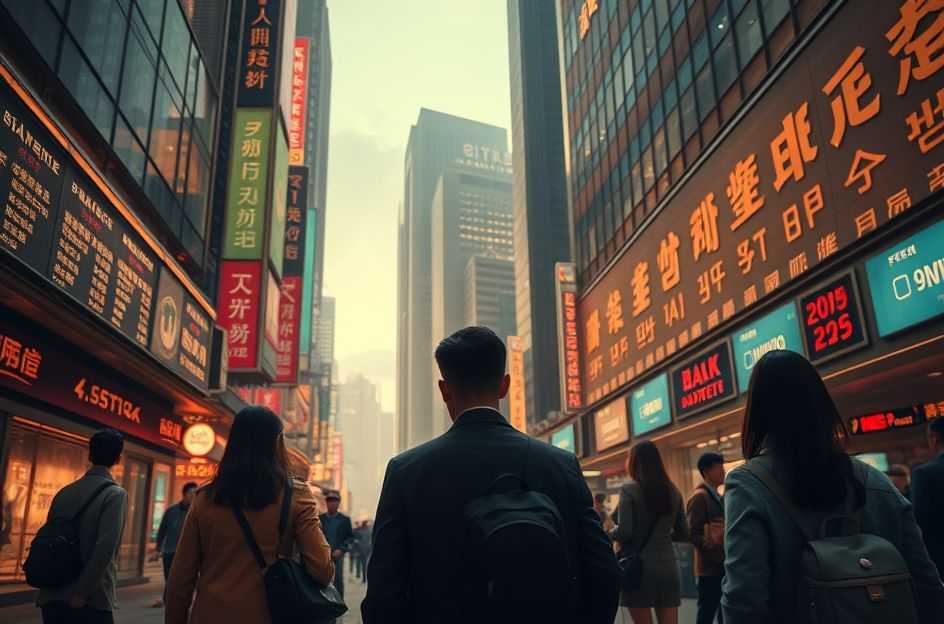
Foreign Investors Execute $1.5 Billion Buying Spree Targeting Tourism, Retail, and Technology Stocks Positioned for Earnings Recovery
Foreign institutional investors executed concentrated buying campaigns across Korean tourism, retail, and technology sectors on September 27, 2025, purchasing approximately 2 trillion won ($1.5 billion USD) worth of equity positions in blue-chip stocks including duty-free retailers, airlines, semiconductor manufacturers, consumer electronics component suppliers, and premium department stores—strategic positioning reflecting sophisticated analysis identifying sectors benefiting from converging positive catalysts including approaching Chinese National Day holiday tourism demand surge, Apple iPhone 17 launch driving Korean component supplier order increases, rising international travel demand as pandemic-era restrictions fully normalize, and Korean domestic consumption recovery following prolonged household spending weakness that suppressed retail sales throughout 2023-2024 before recent improvement trends emerged.
For American readers, understanding foreign investment in Korean equities requires recognizing that Korea represents the world's tenth-largest economy with highly developed capital markets, sophisticated listed companies competing globally across industries including semiconductors, automobiles, shipbuilding, consumer electronics, and entertainment, and a stock market (KOSPI) that attracts substantial international investment from major global asset managers including BlackRock, Vanguard, State Street, and numerous hedge funds seeking exposure to Asian growth markets, Korean corporate earnings, and won currency appreciation potential—creating international capital flows that significantly influence Korean stock prices, with foreign ownership representing approximately 35% of total Korean stock market capitalization compared to roughly 15% foreign ownership in U.S. equity markets where domestic institutional and retail investors dominate trading volumes.
Tourism Sector Surge Driven by Chinese National Day Holiday Anticipation
Duty-free retailer stocks including Lotte Duty Free and Shilla Duty Free experienced share price increases of 4.2% and 3.8% respectively, driven by foreign investor net purchases exceeding 120 billion won ($90 million USD) combined as international funds positioned ahead of expected Chinese National Day holiday spending surge beginning October 1, 2025, when China's week-long holiday traditionally triggers massive outbound tourism waves with Korean destinations—particularly Seoul, Jeju Island, and Busan—consistently ranking among Chinese travelers' preferred international destinations offering convenient access (2-hour flights), cultural familiarity, luxury shopping opportunities, and cosmetics/fashion products highly desired by Chinese consumers willing to pay premium prices for Korean beauty products and fashion brands unavailable or more expensive in mainland China.
Korean Tourism Organization (KTO) projections estimate 2025 Chinese visitor numbers will exceed 6.5 million travelers representing 45% growth versus 2024 levels but still falling short of pre-pandemic 2019 peak when 6.0 million Chinese tourists visited Korea, generating approximately $10 billion USD in tourism revenue through duty-free shopping, hotel accommodations, restaurants, entertainment, and transportation—economic impacts explaining why Korean duty-free retailers, airlines, hotels, and tourism-related businesses closely monitor Chinese economic conditions, currency exchange rates, and political relationships between Beijing and Seoul that significantly affect Chinese tourist flows potentially subject to sudden disruption when diplomatic tensions arise, as occurred 2016-2017 when Chinese government unofficially discouraged Chinese tourism to Korea in retaliation for South Korea's deployment of THAAD missile defense systems opposed by Beijing.
Airline stocks benefited similarly, with Korean Air—Korea's flagship carrier recently consolidated through merger with Asiana Airlines creating Korea's dominant international carrier controlling approximately 65% of Korean international flight capacity—experiencing share price appreciation as analysts upgraded earnings forecasts projecting third-quarter operating profit of 750 billion won ($562 million USD) representing 60% year-over-year growth driven by sustained high load factors exceeding 90% on transpacific routes to the United States and transatlantic routes to Europe where premium business class and first class bookings have recovered to pre-pandemic levels as corporate travel resumed and affluent leisure travelers demonstrate willingness to pay elevated airfares for international travel despite broader economic uncertainties affecting other consumer spending categories.
Technology Sector Strength from Apple Supply Chain Orders and AI Chip Demand
Technology stocks dominated foreign buying with Samsung Electronics and LG Innotek—key Apple iPhone component suppliers providing OLED displays and camera modules respectively—experiencing share price gains of 2.1% and 5.7% as foreign investors purchased 200 billion won ($150 million USD) combined positioning ahead of iPhone 17 sales cycle expected to generate substantial component orders for Korean suppliers whose technology capabilities and manufacturing capacity make them indispensable Apple partners despite ongoing Apple efforts to diversify supply chains and reduce dependence on any single supplier or geographic region that could expose Apple to supply disruptions from natural disasters, geopolitical conflicts, or labor disputes affecting production.
For American readers familiar with Apple's dominant position in the U.S. smartphone market where iPhone commands approximately 55% market share, it's worth noting that Korean suppliers including Samsung Display and LG Innotek provide critical components that Apple cannot easily source elsewhere given their technological sophistication, manufacturing scale, and quality consistency meeting Apple's demanding specifications—creating symbiotic relationships where Apple depends on Korean suppliers for critical components while Korean suppliers depend on Apple orders representing 20-30% of their total revenue, making Apple's product launch cycles critically important events for Korean technology companies whose quarterly earnings fluctuate substantially based on iPhone production volumes, component specifications, and pricing negotiations with Apple's notoriously aggressive procurement organization demanding continuous price reductions, quality improvements, and capacity expansions as conditions for maintaining supplier relationships.
SK Hynix, Korea's leading memory chip manufacturer second only to Samsung in global market share, experienced 3.4% share price appreciation following reports of expanded HBM3E (High Bandwidth Memory 3rd generation Enhanced) orders from Nvidia and other artificial intelligence chip manufacturers requiring specialized high-performance memory products different from commodity DRAM and NAND flash memory that have historically driven memory chip industry revenues but which now face slowing growth as mature markets saturate while emerging AI applications create demand for expensive specialized memory products commanding premium prices and higher profit margins—a market transition favoring technologically advanced manufacturers like SK Hynix capable of developing and mass-producing these sophisticated products while smaller competitors lacking necessary R&D capabilities, manufacturing expertise, and capital resources for the multi-billion dollar fab investments required to achieve competitive production costs.
Retail Sector Recovery Signals Domestic Consumption Improvement
Department store and discount retailer stocks including Shinsegae Department Store and E-Mart gained foreign investor attention as September retail sales data showed consumption recovery with premium food products and luxury goods experiencing double-digit sales growth—trends interpreted as evidence that Korean household consumption patterns are normalizing following prolonged weakness through 2023-2024 when elevated inflation, high interest rates, and economic uncertainty caused Korean consumers to reduce discretionary spending, postpone major purchases, and increase savings rates in response to deteriorating household balance sheets, rising debt service costs on variable-rate mortgages, and concerns about job security in an economy experiencing slower growth than the rapid expansion characterizing previous decades.
For American readers, Korean consumption patterns differ in several respects from U.S. consumer behavior, with Korean households traditionally maintaining higher savings rates (currently 20-25% of disposable income versus 3-5% in the United States), carrying less consumer debt, and demonstrating greater sensitivity to economic uncertainty by quickly reducing spending when conditions deteriorate—behaviors reflecting cultural values emphasizing financial security, intergenerational wealth transfer, and risk aversion shaped by historical experiences including the 1997-1998 Asian Financial Crisis that devastated Korean household finances, caused mass unemployment, forced widespread business bankruptcies, and required International Monetary Fund bailout imposing painful structural reforms—traumatic events seared into Korean collective memory affecting financial behaviors decades later.
Securities analysts quoted in industry media stated "second-half interest rate cut expectations and improving consumer sentiment are creating conditions for retail sector earnings turnaround," referencing Bank of Korea communications suggesting potential policy rate reductions during late 2025 or early 2026 if inflation continues moderating toward the central bank's 2% target without triggering renewed price pressures—rate cuts that would reduce Korean household debt service costs (particularly significant given high household debt levels and prevalence of variable-rate mortgages), improve consumer confidence, and potentially stimulate consumption growth supporting retail sector profitability after several challenging years when rising costs, weakening demand, and intense competition from e-commerce platforms pressured traditional brick-and-mortar retailers' revenues and margins.
Market Implications and Investment Outlook
The KOSPI index closed up 0.6% at 2,685 points reflecting broad-based optimism supporting the selective foreign buying concentrated in sectors with visible positive catalysts rather than indiscriminate across-the-board purchasing that might suggest speculative exuberance or momentum-chasing behavior—a distinction important for understanding whether foreign investment reflects fundamental value recognition or potentially unsustainable capital flows that could quickly reverse if conditions change, market sentiment shifts, or global risk appetite deteriorates due to unexpected economic data, geopolitical developments, or financial market volatility in the United States, Europe, or China that often triggers "risk-off" episodes where international investors rapidly exit emerging market positions including Korean equities to preserve capital and reduce portfolio volatility.
Market strategists cautioned that sustained foreign buying depends on several conditions remaining favorable including Federal Reserve monetary policy avoiding unexpected hawkish surprises that might strengthen the U.S. dollar and reduce capital flows toward international markets, Chinese economic conditions stabilizing or improving rather than deteriorating further amid ongoing property sector weakness and tepid domestic consumption, and Korean corporate earnings meeting analyst expectations rather than disappointing due to unexpected cost pressures, weakening demand, or competitive pressures from Chinese manufacturers increasingly challenging Korean companies' market positions across industries including semiconductors, displays, batteries, and consumer electronics where technological advantages and cost competitiveness determine market share and profitability.
Original article: TrendyNews Korea


0 Comments