
South Korea's Digital Divide Crisis: Elderly Left Behind as Super-Aged Society Looms
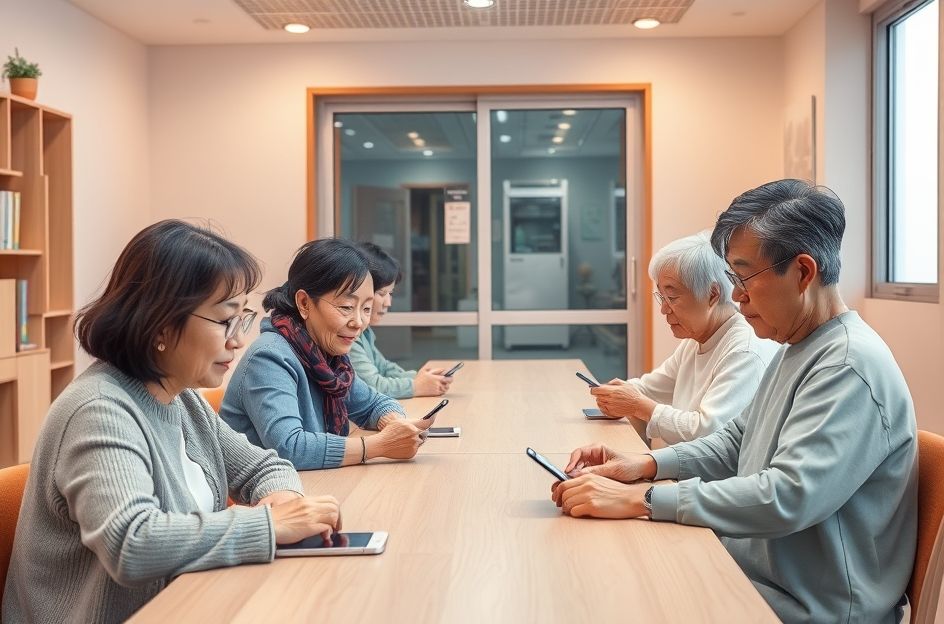
As South Korea prepares to enter a super-aged society in 2025, where more than 20% of the population will be over 65, the nation faces a mounting crisis: a severe digital divide that leaves millions of elderly citizens unable to navigate an increasingly digital world. For American readers familiar with discussions about digital equity in the United States, South Korea's situation presents a stark case study of what happens when rapid technological advancement outpaces social inclusion efforts.
The scope of the problem is staggering. According to South Korea's Ministry of Health and Welfare, 64.2% of citizens over 65 report difficulty using digital services through kiosks, smartphones, and other devices. To put this in American context, imagine if nearly two-thirds of seniors in the United States couldn't use ATMs, self-checkout machines at grocery stores, or mobile banking apps – essential services that have become cornerstones of daily life.
South Korea's digital transformation has been remarkably swift, even by global standards. The country leads the world in internet connectivity and smartphone penetration, with 95% of the population using smartphones compared to about 85% in the United States. However, this rapid digitization has created what experts call a "digital cliff" – a sharp divide between digital natives and those left behind by technological change.
Government Response: Digital Learning Centers
The Korean government has established an ambitious program called "Digital Badaumteo" (Digital Learning Centers) through the National Information Society Agency (NIA). These centers operate in 911 locations nationwide, including 315 welfare centers, 189 community centers, and 100 libraries, with an additional 224 locations serving rural areas. Last year, 792,648 citizens received digital education through these centers, with 438,008 participants – or 55.3% – being over 60 years old.
For American readers, this would be equivalent to having digital training centers in every public library and community center across all 50 states, specifically targeting seniors who struggle with technology. The curriculum covers essential daily tasks: using kiosks to order food or buy movie tickets, booking train tickets through smartphone apps, online shopping, and accessing government services digitally.
The program also features mobile education units – buses equipped with digital instructors that travel to senior centers, community halls, and rural areas. These mobile units provide hands-on training with various devices including multi-function kiosks, tablet computers, smartwatches, digital scales, and blood pressure monitors. The approach recognizes that elderly learners often need personalized, small-group instruction rather than large classroom settings.
Budget Cuts Threaten Progress
However, the program faces a critical setback. During recent parliamentary hearings, lawmakers revealed that the Digital Learning Center budget will be slashed by over 60% in 2025. This dramatic reduction will eliminate approximately 1,800 jobs for digital instructors and support staff, effectively dismantling much of the infrastructure built to address digital exclusion.
Representative Jang Hye-young of the Justice Party criticized this decision, stating that cutting the digital education budget by 60% is tantamount to abandoning the government's digital inclusion policy for vulnerable populations. For American readers, this would be similar to Congress cutting funding for digital literacy programs at the exact moment when such programs are most needed – as the baby boomer generation ages into their 70s and 80s.
The timing of these cuts is particularly concerning given South Korea's demographic trajectory. The country is aging faster than almost any nation in history. While the United States is projected to become a super-aged society (20% over 65) around 2030, South Korea will reach this milestone in 2025 – just months away. The elderly population in Korea is growing by approximately 300,000 people annually, meaning the number of people potentially affected by digital exclusion is expanding rapidly.
International Context and Recommendations
South Korea's digital skills gap represents the most extreme example of generational digital divide among developed nations. Citizens aged 16-24 have the highest digital proficiency rates in the OECD at 63.4%, while those aged 55-65 have proficiency rates of just 3.9% – the largest generational gap worldwide. For comparison, the United States has a much smaller gap, with digital proficiency rates of about 45% for young adults and 15% for older adults.
The National Human Rights Commission of Korea has issued specific policy recommendations that mirror discussions in the United States about digital equity. The commission calls for maintaining both digital and analog service options, ensuring that elderly citizens can choose between online and offline methods for accessing essential services like healthcare, banking, and government programs.
The commission also recommends establishing "help desks" and hotlines specifically for seniors struggling with digital devices – similar to tech support services that major American retailers like Best Buy offer for elderly customers. These support systems would provide immediate assistance and ongoing learning opportunities, moving beyond one-time training sessions to continuous support.
For American policymakers and social service providers, South Korea's experience offers crucial lessons. The country's rapid digital transformation created economic opportunities and increased efficiency, but it also risked leaving an entire generation behind. As the United States continues its own digital transformation – from contactless payments accelerated by COVID-19 to increasing automation in retail and government services – ensuring that older Americans aren't excluded becomes increasingly critical.
The stakes extend beyond individual convenience. Digital exclusion can lead to social isolation, reduced access to healthcare and government services, and economic disadvantage. As both South Korea and the United States grapple with aging populations and increasing digitization, the question isn't whether to embrace technology, but how to ensure that technological progress benefits all citizens, regardless of age.
South Korea's current budget cuts represent a step backward at a crucial moment. However, the country's experience also demonstrates that targeted interventions can be effective when properly funded and implemented. For American readers, South Korea serves as both a warning about the risks of digital exclusion and a model for potential solutions – if the political will exists to implement them consistently.
Original article in Korean: https://trendy.storydot.kr/society-digital-divide-elderly-policy-sep14/

0 Comments