
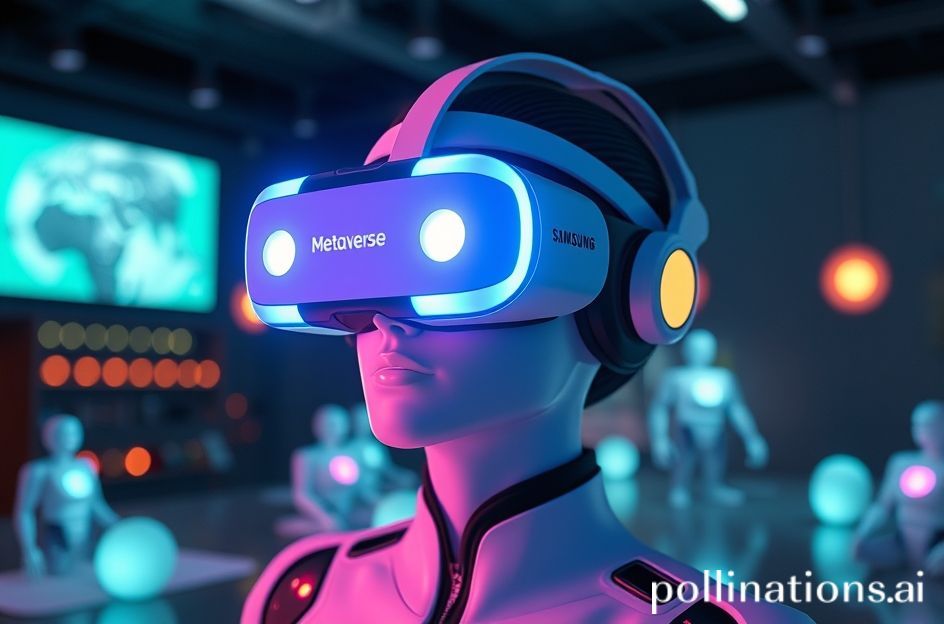
 The metaverse industry, which experienced a significant downturn in recent years, is preparing for a major comeback in 2025 through the convergence of Extended Reality (XR) technology and generative artificial intelligence. South Korea, in particular, is positioning itself to capture leadership in the global XR market through systematic government support and aggressive corporate technology development initiatives.
For American readers unfamiliar with South Korea's tech landscape, the country's technology sector operates differently from Silicon Valley's startup-centric model. Korean tech development is typically driven by large conglomerates (chaebols) like Samsung and LG, working closely with government agencies to establish national technology roadmaps. This coordinated approach has proven effective in sectors like semiconductors and displays, and is now being applied to XR and metaverse technologies.
The significance of South Korea's XR advancement was demonstrated at the "2nd XR Latest Technology Trends Seminar" held on September 14 at the Gyeonggi XR Center in Suwon, organized by the Gyeonggi Content Agency. Meta's Vice President Heo Wook delivered a keynote speech on "Meta's Vision - Open Source AI and XR Latest Technology Trends," presenting the transformative changes that AI-XR convergence will bring to the industry.
Industry experts are evaluating 2025 as the year when companies begin serious competition to overcome the technical limitations of XR headsets. Recon Labs CTO Yoon Kyung-won presented on "XR 3D Technology Trends and Future Challenges" at the seminar, emphasizing the importance of spatial computing and immersive interaction technologies that could revolutionize how Americans experience digital content.
The metaverse industry, which experienced a significant downturn in recent years, is preparing for a major comeback in 2025 through the convergence of Extended Reality (XR) technology and generative artificial intelligence. South Korea, in particular, is positioning itself to capture leadership in the global XR market through systematic government support and aggressive corporate technology development initiatives.
For American readers unfamiliar with South Korea's tech landscape, the country's technology sector operates differently from Silicon Valley's startup-centric model. Korean tech development is typically driven by large conglomerates (chaebols) like Samsung and LG, working closely with government agencies to establish national technology roadmaps. This coordinated approach has proven effective in sectors like semiconductors and displays, and is now being applied to XR and metaverse technologies.
The significance of South Korea's XR advancement was demonstrated at the "2nd XR Latest Technology Trends Seminar" held on September 14 at the Gyeonggi XR Center in Suwon, organized by the Gyeonggi Content Agency. Meta's Vice President Heo Wook delivered a keynote speech on "Meta's Vision - Open Source AI and XR Latest Technology Trends," presenting the transformative changes that AI-XR convergence will bring to the industry.
Industry experts are evaluating 2025 as the year when companies begin serious competition to overcome the technical limitations of XR headsets. Recon Labs CTO Yoon Kyung-won presented on "XR 3D Technology Trends and Future Challenges" at the seminar, emphasizing the importance of spatial computing and immersive interaction technologies that could revolutionize how Americans experience digital content.
Samsung Electronics Enters XR Market, Challenging Meta and Apple Duopoly
The most significant development is Samsung Electronics' full-scale entry into the XR market. Samsung announced plans to launch its "Project Infinity" headset next year, based on the Android XR platform developed in collaboration with Google and Qualcomm. This product is expected to provide a compelling alternative to the Meta and Apple-dominated XR headset market. For American consumers, Samsung's entry represents a potentially game-changing shift similar to how Samsung challenged Apple's dominance in smartphones over the past decade. Samsung's XR headset focuses on mixed reality (MR) capabilities that seamlessly blend the physical and virtual worlds. The device will feature integration with the Galaxy ecosystem, offering seamless connectivity with smartphones, tablets, and wearable devices. This development extends beyond simple hardware competition into an ecosystem war. Samsung's Android XR approach offers an open alternative to Apple's closed ecosystem and Meta's Facebook-centric platform. For American businesses, this could mean more flexible enterprise solutions and lower total cost of ownership, similar to how Android provided alternatives to iOS in the mobile market. Industry analysts predict that "Samsung's participation will diversify choices in the XR market while simultaneously driving technological innovation and price competitiveness improvements. Particularly in Asian markets, Samsung's brand power and the openness of the Android ecosystem will provide significant competitive advantages," similar to how Samsung successfully competed against Apple in global smartphone markets with more affordable flagship alternatives.Generative AI and XR Convergence Drives Content Creation Innovation
The biggest driver of change in the 2025 XR and metaverse industry is the full-scale utilization of generative AI. AI technology is dramatically reducing the cost and time of content creation through 3D modeling automation, real-time voice and video synthesis, and AI NPCs (Non-Player Characters). This represents a paradigm shift comparable to how cloud computing transformed software development in the early 2010s. Digital human technology development is particularly noteworthy. As AI-based real-time voice synthesis and facial expression generation technologies combine, virtual characters capable of natural conversation are becoming active in metaverse spaces. This creates new service models across various fields including education, counseling, and entertainment that could transform how Americans interact with digital services. For American businesses, the implications are substantial. Companies like Walmart and Amazon are already exploring digital twin technology for supply chain optimization, but Korean advances in AI-integrated XR could accelerate adoption across retail, manufacturing, and healthcare sectors. Hyundai Motor Company is utilizing digital twins for production line optimization, while Samsung Electronics is increasing productivity through virtual simulation of semiconductor factories. Digital twin technology has also evolved to the next level. As technology for precisely scanning actual spaces and reproducing them as virtual spaces has become more sophisticated, utilization is rapidly increasing in industrial settings including manufacturing, construction, and healthcare. This mirrors how American companies like General Electric pioneered industrial IoT applications, but Korean companies are now leading the integration of AI with spatial computing technologies. Industry experts analyze that "the convergence of AI and XR is creating completely new user experiences beyond simple technology combination. Korean companies' AI technical capabilities combined with manufacturing know-how are gaining advantages in global competition," positioning Korea similarly to how South Korea's semiconductor industry challenged American dominance in memory chips during the 1990s. These trends were clearly evident at Metaverse Expo 2025 (MVEX 2025). The exhibition, held under the theme "Infinite Possibilities Opened by Virtual Space Technology," showcased numerous convergence cases of the latest technologies including AI, XR, digital humans, and immersive content. Gyeonggi Province operated the "Gyeonggi Province Joint Pavilion" with nine innovative companies from the province, promoting local companies' technical capabilities to the world. The market size implications are significant for American investors and businesses. The global XR market, valued at approximately $34 billion in 2023, is projected to reach $250 billion by 2030, with Asia-Pacific regions including South Korea expected to capture 35% of this growth. For American readers, this represents investment opportunities comparable to the early smartphone ecosystem development between 2007-2012. South Korea's XR and metaverse industry is meeting a new turning point in both technological maturity and market applicability as of 2025. The synergy created by systematic government support policies, active corporate investments, and convergence with AI technology is expected to significantly elevate Korea's position in the global market, potentially challenging American tech leadership in emerging technologies as Korean companies have done in semiconductors, displays, and electric vehicle batteries. The competitive landscape suggests that American companies will need to accelerate their XR and AI integration efforts to maintain technological leadership. Korean companies' coordinated approach to technology development, combined with strong domestic market testing grounds and aggressive global expansion strategies, presents a formidable challenge to established American tech giants in the next phase of digital transformation.
Korean metaverse and XR technology advancement with AI integration (Studio Ghibli style illustration)


0 Comments