
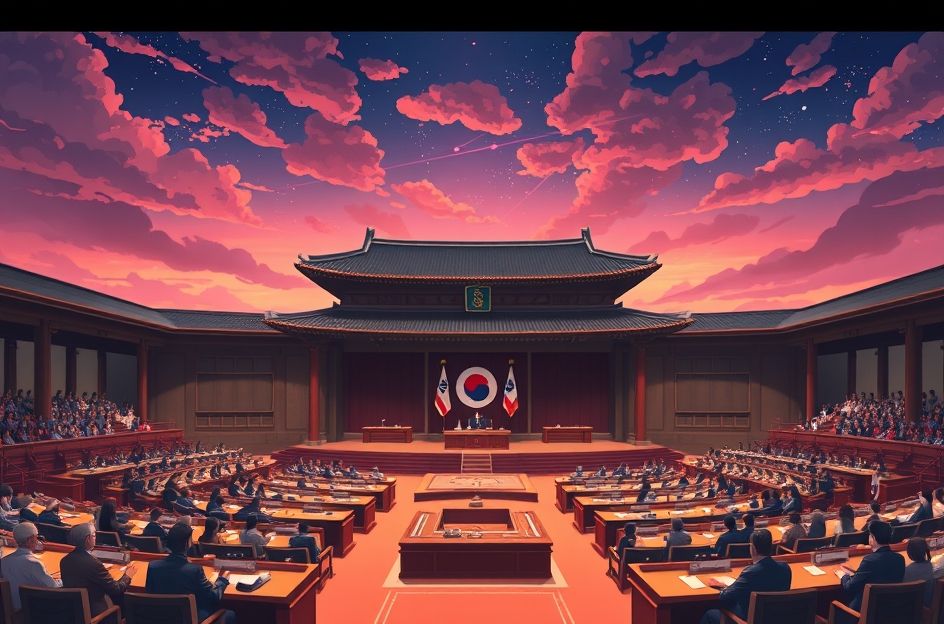
South Korea's 2025 National Assembly Audit: Intensifying Ruling-Opposition Confrontation
September 26, 2025 - South Korea's National Assembly prepares for its annual audit and inspection with unprecedented political tensions between ruling and opposition parties. The Democratic Party, holding a majority in the legislature, is pushing for aggressive scrutiny of government policies, while President Lee Jae-myung's administration faces its first major political challenge since taking office.
National Assembly Audit: A Constitutional Check on Executive Power
The National Assembly's audit and inspection system, enshrined in Article 61 of South Korea's Constitution, represents one of the most powerful legislative oversight mechanisms in democratic nations. Each autumn, this 20-day examination period transforms the legislature into an investigative powerhouse, with lawmakers scrutinizing every aspect of government operations from budget execution to policy implementation.
For American readers unfamiliar with this system, imagine if the US Congress could compel any federal agency to submit documents, force officials to testify under oath, and investigate any government activity without needing probable cause or judicial warrants. This is roughly equivalent to the power South Korean lawmakers wield during the audit period.
The 2025 audit is particularly significant as it marks the first comprehensive examination of President Lee Jae-myung's administration, which began in May 2024. With the Democratic Party controlling 178 out of 300 National Assembly seats, opposition lawmakers have unprecedented leverage to shape the audit's direction and intensity.
Key Confrontation Points and Political Stakes
The ruling-opposition divide centers on several critical policy areas. The Democratic Party is targeting the administration's economic management, particularly its response to inflation and household debt concerns. Opposition lawmakers are also scrutinizing the president's foreign policy approach, especially regarding relations with North Korea and the US-South Korea alliance.
For context, South Korea's household debt-to-GDP ratio stands at approximately 105%, one of the highest among developed economies. This compares to roughly 75% in the United States, making debt management a particularly sensitive political issue. The opposition argues that insufficient government action has exacerbated financial vulnerabilities among middle-class families.
Additionally, the audit will examine controversial appointments and alleged nepotism in government positions. These investigations carry particular weight in South Korean political culture, where perceptions of fairness and meritocracy significantly influence public opinion and electoral outcomes.
International Context and Regional Implications
The timing of this political confrontation coincides with heightened tensions on the Korean Peninsula and shifting dynamics in Northeast Asian geopolitics. South Korea's political stability matters significantly for US strategic interests in the region, as the country hosts approximately 28,500 American troops and serves as a crucial counterbalance to Chinese influence.
The National Assembly audit's findings could influence South Korea's defense posture and economic cooperation frameworks with regional partners. Any political instability resulting from damaging revelations during the audit could complicate bilateral negotiations on defense cost-sharing with the United States and trade agreements with Japan.
Moreover, domestic political tensions may affect South Korea's approach to inter-Korean relations. The opposition Democratic Party generally favors engagement with North Korea, while more conservative factions advocate for stronger deterrence measures. The audit's outcome could shift the balance between these competing approaches.
As South Korea navigates these political challenges, the world watches closely. The country's democratic institutions are being tested, and the resolution of current confrontations will set precedents for governance, accountability, and political stability in one of Asia's most vibrant democracies.
Source: Korea Trendy News


0 Comments