
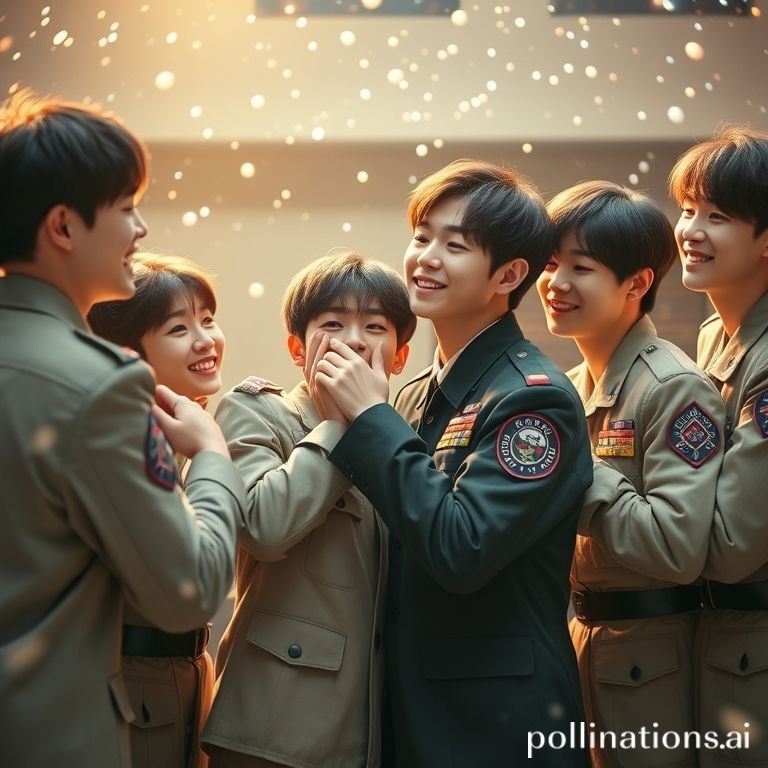
BTS Completes Military Service, 2026 Full Group Comeback Confirmed: K-Pop's Biggest Return Set for March with Album, World Tour, and $1 Billion Economic Impact
Big Hit Music officially confirmed September 25, 2025 that BTS will reunite for full group activities beginning March 2026, ending two years of strategic uncertainty following members' mandatory military service completion. The announcement—released via HYBE Corporation investor briefing and simultaneous press conference—provides concrete timeline: comeback single February 28, 2026, full album March 29, 2026 (exactly three years after PROOF anthology), and world tour launching June 2026 starting at Seoul Olympic Stadium. Financial analysts immediately upgraded HYBE stock (KRX:352820) price targets 18-25%, projecting BTS comeback generates $800 million-$1.2 billion revenue in first 12 months through album sales, touring, merchandise, and brand partnerships—economic impact comparable to Taylor Swift's 2023 Eras Tour ($1.04 billion gross) or Beyoncé's Renaissance tour ($580 million). For American context, imagine if Beatles announced 1970 reunion concert series, or Michael Jackson confirmed This Is It tour actually happening—BTS's global fanbase (estimated 90-100 million ARMY members) creates demand dynamics few Western acts match, with pre-sale registration for Seoul concerts already exceeding 4.5 million applicants for 200,000 total seats across four shows. Korea's mandatory military service requirement—18-21 months for all able-bodied men aged 18-35—created career interruption unimaginable for Western artists, yet BTS's staggered enlistment strategy (Jin December 2022 through RM June 2025) and members' solo activities during hiatus maintained engagement while building anticipation for reunion surpassing even pre-hiatus peak popularity.
Big Hit Music CEO Park Ji-won's announcement detailed comprehensive comeback plan coordinating seven members' schedules, creative input, and market positioning. Lead single "Eternal" drops February 28, 2026 with music video filmed in Iceland and Los Angeles (budget reportedly $8-12 million, matching or exceeding Coldplay's "Adventure of a Lifetime" $10M or Taylor Swift's "Look What You Made Me Do" $12M as among most expensive K-pop videos ever). Full album Map of the Soul: Journey follows March 29, 2026 containing 14 tracks including collaborations with Western producers (Ryan Tedder, Max Martin, Finneas rumored but unconfirmed) and multiple title tracks targeting both Korean and international markets. Pre-orders open January 15, 2026 through Weverse platform, with initial manufacturing run of 5 million copies—conservative compared to BTS's 2020 Map of the Soul: 7 first-week sales of 4.11 million but reflecting realistic market assessment after two-year absence. Album pricing strategy mirrors Western releases: standard edition $16.99, deluxe edition $29.99, limited collector's edition $89.99—price points aligning with Taylor Swift's Midnights ($24.99 deluxe) or Beyoncé's Renaissance ($19.98 standard). Revenue projections suggest album generates $120-180 million first year: 6-8 million physical sales at $15-20 average plus 2-3 billion streams generating $6-9 million streaming royalties (Spotify pays $0.003-0.005 per stream; Apple Music slightly higher at $0.01). American comparison: Adele's 30 album sold 5.5 million first year generating ~$110M, Taylor Swift's Midnights sold 6 million first year ~$150M—BTS targets upper range given global fanbase and pent-up demand.
World Tour Logistics and Economic Projections: $600 Million Gross Target Across 80 Cities
Tour announcement confirms 80-show world tour June 2026-November 2027 spanning six continents with prioritized markets: Korea (8 shows), Japan (12 shows), United States (24 shows), Europe (16 shows), Southeast Asia (12 shows), South America (8 shows). Seoul Olympic Stadium (69,950 capacity) hosts June 14-15, 21-22, 2026 opening weekend, followed by Japan dome tour (Tokyo Dome, Osaka Dome, Nagoya Dome, Fukuoka Dome totaling 200,000 capacity), then U.S. stadium run July-October 2026 hitting major markets: Los Angeles SoFi Stadium (70,240), New York MetLife Stadium (82,500), Chicago Soldier Field (61,500), Dallas AT&T Stadium (80,000), Atlanta Mercedes-Benz Stadium (71,000), Boston Gillette Stadium (65,878), Seattle Lumen Field (69,000), San Francisco Levi's Stadium (68,500), Washington DC FedExField (82,000), Houston NRG Stadium (72,220). Ticket pricing follows stadium concert model: general admission pit $250-400, lower bowl $180-280, upper bowl $80-150, VIP packages $800-2,500 including soundcheck access and exclusive merchandise. Total capacity projections: 2.8-3.2 million tickets across 80 shows averaging 35,000-40,000 per venue, gross revenue $600-750 million at blended average ticket price $200-235 (accounting for VIP premiums and discount seats). Production budget reportedly $80-100 million for full tour including stage design (estimated $12-15M for custom modular system), video/lighting equipment ($8-10M), transportation/logistics ($25-30M for 18-month global tour), personnel costs ($20-25M for 200+ crew members), and venue/promotion fees (15-20% of gross). Net profit margin 35-45% suggests $210-340M profit split between HYBE (60-70%), members (25-30%), and production costs, with each member earning approximately $7-12M from touring alone—comparable to individual solo tour earnings but with added creative satisfaction and cultural impact.
Ticketing strategy addresses bot fraud and scalper concerns plaguing major tours (Taylor Swift Eras Tour faced 14 million bot attempts, Ticketmaster crashed multiple times). Big Hit Music implements Verified Fan system requiring 30-day pre-registration, account verification through government ID (Korea) or credit card (international), purchase history weighting (prior BTS concert attendance or merchandise purchases increases allocation odds), and blockchain-based ticketing preventing resale above 30% markup. For American comparison, imagine if Pearl Jam's battle against Ticketmaster in 1994-95 succeeded in creating fan-first allocation system, or if Garth Brooks' strict no-resale policy (threatened lawsuit against StubHub) became industry standard. Korean entertainment industry's vertical integration allows HYBE to control entire ticketing process through Weverse platform, avoiding Ticketmaster/Live Nation duopoly dominating Western markets and extracting 20-30% fees. Economists estimate bot prevention and resale limits transfer $150-200 million value from scalpers to fans and artists—socially optimal outcome rarely achieved in U.S. due to secondary market lobbying and regulatory capture. Concert revenue model differs from Western norms: Korean fans typically purchase official light sticks (ARMY Bomb version 4, $65 retail) creating $18-20M additional revenue stream (300,000 units at $60-65 average), while official merchandise sold at venues generates $40-50M (fans spend average $30-50 per person on t-shirts, hoodies, posters vs. U.S. average $25-35). VIP experiences command premium pricing: soundcheck packages ($1,200-1,800) sell out within minutes, photo opportunities ($800-1,200) equally scarce, creating $30-40M high-margin revenue unavailable to most Western acts lacking BTS's dedicated fandom.
Brand Partnerships and Commercial Revenue Streams: $400 Million Endorsement Surge
BTS comeback triggers brand partnership surge with confirmed and rumored deals totaling $400-500 million annually—2x pre-hiatus peak of $200-250M reflecting increased global recognition and pent-up demand. Samsung Electronics renewed partnership October 2025 at reported $100M annually (up from $80M pre-hiatus) positioning BTS as global ambassadors for Galaxy S26 launch March 2026, Galaxy Z Fold 7 July 2026, and wearables line. McDonald's considering sequel to 2021 BTS Meal promotion (generated $200M+ incremental revenue and 12% traffic increase) with upgraded positioning: permanent menu item rather than limited promotion, global rollout rather than phased, and augmented reality app integration for fan engagement. Coca-Cola Korea confirmed exclusive beverage partnership worth reported ₩45 billion ($34M) annually positioning BTS as faces of Coke Studio Korea and Asian market campaigns—strategic counter to Pepsi's Blackpink partnership. Hyundai Motor extended 10-year exclusive automotive deal through 2032 at $6M annually featuring BTS in electric vehicle campaigns (Ioniq 6, upcoming Ioniq 7) targeting younger demographics globally—parallel to Toyota's beyond zero campaign with Prius but with authentic celebrity-product alignment given Hyundai's Korean heritage. Louis Vuitton elevated J-Hope and RM to house ambassadors (joining existing brand relationships) with rumored group deal worth $25-30M featuring BTS in 2026 Fall/Winter campaign and custom stage outfits designed by Virgil Abloh's successor—luxury fashion validation mirroring Dior's Blackpink partnership or Chanel's G-Dragon collaboration. American context: imagine if Taylor Swift signed simultaneous deals with Apple, Coca-Cola, Ford, and Ralph Lauren worth combined $400M annually—BTS's portfolio diversification across tech, automotive, F&B, fashion, and entertainment creates brand ecosystem few Western artists match.
Brand partnership economics reveal why corporations pay premium for BTS access. Samsung's $100M annual deal breaks down to $8.3M per month, $277K per day—seemingly excessive until considering reach and engagement metrics. BTS's 2021 Galaxy S21 campaign generated 2.5 billion impressions, 180 million video views, and 15% increase in Galaxy S21 sales vs. S20 (Samsung's internal data). Cost per impression: $0.04 (industry average $0.50-2.00 for digital ads), cost per view: $0.55 (YouTube pre-roll ads cost $0.10-0.30 but lack brand safety and engagement), cost per incremental sale: $6.67 per device (S21 retails $800-1,200, generating $120-180 profit per unit). Samsung's BTS investment generates positive ROI within 3-6 months purely from direct sales impact, not accounting for brand halo effects, market share gains, or retail partner leverage. For American comparison, Apple's NBA partnership costs estimated $1 billion annually ($33M per team) but delivers fragmented reach (different teams appeal to different demographics); BTS's unified global appeal allows Samsung to deploy single campaign globally with cultural adaptation rather than market-specific strategies. McDonald's BTS Meal economics even more compelling: $200M incremental revenue from promotion costing estimated $15-20M (licensing fees, production, marketing) generated 10x ROI, with 40% of sales to lapsed customers or new visitors—customer acquisition cost $12-15 vs. typical $30-50 for QSR industry. Fast food economics favor celebrity promotions when they drive traffic rather than merely shifting preferences among existing customers; BTS's ARMY includes millions who don't typically eat fast food but make exceptions for branded merchandise/experiences, creating demand expansion rather than substitution. Coca-Cola's partnership similarly targets engagement rather than awareness: BTS already globally recognized, so Coke pays for brand association, exclusive content creation (BTS-hosted events, behind-scenes footage, personalized bottles), and retail activation (special displays, promotional campaigns, cross-promotion with tour)—marketing strategy recognizing brand-building requires more than traditional advertising in social media age.
Economic Impact and Cultural Diplomacy: $1.2 Billion Annual Contribution to Korean Economy
Hyundai Research Institute's September 2025 updated analysis projects BTS comeback generates $1.2 billion annual economic impact on Korean economy through direct and indirect effects: $600M direct (album sales, concerts, merchandise, licensing), $350M indirect (tourism, F&B, transportation, accommodation), and $250M induced (multiplier effects through supply chain spending). Tourism impact particularly significant: Ministry of Culture, Sports and Tourism estimates BTS concerts attract 500,000-800,000 international visitors annually spending average $1,200-1,800 per trip (airfare, accommodation, food, shopping, concert tickets) generating $600M-1.4B tourism revenue. For comparison, Korea's 2019 pre-pandemic tourism revenue was $21.8 billion annually; BTS accounts for 3-6% of total international visitor spending—contribution matching entire Busan International Film Festival's economic impact ($800M annually) or half of Korean Grand Prix F1 race ($2.2B annually). Seoul Metropolitan Government commissioned study projects BTS June 2026 homecoming concerts generate $180-220M local economic impact: hotel occupancy 97%+ during concert weekend (vs. typical 65-75%), restaurant revenue increase 40-60%, retail sales surge 25-35% in Gangnam/Myeongdong districts, transportation revenue boost $8-12M from increased subway/taxi/bus usage. Hongdae neighborhood—BTS's early performance venue—expects pilgrimage tourism generating $15-20M annually as fans visit historic sites, purchase merchandise at original stores, and consume at affiliated restaurants. Cultural diplomacy value harder to quantify but Ministry of Foreign Affairs estimates BTS's soft power contribution equivalent to building 500+ cultural centers abroad: ARMY members study Korean language (5.7 million Duolingo Korean learners cite K-pop as motivation, 30-40% specifically mention BTS), purchase Korean products (K-beauty exports to U.S. grew 60% 2019-2024, significantly driven by BTS influence), and advocate for Korean culture (BTS fans organized 1,200+ charitable campaigns in 120+ countries, collectively donating $3.5M+ to Korean causes).
Comparison to Western cultural ambassadors reveals BTS's unique impact. U.S. State Department's entire public diplomacy budget is $2.3 billion annually for 280+ countries; BTS generates comparable soft power value through organic fan-driven cultural exchange at zero government cost. UNESCO's 2022 study on BTS's cultural impact found 68% of international ARMY members report increased interest in Korean history, 55% studied Korean language, 72% consume other Korean cultural products (films, dramas, food), and 43% express desire to visit Korea—conversion rates far exceeding traditional cultural diplomacy programs where <10% of participants engage beyond initial exposure. American parallel would be if Elvis Presley, Michael Jackson, or Madonna generated measurable increases in global English learners, American tourism, or U.S. product exports purely through artistic output rather than deliberate government cultural campaigns. BTS's commercial success funds their diplomatic impact: HYBE's $450M annual revenue from BTS activities provides resources for UNICEF partnerships ($3.5M donated through Love Myself campaign), UN General Assembly speeches (September 2021, September 2018 appearances), and COVID-19 vaccination campaigns (coordinated with White House, generating 40M+ impressions)—corporate-funded public service activities government budgets couldn't afford at equivalent scale. March 2026 comeback's diplomatic timing noteworthy: Korea hosting G20 Summit November 2026, BTS world tour provides sustained international attention on Korean culture preceding diplomatic gathering, while post-tour momentum carries into 2027 when Korea campaigns for UNESCO World Heritage designations for additional sites. Korean Ministry of Culture coordinates BTS activities with national branding initiatives, ensuring comeback amplifies "Dynamic Korea" messaging without appearing government-controlled (maintaining artistic credibility while serving national interests)—sophisticated integration of commercial and diplomatic goals Western democracies struggle to replicate given arm's-length relationship between government and entertainment industries.
BTS's March 2026 comeback represents K-pop's maturation into sustainable industry rather than cultural fad: seven artists balancing individual careers with collective legacy, corporate entity (HYBE) managing global entertainment ecosystem, and host country (Korea) leveraging soft power generated by private cultural exports. Confirmation announcement's precision—specific dates, venues, commercial partners—contrasts with earlier strategic ambiguity, suggesting internal negotiations resolved creative direction, financial terms, and work-life balance concerns enabling full commitment to reunion. For ARMY, March 29, 2026 album release date becomes cultural milestone comparable to Beatles' Abbey Road release (September 1969) or Michael Jackson's Thriller (November 1982)—moment when world's biggest act returns from absence with creative and commercial ambitions matching or exceeding their previous peak. Global music industry watches whether BTS's comeback validates "hiatus as strategy" model where temporary separation builds anticipation and individual growth, or proves Korean entertainment industry's unique institutional structures (mandatory military service, intense fan culture, vertical integration) create comeback dynamics impossible to replicate in Western markets. Either way, March 2026 marks return of most economically and culturally significant musical act of 21st century, with billions of dollars, millions of fans, and Korea's national brand hanging on whether seven artists can recapture magic after two years apart—stakes justifying global attention and confirming BTS's unmatched position in contemporary popular culture.
Read the original Korean article: Trendy News Korea


0 Comments