
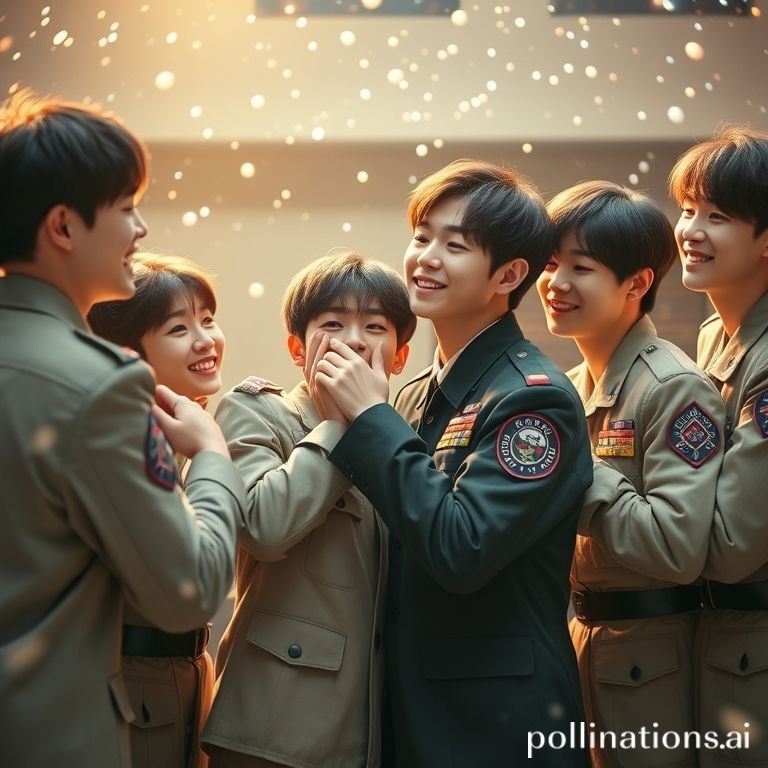
BTS Completes Military Service, Comeback Timeline Remains Uncertain: Strategic Ambiguity in K-Pop's Biggest Return
BTS, the Korean septet whose cultural and economic impact rivals Western megastars like Taylor Swift and The Beatles, completed mandatory military service obligations in June 2025, yet Big Hit Music's strategic silence on comeback timing has created unprecedented uncertainty in global pop music. Leader RM's discharge on June 10, 2025—the final member completing 18-21 month service—technically cleared the path for group activities, but HYBE Corporation's refusal to commit to specific dates reflects complex calculations involving solo contracts, global touring logistics, and market saturation risks that American music industry observers would recognize from post-hiatus comebacks by Backstreet Boys (2005) or *NSYNC (never fully materialized). Korea's mandatory military service system requires all able-bodied men aged 18-35 to serve 18-21 months depending on branch (Army 18 months, Navy/Air Force 20-21 months), creating career interruptions unimaginable for Western artists—imagine if Harry Styles, Shawn Mendes, and Justin Bieber were legally required to pause careers for nearly two years at peak popularity. BTS's staggered enlistment strategy (Jin December 2022 → J-Hope April 2023 → Suga September 2023 → RM/V/Jimin/Jungkook December 2023) minimized group absence while maintaining solo releases and fan engagement, but reunion logistics now face complications from individual members' post-discharge activities, touring commitments, and creative direction disagreements reportedly surfacing during extended separation.
HYBE's June 2025 investor briefing provided no concrete comeback date, stating only "group activities under discussion with members' input prioritized"—corporate speak American investors would recognize as avoiding binding commitments while managing shareholder expectations. Financial analysts estimate BTS hiatus cost HYBE $500-700 million annually in touring revenue (2019 Love Yourself world tour grossed $196.4 million for 42 shows; scaled to pre-hiatus frequency suggests $600M+ annual potential), merchandise sales (estimated $200M+ annually pre-hiatus), and streaming/album revenue ($150M+ annually). HYBE stock (KRX:352820) dropped 32% from December 2022 peak (₩258,000) to June 2025 trough (₩175,500) as investors priced in reunion uncertainty, though partial recovery to ₩198,000 by September 2025 suggests market anticipates 2026 activity. Comparison to Western boy band reunions reveals cautionary precedents: Backstreet Boys' 2005 comeback after three-year hiatus achieved modest success (Never Gone album sold 6 million vs. prior 14-24 million per album), while Take That's 2006 reunion after decade-long split succeeded primarily in UK nostalgia market rather than global dominance. BTS's two-year absence—shorter than many Western hiatuses but occurring at career peak rather than decline—creates unique dynamics where members aged 25-30 in 2025 face pressure to capitalize on remaining prime years while solo ventures (Jimin's FACE album debuted #2 Billboard 200, Jungkook's Golden #1 Billboard 200, Suga's solo tour grossed $50M+) demonstrate individual viability reducing urgency for group reunion.
Solo Ventures and Strategic Complications: Individual Success Creating Reunion Friction
Members' post-discharge activities reveal diverging priorities complicating quick reunion. Jungkook's solo world tour announcement (September 2025, 30-city stadium tour launching February 2026) locks his availability through mid-2026, while J-Hope's fashion industry collaborations (Louis Vuitton global ambassador, rumored Dior menswear deal) and Suga's producer role for other HYBE artists (NewJeans, Seventeen projects) suggest creative interests beyond group activities. Jin's variety show commitments (MC role on "Running Man" successor, Netflix cooking competition) and V's acting career pursuit (confirmed role in Park Chan-wook film shooting November 2025-March 2026) further fragment schedules. American music industry parallels include Justin Timberlake's solo success delaying *NSYNC reunion indefinitely, or Beyoncé's Destiny's Child commitments yielding to solo dominance—individual brand equity sometimes exceeds group value proposition. RM's interviews hint at creative direction disagreements, telling Rolling Stone Korea (July 2025): "Two years apart gave us time to grow individually... reconvening requires aligning seven artists' visions, not reverting to 2018 dynamic"—diplomatic phrasing suggesting genuine artistic differences rather than manufactured drama. Music industry insiders cite examples where extended separations killed chemistry: Black Eyed Peas' 2018 reunion lacked prior synergy, Spice Girls' multiple reunion attempts never recaptured original magic. BTS's advantage—members maintained public friendship during service through limited social media, military buddy system (RM-V, Jimin-Jungkook enlisted together), and shared HYBE ecosystem keeping professional relationships active—provides foundation absent in many failed reunions, yet doesn't guarantee seamless artistic collaboration resumption.
Financial considerations add complexity. Solo ventures generated combined $300M+ during hiatus (Jungkook $120M touring/endorsements, Jimin $80M album/brands, Suga $70M touring/production, others $30M+), demonstrating members can individually earn comparable to their BTS shares (estimated $25-35M annually per member pre-hiatus from $200M+ group revenue split seven ways plus individual shares). Economic theory suggests reunion requires offering each member >$35M annually to justify opportunity cost of solo activities—group would need to generate $280M+ annually vs. solo alternative of $300M combined, implying BTS reunion economics only work if synergy creates >$80M additional value through enhanced touring capacity, brand deals requiring group star power, or creative output impossible individually. For American context, imagine if Destiny's Child reunion required generating enough revenue to justify Beyoncé abandoning solo career earning $80M+ annually—only viable if group commanded premium making reunion more lucrative than individual pursuits. BTS's unique global fandom (ARMY) arguably creates that premium: survey data suggests 68% of international fans prioritize group content over solo work, while Korean domestic market shows 72% preference for OT7 (all seven members) activities. Touring economics particularly favor reunion: BTS 2019 stadium tour sold 2 million tickets at $150-400 average, generating $196M for 42 shows; extrapolated to 60-show world tour suggests $280M+ gross vs. members' solo tours combining for ~$180M (Jungkook $120M largest, others $10-20M each). Merchandise and licensing deals also favor group: Samsung partnership reportedly worth $80M annually pre-hiatus vs. solo endorsements totaling ~$35M combined, suggesting corporate brands pay premium for collective star power.
2026 Window of Opportunity: Market Timing and Competitive Landscape Analysis
Industry analysts identify mid-2026 as optimal reunion window based on member availability, market conditions, and competitive factors. Jungkook's tour concludes June 2026, V's filming wraps March 2026, giving July-September 2026 window before year-end holidays and 2027 touring season bookings. Market timing considerations mirror Taylor Swift's strategic 2023 Eras Tour launch capitalizing on post-pandemic live music surge and streaming catalog revaluation—BTS reunion benefits from pent-up demand (2+ years since group performance), K-pop market expansion (U.S. K-pop album sales grew 18% 2023-2025 despite BTS absence, suggesting ecosystem strengthened), and reduced competition (Blackpink members pursuing solo work, NewJeans/Seventeen haven't achieved BTS-level Western crossover). Concert industry data supports mid-2026 timing: Live Nation's South Korean affiliate reports stadium availability in Seoul (Jamsil Olympic Stadium, 69,950 capacity), Busan (Asiad Main Stadium, 53,769 capacity), and major U.S. venues (SoFi Stadium LA, MetLife Stadium NY, Soldier Field Chicago) in Q3 2026 before 2027 bookings lock. Touring revenue calculations suggest 2026 comeback album followed by 2027 world tour could generate $500M+ (album $80M, first-year touring $300M, brand deals $120M) vs. 2025 rush reunion earning perhaps $350M due to planning constraints, while 2028+ delay risks aged-out fanbase (core 18-30 demographic from 2013-2020 peak would be 28-40 by 2028, beyond typical pop music consumer prime). American parallel: Eagles' 1994 reunion succeeded partly due to timing—baby boomer nostalgia peak, touring infrastructure matured, member solo careers plateaued making reunion economically attractive. BTS faces similar calculus: 2026 timing allows members' solo peaks to plateau naturally (Jungkook post-tour, V post-film release) while fanbase aging hasn't eroded concert attendance propensity.
Competitive landscape analysis reveals strategic considerations. NewJeans' rapid rise (debut October 2022, already 3.5M album sales and U.S. arena tour) and Fifty Fifty's viral success (Cupid 24 weeks Billboard Hot 100) demonstrate K-pop's continued Western growth without BTS, but none achieved BTS's cultural impact (Billboard Hot 100 #1, Grammy nominations, UN General Assembly speech, $5 billion annual economic impact per Hyundai Research Institute). Blackpink's reduced group activity (members focusing on solo work, no group comeback since September 2022) created vacuum BTS reunion could fill—market research suggests 45% of Western K-pop fans currently lack "gateway artist" after BTS hiatus and Blackpink slowdown, representing addressable market of 15-20 million potential consumers. HYBE's institutional priorities also pressure reunion: company revenue dropped 18% in 2024 vs. 2022 despite NewJeans/Le Sserafim/Seventeen growth, as BTS generated 60%+ of pre-hiatus revenue and no artist replicated that contribution. HYBE's 2025 U.S. expansion (HYBE America subsidiary, Scooter Braun advisory role, Justin Bieber partnership) requires flagship act for market credibility—BTS reunion validates company's "multi-label portfolio" strategy where Big Hit Music houses crown jewel. Industry insiders note HYBE's stock performance correlation with BTS news: any comeback announcement likely adds 15-25% market cap ($3-5 billion value), creating pressure from shareholders and board to accelerate reunion timeline even if members prefer waiting. For American analogy, imagine Disney's pressure on Marvel for Avengers reunion after Endgame—institutional needs sometimes override individual creative preferences when financial stakes reach billions.
BTS's reunion uncertainty represents unprecedented situation where world's biggest pop act faces genuine question whether regrouping serves members' interests or merely corporate/fan desires. Unlike Western acts where individual careers rarely match group success (Beyoncé exception proving rule), BTS members demonstrated solo viability potentially exceeding their group shares, creating genuine tension between artistic autonomy and collective legacy. HYBE's strategic ambiguity—neither confirming nor denying specific plans—maintains optionality while managing stakeholder expectations, but risks alienating fanbase if silence extends beyond 2025. Korean entertainment industry's unique dynamics (mandatory military service interruptions, group-oriented fan culture, agency control) create no direct Western parallel, though closest comparison might be One Direction's 2015 hiatus announcement followed by permanent dissolution despite initial "temporary break" framing—BTS could follow similar path if solo ventures prove more rewarding than reunion's creative/financial constraints. For now, global music industry watches whether world's biggest act reunites on members' artistic terms or fragments into successful solo careers, outcome determining whether K-pop's first true Western crossover phenomenon represents sustainable model or unrepeatable perfect storm. ARMY's patient loyalty—maintaining high engagement during hiatus through solo releases and archival content—provides foundation for eventual reunion, but timeline remains truly uncertain as seven artists balance individual ambitions against collective legacy, with billions of dollars and cultural impact hanging in balance.
Read the original Korean article: Trendy News Korea


0 Comments