
Korean Original Title: 이재명 대통령 유엔 귀국, 'END 이니셔티브' 한반도 긴장완화 방안 제시
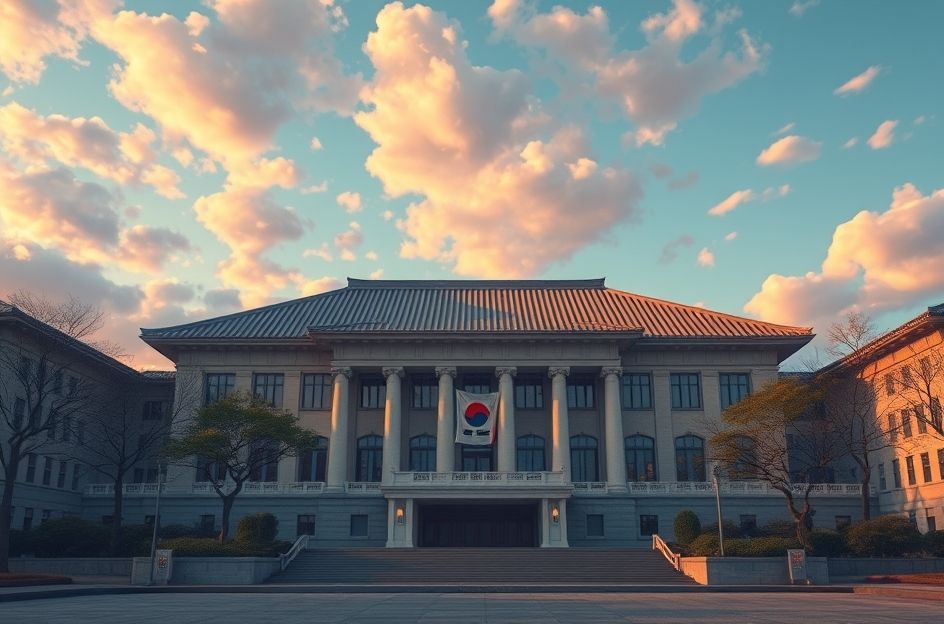
President Lee Jae-myung Returns from UN General Assembly After Unveiling Three-Phase 'END Initiative' for Korean Peninsula Denuclearization
South Korean President Lee Jae-myung returned to Seoul on September 27, 2025, after attending the United Nations General Assembly in New York, where he unveiled the "END Initiative"—a comprehensive three-phase framework for reducing Korean Peninsula tensions and pursuing North Korean denuclearization through sequential engagement, negotiation, and verified nuclear dismantlement processes designed to overcome the diplomatic stalemates, mutual distrust, and failed negotiation attempts that have characterized Korean Peninsula peace efforts for the past three decades, during which cycles of optimistic diplomatic breakthroughs followed by acrimonious breakdowns have repeatedly frustrated international efforts to resolve one of the world's most dangerous nuclear standoffs threatening regional stability and potentially triggering catastrophic military conflict involving major powers including the United States, China, Russia, and Japan whose security interests converge on the Korean Peninsula.
For American readers, understanding this diplomatic initiative requires recognizing that Korean Peninsula tensions differ fundamentally from other international nuclear proliferation challenges in their historical complexity, involving not merely contemporary geopolitical calculations but deeply rooted historical grievances extending from the 1950-1953 Korean War that ended in armistice rather than peace treaty, leaving the two Koreas technically still at war despite 70+ years without major combat, creating legal ambiguities, persistent military tensions along the Demilitarized Zone (DMZ) separating the two nations, and psychological trauma affecting both societies' collective consciousness and shaping political discourse around reunification aspirations, security anxieties, and ideological competition that American domestic politics rarely confronts given the United States' geographic isolation from hostile neighbors and absence of existential national division comparable to the Korean experience.
END Initiative Framework and Strategic Logic
The END acronym represents three sequential phases: Engagement, Negotiation, and Denuclearization, deliberately ordered to build trust incrementally rather than demanding immediate North Korean nuclear concessions that previous failed diplomatic efforts including the 1994 Agreed Framework, 2007 Six-Party Talks agreements, and 2018-2019 Trump-Kim summits attempted without establishing sufficient trust foundations causing North Korea to perceive premature denuclearization demands as existential threats requiring protective nuclear deterrent maintenance despite international pressure, economic sanctions, and diplomatic isolation that Pyongyang has endured for decades while successfully developing increasingly sophisticated nuclear weapons and ballistic missile capabilities including intercontinental ballistic missiles (ICBMs) potentially capable of reaching the U.S. mainland—a capability fundamentally transforming the strategic equation by making North Korean nuclear threats directly relevant to American homeland security rather than merely regional Asian security concerns.
The Engagement phase prioritizes reopening suspended communication channels including inter-Korean dialogue, humanitarian cooperation, and limited economic exchanges designed to build working relationships and demonstrate South Korean goodwill without requiring immediate North Korean policy changes or nuclear commitments that might trigger defensive responses from Pyongyang leadership perceiving pressure as regime-change attempts threatening the Kim dynasty's political survival—a paramount concern for North Korean leadership whose legitimacy rests substantially on maintaining absolute control, projecting strength against foreign pressures, and portraying external threats as justifying internal repression and economic hardship that would otherwise undermine regime stability if citizens blamed leadership rather than external enemies for their material deprivation.
The Negotiation phase would commence only after successful engagement establishes trust and communication norms, focusing initially on nuclear freeze agreements where North Korea commits to halting new nuclear weapons production and ballistic missile testing in exchange for reciprocal concessions including partial sanctions relief, security guarantees, and economic aid—a sequenced approach learning from previous negotiation failures where comprehensive nuclear elimination demands triggered North Korean walkouts and military provocations when Pyongyang concluded it couldn't achieve sufficient compensation for abandoning nuclear programs it views as essential security insurance against American regime-change operations that North Korean leadership believes destroyed governments in Iraq, Libya, and elsewhere through military intervention that might have been deterred had those nations possessed nuclear weapons capabilities.
The Denuclearization phase represents the initiative's ultimate objective, pursuing Complete, Verifiable, Irreversible Denuclearization (CVID) through international inspections, verified dismantlement of nuclear facilities, and destruction of nuclear warheads under International Atomic Energy Agency (IAEA) supervision—aspirational goals that have eluded the international community despite decades of diplomatic efforts but which President Lee's framework approaches incrementally rather than demanding immediate comprehensive nuclear abandonment that North Korea has consistently rejected as threatening regime survival and national sovereignty.
U.S. Tariff Controversy and Domestic Political Implications
President Lee's UN visit was overshadowed domestically by U.S. President Donald Trump's September 25 statement that "Korea's $350 billion U.S. investment commitment must be paid upfront"—remarks interpreted by Korean media as suggesting South Korea should provide immediate financial transfers rather than multi-year investment commitments spread across various Korean companies' independent business decisions regarding U.S. manufacturing facilities, technology partnerships, and market expansion strategies that naturally occur over years as companies evaluate market conditions, negotiate contracts, secure financing, hire workers, construct facilities, and commence operations rather than through government-directed instantaneous capital transfers that would be unprecedented in international economic relations and potentially violate World Trade Organization (WTO) rules prohibiting governments from forcing private companies to make specific investments in particular countries.
The Blue House (South Korea's presidential residence) issued immediate clarifications stating "Korea prioritizes national interests in all trade negotiations" and emphasizing that Korean companies' U.S. investment decisions reflect independent corporate strategies rather than government directives coordinated with American political pressures—statements calculated to rebut domestic criticism from opposition politicians including People Power Party Floor Leader Song Eon-seok who accused the Lee administration of "pressuring Korean business conglomerates (chaebol) to increase U.S. investments" to appease Trump administration trade demands threatening tariff increases on Korean exports including automobiles, electronics, steel, and other products comprising substantial portions of Korea's export-dependent economy where exports represent approximately 40% of GDP compared to roughly 12% for the United States, creating asymmetric vulnerability where Korean economic growth depends substantially on export market access while American economic performance remains relatively insulated from specific bilateral trade relationships.
These domestic political attacks reflect broader tensions in Korean politics where President Lee's Democratic Party faces persistent opposition from the conservative People Power Party that controlled the presidency 2022-2025 before Lee's 2025 electoral victory, creating polarized political dynamics where opposition parties reflexively criticize presidential initiatives regardless of substantive policy merits—a pattern familiar to American readers observing similarly polarized U.S. politics where partisan calculations often override policy substance in shaping political messaging and opposition strategies designed to undermine presidential authority and position opposition parties favorably for subsequent elections.
International Reactions and Implementation Challenges
Diplomatic analysts characterized President Lee's END Initiative as representing South Korea's attempt to reclaim ownership of Korean Peninsula peace processes from the major powers—United States, China, Russia—whose geopolitical interests have historically shaped peninsula diplomacy often subordinating Korean preferences to great power competition dynamics where American security alliances, Chinese economic leverage, and Russian regional influence calculations dominated negotiation frameworks with limited Korean agency despite Korea being the most directly affected nation whose territory, population, and economic interests face immediate threats from military conflict or nuclear escalation scenarios that would devastate the peninsula regardless of outcomes for distant great powers whose homelands remain secure from direct North Korean conventional military threats even if regional instability creates economic disruptions, refugee flows, and geopolitical complications requiring diplomatic attention and military resources.
However, substantive implementation faces formidable obstacles beginning with North Korea's response, which remains uncertain given Pyongyang's historical pattern of ignoring or rejecting South Korean peace initiatives while demanding direct negotiations with the United States as the primary adversary whose security guarantees and sanctions relief North Korea considers essential for any meaningful nuclear agreements—a position reflecting North Korea's assessment that South Korea lacks independent authority to provide the security assurances and economic benefits that only American diplomatic recognition, normalized relations, and sanctions removal can deliver given the U.S. Treasury Department's dominant role in global financial systems enabling American secondary sanctions that pressure foreign companies and financial institutions to cease North Korean business relationships despite those countries' independent sovereignty theoretically allowing them to maintain whatever North Korean ties they choose without American permission.
Chinese and Russian cooperation represents additional complications given their strategic interests in maintaining North Korean buffer state status preventing American-aligned unified Korea from sharing borders with China and Russia—calculations creating incentives to prevent Korean reunification even while officially supporting denuclearization, leading to inconsistent sanctions enforcement and diplomatic protection shielding North Korea from maximum pressure campaigns that might otherwise force Pyongyang toward genuine denuclearization negotiations rather than tactical concessions followed by provocations restarting confrontation cycles serving North Korean interests by maintaining international attention, preserving nuclear leverage, and justifying internal mobilization against external threats.
Original article: TrendyNews Korea


0 Comments