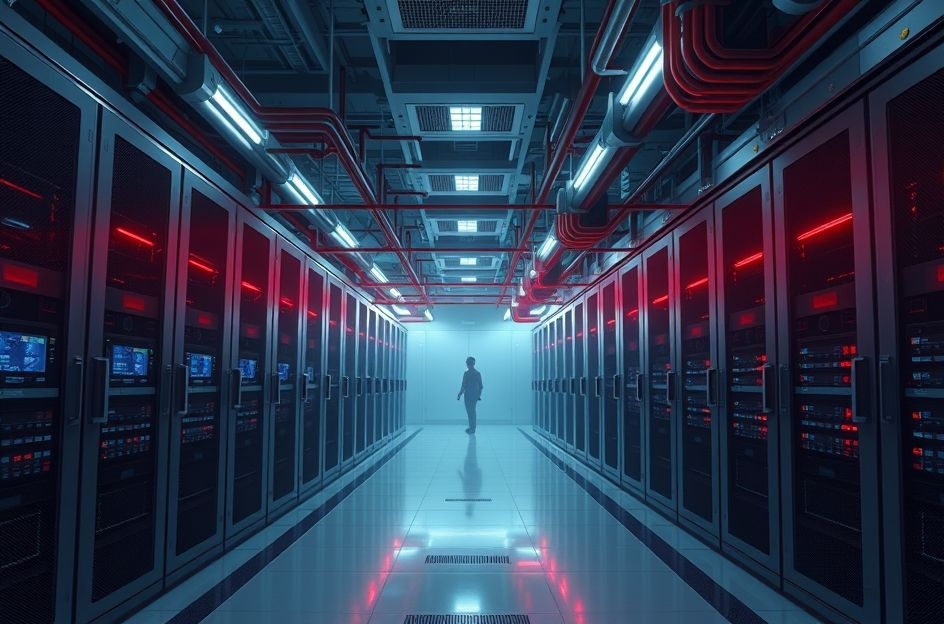
Government Data Center Fire Disrupts Major Administrative Services, Recovery Takes Two Days
A fire broke out at approximately 3:00 AM on September 26, 2025, in the server room at the Government Daejeon Complex in Yuseong-gu, Daejeon, disrupting major administrative services across South Korea. The incident disabled approximately 30 online civil services operated by the Ministry of the Interior and Safety, Ministry of Health and Welfare, and Ministry of Employment and Labor for up to 48 hours. Services directly affecting citizens' daily lives—including resident registration certificate issuance, health insurance inquiries, and unemployment insurance applications—were suspended, causing significant inconvenience to millions of South Koreans who rely heavily on digital government services.
To understand the magnitude of this disruption for American readers, imagine if the Social Security Administration, Medicare systems, and unemployment benefits portals all went offline simultaneously for two full days. In South Korea, where 95% of government services are digitized—one of the highest rates globally—this outage affected approximately 15 million daily transactions. South Korea's e-government initiative, which began in earnest in 2001 with a $2.4 billion investment, has made the country among the world's most digitally connected societies. The United Nations consistently ranks South Korea in the top 3 for e-government development, making this outage particularly jarring for a population accustomed to 24/7 digital service availability.
Fire Cause and Comprehensive Damage Assessment
Fire authorities determined the fire likely originated from UPS (Uninterruptible Power Supply) battery overheating in the server room. UPS systems provide critical power backup to computing equipment during outages, and continuous 24-hour operation over several years led to heat accumulation that triggered the fire. The specific UPS unit involved was a 500kVA system manufactured in 2019, operating well within its expected lifespan but apparently suffering from inadequate ventilation in the densely packed server environment.
Fortunately, no casualties occurred due to the early morning timing and automated fire suppression systems, but approximately 50 servers were destroyed or damaged. The total estimated damage exceeds ₩8 billion ($6 million), including hardware replacement, data recovery efforts, and service disruption costs. Additional damage occurred from water and chemical fire suppressant during extinguishing efforts, affecting adjacent server racks that might otherwise have remained operational.
Most critically for American disaster preparedness experts, backup servers located in the same building sustained simultaneous damage, significantly delaying recovery. This violated fundamental principles of geographic redundancy that are standard practice in American federal IT infrastructure. The Federal Information Security Management Act (FISMA) requires U.S. federal agencies to maintain geographically separated backup systems, precisely to prevent this type of simultaneous failure.
The Ministry of the Interior and Safety formed an emergency recovery team of 120 IT specialists working in 8-hour shifts around the clock. The team gradually restored services starting September 27 afternoon using less-damaged servers and emergency backup systems housed in a separate facility 15 kilometers away. Full service restoration was achieved by September 28 morning, representing a 46-hour total outage—the longest government IT disruption in South Korean history.
Citizen Impact and Economic Consequences
Citizens experienced unprecedented inconvenience during the outage, highlighting South Korea's deep dependence on digital government services. Real estate transactions requiring resident registration certificates were delayed, affecting an estimated 3,200 property deals worth approximately ₩2.1 trillion ($1.6 billion). For context, South Korea processes about 1.8 million real estate transactions annually, making this delay economically significant.
Job seekers couldn't submit unemployment benefit applications through the standard online portal, forcing 23,000 applicants to visit physical offices. South Korea's unemployment insurance system typically processes 40,000 applications weekly, with 95% submitted online. The sudden shift to paper-based processing created massive bottlenecks at the 350 Employment and Labor offices nationwide.
Medical institutions faced particular difficulties verifying health insurance eligibility for patients. South Korea's National Health Insurance Service covers 97% of the population through a single-payer system, making real-time verification crucial for treatment decisions. Emergency protocols allowed hospitals to treat patients first and verify coverage later, but this created administrative complications for approximately 180,000 patient visits during the outage period.
One major real estate agency in Gangnam reported: "Three scheduled contracts worth ₩4.5 billion were postponed. Both buyers and sellers suffered financial losses due to interest rate fluctuations and delayed possession dates." The Korea Real Estate Board estimated total economic impact from delayed transactions at ₩850 billion ($640 million).
The government activated alternative offline services, but limited personnel at 226 district offices created wait times averaging 3.5 hours for services that typically take 2 minutes online. Senior citizens, who comprise 15.7% of South Korea's population and rely more heavily on in-person services, were disproportionately affected as digital-first younger generations overwhelmed physical offices.
IT Infrastructure Vulnerabilities Exposed
The incident exposed critical weaknesses in South Korea's government IT infrastructure that contradict international best practices. Co-locating primary and backup servers in the same building—a configuration that allowed simultaneous damage—represents a fundamental design flaw that would be unacceptable in most developed nations' critical infrastructure planning.
International disaster preparedness standards, including those followed by the U.S. Department of Homeland Security, require geographic distribution of primary and backup systems across different seismic zones and weather patterns. The recommended minimum separation is 100 kilometers for critical government systems, yet South Korea's backup servers were located merely 200 meters away in the same complex.
Budget constraints and management convenience were cited as primary reasons for this compromised design. The Government Information Technology Infrastructure budget allocation of ₩180 billion ($135 million) annually has remained relatively flat since 2020, despite increasing digital service demands. By comparison, the U.S. federal government's IT modernization budget increased 35% over the same period.
Questions also arose regarding inadequate UPS inspection and replacement protocols. The Korean government follows a 7-year replacement cycle for UPS batteries, compared to the 5-year standard recommended by major manufacturers and used by Fortune 500 companies. Regular thermal imaging inspections, standard practice in American data centers, were conducted only annually rather than the recommended quarterly schedule.
IT infrastructure Professor Park Min-soo from Seoul National University stated: "This incident exposed fundamental problems in government IT infrastructure management that have been overlooked during South Korea's rapid digitization. Geographic server distribution, regular facility inspection and replacement, and real-time monitoring systems are not luxuries—they are essential for maintaining public trust in digital government."
Government Response and Systemic Reforms
The government announced comprehensive plans to overhaul IT infrastructure management systems, allocating an emergency budget of ₩500 billion ($375 million) over the next three years. This represents the largest government IT infrastructure investment since the initial e-government initiative in 2001.
Key reforms include geographically distributing backup servers across three separate regions—Seoul metropolitan area, Busan, and Daegu—ensuring no single incident can disable both primary and backup systems. This mirrors the distributed architecture used by major cloud providers like Amazon Web Services and Google Cloud Platform.
The government will also strengthen facility safety management through AI-based anomaly detection systems capable of predicting equipment failures 72 hours in advance. These systems, similar to those used by Microsoft and Facebook for their data centers, continuously monitor temperature, humidity, vibration, and electrical consumption patterns to identify potential failures before they occur.
Additionally, a new rapid response protocol will enable 90% service restoration within 4 hours of any major outage, compared to the current 48-hour recovery time. This standard aligns with private sector service level agreements and reflects citizens' reasonable expectations for government service reliability.
The incident has sparked broader discussions about South Korea's digital dependency and the need for robust analog backup systems. Some policy experts advocate for mandatory offline alternatives for all critical government services, while others argue that investing in redundant digital infrastructure is more cost-effective and user-friendly.
International cybersecurity experts view this incident as a valuable case study for other highly digitized nations. As governments worldwide accelerate digital transformation—particularly following COVID-19—South Korea's experience highlights the critical importance of infrastructure resilience planning that matches the scale of digital service dependency.
Source: Korea Trendy News
Comments
Post a Comment