Korean Original Title: HDC현대산업개발, '호연 센트럴 아이파크' 모델하우스 개관...분양 경쟁 치열
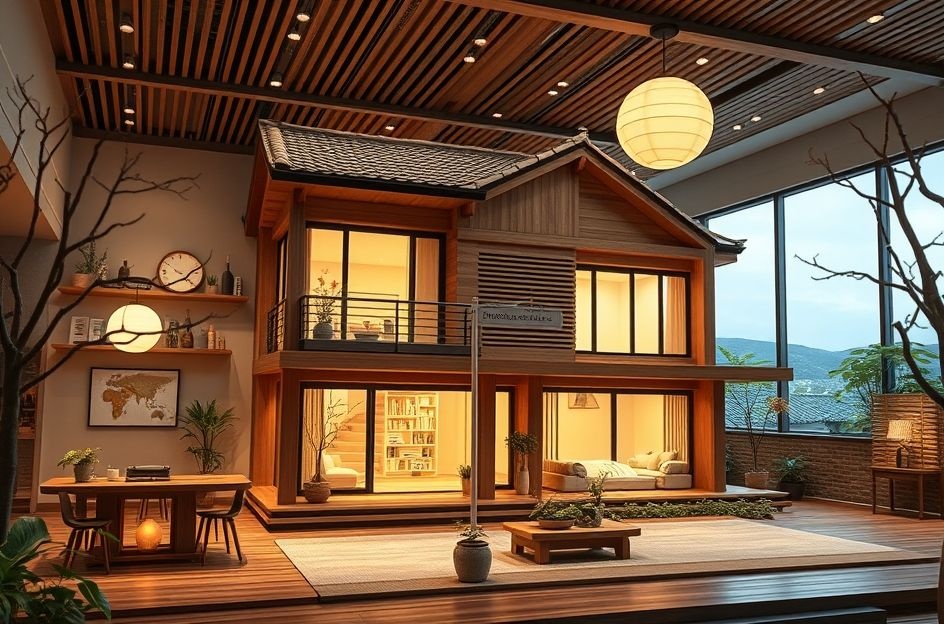
HDC Hyundai Opens Hoyeon Central IPark Model House Near GTX-A Station as 1,248-Unit Complex Attracts Intense Pre-Sale Interest
HDC Hyundai Development Company opened the model house for "HDC Hoyeon Central IPark" on September 27, 2025, in Dongtan 2 New Town, Hwaseong City, Gyeonggi Province, marking the launch of sales for a 1,248-unit residential complex strategically positioned within a five-minute walk of Dongtan Station on the GTX-A express rail line—a location advantage that has generated extraordinary pre-sale interest among Seoul metropolitan area homebuyers seeking affordable access to Seoul's lucrative employment centers while avoiding the prohibitive housing costs that have made Seoul proper increasingly unaffordable for middle-class Korean families earning median incomes insufficient to qualify for mortgage financing on Seoul apartments that typically cost $500,000-$1,000,000 USD or more depending on district desirability and apartment size.
For American readers, understanding Korean apartment pre-sales (분양, bunyeong) requires recognizing fundamental differences from American residential real estate transactions. In Korea, major construction companies like HDC Hyundai pre-sell apartment units 2-3 years before construction completion through lottery-style allocation systems (청약, cheong-yak) where qualified applicants submit applications during designated windows, with units allocated through computerized lottery drawings when applications exceed available units—a system designed to prevent speculative real estate investment and ensure fair distribution but which has evolved into complex financial calculations where applicants analyze expected price appreciation, neighborhood development potential, and investment returns before deciding whether to purchase pre-sale units that won't be habitable for years.
GTX-A Express Rail Transforms Metropolitan Transportation Geography
The complex's primary market appeal centers on its proximity to Dongtan Station serving the GTX-A (Great Train eXpress Line A), an express commuter rail line that opened in March 2024 connecting outer suburban areas including Dongtan directly to Seoul's premium employment districts including Gangnam and Samsung business centers with travel times of 19-23 minutes—dramatically faster than previous 60-90 minute commutes requiring multiple transfers between conventional subway lines, regional buses, and local trains. This transportation revolution has fundamentally altered residential location calculations for Seoul metropolitan area workers who previously faced binary choices between expensive Seoul apartments offering short commutes or affordable suburban housing requiring exhausting 2-3 hour daily commutes that consumed substantial time, money, and energy while limiting family time and personal activities.
The GTX-A system represents South Korea's most ambitious metropolitan transportation infrastructure project, comparable in transformative potential to American express rail systems like San Francisco's BART or Washington DC's Metro, though with superior speed specifications averaging 100-110 km/h (62-68 mph) compared to American heavy rail systems typically averaging 50-80 km/h (31-50 mph). The express rail network bypasses intermediate stations, stopping only at major transfer points and employment centers, allowing outer suburban residents to reach Seoul's core business districts faster than many Seoul residents living in peripheral Seoul districts who must navigate congested subway networks with frequent stops and transfer delays. Real estate analysts report that apartment prices near GTX-A stations have increased 20-35% since line opening was confirmed, with Dongtan Station area experiencing 30% average price appreciation reflecting intense buyer interest in combining suburban housing affordability with metropolitan employment access.
HDC Hyundai's strategic site selection reflects sophisticated understanding of Korean homebuyer priorities where transportation convenience often outweighs apartment quality, neighborhood amenities, or school district reputations as the primary purchase decision factor—a hierarchy differing from American homebuying where school quality, neighborhood safety, and property tax rates typically rank higher than commute times for families prioritizing children's education over parental convenience. The five-minute walk to Dongtan Station positions Hoyeon Central IPark as an "ultra-station-area" (초역세권, cho-yeok-se-gwon) property commanding premium pricing and generating intense buyer competition compared to properties located 10-15 minutes from stations that lose substantial market appeal despite relatively modest distance differences that American homebuyers would consider negligible.
Unit Mix, Pricing Strategy, and Market Positioning
The 1,248-unit complex offers apartment configurations ranging from 59 square meters (635 square feet) suitable for young couples or single professionals to 114 square meters (1,227 square feet) accommodating families with multiple children—a size range addressing diverse household types while concentrating inventory in the 84 square meter (904 square feet) category comprising 540 units (43% of total inventory) targeting the sweet spot for Korean families with 1-2 children seeking adequate space without excessive cost. Pre-sale prices range from 580 million won ($435,000 USD) for the smallest units to 950 million won ($712,500 USD) for the largest configurations, positioning the complex 10-15% below current market prices for comparable nearby apartments trading at approximately 1.1 billion won ($825,000 USD) for 84 square meter units—a pricing discount calculated to generate intense application interest while ensuring HDC Hyundai captures substantial profit margins given that construction costs for Korean apartment buildings typically represent only 35-45% of pre-sale prices.
This pricing strategy reflects sophisticated financial engineering where construction companies profit primarily through land acquisition timing and pre-sale price optimization rather than construction efficiency or operational excellence. HDC Hyundai likely acquired the Dongtan site 3-5 years ago before GTX-A opening was confirmed, paying significantly lower land prices than current market values inflated by transportation infrastructure improvements that the company correctly anticipated would transform Dongtan from distant suburban fringe into connected metropolitan satellite offering Seoul employment access at suburban housing costs. The 10-15% pricing discount versus current market transactions represents careful calculation balancing maximizing revenue against ensuring rapid sellout that minimizes carrying costs, maintains positive market perception, and generates cash flow for subsequent projects—a business model where even modest pricing discounts trigger application volumes exceeding available units by ratios of 10:1 or higher, allowing companies to select financially qualified buyers while creating media coverage portraying projects as desirable "must-have" properties.
Premium Design Features and Community Amenities
Hoyeon Central IPark incorporates HDC Hyundai's latest residential design standards featuring three-bay (3Bay) apartment layouts providing windows on three exterior walls rather than the two-bay configurations common in older Korean apartments, improving natural light penetration, cross-ventilation for natural cooling, and spatial perception that makes apartments feel larger than their actual square footage. All units feature south-facing living rooms and master bedrooms maximizing winter sunlight exposure—a design priority in Korean residential architecture reflecting cultural preferences for bright interiors and traditional feng shui principles emphasizing southern orientation for primary living spaces. Kitchens include island-style dining tables and pantry storage spaces addressing Korean cooking practices requiring substantial food storage, multiple small appliances, and preparation areas accommodating kimchi-making, banchan (side dish) preparation, and other labor-intensive traditional Korean cooking requiring more space than Western cooking focused on large-batch preparation and leftovers storage.
Community amenities include fitness centers with cardiovascular equipment and weight training facilities, golf practice ranges addressing Korean golf culture where driving range practice constitutes popular social activity despite limited golf course access, study rooms for children's after-school academic study, children's libraries, kids cafes providing indoor play spaces crucial during harsh Korean winters and humid summers, group exercise studios, and rooftop gardens offering outdoor gathering spaces—amenity packages reflecting Korean residential preferences emphasizing shared community facilities over larger private apartment spaces, contrasting with American residential development prioritizing individual unit size over collective amenities.
Technology features include 100 electric vehicle charging stations in underground parking facilities addressing rapid Korean EV adoption approaching 10% of new vehicle sales, and comprehensive smart home systems controlling lighting, climate, security, and appliances through mobile apps or voice commands—capabilities that have transitioned from luxury features to standard expectations among Korean homebuyers who increasingly view smart home integration as essential rather than optional given Korea's advanced digital infrastructure and technology-centric consumer culture where smartphones mediate nearly all daily activities including payments, transportation, communication, and now home management.
Pre-Sale Application Process and Competitive Intensity
The pre-sale application process follows standardized Korean procedures requiring qualified applicants to have maintained housing subscription savings accounts (청약통장, cheong-yak tong-jang) for minimum periods (typically 2 years for new construction) with deposit balances meeting minimum thresholds varying by apartment size and location—qualification requirements designed to prevent speculative applications from individuals lacking genuine purchase intent or financial capability while ensuring applicants have demonstrated long-term housing purchase planning through sustained savings discipline. Priority allocation categories favor applicants with longer subscription account histories, larger deposit balances, and dependent children, with remaining units allocated through computerized lottery among qualified applicants after priority categories are satisfied.
First-priority applications open October 15, 2025, followed by second-priority applications October 16, with winner announcements October 22 and move-in scheduled for March 2028—a 2.5-year construction timeline typical for Korean high-rise apartment construction using advanced construction techniques including prefabricated wall panels, modular bathroom pods, and systematic construction sequencing allowing completion speeds exceeding American residential construction where regulatory requirements, weather delays, and craft labor scheduling often extend timelines to 3-4 years for comparable projects.
Real estate analysts predict application-to-unit ratios exceeding 10:1 overall with the popular 84-square-meter category potentially reaching 20:1 given the combination of GTX-A station proximity, central Dongtan 2 New Town location, and below-market pricing attracting both genuine homebuyers seeking residences and speculative investors anticipating 20-30% price appreciation by move-in date based on continued GTX-A area development and housing demand growth in Seoul metropolitan area where household formation continues outpacing new construction supply despite aggressive government housing construction initiatives. A real estate broker quoted in industry media stated "the combination of GTX station-area premium, central new town location, and below-market pre-sale pricing creates conditions for extraordinary application competition, with the 84-square-meter category likely generating the most intense competition given its popularity among typical Korean families seeking adequate space at accessible prices."
HDC Hyundai executives expressed confidence that Hoyeon Central IPark will establish itself as a landmark Dongtan 2 New Town property combining premium design, optimal location, and superior amenities to maximize resident satisfaction—corporate messaging emphasizing quality and resident-focused values while carefully avoiding explicit investment return promises that could attract regulatory scrutiny regarding speculative real estate promotion that Korean authorities have attempted to discourage through policies including capital gains taxes on short-term property sales, loan-to-value limits restricting mortgage financing for investment properties, and public messaging campaigns warning against treating residential real estate as speculative financial instruments rather than genuine housing assets.
Original article: TrendyNews Korea
Comments
Post a Comment