President Lee Jae-myung Returns from UN, Proposes 'END Initiative' for Korean Peninsula Tension Reduction
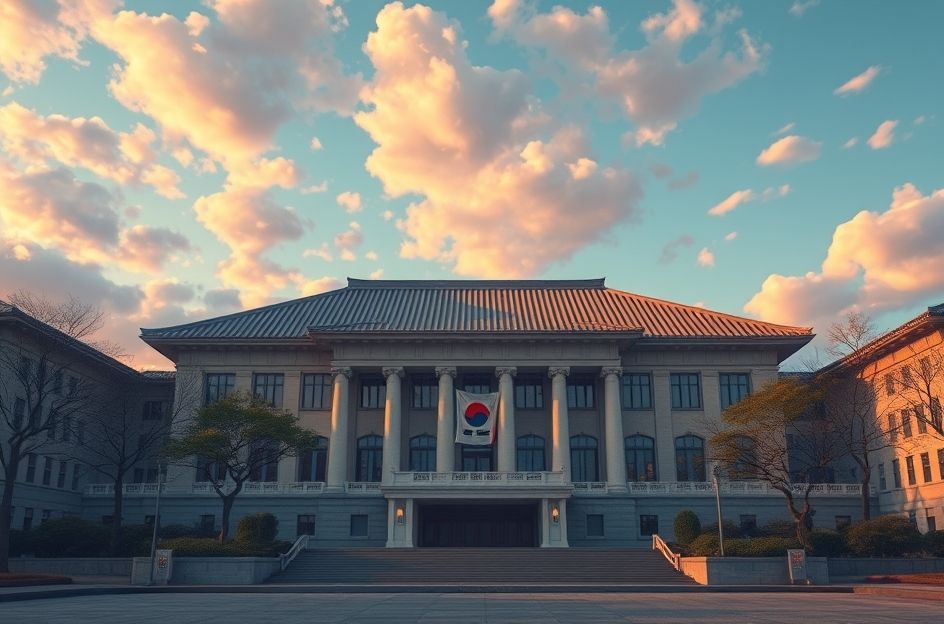
South Korean President Lee Jae-myung Returns from United Nations with New Korean Peninsula Peace Framework
President Lee Jae-myung of South Korea returned to Seoul on September 27, 2025, following his participation in the 80th Session of the United Nations General Assembly in New York, where he delivered a major policy address unveiling the "END Initiative"—a comprehensive three-phase diplomatic framework designed to reduce tensions on the Korean Peninsula and potentially resolve the decades-long North Korean nuclear standoff. Greeted at Incheon International Airport by Prime Minister Kim Min-seok, Interior Minister Yoon Ho-jung, and Democratic Party leader Jeong Cheong-rae, President Lee characterized his UN visit as successful in raising international awareness of South Korea's proactive diplomatic vision and securing preliminary support from key stakeholders for his proposed peace process.
For American readers, President Lee's initiative represents South Korea's most ambitious independent diplomatic effort in years to shape Korean Peninsula policy rather than simply supporting approaches designed in Washington. Historically, South Korean presidents have generally deferred to U.S. leadership on North Korea strategy due to the security alliance, American military presence, and Washington's dominant role in international sanctions enforcement. Lee's END Initiative, while not contradicting U.S. policy, reflects growing South Korean confidence in charting diplomatic courses that emphasize Korean agency and perspectives rather than merely endorsing American frameworks—a subtle but significant shift in the alliance dynamic that could influence regional diplomacy for years to come.
The END Initiative: A Three-Phase Diplomatic Framework
President Lee's proposed END Initiative—an acronym standing for Engagement, Negotiation, and Denuclearization—structures Korean Peninsula peace efforts into three sequential phases designed to build trust progressively while maintaining clear denuclearization objectives. This phased approach reflects lessons learned from previous diplomatic failures, particularly the collapse of the 2019 Hanoi Summit between President Trump and North Korean leader Kim Jong-un, where negotiations collapsed due to unbridgeable gaps between North Korean demands for comprehensive sanctions relief and American insistence on significant denuclearization progress before providing meaningful concessions.
Phase One: Engagement prioritizes reopening communication channels and establishing working-level dialogue between North and South Korea after years of frozen inter-Korean relations. This phase would include humanitarian assistance such as food aid, medical supplies, and disaster relief that address North Korean civilian needs without directly supporting the regime's military capabilities. Limited economic cooperation projects including potential reopening of the Kaesong Industrial Complex—a joint economic zone where South Korean companies employed North Korean workers before operations ceased in 2016—would provide tangible benefits to North Korea while demonstrating South Korean commitment to sustained engagement. Cultural and sports exchanges would rebuild people-to-people connections that atrophied during recent years of high tension. The goal is establishing baseline trust and creating diplomatic infrastructure for more substantive negotiations in subsequent phases.
Phase Two: Negotiation would commence contingent on North Korea agreeing to a verifiable nuclear freeze—halting all nuclear weapons development, testing, and production without yet dismantling existing capabilities. This freeze would be verified through international inspections to ensure compliance and build confidence. During this phase, substantive discussions would address the core trade-off: North Korean denuclearization progress in exchange for sanctions relief, security guarantees, and economic benefits. Security guarantees might include formal peace treaty replacing the 1953 armistice that ended active Korean War hostilities but never established permanent peace, U.S. and international commitments not to seek regime change or military intervention against North Korea, and potentially reduced U.S.-South Korea joint military exercises that North Korea characterizes as rehearsals for invasion. Economic benefits would include staged sanctions relief allowing limited trade and investment, development assistance for infrastructure and economic modernization, and integration into international financial systems currently denied to North Korea due to sanctions.
Phase Three: Denuclearization establishes Complete, Verifiable, and Irreversible Denuclearization (CVID) as the ultimate objective—North Korea fully dismantling its nuclear weapons program, destroying existing weapons and production facilities, and submitting to intrusive international inspections ensuring no covert nuclear activities continue. In exchange, North Korea would receive comprehensive sanctions relief, substantial economic development assistance potentially totaling tens of billions of dollars, full diplomatic normalization including U.S.-North Korea relations establishment, and security guarantees formalized through international agreements or treaties. This final phase would likely require years to fully implement and would depend on maintaining trust established during earlier phases.
President Lee emphasized in his UN speech that "permanent peace on the Korean Peninsula can only be realized through dialogue and cooperation, not threats of force," explicitly rejecting the "maximum pressure" approach favored by some American conservatives who advocate tightening sanctions and maintaining military threats until North Korea capitulates. Lee's framework assumes North Korea will never unilaterally abandon nuclear weapons under pressure alone—a position supported by most Korean Peninsula experts who note that the Kim regime views nuclear weapons as essential to survival and unlikely to surrender them without ironclad security guarantees and substantial benefits that make denuclearization strategically acceptable.
Historical Context and Previous Diplomatic Efforts
The END Initiative builds on decades of inter-Korean diplomacy that has oscillated between engagement and confrontation depending on leadership in both Seoul and Pyongyang. South Korea's "Sunshine Policy" under Presidents Kim Dae-jung (1998-2003) and Roh Moo-hyun (2003-2008) pursued engagement through unconditional humanitarian assistance and economic cooperation, producing the 2000 inter-Korean summit and expanded exchanges, but failing to prevent North Korea's nuclear weapons development. Conservative Presidents Lee Myung-bak (2008-2013) and Park Geun-hye (2013-2017) took harder lines emphasizing human rights, denuclearization preconditions, and coordination with international sanctions, producing sustained tensions but no diplomatic breakthroughs.
President Moon Jae-in (2017-2022) pursued renewed engagement facilitating three inter-Korean summits and the historic 2018 Singapore summit between President Trump and Kim Jong-un. However, the February 2019 Hanoi summit collapsed without agreement when Trump rejected North Korea's offer to dismantle the Yongbyon nuclear facility (a major but not comprehensive denuclearization step) in exchange for lifting five major U.N. sanctions categories—a gap reflecting fundamentally incompatible negotiating positions. North Korea wanted significant sanctions relief for partial denuclearization, while the U.S. demanded near-complete denuclearization before providing meaningful concessions. This failure froze diplomacy that has remained stagnant since, with North Korea resuming weapons testing and rejecting dialogue.
President Lee's END Initiative attempts to bridge this gap through explicitly phased approaches that provide North Korea with incremental benefits for incremental progress rather than requiring comprehensive denuclearization before receiving any sanctions relief. This "action for action" framework resembles approaches advocated by China and Russia, which have argued that the U.S. demand for complete denuclearization before sanctions relief is unrealistic and leaves North Korea no incentive to negotiate seriously. Whether the Biden administration (if still in office) or a potential future Trump administration would support this approach remains uncertain, as American policy has historically insisted that sanctions constitute leverage that should only be surrendered for complete denuclearization rather than parceled out for partial progress.
Trump Tariff Controversy and Domestic Political Context
President Lee's UN visit occurred amid controversy over trade negotiations with the United States, specifically U.S. President Donald Trump's demand that South Korea commit to $350 billion in U.S. investments as part of trade negotiations to avoid threatened tariffs on Korean imports. Trump stated publicly that this investment "must be paid upfront," creating domestic political challenges for President Lee as opposition parties and Korean media questioned whether Lee was capitulating to unreasonable American demands or compromising Korean economic sovereignty.
The presidential office issued statements emphasizing that "the Korean government is conducting tariff negotiations with national interest as the top priority," attempting to reassure domestic audiences that Korea would not accept agreements fundamentally disadvantaging Korean economic interests. The Blue House also rebutted claims by opposition People Power Party floor leader Song Eon-seok that the Lee administration had "requested conglomerate heads to expand U.S. investments" as part of negotiations, calling this "clearly false information and a groundless political attack" designed to undermine Lee's diplomatic efforts.
This domestic political controversy reflects broader tensions in the U.S.-South Korea alliance as Korean leaders navigate between maintaining strong security cooperation with the United States (essential given North Korean threats) and protecting Korean economic interests from American trade pressure. Trump's transactional approach to alliances—viewing relationships through economic lens and demanding financial compensation or trade concessions from allies—creates particular challenges for South Korean leaders who must simultaneously appeal to Korean nationalist sentiments while avoiding alliance ruptures that would threaten security.
For American readers, this dynamic parallels challenges European NATO allies faced during Trump's first presidency when he demanded increased defense spending and threatened to reconsider U.S. security commitments if allies didn't meet financial expectations. Korean officials must balance maintaining the alliance that guarantees security against North Korea while resisting economic demands that Korean publics view as unfair or exploitative—a difficult needle to thread politically.
Diplomatic Challenges and Implementation Obstacles
Despite President Lee's optimism, the END Initiative faces substantial obstacles that could prevent implementation or doom it to failure even if negotiations commence. North Korea has not publicly responded to the proposal and historically rejects South Korean diplomatic initiatives unless they receive prior endorsement from Pyongyang—a response pattern reflecting North Korean preferences for engaging the United States directly rather than through inter-Korean dialogue where South Korea's smaller power position limits its ability to provide security guarantees or sanctions relief that only the U.S. and international community can deliver.
American support is essential yet uncertain. While the Biden administration might express polite support for allied initiatives, U.S. policy consensus favors maintaining sanctions pressure until North Korea demonstrates serious denuclearization intent—a standard that North Korea has never met to American satisfaction. A potential future Trump administration (if Trump wins the 2024 election) might be more open to dramatic diplomatic deals but also more willing to walk away from negotiations if demands aren't met, as occurred in Hanoi. Unless the U.S. indicates flexibility on the phased approach that Lee's initiative requires, the framework cannot progress beyond the first engagement phase.
China and Russia complicate matters further. Both countries have called for easing sanctions on North Korea even without significant denuclearization progress, viewing sanctions as excessively harsh and arguing that humanitarian concerns justify relief. However, their support for Lee's specific initiative remains unclear, as both countries prefer maintaining influence over Korean Peninsula dynamics rather than endorsing South Korean-led frameworks that might reduce their relevance. Additionally, Russia's war in Ukraine and deteriorating U.S.-Russia relations have created geopolitical tensions that spill over into Korean Peninsula diplomacy, as Russia blocks U.N. sanctions enforcement and provides North Korea diplomatic cover partially to spite the United States.
North Korea's internal dynamics present perhaps the greatest uncertainty. Kim Jong-un has invested enormous political capital in nuclear weapons development, which the regime portrays as essential to survival and the ultimate achievement justifying the Kim family's continued rule. Abandoning nuclear weapons—even for substantial economic benefits and security guarantees—would require Kim to reverse this narrative and convince North Korean elites that denuclearization serves their interests. Whether Kim could successfully make this argument without undermining his legitimacy or triggering elite opposition is deeply uncertain. Additionally, North Korea's nuclear weapons provide insurance not just against American attack but also against Chinese domination, giving North Korea independence from its primary ally that conventional military capabilities alone couldn't provide. Surrendering this independence for Chinese-brokered deals or integration into Chinese economic spheres might not appeal to Kim regardless of economic benefits offered.
Strategic Implications for Regional Diplomacy
Regardless of implementation prospects, President Lee's END Initiative signals important shifts in South Korean diplomatic confidence and regional dynamics. South Korea under Lee is asserting more independent foreign policy rather than simply following American leadership—a trend that could accelerate if the U.S. appears unreliable as an ally or if Korean economic interests diverge increasingly from American preferences. This "middle power diplomacy" positions South Korea as an active shaper of regional security architecture rather than a passive recipient of great power decisions.
For the United States, South Korea's diplomatic assertiveness presents both opportunities and challenges. An active, confident South Korea could help advance American interests by leveraging unique relationships and perspectives that Washington lacks. However, South Korean initiatives that diverge from American preferences or prioritize inter-Korean cooperation over denuclearization timelines could complicate U.S. policy coordination and create alliance friction. Managing this dynamic will require American diplomatic sophistication that allows for allied independence while maintaining strategic coordination—a balance that has sometimes eluded U.S. policymakers accustomed to alliance structures where American preferences automatically prevail.
The END Initiative also reflects President Lee's domestic political strategy. By proposing bold diplomatic frameworks, Lee positions himself as a proactive peace advocate rather than a reactive administrator, potentially appealing to progressive voters who favor engagement with North Korea. If the initiative gains traction or produces even modest dialogue reopening, Lee could claim diplomatic success that strengthens his political standing. Even if the initiative fails, Lee can argue he tried everything possible while blaming intransigent North Korea or inflexible American policies for preventing progress—a narrative that could still serve domestic political purposes.
Looking forward, the END Initiative's fate will depend on factors largely beyond South Korean control: North Korean receptiveness, American flexibility, Chinese and Russian cooperation, and the broader geopolitical environment that shapes incentives for all parties. President Lee has opened diplomatic space and presented a framework that could theoretically break the decades-long Korean Peninsula deadlock. Whether this opening produces meaningful progress or becomes another failed initiative joining the long history of unsuccessful Korean Peninsula diplomacy remains to be seen, though most analysts lean toward cautious skepticism given the formidable obstacles that have derailed previous efforts.
Original article: TrendyNews Korea
Comments
Post a Comment