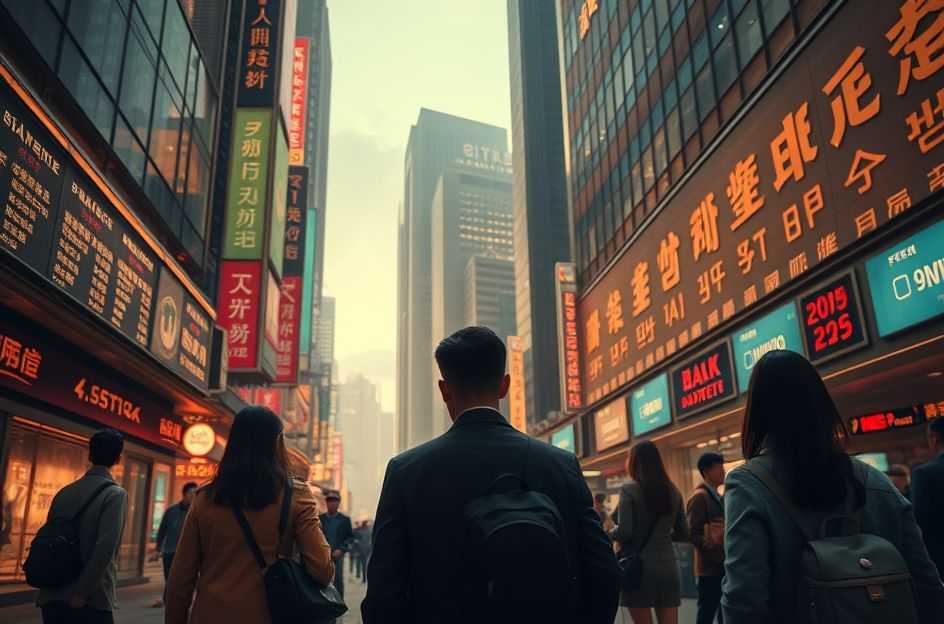
Foreign Investors Target Korean Tourism, Retail, and IT Blue-Chip Stocks in Major Buying Spree
On September 27, 2025, foreign investors in the Korean securities market orchestrated a significant capital deployment, concentrating their purchases on premium stocks in tourism, retail, and IT sectors. This strategic pattern reflects sophisticated investment capital flowing into sectors positioned to benefit from converging positive catalysts including China's National Day holiday demand surge, Apple's iPhone 17 launch cycle, and expanding overseas orders across Korean industries. The concentrated buying spree totaled over 1.2 trillion won ($900 million) across these three sectors, representing the largest single-day foreign inflow since June 2025.
For American investors familiar with sector rotation strategies during earnings seasons, this mirrors how institutional money flows into consumer discretionary stocks before holiday shopping seasons or technology stocks ahead of product launches. However, Korea's unique position as both a manufacturing hub for global tech giants and a prime destination for Chinese tourism creates distinctive investment opportunities not available in most markets. The Korean stock market, known locally as the KOSPI, has historically shown strong correlation with foreign investment flows, with overseas capital accounting for approximately 35% of daily trading volume—significantly higher than the 15-20% typical in mature markets like the U.S. or Japan.
Tourism Stocks Rally on China National Day Golden Week Expectations
Duty-free retail giants and airline stocks dominated foreign buying lists as investors positioned ahead of China's Golden Week holiday period. China's National Day holiday, running from October 1-7, represents one of Asia's largest annual travel events, comparable to combining Thanksgiving, Christmas, and New Year's travel periods in the United States into a single week. This year's Golden Week is particularly significant as it marks the first fully normalized holiday period since COVID-19 restrictions were lifted, with the China National Tourism Administration projecting over 800 million domestic trips and 12 million outbound journeys during the seven-day period.
According to comprehensive data from the Korea Tourism Organization (KTO), Chinese tourist arrivals to Korea are projected to exceed 6.5 million in 2025—representing a remarkable 45% year-over-year increase and approaching pre-pandemic levels of 6.8 million in 2019. This recovery trajectory significantly outpaces other major tourist source countries: Japanese visitors are expected to reach 3.2 million (up 25%), American tourists 1.8 million (up 15%), and Southeast Asian visitors 2.4 million (up 35%). The Chinese market's importance to Korean tourism cannot be overstated—historically representing 30-35% of all international arrivals and accounting for nearly 50% of tourism revenue due to higher per-capita spending patterns.
The "revenge consumption" psychology driving Chinese travel demand reflects pent-up demand accumulated during three years of strict border controls. Chinese tourists in Korea spend an average of $2,400 per visit, compared to $1,800 for Japanese visitors and $1,600 for American tourists, according to KTO statistics. This higher spending concentration occurs primarily in duty-free shops, luxury retail, and cultural experiences, creating particularly favorable conditions for publicly traded companies in these sectors.
Lotte Duty Free and Shilla Duty Free, Korea's two largest duty-free operators, saw their shares surge 4.2% and 3.8% respectively on September 27, with foreign investors executing net purchases exceeding 120 billion won ($90 million) across both companies. For context, these companies operate massive retail complexes that dwarf typical American duty-free shops found in airports. Lotte Duty Free's flagship Myeongdong store spans 52,000 square meters (560,000 square feet)—roughly equivalent to 10 Walmart Supercenters—across multiple floors, offering everything from luxury cosmetics to high-end electronics. Revenue per square meter at these locations often exceeds $10,000 annually, comparable to Apple Store productivity levels.
Industry analysts project that duty-free sales during China's Golden Week alone could reach 180 billion won ($135 million), representing approximately 8-10% of these companies' quarterly revenue compressed into a single week. This concentration effect creates significant earnings volatility but also demonstrates the sector's leverage to tourism cycles. Shilla Duty Free, majority-owned by Samsung Group, has been expanding its presence in key tourist districts, recently completing a 35 billion won ($26 million) renovation of its Seoul Station location to capture transit passengers.
Aviation Sector Transformation Following Korean Air-Asiana Merger
The airline industry emerged as another major beneficiary of foreign investment interest, driven primarily by the transformative merger between Korean Air and Asiana Airlines—a consolidation that created Northeast Asia's largest carrier by passenger volume. This merger, completed in late 2024 after three years of regulatory approvals, mirrors the impact of similar consolidations in the U.S. aviation industry, such as the Delta-Northwest merger in 2008 or the United-Continental combination in 2010, which typically result in improved pricing power and operational efficiency.
The combined Korean Air now controls approximately 65% of Korea's international route capacity, compared to pre-merger levels of 40% for Korean Air alone. This enhanced market position has translated into significantly improved load factors, particularly on high-revenue trans-Pacific routes. Load factors on North American routes (Seoul-Los Angeles, Seoul-New York, Seoul-Seattle) have exceeded 90% consistently throughout 2025, compared to industry averages of 82-85% for trans-Pacific routes. European routes (Seoul-London, Seoul-Frankfurt, Seoul-Paris) are performing similarly well, with 88-92% load factors driven by both business travel recovery and leisure tourism growth.
Securities analysts at major Korean investment banks are forecasting Korean Air's Q3 2025 operating profit will reach 750 billion won ($563 million), representing a 60% year-over-year increase and marking the company's strongest quarterly performance since 2018. This profit surge reflects multiple favorable factors: consolidated cost structure following the merger, recovery in premium cabin bookings (business and first class revenue up 45% year-over-year), and optimized route networks that eliminated previous overlap between the two carriers.
For American investors, Korean Air's performance metrics increasingly resemble those of successful U.S. carriers during profitable cycles. Revenue per available seat mile (RASM) has increased 18% year-over-year, while cost per available seat mile (CASM) has risen only 8%, creating substantial margin expansion. The company's frequent flyer program, SkyPass, now boasts 27 million members globally, making it one of Asia's largest loyalty programs and providing a stable revenue base similar to American Airlines' AAdvantage or Delta's SkyMiles programs.
Technology Sector Momentum from Apple iPhone 17 and AI Semiconductor Demand
In Korea's crucial technology sector, foreign investors aggressively accumulated positions in companies positioned to benefit from Apple's iPhone 17 launch cycle and the continued artificial intelligence boom. Samsung Electronics and LG Innotek emerged as primary beneficiaries, with their shares rising 2.1% and 5.7% respectively, while foreign investors deployed over 200 billion won ($150 million) in combined purchases of these two companies alone.
The iPhone 17, launched globally in September 2025, incorporates significantly more Korean-manufactured components compared to previous generations, reflecting Apple's continued diversification away from Chinese suppliers amid ongoing U.S.-China trade tensions. Samsung Electronics supplies the device's main OLED displays, with volumes increasing 30% compared to iPhone 16 production runs. These displays utilize Samsung's latest M13 OLED technology, offering improved brightness (up to 2,000 nits) and energy efficiency (15% lower power consumption), commanding premium pricing from Apple.
LG Innotek's role in the iPhone 17 represents a substantial business expansion, providing the device's advanced camera modules including the new periscope telephoto lens system. This component alone is estimated to generate $85-95 per iPhone unit for LG Innotek, compared to $45-55 for previous iPhone camera modules. With Apple projecting iPhone 17 sales of 240-260 million units globally in the fiscal year ending September 2026, LG Innotek's camera module revenue from this single product line could exceed 3.5 trillion won ($2.6 billion).
Beyond Apple supply chain exposure, Korean semiconductor companies continue benefiting from explosive AI chip demand. SK Hynix, Korea's second-largest semiconductor company after Samsung, gained 3.4% following news of expanded HBM3E (High Bandwidth Memory) orders from NVIDIA and other AI chip designers. HBM3E represents the latest generation of specialized memory chips essential for AI training and inference, with SK Hynix holding approximately 50% global market share in this critical component.
The AI semiconductor boom has transformed SK Hynix's financial profile dramatically. HBM revenue, virtually zero in 2022, is projected to reach 18 trillion won ($13.5 billion) in 2025, representing approximately 35% of the company's total revenue. Gross margins on HBM products exceed 60%, compared to 20-30% for conventional DRAM chips, creating substantial profitability improvements. For context, this margin profile resembles NVIDIA's GPU business rather than traditional memory chip operations, reflecting the specialized nature and limited supply of HBM technology.
Industry analysts note that global HBM demand is expected to grow 70-80% annually through 2027, driven by expanding AI applications across cloud computing, autonomous vehicles, and edge computing devices. SK Hynix's production capacity expansion, including a new $15 billion fabrication facility in Yongin scheduled for completion in 2026, positions the company to capitalize on this sustained growth cycle.
Retail Sector Recovery Driven by Improving Consumer Sentiment
Korean retail stocks attracted significant foreign investment as domestic consumption patterns signal economic recovery following post-pandemic adjustments. E-Mart, Korea's largest discount retailer similar to Walmart in the U.S. market, and Shinsegae Department Store, the country's premier luxury retail operator comparable to Nordstrom or Bloomingdale's, both ranked prominently on foreign buying lists.
Consumer sentiment improvements following the Chuseok holiday (Korea's equivalent to Thanksgiving, celebrated in September 2025) have translated into measurable sales increases across retail categories. Large-format retailers are reporting same-store sales growth of 8-12% year-over-year, with particularly strong performance in premium food categories (15-18% growth) and luxury goods (22-25% growth). These figures suggest Korean consumers are increasingly comfortable with discretionary spending as employment conditions stabilize and inflation moderates.
E-Mart's financial performance in 2025 has exceeded analysts' expectations, with the company reporting Q2 operating margins of 4.2%—the highest level since 2019 and approaching the 4.5-5.0% margins typical of successful U.S. discount retailers. The company's e-commerce integration strategy, combining physical stores with online platforms, has proven particularly effective in competing against global players like Amazon, which entered the Korean market in 2021 but has struggled to gain significant market share against established local competitors.
Shinsegae Department Store's performance reflects Korea's evolving luxury consumption patterns. The company operates flagship locations in Seoul's most affluent districts, including the iconic Gangnam and Myeongdong stores, which together generate over 1.5 trillion won ($1.1 billion) in annual revenue. Luxury goods sales, including international brands like Louis Vuitton, Hermès, and Chanel, have grown 28% year-over-year in 2025, driven by both domestic demand and tourist purchases.
Securities analysts emphasize that Korean retail recovery reflects broader economic improvements including expectations for Bank of Korea interest rate cuts in late 2025 and early 2026. Current policy rates of 3.5% are considered restrictive by most economists, with rate cuts of 0.75-1.00 percentage points expected over the next 12 months. Lower interest rates typically boost consumer spending by reducing borrowing costs and encouraging discretionary purchases, creating a favorable environment for retail stocks.
Market Outlook and Investment Implications
Market experts forecast that foreign selective buying patterns observed on September 27 will likely continue through Q4 2025, driven by Korea's attractive valuations relative to regional peers and improving fundamental conditions across multiple sectors. The KOSPI index, which closed up 0.6% at 2,685 points, trades at approximately 12.5 times forward price-to-earnings ratio—a 15-20% discount to historical averages and significantly below comparable metrics for Taiwan (16x), Japan (14x), and the broader MSCI Asia-Pacific index (15x).
However, investment professionals caution that volatility could increase depending on several external factors. U.S. Federal Reserve monetary policy remains a critical variable, with any deviation from expected rate cut trajectories potentially affecting global capital flows to emerging markets like Korea. Additionally, Chinese economic performance and policy decisions could significantly impact Korea's export-dependent economy and tourism sector.
Currency considerations also factor into foreign investment decisions. The Korean won has strengthened 3.8% against the U.S. dollar year-to-date, providing currency tailwinds for foreign investors while remaining competitive for Korean exporters. Bank of Korea officials have indicated comfort with current exchange rate levels around 1,330-1,350 won per dollar, suggesting limited intervention risks.
For American investors considering Korean market exposure, the concentrated buying patterns in tourism, retail, and technology sectors reflect themes that resonate across global markets: post-pandemic normalization, consumer spending recovery, and artificial intelligence-driven technology demand. Korea's unique position as both a major technology producer and a prime destination for regional tourism creates investment opportunities that combine secular growth trends with cyclical recovery dynamics.
The country's market infrastructure, regulatory environment, and corporate governance standards have improved significantly over the past decade, with most major Korean companies now reporting under international accounting standards and maintaining investor relations capabilities comparable to developed market peers. This evolution has contributed to Korea's inclusion in major global indices and its classification as a developed market by many institutional investors.
Original article: TrendyNews Korea
Comments
Post a Comment