Korean Original Title: SH공사-서울소방재난본부 MOU, 공동주택 화재안전 강화 나선다
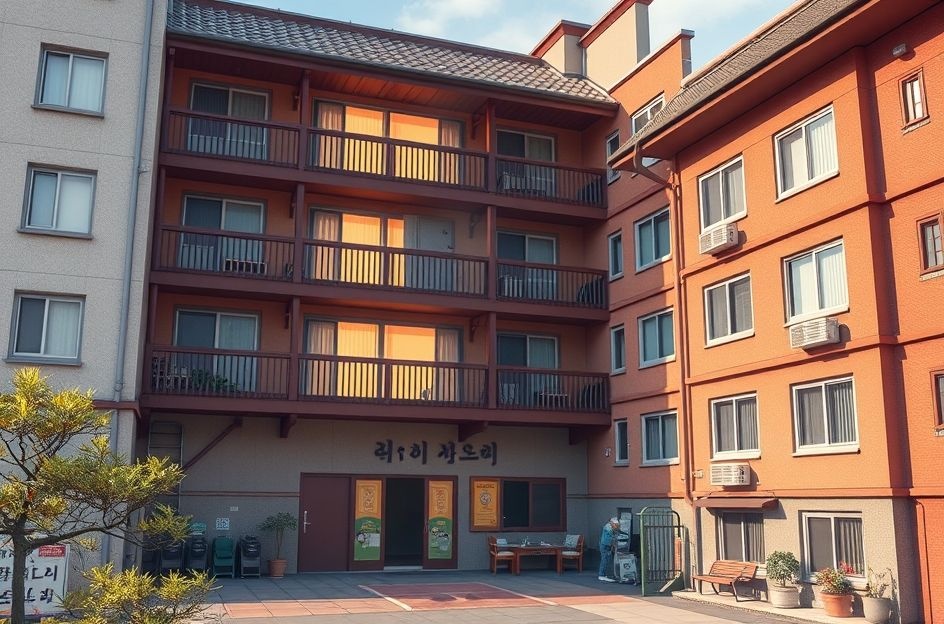
Seoul Housing Corporation and Fire Department Sign Comprehensive Fire Safety Agreement Covering 250,000 Public Housing Units
The Seoul Housing & Communities Corporation (SH Corporation) and the Seoul Metropolitan Fire & Disaster Headquarters signed a memorandum of understanding on September 27, 2025, establishing a comprehensive fire safety partnership covering approximately 1,200 public housing complexes comprising 250,000 residential units across Seoul—a massive infrastructure safety initiative affecting roughly 600,000 residents, equivalent to the entire population of cities like Milwaukee or Baltimore. This agreement represents one of Korea's most ambitious public housing safety programs, developed in direct response to rising apartment fire incidents and growing public concern following several tragic residential fire deaths that dominated Korean news media throughout 2024 and early 2025, exposing critical gaps in fire prevention infrastructure, emergency response protocols, and resident safety education across Korea's densely populated high-rise residential landscape.
For American readers, it's important to understand that Korean public housing differs fundamentally from the American public housing model in both scale and resident demographics. While American public housing primarily serves low-income families and often struggles with maintenance funding and negative social perceptions, Korean public housing (임대아파트, imdae apateu) includes middle-income families, young professionals, and retirees living in well-maintained high-rise apartment complexes that constitute approximately 7% of Seoul's total housing stock. These aren't isolated housing projects but integrated residential communities scattered throughout Seoul's urban fabric, often indistinguishable from privately owned apartment complexes except for their government management structure and income-based rent calculations that can range from deeply subsidized rates for low-income families to near-market rates for middle-income households.
Five Core Collaborative Initiatives
The partnership establishes five interconnected fire safety programs designed to create comprehensive protection across the entire public housing portfolio. The first initiative involves joint fire safety inspections combining SH Corporation's property management expertise with fire department technical assessment capabilities to conduct systematic evaluations of fire suppression systems, emergency lighting, evacuation routes, fire doors, sprinkler functionality, smoke detection networks, and structural fire resistance across all 1,200 housing complexes. Priority inspection targets include buildings exceeding 30 years of age where outdated electrical systems, deteriorating fire suppression infrastructure, and obsolete building materials create elevated fire risks, as well as high-rise towers above 20 stories where vertical evacuation challenges and smoke migration patterns through stairwells and elevator shafts require specialized firefighting strategies that differ from low-rise residential fire response protocols.
The second initiative establishes mandatory quarterly fire safety education programs for all 250,000 households, teaching residents practical firefighting skills including proper fire extinguisher operation techniques, evacuation route identification and alternative escape path planning, smoke inhalation prevention through wet towel breathing protection, and critical behavioral responses during fire emergencies such as closing doors to contain fire spread, avoiding elevators which can become smoke-filled death traps during fires, and identifying designated assembly points outside buildings where residents can gather safely while firefighters conduct rescue operations. These programs include specialized curricula designed for children under 12 years old who need age-appropriate fire safety instruction emphasizing recognizing fire alarms, staying low under smoke, and never hiding during fires, as well as elderly residents over 65 who may have mobility limitations requiring additional assistance during evacuations and who statistically face disproportionately high fire death risks due to slower reaction times, reduced physical capabilities, and social isolation that can delay emergency response.
The third initiative funds comprehensive upgrades to fire suppression infrastructure across the public housing portfolio, replacing obsolete sprinkler systems installed 20-30 years ago with modern high-flow systems meeting current fire safety codes, modernizing fire alarm networks with interconnected smoke detectors that trigger building-wide evacuations rather than isolated unit alarms, and piloting artificial intelligence fire detection systems that use thermal imaging cameras, smoke pattern analysis algorithms, and machine learning models trained on fire development characteristics to identify fires within 30-60 seconds of ignition—dramatically faster than conventional smoke detectors which typically require 3-5 minutes to accumulate sufficient smoke concentration to trigger alarms, a time difference that can mean the difference between easily controllable incipient-stage fires and life-threatening fully developed compartment fires producing flashover conditions and toxic smoke that rapidly overwhelm building occupants.
The fourth initiative provides targeted fire safety assistance to vulnerable populations including elderly residents living alone (독거노인, dokgeo noin), individuals with physical disabilities affecting mobility or cognitive abilities affecting emergency response capability, and low-income families who may lack resources to purchase fire safety equipment. This program installs wireless fire alarm systems in vulnerable resident units that transmit emergency alerts directly to fire department dispatch centers, bypassing the resident notification step that can fail when elderly or disabled individuals cannot hear alarms or respond appropriately, while also providing emergency communication devices allowing one-button direct contact with emergency services—critical for populations who may struggle with dialing emergency numbers during high-stress fire situations or who lack mobile phones that have become the primary communication tool for younger Koreans but remain less common among elderly populations who grew up before the mobile phone era.
The fifth initiative establishes rapid response protocols requiring fire department units to reach any SH Corporation housing complex within 5 minutes of emergency notification—a challenging target in Seoul's notoriously congested traffic environment where rush hour gridlock can delay emergency vehicles, but achievable through strategic fire station placement, dedicated emergency vehicle lanes that civilian vehicles legally cannot obstruct, and real-time traffic management systems that automatically adjust traffic signals to create emergency vehicle corridors. SH Corporation will provide fire department command centers with detailed building floor plans, resident demographic information, and real-time occupancy data through integrated building management systems, allowing firefighters to develop strategic approach plans before arriving on-scene rather than conducting time-consuming reconnaissance after arrival—a capability particularly crucial for high-rise rescues where understanding building layout, stairwell locations, and roof access points before entering burning buildings significantly improves firefighter safety and rescue effectiveness.
Rising Apartment Fire Incidents Drive Policy Response
This comprehensive safety initiative responds to alarming statistical trends documented by the National Fire Agency showing apartment fire incidents increased 8.2% in 2024, with 5,872 residential building fires recorded nationwide—averaging 16 apartment fires daily across Korea, a fire frequency that reflects the dominance of high-rise apartment living in Korean urban centers where approximately 60% of households reside in multi-unit apartment buildings rather than single-family homes that remain the predominant American housing type. Analysis of fire causation patterns reveals electrical system failures account for 45% of apartment fires, with aging electrical wiring unable to handle power demands from modern appliances, overloaded electrical circuits lacking adequate circuit breaker protection, and counterfeit electrical products that don't meet safety certification standards causing short circuits, arcing faults, and electrical fires that ignite surrounding combustible materials. Human negligence causes an additional 25% of fires through unattended cooking that allows stovetop oils to reach ignition temperature, carelessly discarded cigarettes that smolder for hours before igniting bedding or furniture, and portable space heater misuse that ignites curtains, bedding, or other combustible materials placed too close to heating elements.
The August 2024 apartment fire in Daegu that killed two teenage siblings shocked Korean society and generated sustained media coverage examining how the tragedy occurred and what systemic failures allowed it to happen. The fire started from an electrical short circuit in a living room power outlet, spread rapidly through synthetic furniture and interior finishes producing dense toxic smoke that filled the apartment within 3-4 minutes, and killed the victims through smoke inhalation and thermal burns while they attempted to escape through a smoke-filled hallway after the apartment's sole exit door became blocked by flames. The tragedy prompted nationwide discussions about inadequate fire safety education leaving residents unprepared for emergencies, insufficient emergency escape routes in older apartment buildings designed before modern fire codes required secondary exits, delayed emergency response due to apartment address confusion that caused firefighters to initially go to the wrong building, and inadequate smoke detector coverage in bedrooms where the sleeping victims likely didn't hear the living room alarm until fire conditions had already become unsurvivable.
For American readers, Korean apartment fire risks differ from typical American residential fire scenarios due to construction differences, occupancy density variations, and cultural factors affecting fire behavior and response. Korean apartments typically feature concrete structural frames with non-combustible exteriors that prevent external fire spread between units—a construction type that contrasts with American wood-frame construction where fires can spread through wall cavities, roof spaces, and exterior siding, potentially engulfing entire structures. However, Korean apartments often have open-plan interiors with fewer fire-resistant barriers between rooms, synthetic interior finishes that produce toxic smoke, and high furniture and content loading that provides abundant fuel for fire growth, creating rapid fire development that can produce untenable conditions within 3-5 minutes of ignition—faster than many American residential fires in wood-frame structures where compartmentation into separate rooms slows fire spread.
Implementation Strategy and Investment Plan
SH Corporation has committed 50 billion won ($37.5 million USD) over three years to implement comprehensive fire safety improvements across its housing portfolio, with funding allocated through a combination of government budget allocations, SH Corporation operational reserves, and potential resident fee increases averaging 3,000-5,000 won ($2.25-$3.75 USD) monthly per household—a modest increase that most residents will likely accept given heightened fire safety awareness following recent tragic incidents. The improvement program prioritizes 150 housing complexes exceeding 30 years of age where outdated infrastructure, deteriorating building systems, and pre-modern fire code construction create elevated fire risks requiring urgent attention, while newer complexes built within the last 15 years will receive enhanced monitoring and preventive maintenance rather than comprehensive retrofits.
The fire department will designate all SH Corporation complexes as special fire safety management zones receiving enhanced inspection frequency, priority response during emergencies, and dedicated liaison officers maintaining regular communication with property management staff—a designation similar to American fire department programs targeting high-risk occupancies like hospitals, schools, and industrial facilities with specialized pre-planning, regular training exercises, and enhanced regulatory oversight. Fire officials will conduct quarterly inspections rather than the annual inspections required for standard residential properties, identifying deficiencies before they create emergency conditions rather than discovering problems during fire incidents when correction comes too late to prevent casualties.
Academic experts specializing in fire safety engineering have praised the SH Corporation-Fire Department partnership as a potential model for public-private fire safety collaboration that could be expanded beyond public housing to include privately managed apartment complexes comprising the majority of Korea's residential housing stock. A fire protection engineering professor at the University of Seoul stated that "collaboration between housing management entities and fire authorities represents the essential foundation for proactive fire prevention rather than reactive emergency response," noting that effective fire safety requires sustained coordination between building owners who maintain fire protection systems, residents who must understand emergency procedures, and firefighters who must understand building layouts and occupant characteristics before emergencies occur.
Implementation will proceed through phased rollout beginning in October 2025 with pilot programs in five high-priority housing complexes representing diverse building types, age categories, and resident demographics, allowing program designers to identify implementation challenges, refine educational curricula based on resident feedback, and develop best practices before expanding to the full 1,200-complex portfolio through 2026-2027. This deliberate phased approach reflects lessons learned from previous Korean government initiatives where rushed implementation without adequate pilot testing resulted in operational problems, resident resistance, and political backlash undermining program objectives—a cautious methodology that prioritizes effective long-term outcomes over rapid short-term accomplishment claims that might look impressive in press releases but fail to deliver sustainable safety improvements.
Original article: TrendyNews Korea
Comments
Post a Comment