South Korea Faces Million Dementia Patient Era, Expands Comprehensive Care Centers
As South Korea approaches the milestone of one million dementia patients, the government is dramatically expanding its network of dementia care centers to tackle one of the most pressing challenges of its rapidly aging society. The Ministry of Health and Welfare announced in September 2024 a comprehensive overhaul of dementia policy guidelines, significantly strengthening the national support system for dementia patients and their families.
According to statistics from Korea's National Statistical Office and Ministry of Health and Welfare, the country is projected to have 970,000 dementia patients (9.17% prevalence rate) by 2025, with the number crossing the one million threshold by 2026. For American readers, this represents a demographic challenge comparable to the entire population of San Jose, California, requiring specialized medical care and social support systems.
This surge directly correlates with Korea's unprecedented aging speed. While it took France 154 years to transition from an aging society (14% elderly) to a super-aged society (28% elderly), Korea is making this transition in just 26 years – the fastest pace globally. This demographic shift makes Korea's dementia care innovations particularly relevant for other rapidly aging nations, including the United States, where dementia affects approximately 6.7 million Americans.
Nationwide Rollout of Personalized Case Management
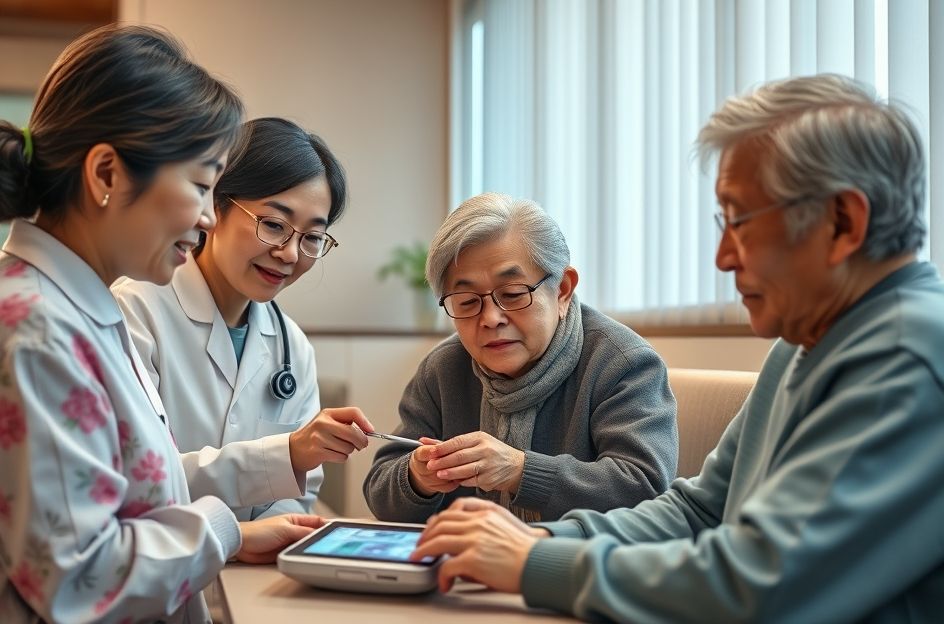
The centerpiece of Korea's strategy is the nationwide expansion of "customized case management operating models" across dementia relief centers. After successful pilot programs in 18 centers during 2023, this personalized approach is being scaled to all 256 centers nationwide in the first half of 2024. This model provides individualized medical and welfare services to dementia patients who fall through traditional care gaps.
For American readers familiar with Medicare's complex navigation challenges, Korea's integrated approach offers an interesting contrast. The customized case management system considers each patient's symptom severity, family circumstances, and economic conditions to create optimized service packages. Mild dementia patients receive cognitive training programs to maintain brain function, while severe cases get intensive daily living support and family caregiver education. Particularly notable is the integrated community resource connection for elderly living alone or families facing economic hardship – addressing isolation issues that affect over 35% of American seniors.
This comprehensive approach differs significantly from the fragmented care systems common in many Western countries. While American families often struggle to coordinate between Medicare, Medicaid, private insurance, and various service providers, Korea's unified system provides seamless coordination through a single point of contact at each dementia relief center.
Expanding Financial Support and Accessibility
Korea is significantly expanding financial support for dementia treatment. Previously limited to basic livelihood recipients and low-income households, treatment cost support is now recommended to extend to families earning up to 120% of median income. This expansion provides up to ₩60,000 ($45) monthly in treatment cost support, with annual benefits reaching ₩720,000 ($540) per patient.
To put this in American context, while Medicare covers many dementia-related medical costs, it doesn't cover most long-term care expenses, leaving families to pay an average of $61,522 annually for dementia care according to the Alzheimer's Association. Korea's approach of providing direct treatment cost support represents a different model of addressing the financial burden on middle-class families.
The policy also includes special accommodations for disabled dementia patients, with new testing procedures developed for those who cannot undergo standard dementia assessments. Additionally, long-term care Grade 5 dementia patients receive enhanced access to dementia relief center respite services, addressing caregiver burnout – a critical issue affecting 83% of dementia caregivers in Korea, similar to the 80% rate reported in the United States.
Positive Mental Health Awareness Trends
Korea's National Center for Mental Health released encouraging findings from its 2024 National Mental Health Knowledge and Attitudes Survey. The comprehensive study of 3,000 citizens aged 15-69 showed mental health understanding scores increased to 4.05 points, up 0.1 points from 2022. Most significantly, public recognition that "anyone can develop mental illness" improved from 83.2% to 90.5%, while scientific understanding that "mental illness is a type of brain dysfunction" rose from 49.3% to 61.4%.
For American readers, these statistics compare favorably with U.S. mental health awareness trends. According to the National Alliance on Mental Illness, approximately 21% of Americans still believe mental health conditions are a sign of personal weakness, suggesting Korea's systematic public education approach may offer valuable insights for American mental health advocacy efforts.
The survey found 78.8% of respondents actively work to maintain good mental health, with 55.2% rating their mental health status as "good." This proactive approach to mental wellness reflects Korea's cultural shift toward preventive healthcare, contrasting with traditionally reactive medical systems in many Western countries.
World Dementia Day and Community Engagement
Korea's annual observance of World Dementia Day on September 21st has become a cornerstone of community-based dementia awareness efforts. The 2024 theme "Elderly and Three Young Artists Creating an Amazing World" featured comprehensive cultural arts projects including health picnics, dance activities, calligraphy workshops, folk painting sessions, nature programs, and culinary experiences – all designed for intergenerational participation.
This community-focused approach addresses dementia stigma through cultural engagement, differing from the primarily medical focus of many American dementia programs. While the U.S. emphasizes clinical interventions and pharmaceutical research, Korea's model integrates artistic expression and community participation as therapeutic interventions. Research shows such programs can improve cognitive function and reduce social isolation among dementia patients.
The designation of World Dementia Day as an official national commemoration day in 2011, established alongside Korea's Dementia Management Act, demonstrates the country's systematic approach to raising public awareness and reducing stigma around dementia and mental health conditions.
Future Strategy and Global Implications
Facing the approaching era of one million dementia patients, Korea is building a comprehensive response system spanning prevention, treatment, and care. The government continues expanding community-based care systems centered on dementia relief centers while intensifying focus on healthy lifestyle practices and early screening for dementia prevention.
Looking toward the 2030s, when baby boomers enter full elderly status, Korea identifies key challenges including training dementia specialists, developing advanced diagnostic and treatment technologies, and creating dementia-friendly community environments. This demographic transition mirrors challenges facing the United States, where baby boomers are driving increased demand for dementia care services.
Korea's comprehensive approach recognizes dementia not merely as an individual or family problem but as a collective social challenge requiring coordinated community response. This perspective offers valuable insights for American policymakers grappling with similar demographic pressures and care system limitations.
International Recognition and K-Healthcare Innovation
Korea's dementia response policies are gaining international recognition as an innovative model for aging societies worldwide. The customized case management system and integrated community care approach are becoming benchmarks for other countries facing similar demographic transitions. This positions Korea's dementia care innovations as a potential component of the broader K-Healthcare export model, alongside the country's successful expansion in medical devices, digital health solutions, and pharmaceutical products.
For American healthcare leaders, Korea's systematic approach offers lessons in policy coordination, community integration, and preventive care strategies. As the United States faces its own aging demographic challenges, Korea's experience provides a roadmap for developing comprehensive, culturally sensitive approaches to dementia care that prioritize both clinical excellence and community support systems.
The success of Korea's dementia care model demonstrates that rapid societal aging need not automatically translate to crisis if met with proactive, comprehensive, and coordinated policy responses. This approach may prove increasingly relevant as global populations age and societies worldwide seek sustainable models for supporting their elderly citizens.
Read the original Korean article: 한국 치매 100만 시대 도래, 정부 치매안심센터 확대로 대응
Comments
Post a Comment