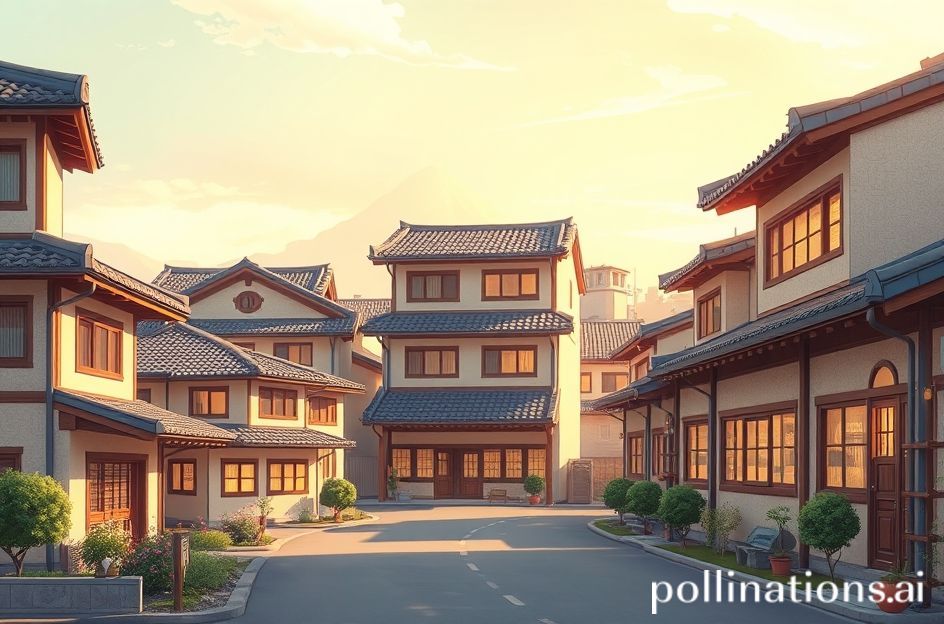
Korean traditional villa residential complex
South Korea's Villa Housing Market Crisis: Rental Fraud Aftermath Deepens Polarization
In September 2025, South Korea's housing market faces an unprecedented crisis that American readers might compare to the aftermath of the 2008 subprime mortgage crisis, but with a uniquely Korean twist. The nation's villa and multi-family housing sector—equivalent to American townhomes and smaller residential complexes—has plummeted into severe depression following widespread rental fraud scandals, creating a stark polarization between apartment and villa markets that threatens the country's housing ladder system.
For American readers unfamiliar with Korea's housing structure, "jeonse" is a unique rental system where tenants pay a large deposit (often $200,000-$500,000) instead of monthly rent, with landlords investing this money and returning it after the lease ends. This system, which has no direct equivalent in the US housing market, has become the epicenter of a crisis that's fundamentally reshaping Korean real estate dynamics.
The Rental Fraud Catastrophe: A Korean Housing Crisis
The current villa market collapse stems from what Koreans call "jeonse fraud" (전세사기), where unscrupulous landlords collected massive deposits from multiple tenants but lack the funds to return them. Since 2022, over 20,000 cases have been reported nationwide, with damages exceeding $3 billion in today's currency. For American readers, imagine if landlords across the US collected security deposits worth 50-80% of property values from multiple tenants for the same unit, then disappeared—this approximates the scale of Korea's jeonse fraud crisis.
According to the Korea Real Estate Board and KB Kookmin Bank's 2025 real estate report, Seoul villa sales prices dropped 5.2% year-over-year in the first half of 2025, while apartment prices rose 2.8% during the same period. More dramatically, villa jeonse prices plummeted 8.7%, revealing structural instability in Korea's rental market that has no parallel in American housing systems.
"The jeonse fraud impact on villas is comparable to what happened to manufactured housing after the 2008 financial crisis in America," explains Lee Sung-won, senior researcher at KB Real Estate Libon. "Entire market segments became untouchable due to trust collapse, but in Korea's case, these properties represent the primary homeownership pathway for working-class families."
Government Response: Building New Safety Nets
The Korean government's September 7, 2025 real estate measures specifically target villa market recovery through institutional reforms that would be familiar to Americans who experienced post-2008 housing reforms. The centerpiece is a "Special Act on Private Rental Housing" that creates government-backed insurance systems similar to FDIC protection for bank deposits.
Under these new rules, even if rental operators commit fraud, guarantee institutions (Korea Housing & Urban Guarantee Corporation and Korea Housing Finance Corporation) will reimburse innocent tenants—essentially creating a federal safety net for rental deposits. For American readers, this is equivalent to the US government guaranteeing security deposits and first month's rent for all rental agreements nationwide.
The policy package also includes significant deregulation of villa construction and renovation, similar to zoning reform initiatives in American cities facing housing shortages. Floor area ratio incentives and streamlined approval processes aim to stimulate new villa development, addressing supply constraints that have plagued Korea's affordable housing sector.
Ministry of Land, Infrastructure and Transport officials emphasize that "non-apartment market normalization is key to overall real estate market stability," echoing arguments familiar to Americans who understand how affordable housing shortages impact entire metropolitan housing ecosystems.
Regional Disparities and Investment Psychology
The villa market crisis varies dramatically by region, similar to how America's foreclosure crisis affected different areas differently. Premium villas in Seoul's Gangnam district, Yeouido financial center, and Yongsan areas—equivalent to high-end townhomes in Manhattan, downtown San Francisco, or Georgetown—continue trading actively. However, suburban and satellite city villas face transaction freezes reminiscent of Detroit's housing market during the auto industry crisis.
A real estate agent in Goyang City, Gyeonggi Province, explains the psychological impact: "Until last year, we had steady villa inquiries, but this year even monthly rental questions have virtually disappeared. Every jeonse fraud news story makes clients more frightened." For American readers, this fear factor resembles the confidence collapse that followed widespread mortgage fraud revelations in 2008-2009.
Investment sentiment has turned decisively negative. Korea Appraisal Board data shows villa and multi-family housing transactions dropped 42% year-over-year in August 2025, reaching levels lower than during initial COVID-19 lockdowns. This represents a more severe contraction than most American housing markets experienced during the pandemic.
Expert Analysis: Structural Reform Requirements
Real estate experts view villa market recovery as essential for overall housing market health, similar to how American housing economists emphasize starter home availability for market stability. The current apartment-focused price increases are squeezing working-class homeownership opportunities, creating affordability pressures comparable to major American metropolitan areas like San Francisco, New York, or Boston.
"Apartment-centered price appreciation further reduces homeownership opportunities for ordinary families," analyzes Lee Sung-won from KB Real Estate Libon. "Villa market stabilization is necessary for housing ladder normalization"—a concept Americans understand as the progression from starter homes to larger properties that builds household wealth over time.
Recovery timeline projections remain cautious. Kim Jin-yu, senior researcher at Korea Real Estate Research Institute, predicts: "Jeonse trust recovery will require minimum 2-3 years. Markets need to witness institutional safeguards actually working before demand returns." This mirrors American housing recovery patterns following major crisis events, where confidence rebuilding typically requires multiple successful transaction cycles.
Broader Economic Implications
The villa market crisis reflects deeper structural challenges in Korea's housing finance system that American readers can understand through comparison with US rental market dynamics. Korea's jeonse system essentially made every tenant a private lender, creating systemic risks when property values declined or landlords faced financial stress.
For Americans, imagine if typical rental arrangements required tenants to provide landlords with interest-free loans equal to 60-80% of property values, with repayment dependent on property appreciation and landlord financial stability. This approximates jeonse system vulnerabilities that the Korean government is now attempting to address through comprehensive regulatory reform.
The policy response emphasizes both supply expansion and demand stabilization, similar to comprehensive approaches American policymakers have used to address housing affordability crises. However, Korea's unique jeonse system requires institutional innovations that have no direct American precedents.
Long-term Market Transformation
Villa market normalization represents more than real estate sector recovery—it's essential for Korea's social mobility infrastructure. These properties traditionally served as stepping stones for working families transitioning from rental housing to homeownership, similar to how starter homes function in American suburban markets.
The government's multi-pronged approach combines supply stimulation, demand protection, and institutional reform in ways that American housing policy experts would recognize as comprehensive crisis response. Success will depend on sustained policy implementation and gradual market confidence rebuilding—processes that typically require several years even under optimal conditions.
For American readers understanding Korea's housing challenges, the villa market crisis illustrates how unique financial systems can create systemic vulnerabilities requiring innovative policy responses. While Korea's jeonse system has no US equivalent, the broader challenges of maintaining affordable housing pathways and preventing financial fraud in real estate markets represent universal policy challenges that both nations continue addressing through different institutional approaches.
Original Korean article: 빌라·다세대주택 시장 양극화 심화, 전세 신뢰 회복이 관건
Comments
Post a Comment