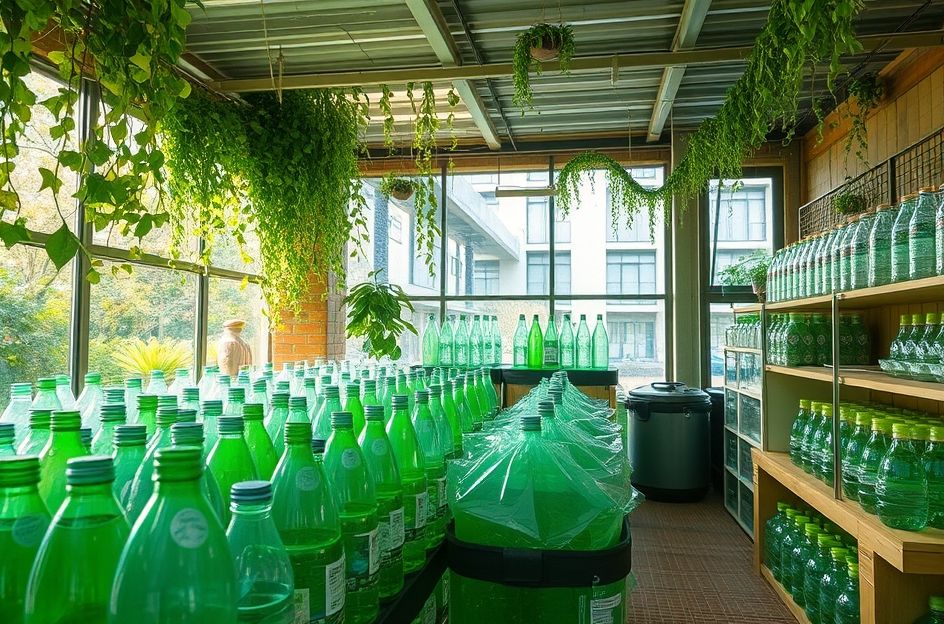
South Korea Implements Mandatory Recycled PET Bottle Requirements, Targeting 30% by 2030
Starting September 26, 2025, PET bottle manufacturers in South Korea are now required to use recycled materials under new environmental regulations. The Ministry of Environment aims to achieve 3% recycled content this year, 10% next year, and 30% by 2030. This policy represents a cornerstone initiative toward realizing a circular plastic economy, aligning with South Korea's commitment to global plastic reduction targets.
Background and Purpose of the Policy
South Korea produces approximately 800,000 tons of PET bottles annually, with 600,000 tons used for beverages and 200,000 tons for household products. While the PET bottle recycling rate is relatively high at 85%, the proportion of recycled plastic actually used in new PET bottle manufacturing has remained below 5%. Most recycled PET has been converted into lower-value products such as textiles or packaging materials, or exported overseas. This phenomenon, known as "downcycling," has been identified as a major obstacle to achieving a true circular economy.
A Ministry of Environment official explained, "The mandatory recycled content policy is a core strategy for realizing bottle-to-bottle recycling—high-quality circular economy where PET bottles are turned back into PET bottles." This approach reduces virgin petroleum-based material consumption and lowers carbon emissions. Recycling one ton of PET reportedly saves approximately two tons of carbon dioxide compared to virgin production.
Industry Response and Challenges
Reactions from the beverage industry are mixed. Major corporations like Lotte Chilsung Beverage and Coca-Cola have already voluntarily expanded their use of recycled PET bottles and welcome this policy formalization. Lotte Chilsung has been using over 50% recycled content in major products since 2023, targeting 100% conversion by 2030. Coca-Cola has also been continuously expanding recycled content alongside introducing "colorless transparent PET bottles."
However, small and medium-sized manufacturers express concerns about cost burdens. Recycled PET currently costs 20-30% more per ton than virgin materials, with more demanding quality control and processing requirements. One small business representative lamented, "Large corporations can absorb costs through economies of scale, but small companies like ours find it difficult without raising product prices." The Ministry of Environment plans to support small businesses through recycled material purchase subsidies and process improvement technology assistance.
Infrastructure Expansion is Key
Building high-quality recycled PET supply infrastructure is essential for policy success. South Korea's current recycled PET production capacity stands at only about 30,000 tons annually—just 12.5% of the 2030 target of 240,000 tons. The government plans to provide tax benefits and low-interest loans for recycled PET production facility investments, while supporting technological advancement among recycling companies.
Consumer participation in proper waste separation is also crucial. PET bottles must have labels removed, be rinsed clean, and separated from caps for high-quality recycling. The Ministry of Environment is promoting proper separation culture through the "Empty, Rinse, Separate, Don't Mix" campaign. Experts emphasize that "the mandatory recycling policy cannot succeed through legal enforcement alone—building a circular economy ecosystem with participation from producers, consumers, and recyclers is crucial." This policy could mark an important turning point in South Korea's efforts to address plastic waste and achieve carbon neutrality.
Original article: TrendyNews Korea
Comments
Post a Comment