'Street Woman Fighter: Fighters' Press Conference Previews Fierce Competition Among Elite Dance Crews
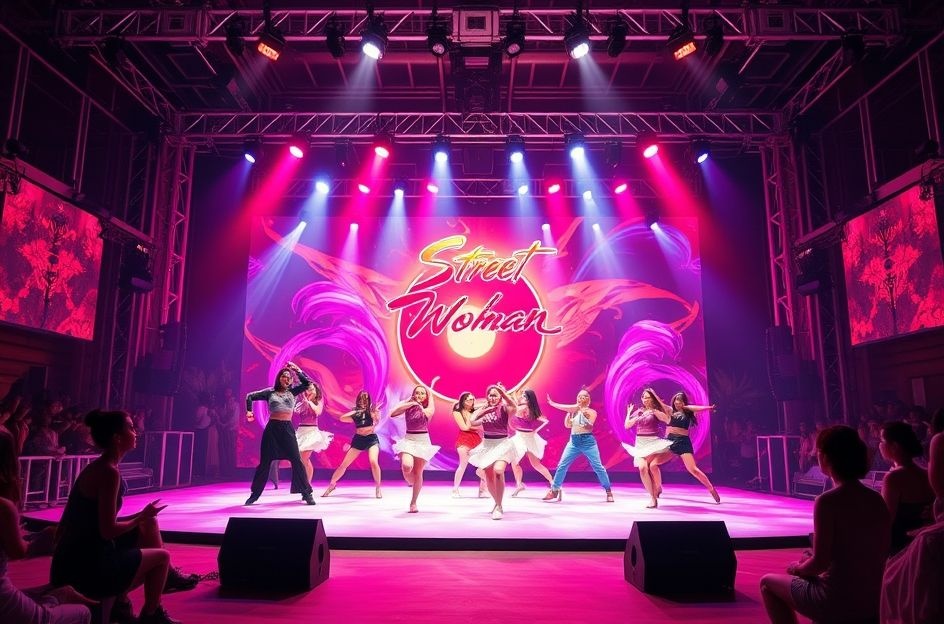
'Street Woman Fighter: Fighters' Unveils Champions League Format Featuring Elite Global Dance Crews
Mnet's groundbreaking dance survival program "Street Woman Fighter" held an elaborate press conference on September 27, 2025, at CJ ENM Center in Seoul's Sangam-dong district to unveil its new season subtitled "Street Woman Fighter: Fighters"—a champions league format that assembles previous season winners and elite international dance crews to compete for supremacy in what producers characterize as the ultimate test of contemporary dance excellence. The new season represents a significant escalation in production ambition and competitive intensity from previous iterations, positioning itself as potentially the most prestigious international dance competition in television history by leveraging the franchise's established global audience and reputation while expanding international participation beyond previous seasons' primarily Korean focus.
For American readers familiar with dance competition television including "World of Dance," "So You Think You Can Dance," and "America's Best Dance Crew," "Street Woman Fighter" represents a Korean production philosophy that emphasizes sustained narrative development, personality-driven storytelling, and intense interpersonal dynamics alongside pure dance performance—elements that have distinguished Korean variety television and contributed to its growing international influence. The show helped catalyze mainstream acceptance of street dance in Korea while simultaneously expanding global appreciation for K-culture beyond K-pop music, demonstrating how Korean entertainment production expertise can elevate international formats through higher production values, sophisticated editing, and narrative structures that create emotional investment beyond simple competition mechanics.
Champions League Format and Participating Crews
The "Fighters" season adopts a champions league structure inspired by European football competitions where elite teams from different leagues compete in a separate prestige tournament beyond their regular competitions. Six dance crews will participate: two Korean champions from previous Street Woman Fighter seasons and four specially invited international crews selected to represent global dance excellence across different styles and cultural traditions. The Korean representatives include HolyBang, led by legendary dancer Honey J (real name Ha Ni), who captained the Season 1 winning team and has become one of Korea's most recognized choreographers and dance personalities, and Jam Republic, featuring Kirsten Dodgen as leader—an American dancer who led her crew to Season 2 victory while becoming a Korean cultural phenomenon despite being a foreign participant, demonstrating the show's ability to transcend national boundaries in its appeal.
The international crews represent diverse global dance traditions and competitive excellence that raise the season's prestige and cross-cultural credentials. "Real Sisters," representing the United States, consists of choreographers who have worked on music videos for Beyoncé, Drake, Megan Thee Stallion, and other major American hip-hop artists, bringing credentials that command respect in American dance culture where commercial success choreographing for major artists represents the industry's highest achievement level. Their participation signals that Street Woman Fighter has achieved sufficient international prestige that elite American dancers view it as a platform worth pursuing rather than merely a foreign television oddity.
"La Mafia" from France represents European house dance excellence, having dominated competitions across Europe and notably participated in choreography for the 2024 Paris Olympics opening ceremony—credentials that demonstrate artistic legitimacy beyond competition success and position them as cultural ambassadors for European dance traditions. House dance, which originated in underground New York and Chicago nightclubs during the 1980s before developing distinct European characteristics, emphasizes footwork complexity, fluid upper body movement, and musical interpretation that contrasts with the more aggressive, isolat-heavy styles common in hip-hop and popping, creating stylistic diversity that enriches competition dynamics.
"Hakuna Matata" represents Japan, having won the Japan Street Dance Championship three consecutive times while building followings across Asia through social media performance videos and commercial choreography work. Japanese street dance culture has developed independently from Korean dance traditions despite geographic proximity, with Japanese dancers emphasizing technical precision, intricate formations, and conceptual choreography that reflects broader Japanese aesthetic preferences for perfection and attention to detail. Their participation creates Korean-Japanese cultural dynamics that carry historical weight given complex relationships between the two nations, adding subtext to competition interactions beyond pure dance evaluation.
Two additional international crew selections were not revealed at the press conference, with producers promising announcements through social media and teaser content designed to build anticipation and speculation among the show's substantial online fan communities. This delayed revelation strategy reflects Korean variety production techniques that maximize viewer engagement across multiple media platforms and create ongoing conversation momentum between episodes rather than concentrating all attention during actual broadcast windows.
Competition Format and Judging Mechanics
The season structure involves six competing crews facing weekly elimination through themed performance missions that test versatility, creativity, and execution across different dance styles and conceptual frameworks. The first mission, "Fusion of Traditional National Dance with Modern Street Dance," challenges crews to incorporate their respective national traditional dance forms into contemporary street choreography—a concept requiring cultural knowledge, creative vision, and technical ability to blend disparate movement vocabularies into coherent artistic statements. This mission creates particular advantages for Korean crews familiar with traditional Korean dance forms including fan dances, drum dances, and court dance traditions, while challenging international crews to research and respectfully incorporate their own cultural traditions in ways that avoid superficial appropriation or cultural caricature.
Subsequent missions focus on specific street dance genres including hip-hop, popping, and house, testing crew depth across fundamental street dance styles with distinct technical requirements, musical relationships, and cultural contexts. Hip-hop missions emphasize groove, swagger, and musicality with roots in African-American cultural expression. Popping missions require mastery of muscle isolation, hitting beats precisely, and creating robotic or wave-like illusions through controlled muscle contractions. House missions demand intricate footwork, fluid torso movement, and deep musical connection to house music's four-on-the-floor rhythms and jackin' grooves. By rotating through multiple genres, the competition prevents any crew from coasting on singular stylistic strengths and requires comprehensive street dance literacy that distinguishes truly elite dancers from specialists.
Judging combines evaluations from a 30-person panel of international dance professionals—choreographers, competition judges, industry leaders, and recognized dancers from multiple countries—with audience voting through mobile applications and online platforms. This hybrid judging structure balances expert assessment of technical execution, creativity, and artistic merit against popular appeal and fan engagement that drive television viewership and commercial success. The panel ensures that quality standards maintain credibility within dance communities, while audience voting creates investment and agency that encourages active viewership beyond passive consumption. Weekly eliminations based on combined scores maintain competitive tension and narrative progression, with the lowest-scoring crew departing each episode until only one champion remains.
The prize structure reflects the show's commercial success and ambition. The winning crew receives ₩300 million (approximately $225,000 USD)—a substantial sum that exceeds prize money offered by most American dance competitions and represents potential life-changing income for full-time dancers who rarely earn stable middle-class incomes despite elite skill levels and cultural influence. Additionally, winners receive automatic invitations to the World of Dance Championship in Las Vegas, one of the American dance industry's most prestigious competitions, creating pathways for international recognition and career opportunities beyond Korean television success. This prize combination of financial reward and career advancement opportunity distinguishes Street Woman Fighter from competitions offering primarily prestige or modest cash prizes insufficient to materially impact participants' lives.
Cultural Impact and Global Expansion of K-Dance Content
"Street Woman Fighter" has profoundly influenced both Korean popular culture and international perceptions of dance television since its 2021 debut. Season 1 achieved massive domestic success that elevated street dance from subculture to mainstream entertainment, created television celebrities from previously obscure dancers, and sparked commercial opportunities including brand endorsements, concert tours, and choreography commissions that transformed participants' professional trajectories. Multiple dance crews became household names, with members achieving celebrity status that enabled full-time dance careers through teaching, performing, and media appearances—outcomes previously rare for Korean dancers who typically supplemented performance income with part-time teaching or service industry employment.
The show catalyzed broader social changes in Korean dance culture. Youth enrollment in street dance classes surged as parents recognized dance as viable career path rather than frivolous hobby, while universities expanded dance programs and scholarship opportunities responding to increased interest. Dance studios proliferated across Seoul and other major cities, creating economic ecosystems supporting teachers, choreographers, and performers. Street dance moved from underground culture associated with hip-hop subculture to mainstream activity practiced by middle-class teenagers and young adults, losing some countercultural edge while gaining social legitimacy and financial viability that enables more people to pursue dance professionally.
Internationally, "Street Woman Fighter" demonstrated that Korean entertainment production expertise could elevate dance television beyond formats that American networks had largely abandoned as commercially nonviable. While American dance shows including "World of Dance" and "So You Think You Can Dance" struggled with declining viewership and cancellations, "Street Woman Fighter" achieved sustained international success through sophisticated production values, personality-driven narratives that created emotional investment beyond dance appreciation, and social media integration that extended engagement beyond broadcast windows. The show streams in over 190 countries with substantial viewership across Asia, growing audiences in Europe and Latin America, and niche but dedicated followings in the United States where Korean entertainment fans discovered it through streaming platforms.
International format adaptations launched in Thailand, the Philippines, Vietnam, and Italy, with more countries negotiating licensing agreements to produce local versions—a pattern familiar from Korean entertainment format exports including singing competition "The Masked Singer" and variety show "Running Man" that have inspired international adaptations. These adaptations demonstrate Street Woman Fighter's format strength and global applicability while generating licensing revenue for CJ ENM that justifies continued investment in ambitious production expansion. The "Fighters" season aims to consolidate and expand this international success by incorporating global crews that provide entry points for audiences in their respective countries while raising competitive stakes through elite international participation.
Challenges and Controversies in Dance Competition Television
Despite success, "Street Woman Fighter" has faced criticisms that the new season must navigate to maintain credibility and audience trust. Some dance community members have criticized editing that emphasizes interpersonal conflict and personality drama over pure dance assessment, arguing that this entertainment focus distorts artistic evaluation and creates incentives for participants to perform exaggerated personalities rather than focusing solely on choreographic excellence. The show's editors frequently highlight tensions, disagreements, and emotional moments that drive narrative engagement but can overshadow dance content for viewers more interested in performance than personality.
Questions about judging objectivity arise inevitably in any subjective artistic competition. Dance assessment involves personal aesthetic preferences, cultural perspectives on movement quality, and biases regarding style superiority that make completely objective evaluation impossible. Incorporating audience voting addresses transparency by giving fans agency, but popularity votes don't necessarily align with technical or artistic merit—a tension that all hybrid-judged competitions face. The 30-person professional panel attempts to balance expertise with diverse perspectives, but panel composition, evaluation criteria transparency, and individual judge credentials all influence perceptions of legitimacy that determine whether dance communities accept results or dismiss them as television entertainment disconnected from authentic artistic values.
Cultural appropriation concerns emerge when dancers incorporate traditional or cultural elements into contemporary choreography without proper understanding, permission, or respectful representation. The first mission's explicit requirement to fuse traditional national dance with street forms creates particular risks as international crews engage with unfamiliar cultural traditions, potentially producing choreography that Korean or other audiences perceive as superficial, disrespectful, or inappropriately extractive. The show's producers must balance creative freedom with cultural sensitivity, providing educational resources while avoiding heavy-handed restrictions that limit artistic expression—a delicate balance that requires thoughtful navigation to avoid controversies that could undermine the season's cross-cultural celebration intentions.
Future Implications for Global Dance Culture
"Street Woman Fighter: Fighters" represents a potential inflection point in global dance culture where international competitions achieve mainstream commercial viability and cultural prestige previously reserved for elite ballet companies or commercial entertainment choreography. If the season succeeds in attracting global audiences and elevating international dance profiles, it could create sustainable infrastructure for professional dance careers that don't require geographic relocation to major dance centers or acceptance of chronic income instability. The prize money, exposure, and career opportunities that successful participation provides could justify the substantial time investment that competition preparation requires, making television competitions viable career development pathways rather than merely promotional opportunities.
The show's success also signals broader shifts in international cultural flows. Korean entertainment production expertise—honed through decades of intense domestic competition and export ambitions—is increasingly shaping global entertainment formats rather than simply importing and adapting Western formats. This represents significant evolution from Korea's historical position as cultural importer to emerging status as cultural exporter whose production innovations and aesthetic sensibilities influence global entertainment. Dance television represents one domain where Korean innovations may reshape international standards, much as K-pop production techniques and K-drama narrative structures have influenced global music and television industries.
Whether "Street Woman Fighter: Fighters" achieves its ambitious goals of crowning a universally recognized champion while celebrating global dance diversity remains to be seen. The challenges of balancing entertainment and artistry, respecting cultural boundaries while encouraging creative fusion, and maintaining international appeal across diverse markets create substantial risks alongside opportunities. However, the show's track record of innovative production, the caliber of participating crews, and growing global appetite for high-quality dance content suggest reasonable prospects for success. The coming months will determine whether this season elevates Street Woman Fighter from successful Korean franchise to defining global dance platform—an outcome that could reshape professional dance landscapes for years to come.
Source: Korea Trendy News
Comments
Post a Comment