In Seoul, a Once-Dominant Rental System Is Giving Way to Monthly Rent — and Reshaping Middle-Class Life
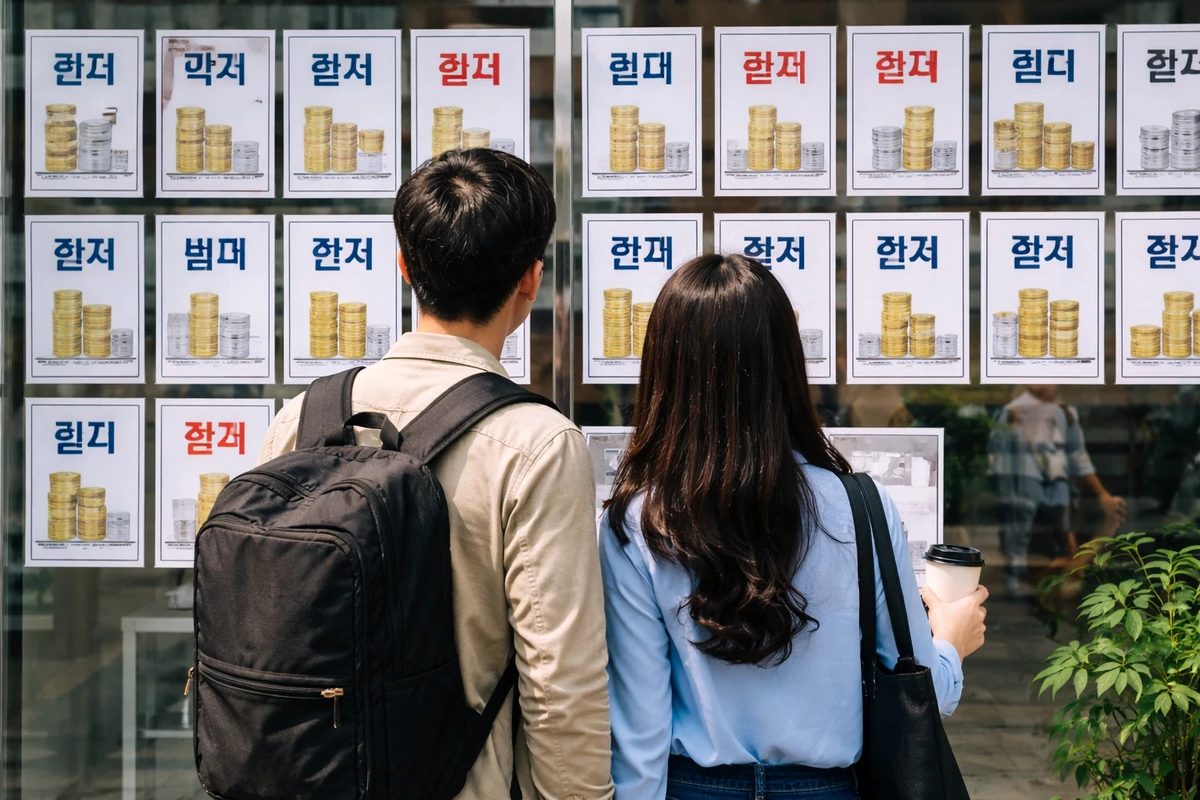
A housing shift in South Korea is becoming impossible to ignore
For decades, one of the most distinctive features of South Korea’s housing market was a rental arrangement that often startled foreigners: Instead of paying rent every month, tenants could hand over a huge lump-sum deposit and then live in the home for two years or more with little or no monthly payment. That system, known as jeonse, has long been central to how many South Koreans, especially in Seoul, managed the high cost of housing.
Now that model is rapidly losing ground in the capital. As of mid-April 2026, about seven out of every 10 rental transactions in Seoul are being made on a monthly-rent basis rather than under jeonse, according to local reporting citing market data. On paper, that may sound like a technical shift in contract type. In practice, it marks a profound change in how households budget, save, marry, commute and plan their futures in one of Asia’s most expensive cities.
The trend is especially striking because jeonse was never just a niche financial product. It was a pillar of Korea’s urban middle-class life. Families stretched to gather a large deposit, often with help from relatives or bank loans, in exchange for lower ongoing housing costs. The tradeoff could be punishing up front, but it gave many tenants a degree of monthly breathing room that is increasingly rare in global superstar cities.
What is emerging in Seoul looks more familiar to Americans: a city where renters pay each month, landlords seek steady cash flow, and housing costs eat into take-home pay in ways that shape nearly every other major life decision. But the speed of the transition matters. Seoul is not simply becoming more like New York, Los Angeles or San Francisco in its rental structure. It is undergoing the unraveling of a long-standing social and financial norm, with consequences that reach far beyond real estate listings.
At the same time, local news reports describe would-be tenants struggling to find jeonse homes at all. Prospective newlyweds, once among the classic jeonse households, are reportedly giving up after unsuccessful searches. Those scenes are not separate stories. They are part of the same larger reality: as jeonse listings shrink and the remaining ones become more expensive, more households are being pushed into monthly rent whether they want it or not.
To understand Seoul’s housing stress, Americans need to understand jeonse
For readers unfamiliar with Korea, jeonse can seem almost upside down. In the United States, renters usually pay a modest security deposit and then send the landlord a monthly rent check. Under jeonse, the tenant instead puts down a very large deposit — sometimes equal to a significant share of a home’s value — and recovers that money at the end of the lease. The landlord, in the meantime, can invest or otherwise use the deposit. In many cases, the tenant pays little or no monthly rent.
That system made sense in an environment where property values rose, credit was available and landlords could earn returns on the deposit. It also reflected a society where family wealth transfers, aggressive saving and real estate-centered household finance played an enormous role in upward mobility. For many young couples, obtaining a jeonse unit was a rite of passage nearly as important as the wedding itself — a practical bridge between living with parents and owning a home.
But jeonse has grown more fragile in recent years. Volatile interest rates, tighter financing conditions and anxiety over landlords’ ability to return massive deposits have all weakened confidence in the system. In South Korea, there has also been public concern over so-called jeonse fraud, a term used for cases in which tenants struggle to recover their deposits because landlords are overleveraged or engaged in deceptive transactions. Even when fraud is not involved, the obligation to return a huge sum at the end of a lease has made some landlords more cautious.
That caution is helping fuel the transition to monthly rent, known in Korean as wolse. From a landlord’s perspective, monthly payments can offer steadier, more predictable income. From a tenant’s perspective, monthly rent may require less cash up front than jeonse. But that lower entry barrier can obscure a harsher long-term reality: instead of struggling to assemble one large deposit, households face a constant drain on monthly income.
In other words, Seoul’s housing problem is no longer only about whether a family can come up with a giant lump sum. It is increasingly about whether they can absorb a recurring expense month after month, year after year, while also paying for transportation, child care, education and basic living costs in a city already known for intense economic pressure.
Why monthly rent is becoming the new norm
The immediate drivers of the shift are straightforward. Jeonse supply is tightening. When fewer jeonse units are available, tenants compete more intensely for what remains. Scarcity pushes prices higher. As the required deposits climb, more renters find themselves priced out of the system even if they still prefer it. At that point, monthly rent stops being a secondary option and becomes the default.
That dynamic is feeding on itself. A household that cannot renew or secure a jeonse lease moves into monthly rent or a hybrid arrangement sometimes called semi-jeonse, which combines a deposit with ongoing monthly payments. As more people make that move, the market gradually reorganizes around monthly payments. What begins as a reluctant compromise becomes a structural realignment.
Landlords, meanwhile, are recalculating their own risks. In an uncertain financial environment, stable monthly income can be more attractive than relying on a large deposit model. There is also the issue of deposit-return liability. A landlord who takes in a giant jeonse deposit must eventually give it back. In a softer property market or tighter credit environment, that obligation can feel less like an advantage and more like a potential crisis.
For American readers, there is a useful comparison here. Imagine if a large share of U.S. renters historically lived without monthly rent, so long as they could come up with a massive, refundable payment at move-in. Now imagine mortgage conditions, market instability and landlord risk all pushing owners away from that model at once. The result would not simply be a different leasing format. It would be a wholesale rewrite of family budgets and housing expectations. That is what is happening in Seoul.
The shift also reflects a broader truth about global cities: when housing costs become too high and supply remains tight, systems that once looked culturally specific begin to give way to simpler, harsher arithmetic. What matters most is no longer tradition or preference, but who can manage the financial burden under new conditions.
The people feeling it first are young couples and ordinary tenants
The pain of that arithmetic is falling hardest on newlyweds, younger renters and households seeking housing for practical life reasons rather than investment. Korean media reports say some engaged couples searching for jeonse homes in Seoul are giving up altogether. That matters because in South Korea, housing is deeply tied to the timing of marriage and family formation.
Much as young Americans may delay marriage, children or homeownership because of student debt and rent burdens, young South Koreans are increasingly making life decisions under the shadow of housing costs. But Seoul’s situation has its own local texture. A newly married couple may have spent years assuming that their first home would be financed through jeonse, with the help of savings, family support or loans. If that route suddenly becomes unrealistic, the couple may need to settle for a smaller apartment, move farther from work, leave Seoul entirely or postpone other goals.
That is why the erosion of jeonse is more than a market trend. It is a story about the life cycle of the middle class. Housing in Seoul is not just shelter; it is the organizing framework for work schedules, child-rearing, elder support, school planning and savings. A couple paying steep monthly rent may find it harder to build assets, start a family or stay in a neighborhood close to their jobs.
The burden also extends well beyond newlyweds. Longtime renters who once preferred jeonse for its relative monthly stability are being forced into a different financial reality. With monthly rent, fixed housing expenses become a regular draw on disposable income. That leaves less room for emergencies, education costs, retirement savings or even routine consumption. Over time, the effect can be as destabilizing as rising mortgage payments are for heavily leveraged homeowners.
Importantly, this is not only a luxury-market problem. It is easy to assume that housing distress in Seoul must center on expensive neighborhoods, high-rise towers and white-collar professionals fighting over premium addresses. But the cash-flow shock of monthly rent can hit middle-income and lower-income households hardest, because they have the least flexibility. A recurring housing payment is unforgiving. Unlike discretionary spending, it cannot easily be delayed or trimmed.
This is less about sticker price than about cash flow
That distinction — between wealth burden and income burden — is crucial. Under jeonse, the central question was often: Can we raise enough money for the deposit? Under a monthly-rent system, the question becomes: Can we keep paying this every month without unraveling the rest of our finances?
Americans are familiar with that kind of pressure. In many U.S. cities, the issue is not simply whether housing is expensive in the abstract, but whether rent consumes such a large share of income that families are one emergency away from crisis. Seoul’s growing dependence on monthly rent points in a similar direction. Even if a tenant can get in the door with a smaller upfront payment, the cumulative cost of years of monthly rent can be far more punishing over time.
That changes the meaning of housing stability. A household may appear more mobile because it no longer needs an enormous jeonse deposit to move. In reality, it may become less secure because its monthly obligations leave less room for savings. That weakens the ability to absorb job loss, switch neighborhoods, care for children or prepare for the future.
It also changes social mobility. Jeonse, for all its problems, sometimes functioned as a bridge for households with access to lump-sum financing, whether through savings, family help or borrowing. If that model recedes and monthly rent becomes standard, those without strong incomes may face a more permanent squeeze. Housing stability begins to depend less on access to a one-time pool of capital and more on the sustained strength of monthly earnings.
For many households, that is a worse bargain. The cost is not only financial but psychological. A monthly payment that continually drains income can reshape choices in quiet, corrosive ways: more time commuting from distant neighborhoods, less spending on children, fewer opportunities to save, greater reluctance to change jobs, and a growing sense that city life is something to endure rather than build around.
As Seoul becomes harder to afford, more households may look outside the city
The shift away from jeonse is unlikely to stay confined to the rental market. It is already influencing where people consider living and whether they can remain in Seoul at all. If monthly rent becomes the norm and jeonse continues to recede, more households will compare the cost of staying in the capital with the cost of moving to adjacent cities or suburban areas.
That pattern, too, has echoes Americans will recognize. When urban cores become too expensive, workers and families fan outward, accepting longer commutes in exchange for more space or lower costs. In the Seoul metropolitan area, that can mean places just outside the capital that are still tied to the city by transit and employment networks. The specific names may be less familiar to U.S. readers, but the logic is universal: when the center becomes unaffordable, the map of opportunity expands outward.
Not everyone who leaves Seoul will be buying a home. In fact, many cannot. But even among renters, the calculation changes. If a family can no longer secure a reasonably priced jeonse apartment in Seoul and monthly rent in the city swallows too much of their income, the appeal of nearby satellite cities grows. The tradeoff may be more manageable housing, albeit at the cost of longer travel times and a looser connection to the urban core.
That outward movement can deepen inequality inside the city itself. Households with more resources can still compete for better-located jeonse homes or absorb higher monthly rents in desirable neighborhoods. Those with fewer resources are pushed farther away, often sacrificing commute times, apartment size or neighborhood amenities. In that sense, the rental transition is also a sorting mechanism. It helps determine who gets to stay close to opportunity in Seoul and who is gradually displaced to the margins.
The broader social consequences could be significant. A city where nurses, teachers, office workers, service employees and young families struggle to live near their jobs may remain economically dynamic on paper while becoming less livable in practice. That is a familiar dilemma in major U.S. metropolitan areas, and Seoul increasingly appears to be confronting its own version.
What policymakers need to watch now
The most important policy question is not simply whether monthly-rent transactions are rising. It is how the underlying cost structure of housing is changing, and which households are absorbing the heaviest strain. A statistical shift in contract type is just the surface. The deeper issue is whether stable urban living is moving out of reach for more of the people who make Seoul run.
That requires policymakers to treat jeonse and monthly rent as more than interchangeable lease formats. They expose tenants to different kinds of risk. Jeonse is tied to asset access, debt and deposit security. Monthly rent is tied more directly to income flow and recurring household stress. If governments respond as though one can seamlessly replace the other, they risk missing what renters are actually experiencing.
In practical terms, protecting tenants in a monthly-rent era may require closer attention to income support, affordable housing supply, deposit assistance, transit access and the cumulative burden of fixed living costs. It may also require acknowledging that housing instability does not begin only when someone faces eviction. It begins when monthly obligations become so heavy that every other part of life has to be downsized to keep a roof overhead.
There is also a cultural and political challenge. Because jeonse has been such a defining feature of Korea’s housing system, its decline can be mistaken for a natural modernization — a move toward a more globally recognizable rental market. But there is nothing inherently healthy about that transition if it leaves households more exposed. An American-style monthly rent system is not a solution in itself. In many parts of the United States, it is a source of chronic insecurity.
If Seoul is indeed entering a more fully monthly-rent era, the policy debate needs to move quickly from transaction counts to lived consequences. What matters is not only how homes are leased, but how much of a family’s income housing consumes, how far workers must travel, how long couples postpone marriage or children, and whether ordinary earners can still imagine a future in the capital.
The fading of jeonse leaves a bigger question about Seoul’s future
The headline figure — roughly 70% of Seoul rental transactions now taking place on a monthly-rent basis — captures more than a market milestone. It signals the steady weakening of a system that, however flawed, once gave many tenants a distinctive way to balance housing costs. In its place is a model that may be easier to understand globally but harder to endure locally.
The most revealing image in recent Korean coverage may be the simplest one: couples preparing to marry, searching for a jeonse home, and then giving up. That scene conveys something the statistics cannot. Housing shifts are never only about contracts or percentages. They are about where people can begin their adult lives, how much uncertainty they can tolerate, and what kind of future a city makes possible.
In Seoul, the retreat of jeonse is asking a broader civic question. Can the capital remain a place where ordinary working households — not just the affluent, not just investors, not just those with family wealth — can build stable lives? Or is it becoming a city where people can survive for a while, but only by accepting a permanent state of financial strain?
That is not just a Korean question. It is a question confronting global cities from London to New York to Toronto. Seoul’s version is shaped by its own institutions, especially the unusual rise and decline of jeonse. But the underlying dilemma is familiar across wealthy democracies: when housing costs shift from a challenge to a chronic drain, the city changes from a ladder of opportunity into a test of endurance.
For now, the numbers suggest Seoul is crossing that threshold. The old logic of the rental market is fading. A new one, defined by monthly payments and narrower margins, is taking hold. And for many tenants — especially young couples and middle-class households — the concern is no longer just how to find a home. It is how to keep living the rest of their lives once the rent comes due every month.
Comments
Post a Comment