Samsung C&T Wins Landmark Rebuilding Contract in Seoul’s Apgujeong, a High-Stakes Vote in Korea’s Luxury Housing Market
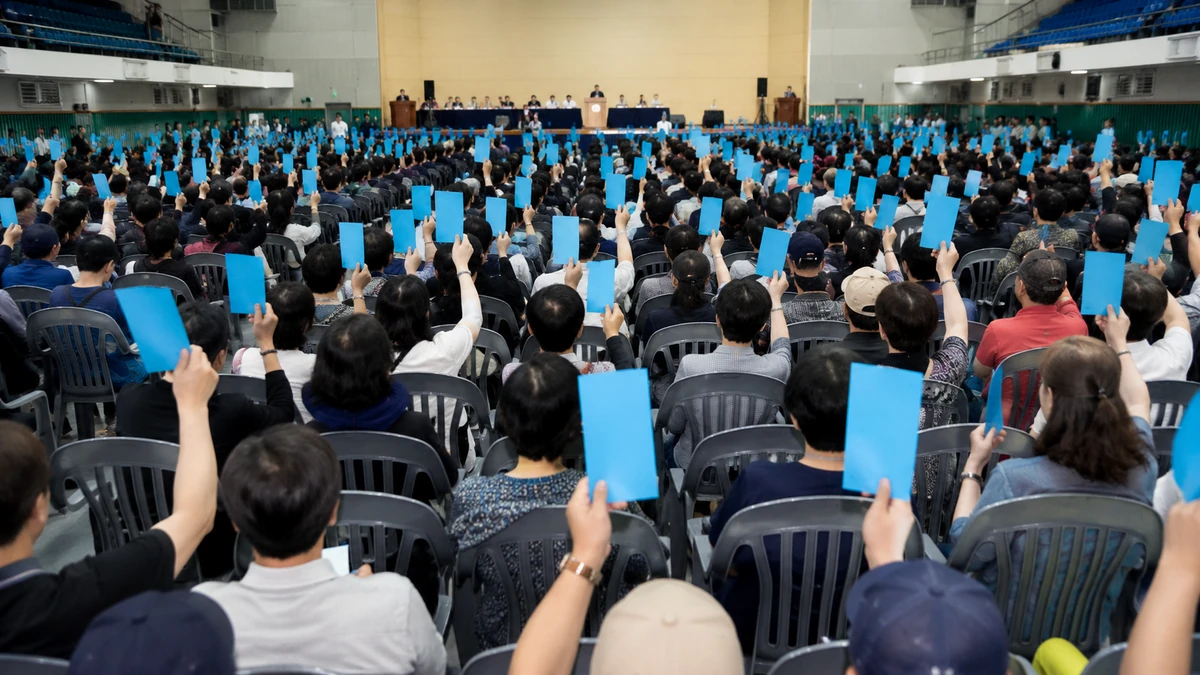
A decisive vote in one of Seoul’s most closely watched neighborhoods
Samsung C&T has been selected as the final construction contractor for the Apgujeong 4 district redevelopment project, a major rebuilding effort in one of Seoul’s best-known and most expensive residential areas. The decision, approved Saturday at a general meeting of the district’s homeowners’ association at Apgujeong High School in Seoul’s Gangnam district, was not simply another corporate contract win. In South Korea’s urban redevelopment market, it was a signal event — the kind of decision that can shape the balance of power among the country’s biggest builders and influence how investors, residents and policymakers read the future of the capital’s premium housing market.
According to Yonhap News Agency, 626 of the 716 voting members backed Samsung C&T out of a total association membership of 1,337, giving the company 87.4% of the vote. In a country where large redevelopment projects often become lengthy, politically sensitive and emotionally charged fights over property value, design, timelines and neighborhood identity, that level of support stands out. It suggests that members of the association — effectively the property owners whose apartments and land are tied to the project — have made a relatively clear choice about who they trust to carry one of Seoul’s most symbolic reconstruction efforts forward.
For an American audience, the easiest comparison may be this: imagine if a prominent slice of Manhattan’s Upper East Side or a prized residential enclave in Beverly Hills were preparing for a once-in-a-generation rebuild, and local owners had to choose the company that would reshape the neighborhood for decades. That would not be merely a local construction story. It would be a window into money, status, politics, urban planning and the brand power of the firms competing to remake a city’s most valuable real estate. That is the role Apgujeong plays in South Korea’s public imagination.
The result also matters because the contractor selection phase is one of the most consequential moments in a Korean redevelopment project. Once a builder is chosen, the project gains a clearer center of gravity. Expectations begin to harden around cost, speed, design ambitions and the prestige associated with a particular corporate brand. In this case, the outcome reinforces Samsung C&T’s standing in the country’s intensely competitive urban renewal sector.
Why Apgujeong matters far beyond one construction site
To understand why this vote drew such attention, it helps to understand Apgujeong itself. The neighborhood is located in Seoul’s Gangnam district, a name that many Americans know because of the global viral hit “Gangnam Style.” But the song’s irony and satire do not fully capture Gangnam’s economic significance. In South Korea, Gangnam is shorthand for elite education, expensive apartments, social status and high real estate values. It carries some of the symbolic weight that neighborhoods like Tribeca, Palo Alto or certain parts of west Los Angeles might carry in the United States — except concentrated in a denser, apartment-centered urban form.
Apgujeong in particular has long been associated with wealth, trendsetting and some of Seoul’s most desirable housing stock. Over time, however, many of the area’s older apartment complexes have become prime candidates for reconstruction. In South Korea, “reconstruction” is not just routine maintenance or modest renovation. It often refers to the demolition and full-scale rebuilding of aging apartment complexes into denser, more modern and more lucrative high-rise developments. These projects can transform not only skylines but also the fortunes of homeowners, construction firms and local governments.
That is why the Apgujeong 4 district carries such symbolic weight. It is not just another site on a builder’s pipeline. It is a marquee address in a city where property is both a social marker and a major financial asset. Winning the right to build there sends a message about a company’s brand power, technical credibility and ability to compete for future work in similarly high-profile projects.
In the South Korean context, redevelopment projects are closely followed because they sit at the intersection of housing affordability, household wealth and urban identity. Seoul is a dense city where land is scarce, apartment values are politically sensitive and redevelopment debates can become proxies for broader economic anxieties. A contractor win in Apgujeong, then, is not simply a matter of pouring concrete. It is part of a much bigger story about who gets to shape the future of the capital and who profits from that process.
How Korean redevelopment works — and why the homeowners’ association is so important
One of the most distinctive features of South Korea’s redevelopment system is the central role played by what Korean media calls a “johap,” or association — typically a body made up of property owners in a redevelopment district. This association is not a casual neighborhood committee. It is a powerful decision-making organization that can determine the direction of a multibillion-dollar project, vote on major milestones and negotiate with construction companies whose proposals can affect property values for years to come.
For Americans unfamiliar with the system, the closest analog might be a hybrid of a condominium board, a redevelopment authority and a shareholder group. Members are not simply commenting on zoning proposals from the sidelines. Their homes and financial futures are directly tied to the project, and they vote accordingly. The association’s general meeting, where Samsung C&T was approved, is therefore a major economic event — not just a procedural formality.
That context helps explain why turnout itself mattered. Of the association’s 1,337 members, 716 cast ballots. In a project where opinions can vary widely and where reconstruction often means years of planning, temporary disruption and high financial stakes, getting hundreds of members to vote reflects the seriousness of the decision. More important, the lopsided result suggests that uncertainty, at least on the question of the contractor, has been reduced.
That reduction in uncertainty is a significant market signal in South Korea. Large redevelopment projects can be delayed by disputes over financing, design revisions, lawsuits, regulatory approvals or disagreements among owners. Because of that, markets and industry watchers often view strong association votes as indicators of internal cohesion. When members overwhelmingly align behind one builder, it tells rivals, investors and public officials that the project may be entering a more stable phase.
It is also notable that Samsung C&T bid for the project alone, rather than emerging from a head-to-head final contest. In another setting, a single bid might raise questions about competitive tension. But in this case, the high approval rate still gave the result weight. Even without a dramatic faceoff between two household-name builders, the association’s vote served as a clear endorsement of the company’s proposal and reputation.
What the win says about Samsung C&T
Samsung C&T is one of South Korea’s best-known major builders, and its connection to the broader Samsung corporate universe gives it a level of recognition that extends well beyond the construction industry. In the United States, the Samsung name is most closely associated with smartphones, televisions and semiconductors. In South Korea, however, conglomerates often span a much wider range of businesses, and construction remains one of the arenas in which corporate reputation and prestige are tested in highly visible ways.
Winning the Apgujeong 4 district project reinforces Samsung C&T’s presence in the urban redevelopment market at a moment when major South Korean builders are competing not only on engineering capacity but on branding. That may sound unusual to American readers, but in South Korea’s premium apartment market, the developer or construction brand attached to a residential project can significantly affect how the market perceives its value. The builder’s name can signal quality, design ambition, amenities, resale potential and status.
That is one reason this vote was more than a line item in a corporate earnings pipeline. Major redevelopment wins help construction companies build momentum, demonstrate credibility and position themselves for other high-profile bids. They can also shape perceptions among homeowners’ associations in nearby districts that may soon make decisions of their own. In a market where reputation compounds, a symbolic victory in a prestigious district can ripple outward.
Yonhap reported that the project is valued at about 2.1 trillion won, underscoring the scale involved. Even before a single new tower rises, the contract carries strategic value. Large domestic redevelopment projects offer not just revenue but visibility, and visibility matters in a market where each signature project can function as a kind of showroom for a company’s capabilities. For Samsung C&T, securing Apgujeong 4 means being linked to one of the country’s most recognizable redevelopment names.
The broader economic takeaway is straightforward: even in a country globally celebrated for chips, batteries, electric vehicles and K-pop, domestic construction and urban renewal remain major theaters of corporate competition. South Korea’s economy is often described abroad through exports and advanced manufacturing. But inside the country, the contest to rebuild its most valuable neighborhoods is still a powerful expression of business influence and economic confidence.
A window into Seoul’s redevelopment economy
The Apgujeong vote also offers a snapshot of Seoul’s redevelopment economy at a time when housing remains one of South Korea’s most sensitive issues. The city’s apartment market has long occupied an outsized place in public debate, influencing everything from household wealth to generational inequality to political messaging. In that environment, reconstruction projects do more than replace old buildings. They become mechanisms through which wealth is preserved, upgraded or redistributed.
That dynamic helps explain why a contractor selection can be treated as hard economic news. The choice of builder affects not only the look and timeline of a future complex but also the negotiating structure of the entire project. A powerful contractor can bring financing strength, marketing appeal and the promise of smoother execution. Just as important, a major brand can reassure some owners that the finished product will command premium market attention.
At the same time, the symbolism of rebuilding in central Seoul should not be mistaken for a guarantee of easy progress. South Korean redevelopment projects are famous for their complexity. They can take years, even decades, to move from planning to completion. Residents may be displaced temporarily. Costs can rise. Regulations can shift. Public sentiment can change, particularly in a country where housing policy is politically volatile and deeply personal. So while Samsung C&T’s selection marks a pivotal step, it does not erase the long road ahead.
Still, a vote like this carries meaning because it marks one of the moments when an abstract project begins to look more concrete. For markets, certainty matters. For homeowners, so does momentum. And for rival builders, a decisive vote in favor of Samsung C&T is a reminder that the fight for Seoul’s most prestigious redevelopment zones remains fierce, even when the final ballot is not particularly close.
There is also a bigger urban story here. Seoul, like many global cities, is dealing with the challenge of aging housing stock in prime neighborhoods. But unlike many American cities, where preservation battles and low-rise zoning can severely constrain wholesale redevelopment, Seoul has a much longer tradition of replacing older apartment complexes with larger, more modern ones. That process can produce sleek new skylines, but it also raises familiar questions about exclusivity, access and the social consequences of luxury redevelopment. Apgujeong is one of the places where those questions are playing out in especially concentrated form.
Why international readers should pay attention
For readers outside South Korea, especially those who follow the country mainly through its tech giants, Oscar-winning films or global pop culture exports, a neighborhood redevelopment vote might seem hyperlocal. In reality, it opens a useful window into how South Korea works as an economy and as a society. The decision in Apgujeong shows that Korean corporate power is not only built in export industries. It is also embedded in the domestic reshaping of urban space, where construction companies compete for prestige as much as for profit.
It also highlights a broader truth about the Korean Wave era: South Korea’s global image is polished and modern, but that image is supported by constant redevelopment at home. Behind the sleek apartment towers, luxury retail districts and cinematic Seoul skylines is a highly organized and often contentious system of rebuilding, rezoning and reinvestment. Understanding that system helps explain not just the housing market but the country’s class structure, urban aspirations and business culture.
In American terms, the story is less about a single contractor and more about what happens when elite real estate, concentrated household wealth and major corporate brands collide in a city where land is politically charged. That is why Apgujeong 4 matters. It is a local vote with national implications, and a construction story that doubles as a status marker in one of Asia’s most closely watched property markets.
The facts that are clear so far are limited but important: Samsung C&T was approved Saturday as the final contractor for the Apgujeong 4 district reconstruction project; 626 of 716 participating members voted in favor; and the result amounted to 87.4% support. From those numbers alone, one conclusion stands out. In one of Seoul’s signature redevelopment districts, homeowners have made a strong statement about who they want shaping the next chapter of their neighborhood.
That does not mean every question about the project has been answered. Timelines, costs, design outcomes and future market conditions will all matter. But the vote has already done something significant. It has clarified the project’s direction and reaffirmed the importance of brand, trust and symbolic geography in South Korea’s redevelopment economy. In a city where real estate can serve as both a family asset and a measure of social position, that is a result the market will not ignore.
And for anyone trying to understand modern South Korea beyond the headlines about chips, diplomacy and chart-topping music, the lesson is simple: sometimes one of the clearest views into the country’s priorities comes not from a factory floor or a concert stage, but from a school gymnasium where apartment owners gather to decide who will rebuild one of Seoul’s most coveted addresses.
Comments
Post a Comment