Why this debate matters now
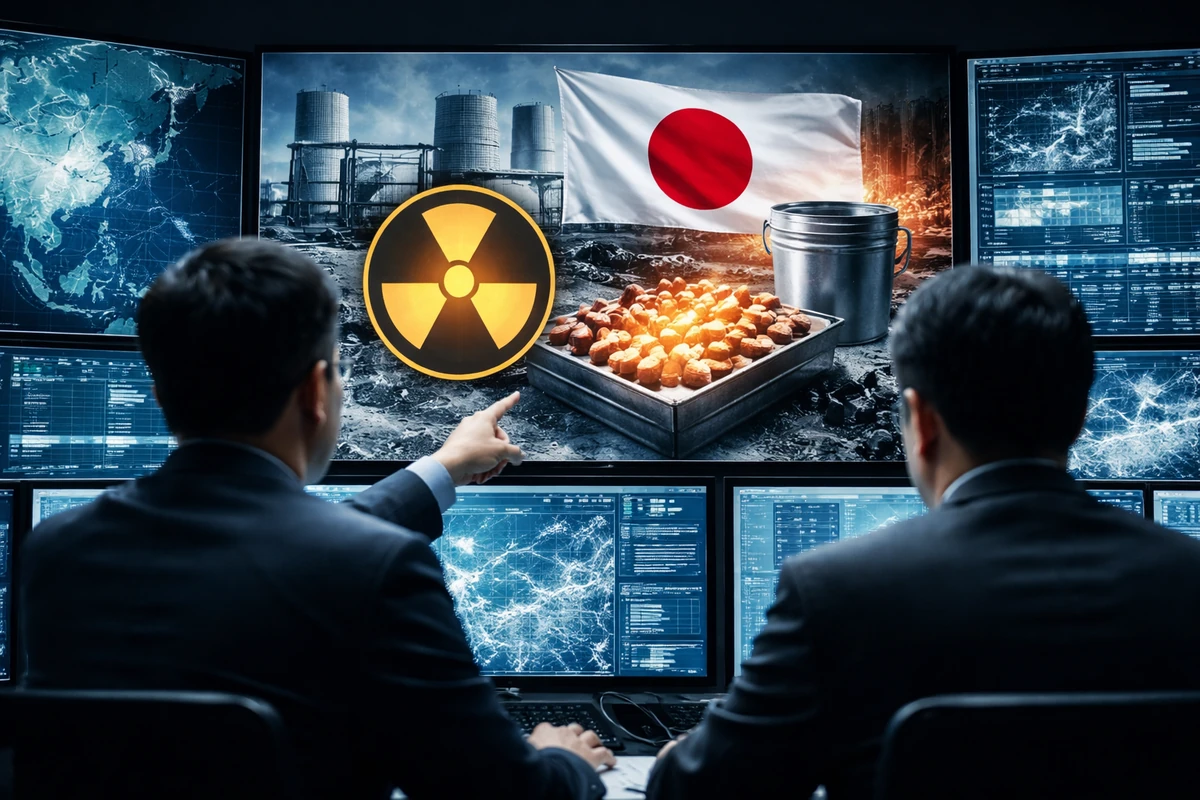
A fresh warning from a Chinese military-affiliated publication has pushed a long-running but often overlooked issue back into the center of East Asian security politics: Japan’s stockpile of plutonium. The article, highlighted in South Korean media and reported by Yonhap News Agency, argued that Japan possesses enough plutonium to produce roughly 5,500 nuclear warheads, framing the issue as a dangerous threshold for the region. Japan has not announced any move toward building nuclear weapons, and it remains formally committed to its non-nuclear principles. But in a region where history, military competition and nuclear anxieties are deeply intertwined, the size of Japan’s plutonium holdings alone is enough to trigger alarm abroad.
For American readers, the distinction here is essential. This is not the same as saying Japan is building a bomb. It is closer to saying Japan has a large quantity of material that, under a very different political decision and with the right technical steps, could theoretically be used in a weapons program. That difference matters legally and diplomatically. It also matters politically, because East Asia is a place where strategic mistrust can turn even a hypothetical capability into a major source of tension.
China’s intervention comes at a particularly sensitive moment. Tokyo has been expanding defense spending, deepening military coordination with the United States and speaking more openly about regional threats, especially around Taiwan and the East China Sea. Beijing has responded by casting Japan’s changing security posture as destabilizing. Raising the plutonium issue now allows China to challenge Japan not only on military policy, but also on nuclear credibility, an area where fears can travel faster than facts.
The result is a reminder that in East Asia, nuclear politics are rarely just about warheads. They are also about technical capacity, strategic signaling and the ability of governments to persuade neighbors that their intentions are peaceful. In that sense, China’s warning is less about an imminent Japanese bomb than about reopening an old argument over what kind of power Japan is becoming and how much trust exists in the region.
What Japan’s plutonium stockpile actually is
Japan’s plutonium has been controversial for decades, but the roots of the issue lie in energy policy, not an overt weapons program. Like many industrialized countries after the oil shocks of the 1970s, Japan pursued nuclear power as a way to strengthen energy security. Because the country has few domestic natural resources, policymakers embraced a nuclear fuel cycle strategy designed to extract more usable fuel from spent nuclear material. That meant reprocessing used nuclear fuel to separate uranium and plutonium, which could then be reused in reactors, including in mixed oxide fuel, commonly called MOX fuel.
In theory, this approach promised efficiency and reduced dependence on imported energy. In practice, it also created a stockpile of plutonium that has long made neighboring countries uneasy. Plutonium can be used in civilian nuclear fuel, and Japan insists that its holdings are for peaceful purposes under international safeguards. Those safeguards are significant. Japan is a party to the Nuclear Non-Proliferation Treaty, known as the NPT, and its nuclear material is monitored by the International Atomic Energy Agency, or IAEA. Tokyo has also long adhered to what it calls the Three Non-Nuclear Principles: not possessing, not producing and not permitting the introduction of nuclear weapons.
Still, East Asia’s security environment makes the issue more complicated than a legal checklist. The problem, as critics see it, is not only what Japan says it intends to do, but what it could do under extreme circumstances. Japan is one of the world’s most technologically advanced countries. It has sophisticated nuclear expertise, an advanced industrial base and strong missile and space-related technologies. That does not mean it is secretly racing toward nuclear arms. It does mean analysts have long described Japan as a country with latent nuclear capability, a term used for states that do not have bombs but possess much of the technical foundation that could support a program if political leaders ever chose that route.
That is why the size of the stockpile matters so much symbolically. Even when material is safeguarded and designated for civilian use, its existence can be interpreted by rivals as strategic potential. In regions with strong mutual confidence, that kind of capability might be viewed as manageable. In East Asia, where distrust remains high, it becomes a recurring fault line.
Why China is raising the issue through a military outlet
The choice of messenger is as important as the message. China did not make this argument solely through a standard diplomatic briefing. Instead, the issue was pushed by a military-linked publication, a move that allows Beijing to send a sharper warning while preserving some flexibility. That approach is familiar in Chinese signaling. Statements issued through affiliated media can reach domestic audiences, foreign governments and strategic communities all at once, while giving officials room to adjust the tone later if needed.
There are several reasons China may see value in reviving the plutonium issue now. First, Beijing wants to complicate Japan’s effort to present its military buildup as purely defensive. Over the past few years, Tokyo has moved away from the low-profile defense posture that defined much of the post-World War II era. It has approved higher military spending, discussed counterstrike capabilities and strengthened alliance planning with Washington. To American observers, those shifts are often framed as a response to a more dangerous neighborhood, especially China’s growing military reach and North Korea’s missile and nuclear programs. China sees the same moves differently. From Beijing’s perspective, Japanese rearmament, even under democratic control and in close alignment with the United States, can be portrayed as a destabilizing change in the regional balance.
Second, the plutonium issue gives China a way to question Japan’s strategic trustworthiness without having to prove any immediate violation. It is easier to raise suspicion about potential capabilities than to demonstrate current wrongdoing. That makes the argument politically useful. Beijing can say it is defending nonproliferation and regional stability while placing Japan on the defensive.
Third, there is a domestic propaganda dimension. Anti-Japanese sentiment remains a powerful and often carefully managed current in Chinese political discourse, shaped by memories of Japan’s wartime occupation of China and atrocities committed before and during World War II. Invoking Japan’s plutonium can resonate with Chinese audiences already primed to view Japanese military normalization with suspicion. In that sense, the issue serves both foreign policy and internal messaging goals.
Of course, China’s position also invites charges of selective principle. Beijing has been rapidly modernizing its own nuclear forces, a trend that has drawn growing attention in Washington and among U.S. allies. Critics will ask why China’s concern about Japan’s latent nuclear potential should be taken at face value when China itself is expanding military capabilities at scale. But geopolitics is rarely about pure consistency. States often spotlight an adversary’s vulnerability even while downplaying their own.
Japan’s strongest defense and its biggest weakness
Japan has a straightforward rebuttal available: it is following the rules. That is not a trivial point. In the global nuclear order, legal commitments, transparency measures and independent monitoring matter enormously. Japan is not North Korea, which withdrew from the NPT and tested nuclear weapons. It is not Iran, whose nuclear program has long been the subject of international disputes over compliance and verification. Japan remains deeply integrated into the U.S.-led alliance system and into the institutions of global nonproliferation.
For many in Washington, that has been enough to treat Japan as a trusted exception, a country allowed to maintain advanced nuclear fuel cycle capabilities because it is a stable democracy, a close U.S. ally and a state seen as committed to peaceful use. That unusual status has long made Japan different from other countries that might face severe scrutiny for accumulating separated plutonium.
But Japan’s problem is that legal compliance does not automatically erase strategic anxiety. Security dilemmas arise when one country’s precaution looks like another country’s threat. Tokyo can point to IAEA safeguards and insist its plutonium is civilian material. China and North Korea can still argue that the stockpile represents latent capability, and therefore a military variable that cannot simply be ignored. In a less tense neighborhood, that might be manageable. In today’s East Asia, where military aircraft and naval vessels routinely operate near disputed spaces and crisis communication remains fragile, such reassurance often falls short.
Japan also faces a practical credibility problem tied to its own nuclear energy policy. Since the 2011 Fukushima disaster, public confidence in nuclear power has been shaken, reactor restarts have moved slowly and the long-term logic of Japan’s fuel cycle has faced repeated scrutiny. Fukushima was not just an industrial accident; for many Japanese, it was a national trauma that fundamentally altered the politics of nuclear energy. That matters because the case for holding plutonium is stronger if there is a clear, functioning civilian plan to use it. If the consumption side of the policy lags while stockpiles remain substantial, outsiders are more likely to ask why so much sensitive material continues to accumulate.
That does not mean Japan lacks an answer. It does mean that simply repeating that the material is for peaceful use may no longer be enough. To persuade skeptical neighbors and reassure partners, Tokyo may need to provide a more convincing roadmap for reducing inventories, increasing transparency and aligning stockpiles with realistic reactor operations. In nuclear politics, numbers and process often matter as much as intent.
The regional context: history, Taiwan and North Korea
To understand why this argument is so volatile, Americans need to appreciate how many unresolved security stories overlap in East Asia. Unlike Europe, where post-Cold War integration softened many older rivalries, Northeast Asia still lives with live historical memory, unresolved territorial disputes and active military flashpoints. Japan’s wartime past remains politically potent in both China and Korea. The Taiwan Strait has become one of the world’s most dangerous geopolitical pressure points. North Korea continues to expand a nuclear and missile program that directly threatens neighbors and challenges the United States.
Put those elements together and even a narrowly technical debate over plutonium becomes politically explosive. China can connect the issue to Japan’s military modernization and argue that Tokyo is moving away from postwar restraint. Japan can respond that its defense changes are a rational answer to Chinese maritime pressure and North Korean weapons development. South Korea, which closely watches both China and Japan, has its own complicated perspective shaped by historical tensions with Tokyo and immediate fear of Pyongyang’s arsenal.
North Korea is especially relevant. Pyongyang regularly uses U.S.-South Korea-Japan security cooperation as justification for its own weapons buildup. If China publicly raises alarms about Japanese plutonium, North Korea can use that rhetoric to reinforce its narrative that hostile powers are surrounding it. That does not make the claim true, but it helps explain how the issue can ricochet through the region in ways that exceed the original dispute.
There is also the U.S. factor. Washington has spent decades balancing two goals that do not always sit comfortably together: strengthening allies such as Japan and South Korea against shared threats while also discouraging any move toward independent nuclear weapons programs. The credibility of the American nuclear umbrella, often called extended deterrence, is central here. The stronger allied confidence in U.S. protection, the less incentive there is for allies to consider their own nuclear options. Any renewed attention to Japan’s plutonium stockpile touches that delicate architecture, even if no one in Tokyo is seriously proposing a bomb.
That is why the immediate question is not whether Japan is on the verge of going nuclear. The more realistic concern is whether mutual suspicion is becoming more deeply embedded. Once states begin treating each other’s technical capabilities as hostile indicators, it becomes harder to stabilize competition even without dramatic policy changes.
What this could mean for U.S. policy and the broader nonproliferation order
For the United States, China’s warning presents a familiar but uncomfortable challenge. Washington wants Japan to remain a robust ally capable of helping deter China and manage regional crises. At the same time, the United States has long championed global nonproliferation norms and has an interest in preventing any erosion of those standards, especially in a region already shadowed by North Korea’s arsenal.
That means American officials are likely to continue supporting Japan’s basic position while quietly encouraging careful management of the issue. Publicly, the U.S. government has little reason to amplify Chinese accusations. Privately, however, American policymakers have every reason to prefer that Japan keep plutonium inventories tightly justified, transparent and politically sustainable. The less ambiguity surrounding Japan’s civilian fuel cycle, the less room rivals have to weaponize the issue.
There is also a larger lesson here about the future of nonproliferation. The world is entering a period in which advanced technology, great-power competition and weakening trust may blur old distinctions between peaceful and military potential. A country does not need to test a nuclear device to trigger regional alarm. Possessing the infrastructure, materials and industrial base that could support a weapons option may be enough to unsettle neighbors, especially when broader strategic rivalry is intensifying.
Japan sits at the center of that dilemma because it is both unusually trusted by Western partners and unusually scrutinized by regional rivals. Its plutonium stockpile has long been tolerated under international rules, but tolerance is not the same as universal confidence. China’s latest warning is a reminder that what is technically legal can still be politically combustible.
That does not mean a crisis is inevitable. The most likely near-term outcome is a war of narratives rather than a sudden shift in nuclear posture. China will continue using the issue to question Japan’s intentions. Japan will continue citing safeguards, treaty obligations and peaceful use. The United States will continue backing its ally while hoping the matter does not spiral into a broader regional argument over latent nuclear capability.
Still, the episode matters because it shows how narrow the margin for reassurance has become in East Asia. In a region already strained by military buildups, historical grievances and competing visions of order, sensitive nuclear material carries political weight far beyond its technical category. If Japan wants to blunt the argument, it may need to do more than insist it is following the rules. It may need to show, in concrete and measurable ways, that its stockpile is shrinking, its civilian plans are realistic and its commitment to non-nuclear status remains beyond doubt.
For American audiences, the takeaway is straightforward. China’s warning is not proof that Japan is secretly building a bomb. It is a strategic move aimed at exploiting a long-standing gray area in regional security. But gray areas can be dangerous in their own right. In East Asia, where perception often drives policy as much as declared intent, even dormant nuclear questions can quickly become frontline geopolitical arguments.
Comments
Post a Comment