For Korea’s No. 1 Women’s Basketball Team, the Playoff Formula Is Simple: Be Even Better at What Already Works
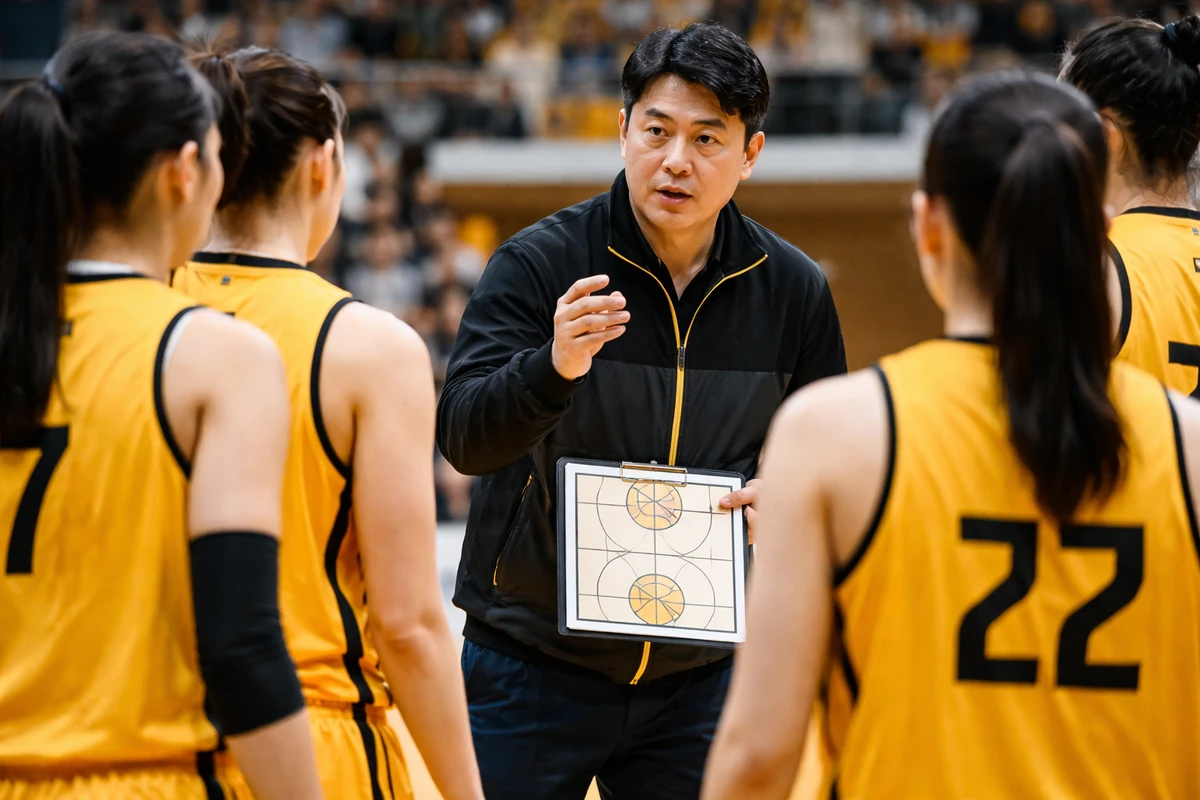
A familiar sports truth, delivered in a distinctly Korean setting
In American sports, coaches heading into the playoffs often reach for one of two messages. They either promise sweeping adjustments — new wrinkles, new lineups, new tactics — or they insist that the formula is already in the building. Kim Wan-soo, the head coach of KB, the regular-season champion in South Korea’s top women’s basketball league, has chosen the second path.
After guiding KB to first place in the regular season, Kim offered a brief but revealing line ahead of the postseason: the team needs to “do better what we already do well.” It is the kind of sentence that can sound almost too simple, the sports equivalent of saying execution matters. But in the context of playoff basketball, and especially in South Korea’s highly structured women’s game, it says a great deal about what separates a strong team over several months from a champion in a short, high-pressure series.
For readers less familiar with Korean basketball, KB refers to a women’s professional club backed by KB Financial Group, one of the country’s major financial institutions. Corporate sponsorship is a central feature of Korean professional sports, and team names often foreground the company rather than the city in a way that can feel unusual to American audiences. The league itself, the Women’s Korean Basketball League, is small by U.S. standards but highly competitive, with a style that often emphasizes discipline, half-court execution and collective defensive structure over pure isolation scoring.
Kim’s remark also landed at a meaningful moment on the Korean sports calendar. In South Korea, the phrase “spring basketball” is commonly used to describe the postseason. It carries some of the same emotional pull that phrases like “March basketball” or “playoff hockey” do in the United States: it signals not just a schedule change, but a shift in atmosphere. The regular season is about accumulation. The playoffs are about compression. Every possession feels heavier, every matchup gets revisited, and every weakness is studied in finer detail.
That is why Kim’s statement mattered. It was not just a generic vote of confidence from a coach who had just finished on top. It was a clear argument about how his team believes championships are won: not by abandoning an identity that earned the No. 1 seed, but by reproducing its strengths at an even higher level when the margin for error disappears.
Why finishing first does not guarantee a title
American sports fans know the pattern well. The team with the best regular-season record does not always finish the job. NBA history is full of examples, from top seeds upset by hotter, healthier or tactically sharper opponents to teams that looked unstoppable over 82 games only to tighten up over a seven-game series. The same logic applies in South Korea, even if the rhythms of the women’s game there differ from those in the United States.
The regular season rewards depth, consistency and the ability to manage a long grind. A playoff series tests something else: adaptability under pressure, the ability to control fouls, the value of timeouts used at exactly the right moment and the mental steadiness to survive an opponent that has spent days trying to dismantle what you do best. A strong regular-season team may have multiple ways to beat a wide range of opponents. In the playoffs, that variety can actually become less useful if it distracts from the team’s most reliable habits.
That helps explain why the top seed can face a strange kind of pressure. The lower-seeded team enters with less external burden. It can press harder, rotate more creatively and gamble more often because the consequences of failure feel less public. The No. 1 team, by contrast, becomes the hunted side. Its mistakes get magnified. Home-crowd expectations can feel less like comfort and more like weight. Every uneven quarter invites questions about whether the favorite is beginning to wobble.
Kim’s message appears designed to cut through that noise. “Do better what we already do well” is not flashy, but it is psychologically useful. It gives players a clear reference point when the game gets messy. Instead of asking them to reinvent themselves under postseason pressure, it asks them to trust the habits built over months of work — then execute them more cleanly, more sharply and more consistently.
That is often what separates playoff teams from champions, in Korea as much as in the United States. Talent matters, of course. Star players matter, too. But short series are frequently decided by whether a team can keep producing stable offense and disciplined defense when the opponent knows exactly what is coming.
The playoff trap for top teams: overconfidence and overcorrection
There are two classic mistakes regular-season champions tend to make. The first is believing that a successful formula will automatically carry over unchanged. The second is seeing playoff pressure coming and overreacting so drastically that they dilute the very qualities that made them good in the first place.
The first trap is easy to understand. A team that has spent months proving it is the league’s best can begin to assume that its standard version is enough. But postseason opponents are not meeting you on ordinary terms. They come with specialized scouting, targeted help defense, carefully chosen matchups and a willingness to attack the same vulnerability over and over. The margin for casual confidence gets very small.
The second trap may be even more dangerous. When a coach worries that the opponent will take away his team’s primary strengths, there can be a temptation to unveil too many changes — new actions, new lineups, new offensive priorities. In theory, that sounds smart. In practice, it can make a team less sure of itself. Players think instead of reacting. Timing gets dulled. Possessions become hesitant. A group that spent all season playing with a recognizable identity suddenly looks like it is searching for one.
Kim’s statement suggests he is trying to avoid both dangers. He is not saying KB should coast because its regular-season success proves superiority. He is also not saying the team needs to become something entirely different to survive a playoff series. Instead, he is pointing toward a narrower, harder task: raising the quality of the team’s core habits while trimming unnecessary variance.
That is a very playoff-minded philosophy. In a short series, the best path is often not to expand the menu, but to sharpen the signature dish. The objective is not to surprise the opponent on every possession. It is to make familiar actions function so precisely that even a prepared defense struggles to stop them.
For American readers, there is a parallel here to the way elite NFL teams often talk in January. The best ones do not usually reinvent their offense the week before the divisional round. They spend that time making sure their bread-and-butter concepts hold up against heavier pressure and better scouting. Basketball, especially playoff basketball, works the same way.
What “doing better” actually means on the court
When a coach says his team needs to be better at what it already does well, the phrase can sound vague. In basketball terms, though, it is usually quite specific. It points to repeatable aspects of team identity: defensive rotations, rebounding discipline, spacing in the half court, pass timing, decision-making late in the shot clock and role clarity from starters to bench players.
Defense is often the first place that identity shows up. Shooting can swing wildly from game to game. A team can go cold for reasons that are hard to predict. But defensive spacing, help-side awareness, closeout discipline and box-outs are more controllable. They depend on preparation, trust and focus. That makes defense one of the most reliable playoff assets, particularly in leagues where possessions are highly structured and transition opportunities can be limited.
If KB earned the regular-season title through collective organization, then the playoff challenge is to maintain that structure even when the other side spends an entire week trying to break it. That means defenders must make the same reads under greater pressure. It means weak-side helpers need to arrive a step earlier. It means rebounders have to finish possessions instead of merely contesting them. In a short series, those details are not side notes; they are often the difference between control and chaos.
On offense, “doing better” tends to mean better precision rather than greater invention. Playoff opponents work hard to take away first options. The answer is not always a new playbook. Sometimes it is a sharper screen angle, a cleaner cut, a better outlet pass to initiate the set a second sooner or stronger spacing that punishes help defenders for cheating into the lane. The same play can look ordinary in January and unstoppable in March if executed with better timing.
Bench management is part of this, too. In the postseason, starters usually carry a heavier load, but the importance of reserves does not disappear. It becomes more concentrated. A backup who can survive three difficult minutes on defense, secure one offensive rebound or commit a smart foul to stop momentum may alter the shape of a game. That kind of contribution rarely makes highlight reels, but coaches chasing titles know how valuable it is.
All of this helps explain the deeper meaning behind Kim’s public message. He was not just asking for more scoring or more intensity in a general sense. He was describing a playoff standard: preserve the team’s identity, refine the details and make the parts that traveled all season travel under even harsher conditions.
The opponent’s mission will be simple: make KB uncomfortable
Once a team finishes first, it also becomes the most heavily studied team in the bracket. The opponent’s coaching staff will search for every entry point to disrupt rhythm. That could mean pressuring the ball earlier, denying a preferred passing angle, crowding the paint to challenge interior touches or repeatedly hunting a particular matchup until the favorite is forced to respond.
In a playoff environment, the question is not whether KB’s strengths will be challenged. They will be. The more important question is whether KB can restore its usual efficiency once those disruptions begin. That is where elite teams distinguish themselves. They do not avoid pressure; they absorb it and return to form quickly.
If an opponent extends ball pressure to shake the guards, for example, the adjustment may not be dramatic. It may simply require cleaner support angles, quicker reversal passes and earlier movement from off-ball players so the offense does not waste precious seconds just getting organized. If the defense overprotects the interior, perimeter players may need to shoot with confidence, but just as important, the team must rebalance for rebounds and transition defense so those shots do not become giveaways.
These are not changes that can be solved by a whiteboard alone. They rely on habits built across an entire season: communication between teammates, trust in the next pass, confidence in the next rotation and a shared understanding of where to go when a possession starts to wobble. Coaches influence those habits, but players ultimately reveal them in real time.
That is part of why Kim’s wording matters. It is tactical, but it is also emotional. In moments when top-seeded teams begin to rush — a couple of turnovers, a missed defensive assignment, a scoring drought that feels longer than it is — they can lose themselves trying to get the whole game back in a single possession. A message centered on familiar strengths gives the team a way to settle. It says, in effect: Do not chase the game. Return to the standard.
Playoff series are cumulative arguments. What works in Game 1 may be dulled in Game 2. A fix in Game 2 may need revision by Game 3. The best teams adjust, but the strongest ones do so without severing themselves from their identity. That balance — flexibility without drift — is likely to define whether KB’s regular-season success becomes something larger.
Leadership in the postseason sounds different
Coaches often speak in recognizable categories before the playoffs. Some emphasize confidence. Some emphasize respect for the opponent. Others use the moment to restate internal standards. Kim’s remark falls most clearly into that third group, and that is often the most telling category of all.
When a team has already accomplished something meaningful, such as finishing first in the regular season, the main challenge is not always motivation in the ordinary sense. Players do not need to be convinced the games matter. What they often need instead is simplification. Pressure tends to clutter the mind. The more possibilities players try to process, the slower and heavier they can look on the floor.
By narrowing the focus to what KB already does well, Kim appears to be giving his players something valuable: clarity. The postseason can make athletes feel as if they must do everything. Strong leadership reminds them what they must do first. The point is not to ignore the opponent or pretend adjustments are unnecessary. It is to organize the team around a stable center.
That approach also changes how failure is interpreted. In a stressful series, a missed rotation or a broken offensive possession can create panic if players believe every mistake means the old formula no longer works. But if the coach’s standard is clear, the response becomes more measured. The team does not conclude that its identity has failed. It concludes that execution slipped, and that the answer is to return to the structure with better precision.
There is a cultural layer here, too. Korean team sports often place a visible premium on order, role definition and collective discipline. That does not mean creativity is absent, but it does mean leadership language frequently emphasizes responsibility to the group and fidelity to shared principles. To American ears, Kim’s quote may sound understated. In the Korean setting, it reads as a deliberate effort to keep the team aligned and emotionally level as expectations rise.
That kind of leadership tends to look smartest not when things are easy, but when the favorite is suddenly uncomfortable. A close game in the fourth quarter, a hostile stretch of officiating, a lineup in foul trouble, an opponent making a run — those are the moments when the difference between noise and guidance becomes obvious. Kim’s message suggests he wants KB to meet those moments not with panic or novelty, but with a sharper version of its usual self.
What American readers should watch as the playoffs unfold
For fans in the United States who may be discovering Korean women’s basketball through this moment, the temptation may be to search immediately for the league’s brightest star or its most dramatic scorer. Those players matter, of course, and the postseason always has room for individual shot-making. But if Kim’s comments are any indication, the more revealing story may be structural rather than glamorous.
Watch how consistently KB defends across multiple games. Watch whether the team finishes defensive possessions with rebounds rather than allowing second chances. Watch how quickly its offense flows into sets when the opponent tries to disrupt the first pass. Watch the role players and reserves, whose contributions often carry outsized value in playoff basketball. And watch, perhaps most importantly, whether the team looks like itself under pressure.
That is usually the real test of a regular-season champion. Anybody can look organized when the schedule is long and the consequences are diluted across months. The playoffs demand replication under stress. They demand that a team’s best habits hold up after the opponent has memorized them, probed them and spent days trying to break them apart.
Kim Wan-soo’s short statement captured that challenge with unusual economy. It rejected the idea that postseason success requires theatrical reinvention. It also rejected the complacency that sometimes shadows top seeds. Instead, it pointed toward a harder and more mature standard: take the strengths that brought you here and perform them at a level the opponent still cannot erase.
In that sense, the message reaches beyond one Korean team in one postseason. It speaks to a broader truth about championship basketball, whether in Seoul, Las Vegas, Storrs or Los Angeles. Titles are often won not by the team that discovers itself in spring, but by the one that knows exactly what it is — and proves it again when the games become hardest.
Comments
Post a Comment