
A familiar name returns in a very different Korea
Seventeen years is a long time for any movie character to disappear, especially one who was never part of a superhero franchise, a major studio universe or a carefully managed entertainment brand. But in South Korea, the return of a character known as "Jjang-gu" is drawing attention precisely because he comes from a much smaller, more intimate corner of the film world.
The character first made his mark in the 2009 film "Wind," a modestly scaled but influential coming-of-age movie that became a lasting touchstone for many Korean viewers. In that film, Kim Jung-guk, nicknamed Jjang-gu, was a volatile, memorable high school boy whose swagger, vulnerability and regional Busan dialect helped make him feel less like a fictional hero than someone audiences might have actually known. Now, 17 years later, Jjang-gu is returning as the title character of a new film set for release in April 2026.
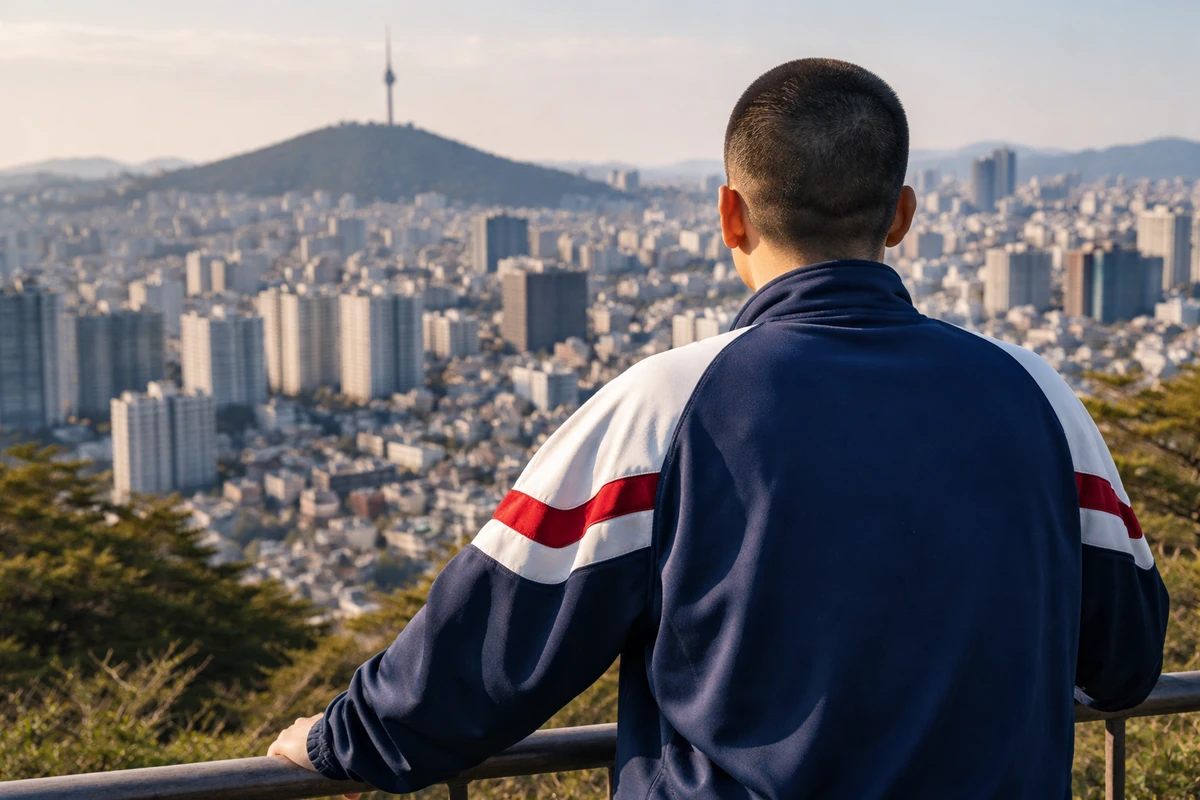
This time, he is no longer a teenager navigating schoolyard hierarchies and adolescent bravado. He is a man nearing 30, living in Seoul after leaving the southern port city of Busan and trying to build a life as an aspiring actor. According to details released in Korea, the new film follows his efforts to survive in the capital, attend auditions, land bit parts and keep hold of a dream that has become harder, not easier, with age.
That setup may sound familiar to American audiences who have seen countless stories about hopeful young performers moving to New York or Los Angeles. But Jjang-gu's return carries a different kind of emotional freight. This is not simply another underdog story about making it in the big city. It is the revival of a character who has remained culturally alive in Korea long after his original film left theaters, and whose return raises broader questions about memory, class, regional identity and what happens when youthful energy runs into adult reality.
For U.S. readers, one useful comparison might be the difference between a conventional sequel and a later-life revisit to a character audiences once loved for how real he felt. Think less along the lines of a franchise installment and more like catching up with someone from an old neighborhood drama years after graduation, only to discover that the world changed, the country changed and so did he.
Why "Wind" mattered far beyond the box office
To understand why this comeback matters in South Korea, it helps to understand the place "Wind" occupies in Korean movie culture. The 2009 film was an independent production, not a major commercial blockbuster. Yet it sold more than 100,000 tickets in theaters, an unusually strong showing for an indie movie, and its influence outgrew those numbers over time.
In Korea, the film came to be remembered as what some people loosely called an "unofficial 10-million movie," a phrase that does not mean it literally matched the country's biggest box-office smashes. Rather, it suggests that its cultural reach extended far beyond its original theatrical run. Scenes, lines and character mannerisms continued to circulate long after release, particularly among viewers who saw the movie as one of the sharpest portrayals of teenage male life in modern Korean cinema.
That reputation was built not on spectacle or plot twists but on detail. "Wind" was praised for capturing the rhythms of everyday adolescent life: the way boys talk to one another, the pecking order inside friend groups, the small humiliations, the need to save face and the performative confidence that often masks insecurity. In American terms, the movie landed not because it mythologized youth, but because it observed it. It made room for the awkwardness, posturing and emotional confusion that define an age when people are desperate to seem tougher than they really are.
It also mattered that the film was rooted in Busan, South Korea's second-largest city and a place with a powerful regional identity. Busan is often described to American audiences as a rougher-edged, more direct counterpoint to Seoul, a coastal city with its own accent, manners and cultural confidence. In Korean media, regional dialects can carry strong social meaning, signaling class background, local pride and sometimes a distance from the polished, status-conscious norms associated with the capital. "Wind" leaned into that specificity, and for many viewers that helped make it feel unusually alive.
So when Koreans hear that Jjang-gu is returning, they are not just being told that an old movie character is back. They are being invited to revisit a whole texture of remembered life: a way of speaking, a kind of masculinity, a generation's emotional weather. That is a much subtler proposition than a reboot designed to sell familiarity. It asks whether a character preserved in public memory can still feel truthful after being moved into adulthood.
From teenage chaos to adult precarity
The most interesting thing about the new film may be the way it shifts the center of gravity from collective youth to personal survival. In "Wind," the emotional engine was the world of high school boys: friendship, conflict, rebellion and the hunger for recognition among peers. In the new "Jjang-gu," the concerns are lonelier. The character is no longer defined by a tight group or a school setting. He is trying to survive as an adult in a competitive city while chasing a dream that may or may not pay off.
That move changes the emotional register of the story in important ways. American viewers are familiar with the broad outlines of this kind of transition. Countless movies and TV dramas have charted the passage from adolescence, when identities are formed in groups, to young adulthood, when success or failure starts to feel brutally individualized. What makes Jjang-gu's new chapter distinct is that it is attached to a character once associated with noisy, communal, testosterone-driven teenage life. Watching him age into a struggling, near-30 aspirant promises a collision between memory and reality.
It also sharpens the stakes of time. The Korean summary describes him as being at the "tail end of his 20s," a phrase that carries a weight American audiences will recognize even if the social specifics differ. In South Korea, as in the United States, the late 20s can feel like a deadline period, when youthful possibility begins giving way to pressure over career stability, income, housing and family expectations. In Korea, those anxieties are often intensified by a hypercompetitive labor market, steep housing costs in Seoul and cultural pressure to appear settled by milestones that many young adults can no longer realistically meet.
That is why the details matter: auditions, small acting roles, the struggle to hold on. This is not the fantasy version of the entertainment business, filled with overnight discovery and glamorous ambition. It sounds closer to the lived experience of trying to remain hopeful while taking piecemeal opportunities and absorbing repeated disappointment. For a character remembered as a restless high school presence, that kind of adult life can be especially poignant. The bravado that once read as youthful vitality may, in a different setting, register as stubbornness, pride or even desperation.
And there is another layer. By moving Jjang-gu from Busan to Seoul, the film sets up not just a career journey but a social and linguistic one. In Korea, relocating to Seoul often means entering the country's most concentrated arena of opportunity and hierarchy. It is where many entertainment, media and corporate careers are centered, and where regional background can become newly visible. Just as an aspiring actor in America might feel the pressure of arriving in Los Angeles without money, connections or polish, Jjang-gu's move suggests a tension between where he comes from and the place where he is trying to reinvent himself.
The actor who grew up with the character
If the story itself invites curiosity, the creative circumstances behind it may be just as important. The new film is not only starring Jung Woo, the actor who played Kim Jung-guk in "Wind." It also marks his debut as a director. That means the person guiding the character's next life onscreen is the same performer who embodied him as a teenager nearly two decades ago.
That matters because some screen characters are inseparable from the actors who first brought them to life. Over time, the performer's own aging becomes part of the audience's understanding of the role. When the actor revisits that role later, viewers are not simply seeing a fictional continuation; they are seeing time itself become part of the text. That dynamic can be gimmicky if handled poorly, but it can also create emotional depth when the return is grounded in experience rather than nostalgia for its own sake.
At a recent preview event in Seoul, Jung Woo said he hoped the film would serve as "another gift" for viewers who wanted to see Jjang-gu again. In the language of entertainment promotion, that could sound like standard fan service. But the idea of a "gift" also suggests something gentler: not a re-creation of what audiences felt in 2009, but a chance to revisit that memory in a new emotional key. It implies trust that the character means enough to viewers that they are willing to encounter him not as a frozen icon of youth, but as someone weathered by time.
The directorial debut angle is also noteworthy in Korean cinema, where actor-directors periodically emerge but can face skepticism if their projects look too much like vanity exercises. In this case, the premise cuts in the opposite direction. Rather than inventing a flashy new persona to prove himself behind the camera, Jung Woo appears to be building on a role that already has a relationship with the public. That makes the project feel less like reinvention and more like accumulation, as if years of acting experience have been folded back into a character he understands from the inside.
For American readers, there is a familiar appeal here too. Audiences often respond strongly when an artist revisits earlier work in a way that reflects real passage of time. Whether in independent film, prestige television or music documentaries, there is something compelling about seeing people return not to relive their younger selves, but to reckon with them. That seems to be the wager "Jjang-gu" is making.
More than nostalgia in an age of IP
The timing of the film also says something about where Korean cinema stands now. Like Hollywood, the Korean entertainment industry operates in an era saturated with intellectual property, sequels, remakes, spinoffs and franchise logic. Audiences around the world are accustomed to seeing familiar titles revived because recognizable brands feel safer in a crowded marketplace. But "Jjang-gu" appears to be doing something slightly different.
Instead of expanding a grand mythology or spinning out a heavily engineered cinematic universe, the film seems to be asking whether a single remembered person can remain narratively meaningful after a long absence. That is a quieter, riskier proposition. It depends less on lore than on emotional continuity. It asks viewers to supply part of the story themselves through memory: to remember what Jjang-gu once represented, and then to compare that remembered image with the man he has become.
That approach plays to one of Korean cinema's long-standing strengths. While South Korean film is often recognized internationally for its thrillers, horror, social satire and high-concept genre work, some of its most durable achievements come from close observation of ordinary life. Regional texture, social behavior, family dynamics and class-coded speech patterns often do as much narrative work as plot. "Wind" became beloved in part because it felt so precise about the lived experience of boys in a specific time and place. If "Jjang-gu" succeeds, it will likely be because it can generate that same precision for a different stage of life.
In other words, this comeback will matter only if it does more than recycle old scenes or repackage a famous nickname. Nostalgia is easy to market and hard to justify artistically. True character preservation demands more. It means allowing a person audiences once loved to age, fail, relocate, dream and perhaps disappoint. It means treating continuity not as branding but as responsibility. If "Jjang-gu" can do that, it will offer something rarer than a reunion: a believable extension of a life viewers thought they already understood.
Why American audiences should pay attention
Even for viewers who have never heard of "Wind," this story offers a revealing window into contemporary South Korea. At one level, it is about a cult movie character returning after 17 years. At another, it is about how Korean popular culture remembers youth and how that memory changes as a generation ages. Many of the pressures facing Jjang-gu will feel recognizable to audiences well outside Korea: moving to a bigger city, trying to break into an unforgiving industry, wondering whether ambition still counts as courage when you are no longer young enough to be excused for struggling.
But the Korean context gives those themes their own shape. The move from Busan to Seoul is not just geographical; it maps onto a broader national concentration of power, jobs and prestige in the capital. The struggle to become an actor is not just a show-business cliché; it unfolds in a country where celebrity culture is enormous, but so are competition and precarity. And the return of a once-beloved character is not merely a business decision; it reflects a film culture that still places high value on socially recognizable types, regional realism and the emotional durability of ordinary people.
There is also something broader here about the Korean Wave, or hallyu, the global rise of South Korean entertainment. International audiences often encounter Korean culture through polished exports: K-pop megastars, glossy dramas and Oscar-winning auteurs. Those are real and important parts of the picture. But stories like "Jjang-gu" point to another current beneath them: a local tradition of character-driven storytelling that is deeply rooted in neighborhood life, speech, memory and the awkward passage from one life stage to another. That tradition may not always travel as easily as spectacle does, but it can be just as revealing.
In that sense, the return of Jjang-gu is not only a Korean nostalgia story. It is a test of whether a film industry can honor what made a character matter in the first place while allowing him to grow old in public. For American audiences raised on reboots that often confuse recognition with meaning, that is a premise worth watching. The most compelling question facing this new movie is not whether viewers still remember Jjang-gu. It is whether they can believe in him now.
If they can, then his return will stand as more than a sentimental callback. It will become a small but telling example of how Korean cinema keeps faith with character: not by preserving youth in amber, but by letting it walk forward into adulthood, carrying all the bravado, loneliness and unfinished hope that time leaves behind.


0 Comments