A Korean Ballad Powerhouse Returns to the Stage After Seven Years, Testing What Still Matters in the Concert Business
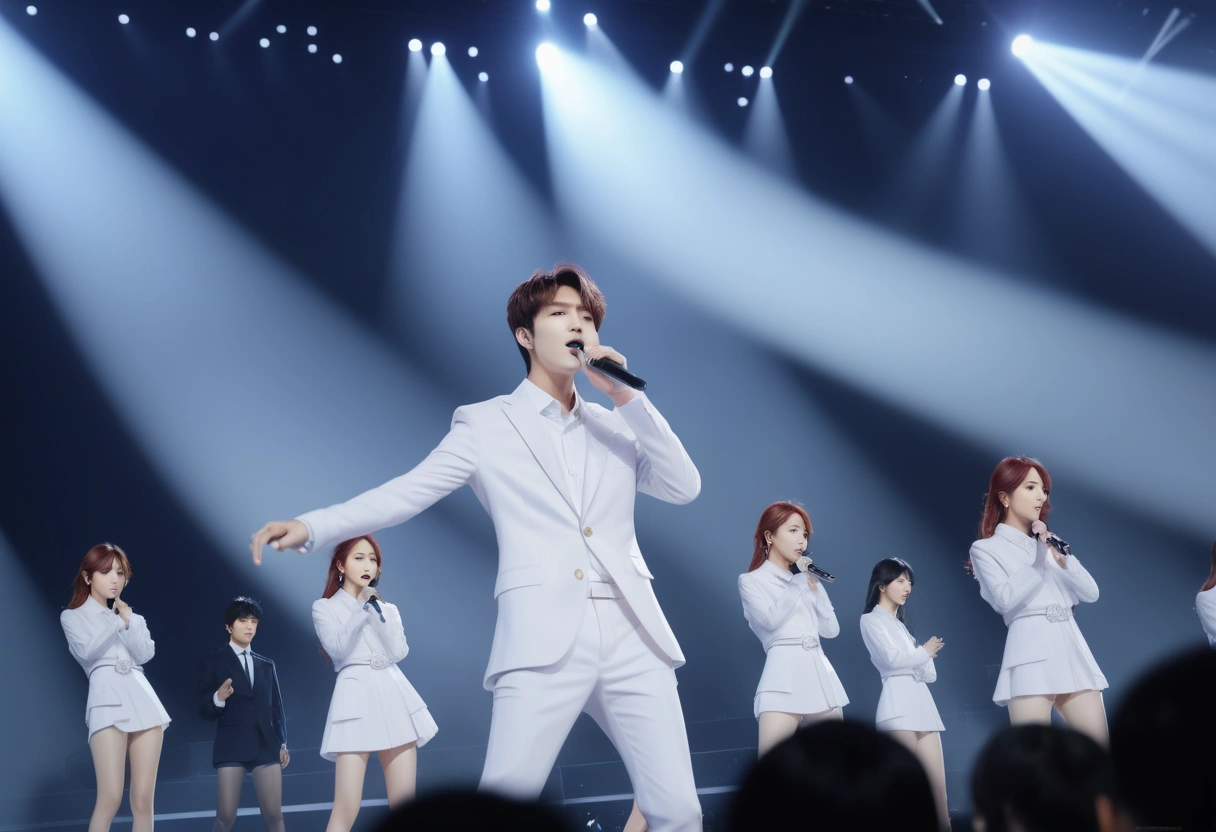
A long-awaited comeback, and more than a simple concert announcement
South Korean singer Park Hyo-shin is set to hold a solo concert on April 5, 2026, his first standalone show in seven years — and in Korea, that is being treated as much more than a routine entertainment update. For American readers who may not follow the Korean music scene closely, the significance is not just that a popular singer is performing again. It is that one of Korea’s most respected male vocalists, known less for celebrity antics than for the sheer force of his voice, is returning to the format that most directly tests an artist’s staying power: the live solo concert.
In South Korea, a solo concert carries a particular kind of prestige. It is not simply a tour date or a promotional event tied to a new album. It is a referendum on an artist’s ability to command a room for two hours or more with little more than a catalog, a voice and a bond with fans strong enough to get them to spend real money and time for an in-person experience. In that sense, Park’s return says something about him, certainly, but also about how the Korean concert market has changed during his absence.
The seven-year gap matters. In pop culture, especially in a digital era shaped by TikTok-style clips, streaming churn and a nonstop cycle of new releases, seven years is enough time for an entire audience to age into adulthood and another to discover an artist through old videos, soundtrack cuts and fan-posted performances. It is also enough time for a concert industry to evolve: ticket tiers become more complex, resale controversies intensify, mobile booking becomes even more cutthroat, and the afterlife of a live event increasingly unfolds online through short-form video, fan communities and social media reaction.
That is what makes Park’s announcement noteworthy beyond fan circles. His comeback to the solo stage offers a case study in whether a singer defined by vocal performance, emotional interpretation and old-fashioned concert craftsmanship can still hold the same weight in a market that has become faster, flashier and more visually driven. The central question is not merely how long it has been since Park performed alone. It is how those lost years will be translated into the persuasive power of a live show in 2026.
For a U.S. audience, there is a parallel here to what happens when a major legacy vocalist — someone valued for live delivery rather than constant tabloid visibility — steps back into the spotlight after years away. Think less along the lines of a viral pop reinvention and more like the return of an artist whose reputation rests on how a room feels when the first note lands. That is the category Park occupies in Korea, and it helps explain why this concert announcement is resonating far beyond the basic facts on the calendar.
Why Park Hyo-shin still matters in Korea’s music landscape
Park is not the kind of star whose appeal is easiest to measure by the current rules of online attention. His name is not primarily built on variety-show ubiquity, relentless social posting or the kind of constant high-visibility activity that often defines celebrity in today’s entertainment economy. Instead, his reputation has long been anchored in what Korean audiences describe as vocal ability in its purest sense: control, emotional depth, tonal richness and the feeling that a song becomes complete only when he sings it live.
That makes him an interesting figure in Korean pop music, where the global conversation often centers on idol groups, tightly choreographed stagecraft and fandom metrics such as album sales, streaming totals and social engagement. Korea’s music industry is much broader than K-pop as it is commonly understood abroad, and Park belongs to a lineage of singers often associated with ballads — emotionally expressive songs that place a premium on melody, lyrics and vocal interpretation. In the United States, “ballad” can sound soft or old-fashioned, but in Korea the genre remains a major pillar of the mainstream and carries serious emotional and commercial force.
Park has long been considered one of the rare singers who can turn that appeal into large-scale live demand. There are many respected vocalists in Korea; there are fewer who can reliably fill a sizable venue for a solo show where the main selling point is not spectacle, celebrity guests or elaborate storytelling devices, but the promise of hearing a major voice at full power. That is part of why his name still carries weight after a long absence from solo concerts.
His audience is also unusually broad. Some fans have followed him for years, perhaps since earlier hits or original soundtrack songs tied to Korean dramas, a major pipeline of music discovery in the region. Others are newer listeners who found him through streaming platforms, video clips or recommendation algorithms that keep resurfacing great live performances long after they first aired. When multiple generations of listeners show up for the same artist, a concert becomes more than fan service. It becomes a live reintroduction of the artist’s brand — and a test of whether that brand still feels vital.
That broad age mix also shapes expectations. Longtime fans often want the emotional payoff of familiar signature songs, the equivalent of hearing a beloved staple done with the maturity of years. Newer listeners, by contrast, may come in with fewer fixed memories but high standards formed by the polished visual culture of modern concerts. Park therefore faces the challenge that often greets artists returning after a long hiatus: nostalgia alone is not enough, but abandoning the emotional core that made audiences care in the first place can be just as risky.
A concert market transformed by pricing, platforms and digital culture
While Park was away from the solo-concert spotlight, the Korean live entertainment business changed in ways that will be familiar to American concertgoers, even if the local mechanics differ. Ticket prices have become more layered. Seating classes are more segmented. Premium experiences, packaged benefits and fan-oriented add-ons are more common. Audiences are no longer simply paying to attend a show; they are often paying for a level of proximity, exclusivity or memory-making that turns attendance into a status-marked experience.
That trend mirrors what American fans have seen with VIP packages, platinum pricing and escalating competition for high-demand seats. In Korea, as in the United States, fans have become acutely aware not just of whether they can go, but of where they will sit, how fair the ticketing system feels and whether the process rewards loyalty or simply speed, luck and deep pockets. For an artist like Park, whose return has been anticipated for so long, the ticketing phase itself may become part of the story.
Booking conditions have also shifted dramatically. Mobile-first ticketing is now the norm, and that means intense pressure on platforms to handle real-time surges. Fans increasingly expect not only technical stability but also transparency around anti-bot protections, queue systems and measures aimed at limiting unfair resale practices. In high-demand Korean concerts, public conversation around a performance often begins before the artist ever takes the stage, shaped by whether fans felt the ticket sale was accessible, orderly and fair.
Then there is what happens after the show. Live music used to be defined primarily by the people in the room. That is no longer true. Today, a concert’s cultural footprint expands almost instantly through fancams, reaction posts, review threads, photo collections, short clips and the sometimes feverish real-time commentary of fan communities. A single standout note, a set-list surprise or a shaky but emotional audience-captured moment can ricochet through the internet within minutes.
That dynamic cuts both ways. It expands the social reach of a concert and helps artists extend the life of a performance beyond one night. But it also means quality is judged quickly and publicly. For a singer whose reputation rests so heavily on live ability, that can be an advantage — if the performance delivers. If it does not, disappointment spreads just as fast. In other words, Park is returning not only to a concert hall, but to an ecosystem in which the live event is instantly converted into digital evidence.
Still, it would be a mistake to assume all these market changes point in only one direction: bigger, louder, more visually overloaded. In fact, one of the most interesting features of the current concert landscape is that the more audiences become accustomed to spectacle, the more some of them begin to crave clarity. The more pyrotechnics and cinematic staging dominate, the more distinct a truly vocal-centered concert can feel. Park’s return is compelling in part because it tests whether there is still strong demand for that kind of straightforward, singer-first performance — not as a niche curiosity, but as a commercially viable main event.
The enduring appeal of the voice-first concert
One of the core ideas surrounding Park’s return is that his strength lies in making the act of listening the main event. That may sound obvious, but it is increasingly not. Across the global concert business, blockbuster shows often lean heavily on scale: huge LED environments, narrative production, synchronized fan interaction, costume changes, camera language designed for viral moments and visual cues crafted for social media circulation as much as for the audience in the venue.
Park belongs to a different tradition. His competitive edge has historically been tied to voice, phrasing, emotional pacing and the ability to make silence in a room feel charged rather than empty. That matters because it signals that there is still a market for concerts where the singer’s interpretive power carries more weight than a production concept. In American terms, this is the difference between going to a massive pop spectacle and going to see a vocalist whose artistry lives in nuance: breath control, restraint, emotional timing, the ability to reshape a familiar song with a subtle shift in delivery.
That does not mean his concert will be bare or old-fashioned in a simplistic sense. Korean productions, even those centered on vocal performance, are often highly professional and technically polished. But the evaluative standard is likely to be different. Instead of asking first how immersive the staging is, many fans will ask whether Park still commands the room with his voice, whether the set list balances signature songs with present-day relevance, and whether the performance feels emotionally convincing rather than merely well-packaged.
In that sense, his return may function as a kind of stress test for an often-overlooked corner of the music business: the singing-centered concert. Such shows tend to be less vulnerable to trends but more vulnerable to expectation. Audiences do not forgive them easily. If a spectacle-heavy concert underwhelms vocally, fans may still talk about the visuals. If a voice-first concert disappoints, there is less to hide behind. For Park, that raises the stakes. Seven years away is a long time, and a return of this scale cannot simply replay past glory.
That is why nostalgia and novelty must coexist. Fans want the emotional reliability of the songs that made Park a major name, but they also want to know what 2026 Park Hyo-shin sounds like now — not as a museum piece, but as a working artist who still has something to say. The success of the concert may depend on whether it can connect those two impulses naturally. Too much dependence on memory, and the show risks feeling backward-looking. Too much reinvention, and it risks severing the emotional continuity that gives the comeback its force.
What this says about fandom in the age of fast content
Another reason the concert matters is what it may reveal about fandom at a time when the entertainment industry often reduces audience loyalty to numbers on a dashboard. Album sales, streaming records, chart placements and social media impressions all matter, but a solo concert asks for a different kind of commitment. It asks fans to schedule their lives around a date, pay what may be a significant price, navigate the stress of ticketing and invest emotionally in a shared in-person experience that cannot be paused, skipped or replayed on demand.
That kind of behavior measures density more than size. A fandom may not be the loudest online and still be remarkably durable in the real world. In Park’s case, the expectation is not merely that there will be demand, but that the demand will come from listeners whose attachment has lasted over time. That is especially notable in an era when entertainment consumption can feel fleeting and algorithm-driven, with trends spiking and vanishing in weeks.
Korean entertainment companies and media often track fandom in highly quantified ways, but a concert like this highlights the qualitative side of audience devotion. Fans of a vocalist-centered performer tend to care intensely about details that casual outsiders might miss: set-list construction, sound mixing, vocal condition, the emotional density of the artist’s speaking moments between songs, and whether the evening feels carefully shaped rather than mechanically executed. In other words, they are not simply purchasing access. They are evaluating craft.
That also means the outcome cannot be judged solely by whether tickets sell out. Sellouts can reflect hype, scarcity or speculative buying. The more meaningful question is what kind of experience audiences report afterward. Did they feel they witnessed a true artistic return? Did the concert generate the kind of word-of-mouth that strengthens future demand? Did it deepen the artist’s identity in a changed market?
There is another modern layer here as well: fans increasingly want both the live memory and the digital trace. The in-person emotional hit remains irreplaceable, but the after-concert ecosystem matters too. Official performance footage, concert photography, merchandise, fan documentation and online discussion all help extend a show’s life. For a singer whose brand is tied to live credibility, those secondary forms of circulation can reinforce value long after the venue lights come up.
Seen that way, Park’s upcoming concert is not simply about one singer returning to a familiar role. It is also about whether, in a culture of accelerated consumption, there remains strong appetite for waiting — really waiting — for a voice that people believe is worth hearing in the same room. That may be the most revealing takeaway of all.
Separating confirmed facts from bigger industry claims
At this point, the confirmed fact is straightforward: Park Hyo-shin plans to hold a solo concert on April 5, 2026, ending a seven-year gap in standalone performances. That alone is newsworthy in Korea. But it is important not to overstate what one event can prove. A high-profile return concert can be symbolically powerful without automatically signaling a broad industry reset or a full-scale revival of any one genre.
That distinction matters in entertainment reporting, where headlines often rush to declare comebacks, renaissances or paradigm shifts after a single announcement. The more grounded reading is that Park’s concert offers a useful lens through which to view several overlapping changes: the maturation of a fan base, the transformation of live music economics, the continuing value of elite vocal performance and the ways digital circulation amplifies — and pressures — the meaning of a live event.
It also underscores how Korean pop culture, often flattened abroad into a narrow understanding of K-pop, contains multiple ecosystems operating at once. Idol groups may dominate global visibility, but Korea’s domestic market continues to make room for singers whose strength lies in ballad performance, soundtrack work and concert interpretation. Park’s return is a reminder that the Korean Wave is not a single sound. It is a layered cultural field with different audiences, traditions and definitions of stardom.
For American readers, that may be one of the most useful pieces of context. Park’s comeback is not just another celebrity event in Seoul. It is a story about what audiences value when trends accelerate faster than attention can keep up. It is about whether a singer whose reputation was built on substance rather than saturation can still command the center of the room. And it is about the concert business itself, which keeps changing technologically and economically even as its core promise remains the same: for a few hours, one performer has to make people believe the live experience is worth all the trouble it took to get there.
If Park Hyo-shin succeeds, the meaning of the night will extend beyond applause or sold-out seats. It will suggest that in an era shaped by speed, scale and constant distraction, there is still commercial and cultural force in the old standard by which singers were once judged first and foremost: Can they stand onstage, open their mouths and make a crowd feel something that no algorithm can replicate?
Comments
Post a Comment