A Korean Box Office Giant Keeps Growing: What ‘King’s Man South’ and Its Repeat Viewers Reveal About Moviegoing in South Korea
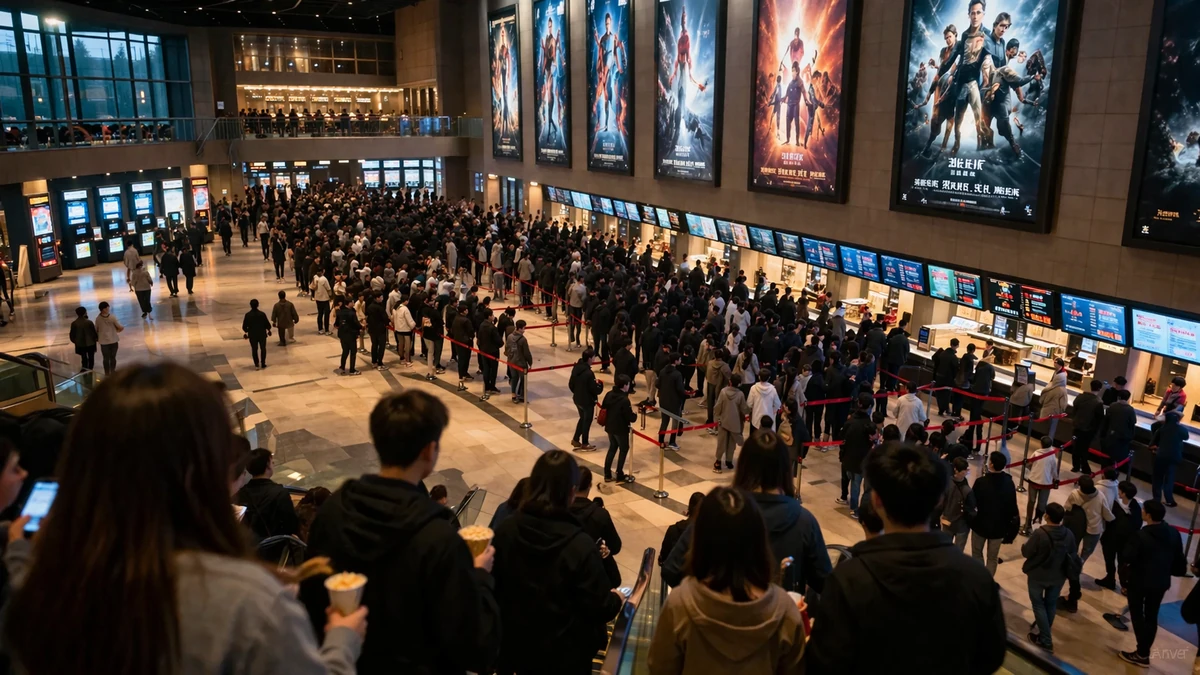
A rare box office milestone in a changing movie market
South Korea has a new reminder that theatrical hits still matter — and that in 2026, the biggest successes are no longer defined only by opening weekend fireworks. The Korean film “King’s Man South,” known in Korean shorthand as “Wangsanam,” has now topped 16 million admissions, according to local reports, pushing it into one of the most exclusive tiers in the country’s box office history. Just as striking, roughly 8% of moviegoers who bought tickets for the film have gone back to see it again, and about 3% have watched it three or more times.
For American readers, that number needs a little translation. South Korea reports box office performance primarily by admissions — how many tickets were sold — rather than focusing only on gross revenue. That matters because ticket prices can vary by format and theater, but admissions offer a cleaner sense of how many people actually showed up. In a country of roughly 51 million people, 16 million admissions is a towering figure. It does not mean one in three South Koreans saw the movie, because repeat viewing is part of the total, but it still signals a level of cultural reach that few films ever achieve.
To put it in U.S. terms, crossing 10 million admissions in South Korea is often treated like entering the blockbuster hall of fame. Reaching 16 million is something else entirely: It is less the equivalent of a studio hit and more the mark of a national event. Only a very small number of titles in Korean film history have climbed into that range, and when they do, they typically stop being just movies. They become shared reference points — the kind of titles families discuss over dinner, coworkers mention in the office, and friends use as a default answer when deciding what to watch together on a weekend.
That helps explain why industry observers in Seoul are not looking at “King’s Man South” simply as a success story, but as a case study in what long-term theatrical endurance looks like in an era dominated by streaming, rising ticket prices and a more cautious audience. In the U.S., movie coverage still tends to fixate on opening weekend, a habit reinforced by Hollywood’s marketing machinery and the long shadow of franchises like Marvel, “Star Wars” and “Fast & Furious.” In South Korea, opening weekends matter too. But the latest run of “King’s Man South” suggests a different measure of power: not how hard a film explodes, but how steadily it keeps drawing people back.
That is the real headline behind the 16 million figure. This is not just a movie that arrived with hype. It is a movie that has stayed in conversation, stayed on screens and, crucially, stayed worth paying for even after many viewers had already seen it once.
Why repeat viewing matters more than it sounds
The 8% repeat-viewing rate may sound modest at first glance, especially to audiences used to fandom-heavy franchises in the United States, where die-hard viewers sometimes buy multiple tickets to support a film or revisit it in premium formats. But in box office analysis, repeat attendance is one of the clearest signs that a movie’s momentum is not being carried only by marketing.
The first ticket a viewer buys can come from advertising, curiosity, a famous cast or a well-timed release date. The second ticket usually means something more personal. It suggests satisfaction, emotional attachment or the feeling that the movie offers something worth revisiting — whether that is a layered story, memorable characters, visual spectacle or the simple pleasure of bringing another person along. In that sense, repeat viewing is less like a marketing stat and more like a consumer confidence index.
That distinction matters because modern moviegoing has become more selective. In South Korea, as in the United States, audiences are weighing whether a trip to the theater is worth the price. Streaming platforms have changed habits. So have social media reviews, spoiler culture and the expectation that many titles will be available at home not long after release. In that environment, the easiest path for many consumers is to wait. A movie has to give them a reason not just to go once, but to go now.
When 8 out of every 100 ticket buyers return for another viewing, and a meaningful slice comes back three or more times, the film starts to look less like a one-cycle event and more like a piece of repeat entertainment. That does not necessarily mean it is a niche fandom phenomenon. In fact, local reporting suggests the opposite: “King’s Man South” appears to have reached beyond hardcore fans and found a broad audience that includes families, friend groups and ordinary repeat customers who are helping extend its life.
That is an important difference. Fan-driven repetition can be intense but narrow. Broad-based repetition is what gives a movie staying power. It widens the social footprint of the film. One person sees it first, likes it, then goes back with a spouse, sibling, parent or friend. A colleague hears about it, then finally books a seat the following weekend. That kind of pattern is how box office totals keep growing long after the initial advertising push fades.
American studios often chase rewatchability as a branding goal, especially in tentpole filmmaking. But it is hard to manufacture. It usually emerges when a film becomes part of social life rather than just entertainment content. By that standard, the repeat-viewing numbers for “King’s Man South” are not just a footnote to its admissions total. They may be one of the clearest explanations for how it got there.
What makes a movie last in South Korea
No single factor explains long theatrical runs, and that appears to be true here as well. But several conditions seem to have worked in “King’s Man South’s” favor, creating the kind of self-reinforcing success that theaters and distributors hope for but rarely get.
First is accessibility. In box office terms, that does not simply mean easy to understand. It means a film is broad enough in tone, story and appeal to work across age groups and viewing situations. A movie that can be watched by couples on date night, by parents with older children, by groups of friends and by solo viewers already starts with a wider runway. Korean industry observers often talk about a film’s ability to support “companion viewing” — in other words, whether it is the kind of title people feel comfortable choosing when they are not the only person buying the ticket. That can be a bigger advantage than critics sometimes acknowledge.
Second is word of mouth. That phrase can sound quaint in an algorithmic era, but it remains one of the strongest forces in the Korean market. Social media chatter matters, of course, but so do direct recommendations. A film that is merely “fine” may survive its opening week. A film that people actively urge others to see can remain alive for much longer, especially if it delivers the kind of emotional or narrative payoff that invites discussion afterward.
Third is screen availability. This is one of the less glamorous but more consequential parts of theatrical success. In South Korea, as in the United States, theaters devote more screens and showtimes to proven hits. That creates a feedback loop. More showtimes make the movie easier to watch. Easier access brings in late adopters who heard the buzz but did not go early. Continued admissions justify continued scheduling. A hit becomes more visible precisely because it is already a hit.
That dynamic is especially important in a market where moviegoing is increasingly concentrated around a few dominant titles. When a film captures public attention and keeps satisfying viewers, exhibitors have every reason to hold it in place. For “King’s Man South,” the narrowing gap with the No. 2 all-time box office slot — reportedly down to about 260,000 admissions — suggests that the virtuous cycle has not fully burned out.
Then there is the social character of the theatrical experience itself. Some movies are consumed quietly and individually, then forgotten. Others become conversation starters. They generate debates, references, favorite scenes and emotional callbacks. Those are the films people revisit with others, not necessarily because they missed something the first time, but because sharing the experience becomes part of the value. That social dimension is harder to quantify than admissions, but it often separates ordinary hits from movies with real shelf life.
If any of this sounds familiar to American audiences, that is because the pattern is not uniquely Korean. U.S. box office history is full of films that ran for months because they became communal experiences: “Titanic,” “Top Gun: Maverick,” “The Sixth Sense,” “Avatar,” “My Big Fat Greek Wedding.” Some opened big, some built gradually, but they all benefited from the same core truth. People kept choosing them because other people kept talking about them.
More than a ranking race
The headline-grabbing subplot is whether “King’s Man South” can climb to No. 2 on South Korea’s all-time admissions chart. With a gap of about 260,000 admissions, the answer appears to be: possibly, but not yet certainly. Box office records in the late stages of a run are shaped less by surges than by durability. The key question is not whether the film can produce another giant weekend, but whether it can keep posting solid daily numbers, retain family and group audiences and fend off pressure from incoming releases.
Still, the fixation on rankings risks missing the more important story. The numbers already point to a rare combination: mass appeal on one hand, meaningful repeat viewing on the other. Plenty of movies attract huge crowds in a concentrated burst. Plenty of fandom titles inspire multiple viewings within a devoted base. It is unusual to see both qualities at once, especially at this scale.
That is why this run matters beyond bragging rights. It offers a snapshot of how audiences behave now. In both Korea and the U.S., viewers have become more deliberate. They are more likely to consult reviews, reactions from friends and online ratings before paying for a ticket. That puts pressure on movies to prove themselves quickly. A film that clears that hurdle can then benefit from a winner-take-more environment in which attention consolidates around titles that feel socially validated.
In that sense, “King’s Man South” is not just a hit; it is an example of concentration. Audiences are not spreading themselves evenly across the marketplace. They are gathering around the titles that feel safest, strongest or most culturally unavoidable. For theaters, that can be a lifeline. A runaway success can lift concession sales, improve seat occupancy and bring back patrons who may not have visited in weeks.
But there is a downside. The same concentration that powers a mega-hit can make life harder for smaller and mid-budget films. When one movie dominates the conversation and the screen schedule, other releases face steeper odds. The result is familiar to anyone following Hollywood: a theatrical market that is simultaneously energized by big wins and narrowed by them.
That tension is part of the story here. “King’s Man South” has become evidence that theaters can still produce an event powerful enough to pull audiences off the couch. It is also evidence that today’s movie economy increasingly rewards movies that break through decisively and punishes those that do not.
What this says about Korean audiences now
American coverage of South Korean pop culture often focuses on exports — K-pop, Korean dramas, Oscar winners like “Parasite,” the global “Squid Game” phenomenon. But South Korea’s domestic audience habits deserve their own attention. This is a sophisticated, digitally connected, highly trend-aware public that often makes entertainment choices with remarkable speed and intensity. When something lands, it can spread fast. When it does not, audiences move on just as quickly.
The success of “King’s Man South” suggests several things about that audience right now. One is that quality signaling matters. A film cannot rely only on noise. It needs visible proof of satisfaction after release — the kind that shows up in repeat attendance, sustained weekend rebounds and the sense that seeing it later is still worthwhile. Another is that shared viewing remains a powerful draw. Even in an age of personalized recommendations and on-demand streaming, people still want cultural experiences that can be talked about together.
There is also a practical reality at work. Ticket prices are not trivial, and viewers know it. That tends to make audiences choosier, not more impulsive. Under those conditions, long runs are increasingly built on trust. Consumers want to feel that a theater trip is a safe bet. A movie that earns that trust can become a default choice for people who had not planned on going until they heard enough positive feedback.
The Korean term often used around repeat viewing is “N-cha gwanram,” literally meaning “Nth viewing.” It refers to watching the same movie multiple times, whether twice, three times or more. In American fan culture, there is a similar instinct around beloved franchise films, concert movies or awards contenders with strong emotional hooks. But in Korea, the term has become a recognizable part of the entertainment vocabulary, a shorthand for the idea that some works are not just consumed but revisited. When a mainstream movie begins posting notable Nth-viewing rates, the industry pays attention because it points to depth of engagement, not just breadth.
That depth appears to be one of the defining features of this film’s run. The movie did not simply attract a large audience; it appears to have held that audience’s affection. And that distinction may become more important as theater owners, investors and distributors try to understand what kind of films can still break through in a fragmented media landscape.
The business lesson for theaters and distributors
For exhibitors and distributors, the success of “King’s Man South” is not just celebratory. It is instructive. A hit of this size generates immediate revenue, but it also leaves behind data — the kind that shapes future decisions about release strategy, marketing and screen management.
Repeat viewers, for instance, can justify specialized promotions that would be wasted on a film with weaker loyalty. In both Korean and U.S. markets, movies with strong revisit intent are more likely to benefit from premium-format pushes, cast-event screenings, commemorative merchandise, anniversary promotions or other efforts aimed at extending the tail of a run. Those tactics only work if audiences actually want to come back.
Theaters also watch how a film performs over time because long runs stabilize operations. A dependable holdover can help balance scheduling across weekdays, evenings and weekends. It can also lift food and beverage sales, which remain a crucial part of theater economics. In other words, a long-lasting blockbuster is not just a publicity victory. It improves the daily math of exhibition.
For investors and distributors, the lesson is subtler. The market is giving clearer signals about what connects with audiences. Movies that combine broad accessibility, social buzz and rewatchability may have an edge in a climate where consumers are careful and attention is concentrated. That does not mean every project needs to be designed for repeat viewings. But it does suggest that films capable of sparking conversation and companionship at the theater have a structural advantage.
At the same time, the industry will have to be careful not to overlearn the wrong lesson. Chasing the exact surface traits of a hit often produces imitation rather than insight. The stronger takeaway is not “make more movies like this one,” but “understand why people felt this one was worth returning to.” Those are not always the same thing.
What comes next
Whether “King’s Man South” reaches the No. 2 all-time spot in South Korea, the film has already done something more revealing than move up a leaderboard. It has shown that in a media era defined by abundance and distraction, a theatrical movie can still build longevity the old-fashioned way: by satisfying enough viewers that they bring others, come back themselves and keep the conversation going well past opening week.
For American readers, that may be the most useful way to understand the story. This is not simply a tale of a Korean box office number that sounds impressive from afar. It is a window into how moviegoing is changing in one of the world’s most dynamic entertainment markets. Bigger is no longer just bigger. Now the question is how a film gets big — whether through a short burst of hype, or through the slower, stronger accumulation of trust.
Right now, “King’s Man South” looks like a film in that second category. Its 16 million admissions make it historically significant. Its repeat-viewing rates make it culturally revealing. And together, those figures tell a story that Hollywood executives, theater owners and movie marketers well beyond Seoul are likely to study closely.
In the end, the movie’s most lasting contribution may not be the rank it reaches, but the model it offers: a modern blockbuster sustained not only by scale, but by return business, social momentum and the simple but increasingly rare idea that a theatrical experience can still feel worth repeating.
Comments
Post a Comment