
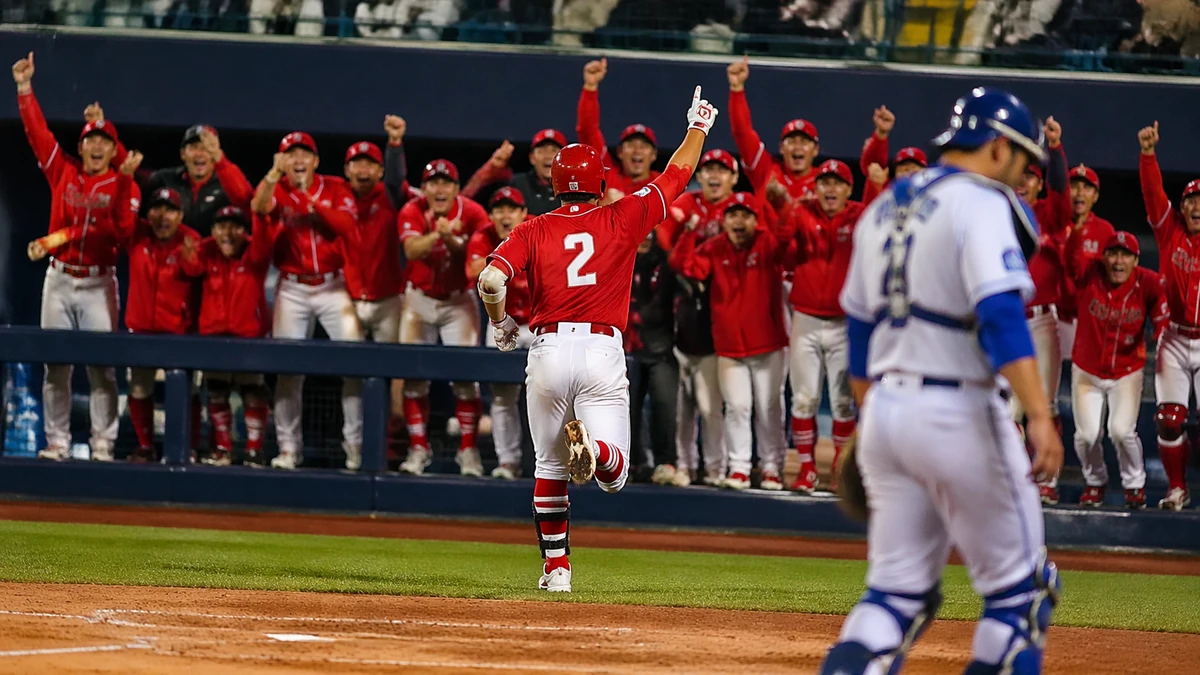
A comeback that reshaped more than the scoreboard
Baseball seasons are long, and in late April it is usually wise to resist reading too much into one game. But every so often, a single night tells a larger truth about where a team is headed. That was the case Thursday in Daegu, where the SSG Landers scored seven runs in the top of the ninth inning to beat the Samsung Lions 8-2 in one of the early Korean Baseball Organization season’s most dramatic reversals.
On paper, the result looks simple enough: SSG extended its winning streak to three games and moved from fourth place to third, while Samsung dropped its fourth straight and slid from third to fourth. In the standings, it counts as one win and one loss, no more and no less. But anyone who follows baseball closely knows some games leave marks that linger beyond the standings page. This was one of them.
For American readers who may be less familiar with the KBO, South Korea’s top professional baseball league often compresses emotion, momentum and strategic tension into a way that can feel especially intense. The regular season is a grind, much like Major League Baseball, but the daily rhythm of play, the tightly packed standings and the pressure of short swings in form can turn late-April games into early psychological tests. Teams are not just trying to bank wins. They are trying to establish identity: resilient contender, shaky closer, streaking threat, or club still searching for itself.
SSG’s rally in Daegu sent exactly that kind of message. This was not just a big inning. It was a game that suggested the Landers can absorb mistakes, stay close, and still put an opponent under pressure when the final outs should be the easiest to get. For Samsung, the loss carried a harsher implication. The Lions had the game in hand for most of the night, only to watch it unravel in the inning that matters most.
In the United States, fans might compare this to a team blowing a two-run lead in the ninth at Yankee Stadium or Dodger Stadium after controlling the pace all evening. The loss itself hurts. But what stings more is what it makes everyone wonder the next day: Can this team finish games cleanly when it has to?
How the game slipped away, and how SSG stayed alive
For much of the evening, there was little reason to think SSG would be the team leaving with momentum. The Landers trailed 2-0 and had struggled to generate offense through eight innings. Their starter, Mitch White, had also contributed to the trouble in a way that can haunt a club if it spirals.
In the bottom of the fifth, with one out and a runner on first, White fielded a bunt by Samsung’s Kim Ji-chan and made an errant throw to first, turning a manageable situation into a far more dangerous one. Soon after, another misplay on a pickoff attempt at first helped produce a run. For a pitcher, especially on the road, those are the kinds of mistakes that can fracture the entire structure of a game. They interrupt rhythm, accelerate bullpen decisions and can quietly infect the dugout with the feeling that the night is slipping away.
That matters in any baseball culture, but it has a particular texture in the KBO, where home crowds are famously loud, organized and deeply engaged. Korean baseball atmospheres are often more coordinated and musical than what American fans encounter at most MLB parks, with chants, songs and cheering sections that keep pressure on visiting teams inning by inning. When a road club commits mistakes in that environment, momentum can feel less like an abstraction and more like a living thing inside the stadium.
Yet SSG never let the game get away from them entirely. The Landers scored once in the sixth to cut the deficit to 2-1, and that single run proved more important than it may have looked at the time. In baseball terms, there is a world of difference between trailing by two and trailing by one. Down two, hitters and managers start to feel the need to manufacture urgency. Down one, the game still belongs to the realm of normal baseball logic: one baserunner can change everything, and the team in front knows it.
That is what SSG preserved. Even though the Landers did not break through again in the seventh or eighth, they kept Samsung within reach. The Lions entered the ninth protecting a one-run lead rather than closing out a comfortable game, and that distinction matters. A close game sharpens every decision involving pitching changes, defensive positioning and strike-zone aggression. It also makes each mistake feel larger.
By the time the ninth inning arrived, SSG had already done the hard part. The Landers had survived their own errors, stayed connected to the game and forced Samsung to carry the burden of finishing it.
Why a seven-run ninth is usually about pressure, not just power
Big innings can look sudden from the outside. Fans see a flood of runs and assume an offense simply caught fire. But baseball rarely works that cleanly. More often, an explosive inning is the visible release of pressure that has been quietly building for hours.
That was the deeper lesson of SSG’s seven-run ninth. Yes, the Landers delivered in the box when the opportunity finally cracked open. But innings like that are not usually created by one magical swing alone. They emerge when a trailing team keeps enough tension on the game that the opponent enters the final outs with no margin for error.
In American baseball language, this is where “save situation” pressure becomes something more complex than a statistic. A pitcher protecting a 2-1 lead is not simply trying to throw strikes. He is aware that one single, one walk, one misplayed ball or one bad matchup can flip the emotional center of the game. The defense behind him feels it, too. Fielders can become cautious, trying not to make the big mistake, and that often becomes the first step toward making one.
That is why SSG’s comeback should not be dismissed as a fluke inning. The Landers earned the right to test Samsung late. They endured a quiet offensive night without letting the score widen. They treated the game as recoverable even when their own starter’s mistakes had set the tone in the middle innings. And when the door opened in the ninth, they did not merely squeeze through it. They blew it off the hinges.
There is a larger baseball truth here, one familiar to anyone who has watched pennant races in the United States. The most dangerous teams are not always the ones that score early and often. Sometimes they are the clubs that can look dormant for most of the night and still assemble one decisive inning because they never let the game become unreachable. That quality does not always show up in simple offensive rankings, but over time it shapes seasons.
For SSG, Thursday’s rally suggested exactly that kind of competitive durability. This was not dominance from first pitch. It was persistence, game management and emotional steadiness. In a long season, those traits can matter as much as star power.
What third place in late April means in the KBO
To outsiders, a one-spot shift in the standings in late April may sound minor. In both the KBO and MLB, the season is far too young for anyone to hang banners over third place. But within clubhouses, these early changes are not meaningless. They influence confidence, tactical choices and the stories teams tell themselves about who they are.
Korean baseball, like American baseball, is shaped by routine. Managers have to decide how aggressively to use starters, how quickly to trust or protect relievers and how much rope to give bench players. Those decisions are not made in a vacuum. A team riding a three-game winning streak into the upper half of the standings tends to believe its current formula is working. Coaches manage with more conviction. Players feel less pressure to force results. Series plans can be followed rather than improvised.
The opposite is also true. A team that has lost four straight and just watched a ninth-inning lead explode is likely to feel urgency in every direction. Bullpen roles can suddenly look uncertain. Defensive mistakes feel heavier. At-bats with runners on base start to carry the weight of recent history. It becomes harder not to manage scared.
That is why SSG’s move from fourth to third matters beyond the number itself. In a tightly packed section of the standings, these shifts are compressed symbols of momentum. They affect how a team enters the next series and whether it sees itself as chasing the top or merely trying to stop the bleeding. The standings may be temporary, but the psychology attached to them can be immediate.
For American audiences, think of it the way fans talk about an MLB club “playing like a first-place team” before Memorial Day. No one is claiming the race is settled. But people inside and around the team begin to notice whether the club is trending toward assertive baseball or reactive baseball. That distinction can change a month.
SSG now gets an immediate chance to prove this comeback was more than a one-night surge. The Landers were set to continue play against KT Wiz in Incheon, with additional games on the schedule soon after. That matters because momentum in baseball is only real if it shows up again. Late-April surges are not defined by rhetoric. They are defined by whether a team can reproduce its edge in the next set of games.
For Samsung, the damage is about trust as much as defeat
If SSG left Daegu with validation, Samsung left with a more troubling kind of question. The Lions did not simply lose. They lost the sort of game teams feel they are supposed to win. They held the lead into the ninth, had controlled the run of play for most of the night and then watched the final inning become a disaster.
That kind of loss can be more harmful than a routine defeat because it forces a team to reconsider things it thought were stable. A bullpen is not just a collection of arms; it is a set of expectations. A late lead is not just an advantage; it is an emotional contract between pitchers, fielders and coaches. When that contract breaks in spectacular fashion, the aftereffects can spill into the next game and sometimes the next week.
Anyone who has covered baseball in the United States has seen the pattern. A team blows a lead, and the next day every close game feels different. Pitchers nibble instead of attacking. Fielders rush plays they normally make calmly. Hitters press because they feel they need more insurance runs than usual. Managers overcorrect, changing roles or matchups too quickly. The problem is not just the runs surrendered. It is the erosion of trust in ordinary game flow.
That is the warning sign for Samsung after a fourth straight loss. A losing streak in April is recoverable. Nearly everything in baseball is, this early. But not all losing streaks carry the same emotional residue. There is a difference between getting beaten cleanly and failing to secure a game that was within reach of the handshake line.
Samsung’s challenge now is not to produce a dramatic response for headlines. It is to restore something more basic: the ability to play normal, competent closing baseball when ahead. In a pennant race, teams do not need heroics every night. They need the steadiness to turn good positions into wins. That is what escaped the Lions on Thursday, and that is why the loss felt heavier than one mark in the standings.
The broader lesson: early-season baseball reveals how teams handle imperfection
The most revealing part of this game may be what it said about the nature of strong teams in April. Fans and analysts often focus on talent, clean execution and hot starts. Those things matter, of course. But early in a season, when clubs are still discovering their reliable patterns, one of the clearest indicators of staying power is how they react after things go wrong.
SSG offered a compelling example. The Landers got hurt by their own starter’s mistakes. They spent much of the game quiet at the plate. They played from behind on the road in front of an energized home crowd. Any one of those factors can become an excuse for a loss. Together, they often are. But SSG kept the game from becoming emotionally unwinnable, and then it seized the moment when Samsung finally cracked.
That does not guarantee anything by itself. One comeback does not secure a playoff place, and one collapse does not define a season. Baseball resists easy conclusions, which is part of why both the MLB and KBO seasons remain so compelling over time. But games like this do provide clues. They show which teams can absorb imperfection without panicking and which teams are still vulnerable when a routine finish turns unstable.
That may be the true significance of SSG’s 8-2 win. It was not just a reversal. It was a demonstration of response speed — the ability to recover, recalibrate and stay present long enough for the game to swing back. In a sport played nearly every day, that trait can be more valuable than looking sharp for five innings or even eight.
For American readers still getting acquainted with the KBO, this is one of the reasons the league attracts such loyal and growing international interest. The games can be loud, emotional and tactically rich, but beneath the atmosphere is the same fundamental baseball drama that resonates everywhere: the tension between control and chaos, between a lead that feels safe and one that never really is.
On Thursday in Daegu, SSG turned that tension into a statement. The Landers did not just climb into third place. They showed, at least for one night, the kind of resilience that can alter the shape of a season. Samsung, meanwhile, was left to reckon with the crueler side of baseball: sometimes the inning you need most is the one that tells everyone who you are not yet ready to be.


0 Comments