A South Korean mayoral primary is upended by allegations of illegal phone-bank campaigning — and raises wider questions about how parties police local
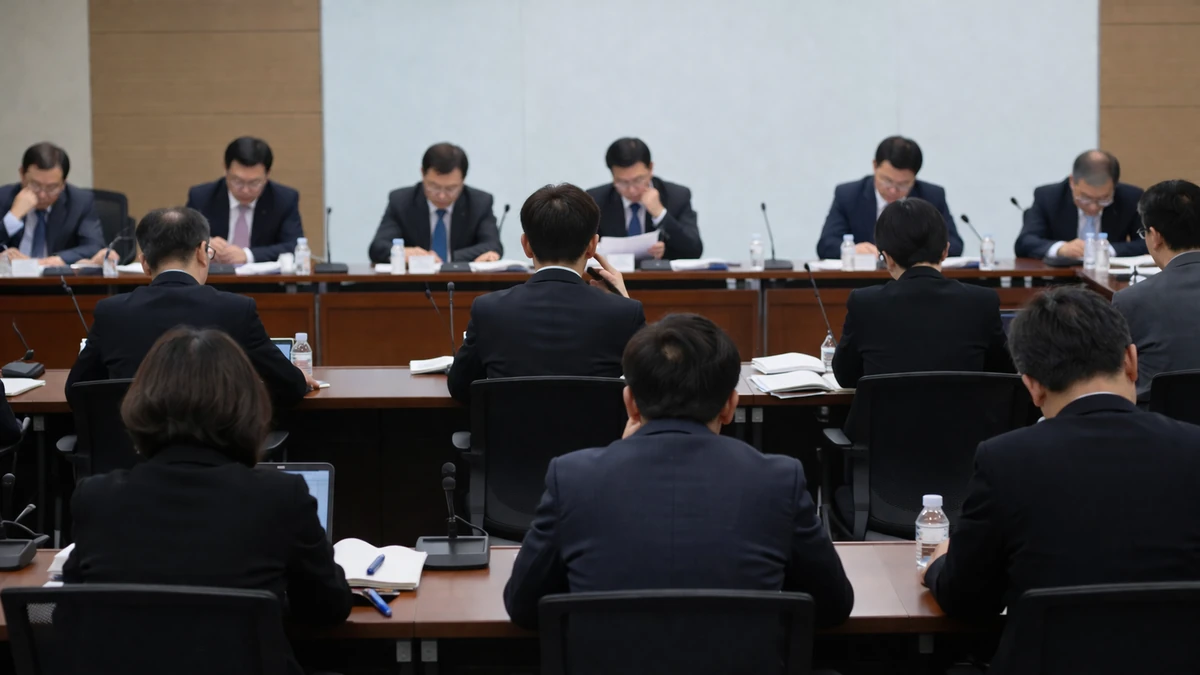
A local race in South Korea has become a test of political accountability
In American politics, a city mayor’s race in an industrial port town would rarely draw national attention unless it exposed a bigger weakness in the system. That is effectively what is happening in Gwangyang, a city on South Korea’s southern coast, where the ruling party has recommended stripping preliminary mayoral contender Park Sung-hyun of eligibility to compete in the party primary ahead of local elections scheduled for April 6, 2026. The move, tied to allegations surrounding the operation of an illegal phone-bank style campaign organization, has turned what might have been an ordinary nomination battle into a broader debate over election fairness, party screening and the health of local democracy.
On its face, the story is about one prospective candidate and one city race. But in South Korea, where party nominations often carry enormous weight — especially in regions with strong partisan loyalties — the decision to bar or recommend barring a candidate from a primary can reshape the entire contest. It can also send a signal about how seriously a party is willing to treat allegations of improper campaigning before voters ever cast a ballot.
That is why the ruling party’s response has resonated beyond Gwangyang. Rather than issuing a warning or simply asking for further explanation, the party chose one of the strongest internal sanctions available during the nomination process: recommending that Park lose his qualification to participate in the primary. According to the summary of the case, party officials viewed the alleged operation of an illegal “phone room” as serious enough that proceeding normally with the nomination process would be difficult. In practical terms, that means the party judged the political and ethical risk to be bigger than any short-term advantage Park might have offered as a competitive candidate.
For American readers, the closest comparison may be a county or city candidate in a heavily one-party area being removed from consideration by party leaders over allegations of improperly organized robocall or paid phone outreach operations. The difference is that in South Korea’s local political culture, party nomination battles can be even more decisive than general elections, and the internal discipline of parties can matter as much as the formal legal process.
That distinction is important. At this stage, what is established is not that a court has found Park guilty of violating election law. What is established is that the ruling party has taken the allegations seriously enough to recommend disqualification from its own selection process. That is a political judgment, not a final legal verdict. Still, political judgments often carry immediate consequences in a nomination system where momentum, local networks and institutional backing can determine who survives.
Why an alleged illegal phone bank matters so much in South Korea
To understand why this issue is so sensitive, it helps to understand how local campaigning works in South Korea. In municipal elections, personal networks, neighborhood influence and small-scale organizational strength can matter at least as much as ideology. A candidate for mayor is not just competing on policy; he or she is also relying on local reputation, community ties and the ability to mobilize supporters across neighborhoods, business circles and civic groups.
Within that environment, phone outreach is a familiar and legal tool up to a point. Campaign workers and supporters may contact voters, introduce a candidate and encourage turnout. But once those operations move outside legal boundaries — for example, if they involve improperly compensated workers, questionable access to voter lists, or repeated, organized contacts that violate election rules — the practice can become a serious fairness issue. The concern is not only about technical compliance. It is about whether one candidate is gaining an improper advantage through methods other candidates either cannot or should not use.
The Korean term often translated loosely as a “phone room” refers to an organized phone operation set up to contact voters repeatedly and shape opinion. Americans might think of a call center mixed with a grassroots turnout shop, though the Korean context is more localized and often more socially embedded. In a close municipal race, especially one where name recognition and local familiarity drive support, such a structure can have outsized influence. It can help a candidate reach older voters, reinforce support in key neighborhoods and create the sense of momentum that often shapes local races.
That is one reason political parties react so strongly to allegations involving this kind of activity. If a candidate enters the general election under a cloud of suspicion about illegal phone campaigning, opponents can shift the campaign away from jobs, roads, housing or public services and turn it into a referendum on legitimacy. Instead of debating who is best equipped to run city hall, the race becomes an argument over whether one side tried to game the system.
There is also a voter fatigue problem. Residents in local elections generally want to hear how candidates plan to improve schools, transit, industrial development and quality of life. When a campaign becomes consumed by accusations of illegal organizing or covert voter contact operations, substantive issues tend to disappear. The election starts to look less like a contest of ideas and more like a contest over who built the more effective political machine. That is damaging in any democracy, but it is especially corrosive at the local level, where citizens often expect direct, practical answers from candidates they may literally see in daily life.
Why Gwangyang matters beyond one mayor’s office
Gwangyang is not Seoul, and it is not a place most American readers would immediately recognize. But it plays an important role in South Korea’s economy. Located in South Jeolla Province, the city is part of the country’s industrial and logistics network, with strong ties to manufacturing, shipping and port activity. In many ways, it is the kind of city where a mayor’s decisions can have visible, everyday consequences: economic development strategy, industrial site planning, population retention, public infrastructure, housing and support for working families.
That local profile is exactly why the primary mattered before the scandal. A mayoral contest in a city like Gwangyang is not just symbolic. It is about who will guide growth, respond to demographic pressures and position the city in a country grappling with slowing population growth, regional inequality and economic transition. Candidates would normally be expected to campaign on questions that American readers might compare to debates in midsize industrial cities: how to attract investment, keep young people from leaving, connect jobs to infrastructure and improve municipal services without overwhelming local finances.
Now, however, the race risks being reorganized around something else entirely. With one major preliminary contender facing disqualification, the field could shift rapidly. Supporters who had lined up behind Park may move to another candidate, wait to see how events unfold, or fragment into rival camps. In local politics, that kind of movement is not just about endorsements. It can involve staff, volunteer networks, neighborhood captains, elder community figures and informal channels of influence that matter tremendously in municipal campaigning.
In other words, disqualifying or effectively sidelining one candidate does not simply remove a name from the ballot. It redraws the map of local alliances. And because local elections in South Korea often depend on organizational strength at the neighborhood level, the redistribution of those networks can alter the balance of the entire primary almost overnight.
Even so, it would be a mistake to assume the outcome automatically benefits one remaining contender. Some voters may see the ruling party’s tough response as evidence of institutional self-correction — proof that it is willing to police its own ranks. Others may ask a less flattering question: Why did the allegations reach this stage in the first place? If warning signs existed earlier, critics may argue, why were they not addressed before the primary process advanced this far?
That ambivalence is politically significant. A strong disciplinary action can reassure voters, but only if they also believe the process was fair, consistent and timely. Otherwise, a crackdown can look selective, reactive or politically convenient.
How party nominations work in South Korea — and why internal discipline matters
For American audiences, one of the most important pieces of context is that South Korean political parties often play a more centralized and gatekeeping role in candidate selection than many U.S. voters are used to. While American primaries are typically public, state-run elections with formal ballots and broad participation, South Korean party nomination processes often involve internal reviews, party screening, strategic decisions and varying primary mechanisms that can give party leadership considerable influence.
That makes the nomination stage a critical checkpoint. Parties are not merely endorsing candidates; they are, in effect, certifying them to the public. In regions where one party has a structural advantage, winning the party nomination can be the hardest and most decisive step. As a result, parties are expected to serve as a first line of vetting, especially when concerns arise about ethics, legal exposure or campaign conduct.
The Gwangyang case puts that gatekeeping function under a spotlight. If the ruling party concluded that allegations of illegal phone-bank operations posed too great a risk, it was making a calculation that many parties in democracies face: Is it better to protect a potentially strong contender and risk scandal later, or absorb short-term political pain now in order to defend the integrity of the process?
According to the Korean summary, the party appears to have chosen the latter. That decision matters because it suggests the party regarded the fairness issue as more dangerous than any organizational advantage Park may have brought to the race. It also reflects an understanding that in local elections, the manner of campaigning can become as important as the content of campaigning. If a candidate appears to have benefited from improper methods, the legitimacy of the race itself can become the story.
Still, this episode also exposes the pressure points inside party systems. Political organizations often have competing incentives. On one hand, they want broadly attractive candidates with strong name recognition, durable networks and the ability to win. On the other, they need to avoid candidates whose conduct could taint the party or trigger legal and ethical fallout. Those two goals can collide, especially in local races where organization on the ground is often a candidate’s biggest asset.
That is why the next question is larger than Park himself: What exactly did the party know, when did it know it and what standards did it apply? In any nomination system, the credibility of the process matters almost as much as the result. Voters are more likely to trust a tough disciplinary action if they believe the underlying review was transparent and consistently applied. If they suspect that some candidates are judged more harshly than others, even a severe sanction can deepen mistrust instead of repairing it.
The line between confirmed fact and political interpretation
Cases like this often become vulnerable to exaggeration, especially in the fast-moving atmosphere of campaign coverage. It is essential to separate what has been confirmed from what remains interpretation.
The confirmed facts, based on the summary provided, are relatively narrow. The ruling party recommended stripping Park Sung-hyun, a preliminary candidate in the Gwangyang mayoral race, of his qualification to compete in the primary. The recommendation was tied to allegations surrounding the operation of an illegal phone-bank style campaign organization. Those are the core facts currently on the table.
What is not yet settled is equally important. There has not, based on the information available here, been a final legal determination that election law was violated. A party’s internal decision and a court’s legal judgment are not the same thing. Parties may impose sanctions or disqualify candidates based on reputational risk, ethical concerns or a lower evidentiary threshold than a criminal or civil proceeding would require. That is common in politics worldwide.
Why does that distinction matter? Because political reporting can easily blur disciplinary action with legal guilt, especially when an allegation sounds serious and the punishment is severe. Responsible coverage requires acknowledging both realities at once: the party clearly viewed the matter as grave, and the final legal status of the allegation remains a separate question.
That distinction also shapes how voters may interpret the episode. Some may conclude the party acted appropriately, putting integrity first before the contest moved further. Others may wonder whether due process within the party was sufficient or whether political motives could have influenced timing and enforcement. Those concerns are not mutually exclusive. A party can both have legitimate reasons to act quickly and still face scrutiny over whether its procedures were evenhanded.
For journalists, analysts and voters alike, this is where discipline matters most. It would be an overreach to treat one municipal primary controversy as proof of a sweeping national realignment. It would also be simplistic to dismiss it as purely local noise. The more persuasive reading is narrower but still significant: the Gwangyang case illustrates how sensitive nomination ethics and campaign legality have become in South Korea’s local elections, and how quickly those issues can overwhelm policy debate.
What voters in Gwangyang are likely to watch next
The immediate question is whether the recommendation to strip Park of eligibility becomes final within the party’s nomination process. Until that step is completed, the field remains politically unsettled. The answer will determine not only who can compete but how rival campaigns reposition themselves, whom local organizers back and whether the controversy begins to fade or intensifies.
Just as important is how the ruling party explains itself. If it wants credit for acting decisively, it will likely need to say more about the standards it used, the review process it followed and whether the same rules will be applied in future local races. In many democracies, institutions regain trust not simply by punishing misconduct but by showing the public that the process was principled rather than improvised.
Voters may also be looking for signs that the election can return to local issues. Gwangyang, as an industrial and logistics hub, faces practical questions that would sound familiar in many American city halls: how to sustain economic growth, improve public infrastructure, connect industrial development to quality-of-life improvements, address out-migration and make the city attractive to younger families and workers. Those issues risk getting drowned out if the campaign remains dominated by procedural fights and ethics allegations.
That is why the remaining candidates now face a strategic test. It may be tempting to focus on organizational advantage or exploit the weakened state of a rival faction. But they will also be under pressure to prove they are transparent, stable and capable of governing. In the aftermath of a controversy about campaign methods, promising effective administration may not be enough; candidates may need to convince voters they can offer clean administration as well.
The broader public, meanwhile, may judge the ruling party less by who ultimately wins and more by whether this case becomes a one-off embarrassment or the beginning of stronger screening rules. If the party follows up with clearer verification procedures for preliminary candidates, more transparent complaint handling and earlier review of election-law risks, it could argue that the controversy led to reform. If not, critics may see the episode as another example of a political system that reacts only when a scandal becomes impossible to ignore.
A warning sign for local democracy, not just one campaign
There is a temptation in political coverage to treat nomination controversies as inside baseball — the kind of procedural drama that matters mainly to party elites, campaign operatives and political obsessives. But that would miss the deeper point of what is unfolding in Gwangyang.
At stake is a basic democratic question: Do voters believe the people asking to govern them are being selected through a fair and trustworthy process? In local elections, that question may matter even more than at the national level. Mayors oversee visible services, direct budgets that affect daily life and often serve as the public face of government in moments of local crisis. If citizens lose confidence in how candidates are nominated, they may also lose confidence in the governing system that follows.
The Gwangyang case underscores how fragile that confidence can be. Allegations involving an illegal phone operation are politically explosive not just because they may violate election rules, but because they touch the mechanics of influence itself — who gets contacted, how support is built and whether a campaign’s organizational edge comes from legal persuasion or improper manipulation. Once those questions take center stage, they can distort the election and push real policy choices to the margins.
For South Korea’s ruling party, the challenge now is twofold. First, it must show that its action in this case was justified, measured and procedurally sound. Second, it must demonstrate that the same vigilance will apply beyond this single race. A party that disciplines one candidate but leaves the underlying nomination system unchanged may win a day’s worth of favorable headlines and still lose the larger argument about institutional credibility.
For voters in Gwangyang, the coming weeks may reveal whether this controversy becomes a detour or a defining feature of the race. If the campaign returns to debates over industrial strategy, jobs, infrastructure and local quality of life, the political system may have contained the damage. If not, the election could become an example of how ethics disputes and campaign tactics crowd out the bread-and-butter concerns local government is supposed to address.
And for outside observers, including American readers, the episode offers a useful reminder that the health of democracy is often tested far from national capitals. It is tested in the rules parties use to choose candidates, in the willingness of institutions to act before a scandal hardens into cynicism and in the ability of voters to insist that local elections be about governing rather than gamesmanship. Gwangyang’s mayoral primary may be a local contest, but the questions it raises — about fairness, legitimacy and accountability — are ones every democracy understands.
Comments
Post a Comment