South Korea’s Construction Industry Is Bracing for Middle East Turmoil. Why That Matters Far Beyond Seoul
Why South Korea is suddenly worried about a faraway crisis
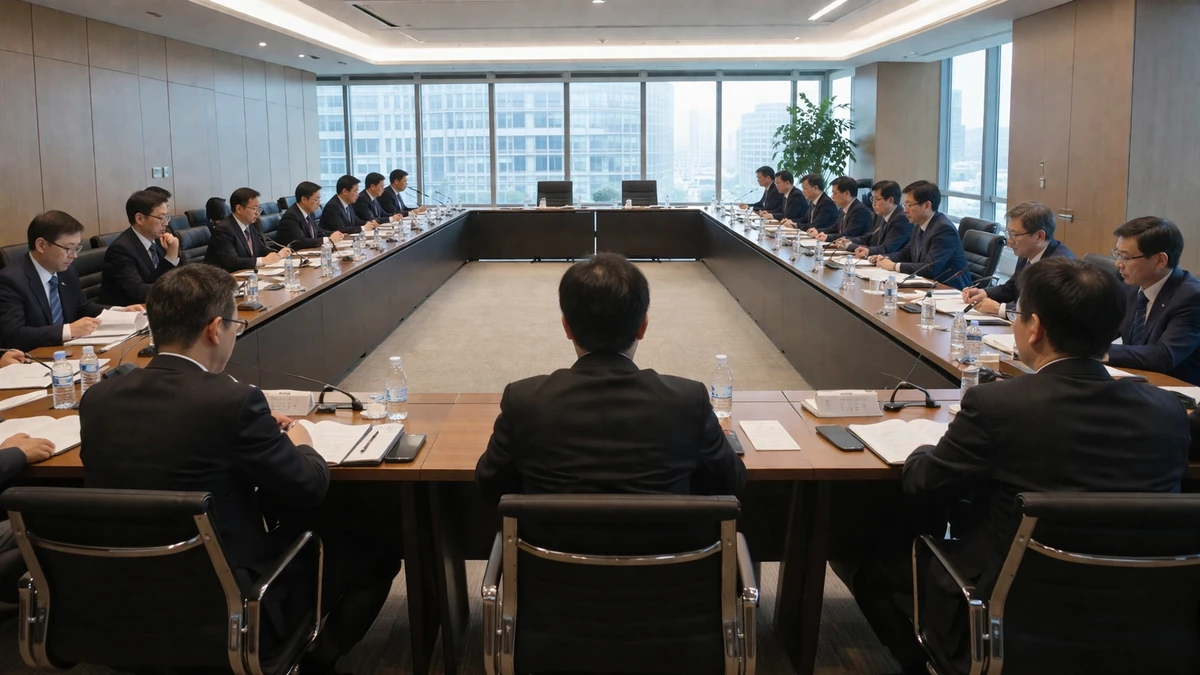
South Korea’s government has moved to take the temperature of one of its most geopolitically exposed industries: construction. On April 6, the Ministry of Land, Infrastructure and Transport convened an emergency meeting with eight major construction-sector associations to assess how rising tensions in the Middle East could ripple through South Korea’s domestic building market and its overseas project pipeline.
At first glance, that may sound like a narrowly bureaucratic exercise. It is not. In South Korea, construction is more than a cyclical business sector. It is deeply tied to homebuilding, public infrastructure, regional employment and the country’s sizable overseas contracting business. When the government calls in industry groups for an urgent review, it is often a sign that officials see more than a temporary price spike. They are trying to gauge whether an external shock could spread into housing supply, public works budgets, subcontractor finances and the overseas earnings of some of the nation’s largest builders.
The immediate concern is straightforward: conflict or instability in the Middle East can drive up oil prices, disrupt shipping and raise the cost of raw materials used in construction. Those effects can hit South Korean builders from several directions at once. Fuel becomes more expensive. Transport costs increase. Materials that rely on petroleum or energy-intensive manufacturing get pricier. Overseas projects in the Middle East can become more costly to operate, insure and secure.
For American readers, there is a familiar logic here. In the United States, a jump in oil prices does not only show up at the gas pump. It can also affect airline tickets, freight, plastics, asphalt and the cost of getting goods onto shelves. South Korea is facing a similar chain reaction, but in a country where the construction sector is especially sensitive to imported energy, global shipping and long-term project contracts that are hard to renegotiate on short notice.
The meeting did not produce a major bailout or an immediate policy overhaul. So far, the government has signaled that it is monitoring conditions and sharing information with the industry. But even that is telling. Seoul appears to be preparing for the possibility that a geopolitical crisis overseas could end up influencing apartment construction at home, infrastructure timelines and the economics of Korean companies operating on job sites from Saudi Arabia to the United Arab Emirates.
A domestic industry with global vulnerabilities
Construction often looks like a local business. Apartment towers rise in Seoul. Roads and rail lines get built in provincial cities. Industrial plants are erected for Korean manufacturers. But the cost structure underneath those projects is far more global than many people assume.
Steel products, nonferrous metals, petrochemical-based finishing materials, asphalt and heavy-equipment fuel all depend, directly or indirectly, on international commodity markets. Cement and steel processing are energy-intensive. So are transport and logistics. When oil climbs, builders do not simply pay more to run excavators and trucks. Manufacturers face higher production costs. Suppliers face higher packing and delivery costs. Shipping companies can raise freight rates. Marine insurance can become more expensive if regional instability threatens major routes.
That matters because construction contracts are often signed months or years in advance. Unlike retailers, builders cannot always change prices quickly when their costs go up. Unlike manufacturers, they do not have the same flexibility to reprice a finished product every few weeks. A builder working on a public project, a redevelopment site or a private residential complex is often locked into a contract structure with limited room to pass along higher expenses in real time.
That basic mismatch is one reason construction firms can look healthy in boom times and then suddenly find themselves squeezed when financing conditions tighten or input costs surge. In South Korea, that problem has become more acute after several years of high interest rates and anxiety surrounding project financing, known locally as PF, a term that has become shorthand for a broader real estate funding squeeze. Much as Americans became familiar with the role of commercial real estate financing after stress in U.S. regional banks, South Koreans have spent years watching the fragility of debt-backed property development.
For builders already weakened by that environment, another external cost shock can hit margins and cash flow quickly. Large firms may have more room to absorb short-term volatility. Mid-sized and smaller companies, especially subcontractors, typically do not.
How oil and materials costs work their way into construction bills
The ministry’s concerns are not theoretical. There are several concrete channels through which Middle East instability can affect what it costs to build in South Korea.
The first is energy. Oil prices influence the cost of running ready-mix concrete trucks, dump trucks, cranes, excavators and other equipment essential to large construction sites. That is the visible part. The less visible part is that energy also affects upstream manufacturing. Cement production consumes significant energy. Steel processing does too. Asphalt is directly tied to petroleum. A rise in fuel costs can therefore hit both the job site itself and the factories producing key inputs.
The second channel is logistics. If tensions in the Middle East contribute to higher ocean freight rates or increased insurance premiums, imported materials can become more expensive and less predictable. Construction is unusually vulnerable to delivery delays because projects are sequential. One missing component can hold up later stages of work. Electrical systems, building equipment and finishing materials often depend on precise scheduling. A delay in a specialized part can cascade across the entire project calendar.
That dynamic is broadly familiar in the post-pandemic era. Americans saw how supply-chain problems could stall auto production over a shortage of semiconductors or leave retailers waiting on inventory stranded in ports. Construction works similarly, except the consequences can be even more disruptive because labor crews, equipment rentals and financing schedules all keep running while a site waits for a shipment or a cost dispute to be resolved.
The third channel is contractual. South Korea does have systems that can allow adjustments for inflation or changing input prices, particularly in public works. But those mechanisms are not always immediate, automatic or comprehensive. In private projects, price changes usually require negotiation among developers, general contractors and subcontractors. That means the financial pain often shows up first in the weakest part of the chain.
In practical terms, a major contractor may try to hold margins by pushing suppliers for concessions. Suppliers may resist. Subcontractors with thin reserves may face delayed payments or unit-price disputes. That can then affect site progress, labor retention and the ability of smaller firms to continue operating smoothly. If the shock is sharp enough, the problem can move from a pricing issue to a liquidity issue.
The fourth channel is financing. If a project’s cost rises beyond original expectations, developers and builders may need additional working capital. But in an industry already dealing with tighter credit conditions, fresh financing is neither cheap nor guaranteed. That makes companies more cautious about launching new projects. And when companies delay new starts, the effect eventually reaches housing supply and local economies.
Why the Middle East matters so much to Korean builders
South Korean construction companies are not only worried about imported inflation. They also have a long and important history in the Middle East itself. For decades, Korean firms have been major players in the region, taking on large-scale plant construction, energy infrastructure, urban development and transportation projects. In South Korea, overseas construction contracts are often treated as a marker of industrial competitiveness and national economic reach.
That historical relationship dates back to the country’s rapid industrialization, when construction contracts in the Middle East helped fuel growth and burnished the reputation of Korean engineering and building firms abroad. Even today, winning a major project in Saudi Arabia, Qatar or the UAE is not merely a corporate accomplishment. It is often covered as a national business story, akin to the way a large aircraft order or semiconductor investment might be viewed in the United States.
That is why instability in the Middle East is more than a background geopolitical concern for Seoul. It can affect active Korean work sites directly. If regional tensions rise, companies may face higher security costs, more expensive insurance, disruptions in material deliveries and new risks tied to worker safety and mobility. Construction schedules can slip. Emergency planning becomes more important. Some project owners may delay tenders or slow procurement decisions, which then affects future order books for Korean firms.
Not all of those added costs can be passed on to clients. Contract terms vary. Some projects include escalation clauses or provisions for extraordinary disruptions. Others do not, or they may require lengthy negotiation before additional costs are recognized. In large engineering and infrastructure projects, timing matters almost as much as headline cost. Delays can mean penalty exposure, lower profitability and pressure on cash flow.
For an American comparison, think of how a U.S. defense contractor or engineering firm might watch instability in the Persian Gulf not only for diplomatic reasons but because it could alter staffing, insurance, transport and contract execution on major overseas projects. South Korean builders are in a similar position, except their exposure is concentrated in a sector that also feeds directly back into domestic housing and infrastructure policy.
What this could mean for housing and infrastructure at home
The immediate fear in South Korea is not necessarily that apartment prices will suddenly spike overnight because of Middle East tensions. The more likely impact, at least in the early stages, is on project timing, profitability and decisions about whether marginal developments still make financial sense.
South Korea’s housing market already faces strains familiar to many advanced economies: high land costs, expensive financing, labor pressures and intense political sensitivity around affordability and supply. In Seoul and surrounding areas, apartment construction is not just an industry matter. It is tied to household wealth, family formation, politics and social stability. Any factor that makes builders more cautious about starting projects eventually matters to ordinary consumers.
If materials and transport costs rise while financing remains tight, developers may delay launches or revisit business assumptions on projects with thinner margins. That risk is especially acute outside the capital region, where weaker local demand can make profitability more fragile. Smaller developments and regional projects may be the first to face schedule adjustments.
Public infrastructure is not immune either. In the United States, cost overruns on roads, bridges and transit projects can produce political fights over budgets and delays. South Korea faces a similar challenge, particularly at the local-government level. If materials become more expensive and budgeted costs no longer match market conditions, officials may have to revise designs, renegotiate budgets or slow implementation. That can affect everything from roads and utilities to regional redevelopment plans.
The longer the shock lasts, the more likely it is to influence strategic behavior. Builders may become more conservative about bidding aggressively on new work. Developers may try to lock in supply contracts earlier. Public agencies may be pressured to update cost-adjustment practices to avoid forcing contractors to absorb unsustainable losses. None of that means a full-blown industry crisis is inevitable. But it does mean the ripple effects can extend well beyond headline oil prices.
There is also an employment dimension. Construction remains a major source of jobs, both directly and through subcontracting networks. When projects are delayed, smaller firms often feel the squeeze first. In South Korea, as in the United States, the pain of an external economic shock rarely lands evenly. It tends to move through the supply chain, hitting the least capitalized players hardest.
What the government is watching now
The emergency meeting appears to have been designed less as a policy rollout than as an early-warning exercise. That may sound modest, but in a sector as complex as construction, early detection matters. Official price statistics often lag behind what companies are seeing on the ground. A builder may face longer procurement times or sudden supplier quotes well before those changes appear in formal data.
That means policymakers will likely need to track more than average material prices. They will also need to watch delivery times, freight conditions, fuel costs for heavy equipment, contract disputes and the financial health of smaller subcontractors. If the government waits until broad inflation indicators show a clear move, site-level pressures may already be severe.
One of the biggest issues is how to protect smaller companies within the construction ecosystem. During cost surges, financially weaker subcontractors are often the first to come under strain. Payment delays, disputes over unit prices and limited access to working capital can quickly become operational problems. If enough smaller firms pull back or fail, larger projects can slow, regardless of the intentions of major contractors or public agencies.
Another priority is overseas-site risk management. For firms active in the Middle East, this is not only about costs but also about contingency planning. Companies may need to recheck evacuation plans, alternate sourcing channels, insurance coverage and the legal language governing claims for extraordinary expenses. In many industries, geopolitical risk is still discussed in abstract terms. In construction, it tends to become practical very quickly: Can workers move safely? Can materials arrive on time? Who pays if the schedule slips?
At the government level, Seoul may also be considering how to balance two competing goals: preserving stability without overreacting. Officials do not appear ready to announce sweeping support measures based on one meeting alone. Much depends on how oil prices move, whether shipping disruptions deepen and whether the regional security environment deteriorates enough to affect active projects materially.
A reminder that geopolitics can hit the real economy fast
There is a tendency in many countries, including the United States, to treat foreign-policy crises and domestic economic concerns as separate storylines. South Korea’s latest construction-sector review is a reminder that they are often tightly linked. A flare-up in the Middle East can move through energy, shipping, raw materials, finance and labor, eventually influencing whether an apartment complex breaks ground on time or whether an overseas plant project stays on budget.
For South Korea, the vulnerability is amplified by the structure of its economy. It is heavily trade-dependent, reliant on imported energy and deeply engaged in overseas contracting. Construction sits at the intersection of all three. That makes it a useful window into how geopolitical risk becomes a real-economy problem.
Nothing in the government’s latest meeting suggests an immediate emergency on the scale of the pandemic-era supply-chain breakdown. But the message is clear: officials believe the industry is exposed enough to warrant close monitoring now, before costs, delays or financial strains become more visible. In a country where construction affects housing supply, infrastructure delivery and overseas commercial influence, that kind of vigilance is about more than protecting corporate balance sheets. It is about guarding against another external shock in an economy that has already spent years adapting to higher rates, property-market stress and global uncertainty.
For American audiences, the broader lesson is recognizable. Whether in Seoul, Los Angeles or Houston, construction turns global instability into local consequences with surprising speed. Oil shocks rarely stay confined to energy markets. Supply-chain disruptions rarely remain a logistics story. And sectors that seem domestic at first glance can be far more international under the hood than most people realize. South Korea’s builders are now confronting that reality again, with the Middle East serving as the latest reminder that geopolitics can reach all the way down to concrete, cranes and the cost of putting up a building.
Comments
Post a Comment