After 14 Years, TEPCO Restarts a Nuclear Reactor in Japan, Signaling a Broader Shift in Energy Policy
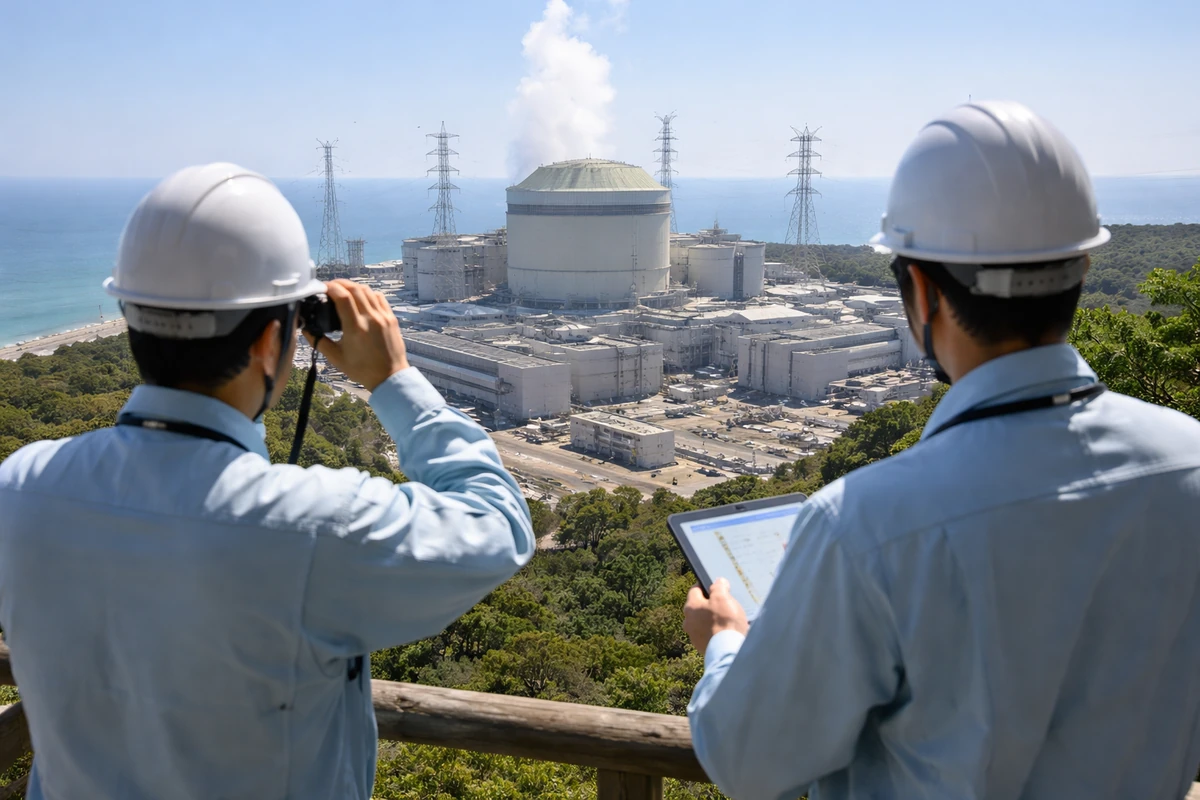
A reactor returns, but so does a national argument
Tokyo Electric Power Co., better known as TEPCO, has resumed commercial operations at Unit 6 of the Kashiwazaki-Kariwa nuclear power plant in Niigata Prefecture, marking the company’s first return to full commercial nuclear generation in 14 years. On paper, that sounds like a narrow industry update: one reactor at one plant is back online. In practice, it is one of the clearest signs yet that Japan, after years of political caution and public skepticism, is slowly but unmistakably repositioning nuclear power as part of its energy future.
The date matters. So does the operator. TEPCO has not put a reactor back into commercial service since late March 2012, in the long shadow of the Fukushima Daiichi disaster, the triple meltdown that followed the March 2011 earthquake and tsunami and reshaped Japan’s politics, energy system and public trust. That history means the restart of Kashiwazaki-Kariwa Unit 6 is about far more than megawatts. It speaks to how Japan’s regulators now judge nuclear safety, how utilities are trying to rebuild credibility and how the country is balancing decarbonization goals against the hard realities of energy security.
For American readers, a rough comparison might be this: imagine a utility tied to one of the worst industrial disasters in modern history regaining permission, after years of scrutiny, to resume running part of the nation’s largest nuclear complex. The technical step would be important. The symbolic weight would be even bigger.
According to Japanese media reports, TEPCO began commercial operation on April 16 after completing a comprehensive load test and receiving confirmation from Japan’s Nuclear Regulation Authority. That sequence is crucial. The reactor was not merely switched on for a trial run; it crossed the threshold into normal commercial operation, meaning the electricity it produces is once again part of Japan’s regular power supply system.
That distinction may sound bureaucratic, but in nuclear policy bureaucracy often is the story. Commercial operation means that after years of regulatory review, safety upgrades, testing and political hesitation, one dormant piece of Japan’s nuclear fleet has officially returned as a working economic asset. In a country where every nuclear restart is contested terrain, that is a consequential development.
Why Japan is turning back to nuclear now
To understand why this restart matters, it helps to look beyond the plant gates. Japan is one of the world’s most energy import-dependent advanced economies. Unlike the United States, which has substantial domestic oil and natural gas production, Japan relies heavily on imported fossil fuels and has long been vulnerable to shocks in global commodity markets and shipping routes. When fuel prices spike or supply chains tighten, Japanese utilities and consumers feel it quickly.
That vulnerability has become harder to ignore in recent years. Russia’s invasion of Ukraine scrambled global energy markets. Tensions in sea lanes and broader geopolitical instability have raised new questions about how secure imported energy really is. At the same time, Japan is trying to cut carbon emissions without destabilizing the power grid. Renewable energy has expanded, but solar and wind still face familiar limits, especially when it comes to round-the-clock reliability and transmission constraints.
That leaves Japan confronting the same dilemma many industrialized countries face, though with unusually high stakes: how do you keep electricity affordable, dependable and cleaner, all at once? For Japan’s policymakers, nuclear power remains one of the few available answers that can provide large-scale, low-carbon baseload generation. “Baseload” is energy-policy shorthand for power sources that can run steadily for long periods and anchor the grid, something intermittent renewables alone cannot yet fully do without major advances in storage and transmission.
In that sense, the return of Kashiwazaki-Kariwa Unit 6 reflects less a dramatic ideological reversal than a practical concession to reality. Japan is not suddenly embracing a sweeping new build-out of nuclear plants. It is instead working, cautiously and often controversially, to bring existing facilities back into service under stricter post-Fukushima rules. Politically, that matters. Restarting an existing reactor is easier to defend than announcing an entirely new one, even if public unease remains strong in both cases.
For Americans, the closest analogy may be the way debates over old coal plants, gas export terminals and aging nuclear facilities often turn less on abstract energy philosophy than on the immediate question of what can actually keep the lights on. Japan’s version of that debate is sharper because the memory of Fukushima never fully recedes. But the underlying policy logic is recognizable: governments under pressure tend to favor tools they already have, even controversial ones, rather than gamble everything on a future system that is not fully built yet.
The long shadow of Fukushima and TEPCO’s credibility problem
No discussion of a TEPCO nuclear restart can be separated from Fukushima. The company still carries the burden of operating the plant where multiple reactor cores melted down after the 2011 disaster. The catastrophe forced mass evacuations, contaminated land and sea, devastated public confidence and triggered one of the most far-reaching energy policy reckonings in postwar Japan. Even now, more than a decade later, Fukushima remains a live political and emotional issue rather than a closed chapter.
That is why the return of Kashiwazaki-Kariwa Unit 6 is not simply about whether a reactor meets engineering standards. It is about whether TEPCO, of all companies, can persuade regulators, local communities, investors and the broader public that it can safely manage nuclear operations over the long term. The company’s challenge is not just technical competence. It is moral and institutional credibility.
In the years since Fukushima, Japan rebuilt its nuclear oversight regime, creating a more independent regulator and imposing tougher safety standards. Utilities were required to install extensive anti-tsunami measures, backup power systems, filtered venting equipment and other protections. They also had to demonstrate tighter operational controls and emergency planning. In theory, that transformed the rulebook. In practice, however, trust is not restored by rule changes alone.
That is especially true for TEPCO, which has faced repeated criticism over crisis management, disclosure practices and organizational culture. For many Japanese residents, and especially those living near nuclear facilities, the question is not simply whether a checklist has been completed. It is whether the company has changed in a deeper sense: whether caution has replaced complacency, whether transparency is now the default and whether the operator can respond quickly and honestly if something goes wrong.
The Kashiwazaki-Kariwa complex itself carries outsized significance. Located in Niigata on Japan’s main island of Honshu, it is often described as one of the largest nuclear power stations in the world by generating capacity. Any change there is not just a regional story. It is a national test case. If Japan is going to reintroduce nuclear power into the mainstream of its electricity mix, it needs one of its flagship facilities to function under intense scrutiny.
Why the delay matters as much as the restart
The reactor’s return to commercial service is notable not only because it happened, but because it did not happen on the original schedule. TEPCO had aimed to begin commercial operation earlier, around February, but the timeline slipped after alarms sounded during work related to withdrawing control rods as part of the restart process. In most types of power generation, a delay like that might register as a routine operational hiccup. In nuclear power, especially in Japan, even a seemingly minor irregularity carries a much heavier meaning.
That is because nuclear plants operate in a world where process is inseparable from legitimacy. The public does not judge these facilities solely by whether they eventually produce electricity. It also judges whether every step toward that outcome was deliberate, documented and independently verified. A delay caused by an alarm can reinforce anxieties about preparedness, but it can also demonstrate that the system is functioning as intended if the issue is investigated thoroughly before operations proceed.
In that sense, the April start carries a double message. On one hand, it underscores the fragility of any nuclear restart in Japan; schedules are never just schedules, because every milestone can be disrupted by technical, regulatory or political concerns. On the other hand, the fact that commercial operation began only after final confirmation from the regulator reinforces a principle that Japanese authorities have tried to emphasize since Fukushima: speed comes second to validation.
That may sound obvious, but it reflects a real policy tension. Japan wants more stable domestic power supplies. Industry wants predictable electricity costs. The government wants to lower emissions without undermining growth. All of that creates pressure to bring reactors back. Yet the same pressures make it even more important for regulators to avoid any appearance of haste. If the public concludes that economic needs are overriding safety discipline, the political backlash could be severe.
So the delay matters because it shows what nuclear governance in Japan now looks like. Restarts are not treated as simple switches to be flipped. They are treated as prolonged exercises in proving readiness. For critics of nuclear power, that still may not be enough. For supporters, it is evidence that Japan’s system has become more demanding. Either way, procedure is no longer a side issue. It is central to the social license that nuclear plants need in order to operate at all.
More than electricity: What this means for Japan’s energy strategy
Japan’s broader energy strategy has sometimes sounded contradictory from the outside. The country talks aggressively about renewable energy and decarbonization, while also supporting liquefied natural gas imports and, now more openly, the restart of nuclear reactors. But that apparent contradiction reflects the messy arithmetic of real-world energy planning rather than simple policy confusion.
No major industrial economy has yet found an easy formula for replacing fossil fuels while ensuring stable electricity around the clock. Germany’s experience with nuclear phaseout and gas dependence, California’s recurring debates over grid reliability and even the United States’ own struggles to build transmission lines all illustrate the point. Energy transitions are not linear. They are patchworks of trade-offs, and governments rarely get to choose among perfect options.
Japan’s approach appears to be settling into a pragmatic middle path. It is expanding renewables where possible. It is preserving imported fossil fuel capacity as a backstop. And it is gradually restoring portions of the nuclear fleet that can clear post-Fukushima regulation. The restart of Kashiwazaki-Kariwa Unit 6 fits squarely into that strategy. It is not a declaration that nuclear is the sole answer. It is an acknowledgment that Japan does not believe it can safely manage without it.
The policy message is subtle but significant. Rather than campaign under a slogan of nuclear expansion, Japanese authorities can present this kind of move as the controlled reactivation of an existing national asset under stricter oversight. That framing lowers the political temperature, even if it does not eliminate opposition. It also gives the government more flexibility. Bringing back one reactor at a time allows officials to respond to public concerns, regional politics and grid needs incrementally rather than through one sweeping, high-risk decision.
For business and financial markets, that incrementalism matters too. Commercial operation means real output, and real output can affect utility balance sheets, fuel purchasing strategies and longer-term assumptions about power availability. In a country where electricity costs have been shaped heavily by imported fuel prices, the return of a large domestic generating unit offers not just added supply but a measure of policy breathing room.
The local and political stakes in Niigata
Nuclear restarts in Japan are never purely national decisions. They are also deeply local, and that local dimension helps explain why each case unfolds slowly. The Kashiwazaki-Kariwa plant sits in Niigata Prefecture, a coastal region that is not simply a backdrop for national energy policy but a community with its own risk calculations, economic interests and political voices. Local acceptance in Japan can be as important as regulatory approval, and often harder to secure.
That dynamic may be somewhat unfamiliar to American readers used to thinking of utility regulation as a matter mostly handled by state or federal agencies. In Japan, host communities and prefectural leaders can wield significant influence over whether a nuclear restart is politically viable. Residents may weigh the jobs and tax revenue associated with a plant against fears about evacuation planning, earthquake risk and whether promises made in Tokyo will hold up in a real emergency.
Niigata’s concerns are not theoretical. Japan is one of the most earthquake-prone countries in the world, and the geography of risk is always part of the nuclear debate. Even if a reactor satisfies the national regulator’s requirements, local officials and residents may still ask a broader question: Are we convinced that this operator, in this place, under these conditions, deserves to run again?
That helps explain why a restart can be technically completed yet remain politically fragile. One smooth month of operation will not erase years of doubt. One successfully finished load test will not silence communities that believe Japan is normalizing risk too quickly. TEPCO now enters a phase in which every routine action, every maintenance cycle and every anomaly will be watched closely not just by experts in Tokyo but by ordinary people living near the plant.
In some ways, that is exactly what post-Fukushima Japan intended to create: a system where nuclear power, if it exists at all, operates under sustained public and political pressure rather than quiet technocratic assumptions. The burden on TEPCO is therefore unusually high. It must do more than generate electricity. It must repeatedly demonstrate that caution, disclosure and compliance are embedded in everyday operations.
Japan’s nuclear paradox is now on full display
The restart of Kashiwazaki-Kariwa Unit 6 captures a paradox that has defined Japan’s nuclear debate for years. Nuclear plants are at once deeply needed and deeply mistrusted. They offer a form of stable, low-carbon power that is difficult to replace quickly, especially for an import-dependent economy. At the same time, they embody some of the country’s deepest anxieties about technological risk, institutional failure and whether public assurances can be believed.
That is why it is too simple to describe this development as either a triumph for the nuclear industry or a defeat for anti-nuclear sentiment. It is better understood as a carefully limited answer to a hard national question. Japan is not abandoning its caution. It is trying to operationalize that caution while still recovering some of the generating capacity it believes it needs.
The more revealing question, then, is not “Is Japan going back to nuclear?” in some broad, sweeping sense. It is “Under what conditions can nuclear power be operated, by whom and with what proof of accountability?” That is where the debate has moved. Safety is no longer framed only as an engineering matter. It is also a governance issue, a communications issue and, ultimately, a question of democratic legitimacy.
In that regard, Kashiwazaki-Kariwa Unit 6 is a milestone, but not a final verdict. It shows that Japan’s post-Fukushima system can, under strict conditions, return a reactor to commercial service. It does not prove that the public has fully forgiven TEPCO, or that future restarts will be politically easier, or that nuclear’s role in Japan’s energy mix is settled. It proves only that one very difficult threshold has been crossed.
What comes next will matter more than the ceremony of restart itself. If Unit 6 runs stably, meets inspection requirements, communicates transparently and avoids incidents, it may strengthen the case for further gradual reactivation of Japan’s nuclear fleet. If problems emerge, even small ones, they could quickly reignite public resistance and reinforce the belief that the country is still moving too fast. In nuclear power, operational history often matters more than rhetoric, and trust is accumulated in small increments over long periods.
For now, Japan has restored one reactor after 14 years and, in doing so, revealed the contours of its current energy strategy: pragmatic, cautious, reluctant and still unresolved. The electricity flowing from Kashiwazaki-Kariwa Unit 6 will help power homes and businesses. But the larger current running through this story is political. It is about how a country still marked by Fukushima is learning, uneasily, to live with a technology it does not fully embrace yet does not believe it can entirely leave behind.
Comments
Post a Comment