Hungary’s Political Earthquake: Viktor Orban Ousted After 16 Years, and Europe May Not Look the Same
A political era ends in the heart of Europe
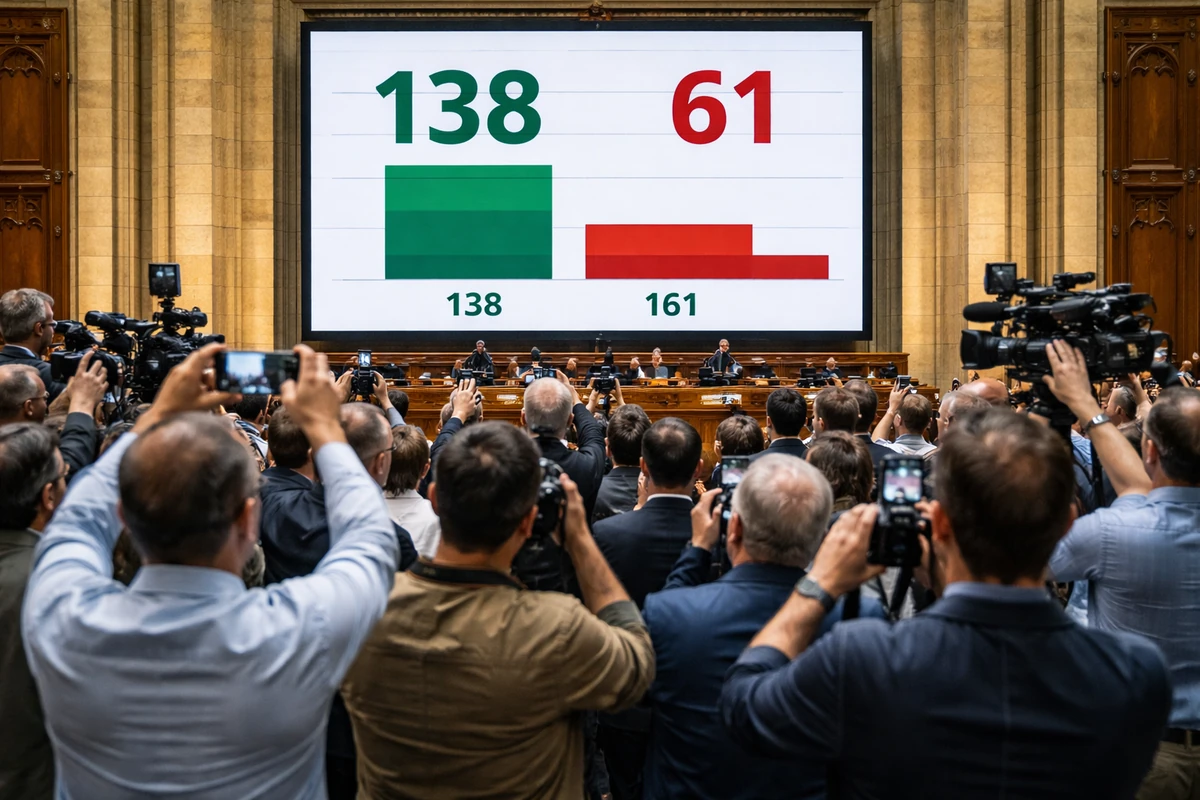
Hungary has delivered one of the most dramatic election upsets Europe has seen in years, and the consequences are likely to stretch far beyond Budapest. In parliamentary elections held April 12, opposition leader Peter Magyar and his Tisza party were projected to win 138 of Hungary’s 199 seats with nearly all votes counted, according to international wire reports. That is not just a victory. It is a landslide large enough to cross the threshold needed for constitutional change, effectively giving Magyar the power not only to replace Prime Minister Viktor Orban but also to begin dismantling parts of the political system Orban built over 16 years in power.
For Americans who may only know Hungary through headlines about democratic backsliding, clashes with the European Union or Orban’s close ties to the global right, the scale of this result is hard to overstate. In U.S. terms, imagine a president’s party losing not only the White House equivalent but also such a commanding share of Congress that the victor could rewrite the rules of the game. That is roughly what has happened here. Hungary’s voters did not simply choose a new government. They appear to have chosen a new direction for the state itself.
That matters because Orban was never just another European leader. He was the most durable and influential champion of what he called “illiberal democracy,” a model that kept elections in place while concentrating power, weakening independent institutions and turning culture-war politics into a governing philosophy. He became a hero to much of the American right, especially in the Trump era, where admirers pointed to Hungary as a testing ground for nationalist conservatism. At the same time, Orban maintained working ties with Russia and frequently frustrated European Union efforts to present a united front on issues such as Ukraine, sanctions and rule-of-law standards.
Now that system has been shaken by voters themselves. The numbers tell the story. Out of 199 seats, 138 is well above the 133 needed for a constitutional supermajority. In practical terms, that gives the incoming government the leverage to do more than pass routine legislation. It opens the door to revisiting institutional arrangements, political appointments and legal frameworks that helped define the Orban era. That is why this election is being watched not just as a domestic power shift, but as a turning point in Europe’s broader struggle over democracy, sovereignty and alignment between East and West.
The result is also a reminder of something political operatives in Washington, Brussels and Moscow all learn eventually: outside endorsements have limits. Orban enjoyed prominent support from figures close to President Donald Trump, including Vice President JD Vance, who visited Hungary during the campaign. Trump himself publicly backed Orban. It was not enough. Hungarian voters, facing their own accumulated frustrations, chose change anyway.
Why the numbers matter more than the headline
Election night headlines often reduce politics to winners and losers. But in Hungary, the seat count carries deeper meaning. A simple parliamentary majority would have allowed Magyar to form a government. A supermajority allows him to do something more consequential: alter the architecture of the state that Orban and his allies shaped over more than a decade and a half.
That distinction is important for American readers because long-serving governments leave behind more than policy. They leave systems. In Hungary, Orban’s Fidesz party used repeated election victories to influence the courts, media environment, electoral rules and other institutions that in a liberal democracy are supposed to function with a measure of independence. Supporters argued that Orban brought stability, defended national identity and pushed back against European bureaucrats in Brussels. Critics said he hollowed out democratic checks while preserving the appearance of electoral legitimacy.
So when observers say this was not merely a transfer of power, they mean Hungary may now be entering a period of regime revision, even if that word sounds overly dramatic. It does not necessarily mean immediate upheaval. Bureaucracies do not reverse overnight. Civil servants, judges, party loyalists and state-aligned networks remain in place even after an election. But crossing the constitutional threshold means the new government has the legal room to begin changing the rules that once protected Orban’s dominance.
There is also symbolic force in the size of the defeat. Orban’s longevity made him seem, to supporters and critics alike, almost immovable. He had outlasted other European leaders, weathered criticism from Brussels and transformed political conflict into part of his brand. He presented himself as the man willing to say what others in Europe would not: on migration, national sovereignty, family policy and the limits of liberal internationalism. For years, that message worked. The election suggests many Hungarians no longer believe the tradeoff between strongman stability and democratic erosion is worth it.
That does not mean Hungary is suddenly becoming ideologically uniform or that all Orban-era policies will disappear. Many of the social and cultural issues that fueled his support remain potent across Central Europe. But the result suggests a broader fatigue with permanent confrontation as a governing model. Voters seem to have decided that a country cannot live forever as Europe’s designated dissenter without paying a price in influence, trust and international flexibility.
What Orban’s fall means for Washington, Brussels and Moscow
Few leaders in Europe managed to be useful at the same time to parts of the American right and to Russia, but Orban did. That did not mean Washington conservatives and the Kremlin wanted the same things from him. Their interests were different, often hostile to one another. But both benefited, in their own ways, from Hungary’s role as a disruptive player inside the European mainstream.
For Trump-aligned conservatives in the United States, Orban represented a kind of ideological proof of concept. He was often framed as a leader who resisted progressive social norms, challenged migration, promoted Christianity in public life and refused to defer automatically to international institutions. Conservative conferences held events in Budapest. American right-wing media figures praised Hungary as a model or at least an experiment worth studying. In that sense, Hungary became more than a country. It became a symbol in America’s own culture wars.
For Moscow, the value was more strategic than symbolic. Orban was one of the few European Union leaders willing to keep a more flexible relationship with Russia than many of his peers found acceptable, especially after Russia’s full-scale invasion of Ukraine. He did not wholly break with the West, nor did he align with Moscow in a simple or open-ended way. But he created friction inside Europe’s consensus politics, and friction itself can be useful to the Kremlin. When the EU needs unanimity or broad cohesion, one government willing to slow things down can matter more than a dozen loudly supportive ones.
That is why Orban’s defeat reverberates in several capitals at once. In Brussels, officials are likely to see an opening for a more cooperative Hungary, one less interested in using defiance as a negotiating tactic. In Washington, especially among establishment foreign-policy circles, the result may be read as an opportunity to normalize relations with Budapest at the institutional level rather than through partisan affinity with one leader. In Moscow, the loss is more subtle but no less real: a dependable outlier inside the EU has become far less predictable.
Predictability is one of the most undervalued assets in international politics. A government does not need to be powerful to matter if other players know exactly how it will behave at key moments. Hungary under Orban had that kind of usefulness. Even when allies found him frustrating, they understood his political grammar. He traded on ambiguity, on selective resistance, on being the voice in the room willing to say no. With Orban gone, that familiar script disappears. The disruption comes not only from future policy changes but from the fact that the old pattern can no longer be assumed.
That is why this election is bigger than one leader’s defeat. It changes the diplomatic map, or at least the assumptions that have guided it. Hungary is not Germany or France. It is not Europe’s largest economy or military power. But it became influential because it knew how to matter at moments when unity was required. If that role changes, Europe’s internal balance changes with it.
The American dimension: Why U.S. readers should care
Hungary can seem distant from everyday American life, but the country has had an outsized presence in U.S. political debate for years. Orban’s government was frequently cited by conservatives who admired his unapologetic nationalism and by liberals who saw him as a warning sign for democratic decline. In the same way Americans once looked to Britain under Margaret Thatcher or to Sweden as shorthand for broader ideological arguments, Hungary became a reference point in battles over what kind of democracy the West should be.
That is partly why the U.S. political angle in this election matters. During the campaign, Orban received unusually explicit support from figures aligned with Trump. For the incoming Hungarian leadership, that creates a tricky inheritance. The problem is not that Hungary must become “anti-American” to prove its independence. Quite the opposite. The likely challenge is to rebuild the relationship so it is based less on personal or ideological closeness to a particular faction in Washington and more on standard ties between allied institutions.
That distinction may sound abstract, but Americans understand it intuitively. Every allied country has to manage the difference between being close to a U.S. administration and being seen as too closely attached to one political camp. If Magyar wants Hungary to recover diplomatic flexibility, he is likely to emphasize the latter: state-to-state relations rather than personality-driven alignment. In plain English, the new leadership will want Washington to deal with Hungary as a country, not as a mascot in America’s partisan fights.
There is a cautionary lesson here for the United States as well. Politicians and pundits often assume that high-profile endorsements abroad signal influence. Sometimes they do. But this election shows the limits of symbolic politics crossing borders. Hungarian voters had their own concerns, their own fatigue, their own verdict on 16 years of rule. Outside validation could not erase that. If anything, visible backing from foreign political figures may have reinforced the perception that Orban’s Hungary had become overly identified with external agendas.
For U.S. readers, the broader takeaway is simple: Europe’s internal political shifts do not stay in Europe. They affect NATO cohesion, U.S.-EU coordination, sanctions enforcement, energy politics and the wider contest over democratic norms. A more conventionally pro-European Hungary would likely make transatlantic policy coordination smoother. A Hungary in transition, however, could also create short-term uncertainty as a new government defines its priorities.
Peter Magyar’s first signal: Why Poland matters
One of the most closely watched details after the vote was not a formal policy paper or cabinet announcement but a symbolic choice: Magyar’s indication that Poland would be among his first foreign destinations. In diplomacy, early travel plans can function like a mission statement. They tell allies and rivals alike what kind of relationships a new leader wants to prioritize.
To American readers, Poland may be more familiar than Hungary because of its central role in NATO’s eastern flank and its strong support for Ukraine. It has become one of the most important countries in Central Europe on security matters, and in recent years it has carried considerable weight in shaping how the region responds to Russia. So if Magyar is signaling a desire to engage Poland quickly, he is sending a message that Hungary may be preparing to re-anchor itself more firmly within Europe’s mainstream security and political structures.
That matters because Orban-era Hungary often projected itself as exceptional. It sought leverage by being the capital that could not be taken for granted, the EU member that would raise objections, slow consensus or force concessions. Magyar appears to be flirting with a different model: not isolation, not ideological theater, but reintegration. In Korean political commentary, analysts sometimes frame shifts like this as a return to “normalization” rather than revolution. That concept is helpful here. The point is not that Hungary will stop defending its interests. The point is that it may try to do so by acting as a conventional negotiating partner rather than as Europe’s permanent dissenter.
Poland is a useful first stop precisely because it represents both regional identity and institutional seriousness. It is Central European without being marginal, nationalist in its own politics yet deeply invested in Western security architecture. Choosing Poland would suggest that Magyar wants Hungary to remain proud of its regional identity while stepping back from the posture of deliberate estrangement that often defined the Orban years.
Symbolic gestures are not policy, of course. No visit can erase years of accumulated mistrust between Hungary and parts of the EU establishment, nor can one handshake reverse the networks and habits left by long incumbency. But first signals matter because they establish the vocabulary of a new government. Orban’s Hungary often spoke the language of exception. Magyar’s early moves suggest he may prefer the language of restoration.
Can Hungary really reverse course?
The temptation after a dramatic election is to imagine instant transformation. Real politics rarely works that way. Even with a constitutional supermajority, the incoming government will face constraints. Institutions shaped over 16 years do not vanish after a vote count. Party loyalists may still hold key posts. State and quasi-state networks built under Orban may remain influential. Public opinion, too, does not become unanimous simply because one side won decisively.
That means the next chapter in Hungary will likely be less about grand declarations than about choices in sequence. Does the new government move first on institutional reform, such as changes affecting governance and oversight? Does it prioritize external credibility by repairing relations with Brussels and key European partners? Does it try to reassure markets and investors that political turnover will not produce instability? Or does it focus on domestic legitimacy, emphasizing anti-corruption or democratic renewal at home before making large foreign-policy moves?
Each path carries tradeoffs. Push too quickly on structural reform, and opponents will accuse the new leadership of imitating the heavy-handedness it campaigned against. Move too cautiously, and supporters may conclude that a historic mandate is being wasted. Rebuild ties with Europe too eagerly, and nationalist critics may paint the government as surrendering sovereignty. Delay too long, and Hungary could miss the moment to reset its standing while goodwill is available.
There is also the question of style. In international politics, style is often substance by another name. Orban understood that perfectly. He knew how to turn vetoes, delays and rhetorical brinkmanship into leverage. Magyar’s challenge is not merely to change policies but to redefine how Hungary projects power. Under Orban, Hungary mattered because it disrupted. Under Magyar, it may seek influence by coordinating, mediating and showing reliability. That is a very different diplomatic identity.
If he succeeds, Hungary could find that normalcy brings its own advantages. An America-centric way to think about this would be the difference between a lawmaker who dominates cable news by constantly provoking fights and one who quietly becomes influential by helping write the bills everyone can live with. The former attracts attention. The latter often gets more durable results. Hungary now has a chance to test which model better serves a midsize European state in a dangerous geopolitical neighborhood.
A domestic vote with international consequences
In the end, the Hungarian election is a reminder that domestic politics and international politics are no longer easy to separate. Voters may have cast ballots over corruption, stagnation, fatigue with long rule or a desire for cleaner government. But their decision simultaneously affects how the European Union functions, how Washington manages alliances and how Moscow assesses fractures in the West.
That is why this story resonates far beyond Hungary. For years, Orban seemed to embody a durable formula: centralize power, frame every dispute as a battle for national survival, cultivate foreign admirers and turn institutional conflict into political energy. The election suggests that even durable formulas can wear out. At some point, voters start asking not whether a leader is strong but whether the country is stuck.
Hungary’s answer appears to be yes. And with 138 seats, voters have given Peter Magyar something rare in modern democratic politics: not just permission to govern, but room to alter the system that came before him. Whether he uses that mandate to rebuild trust at home, restore smoother relations abroad or simply replace one elite with another will determine whether this election becomes a genuine turning point or only a dramatic interruption.
For now, the most important fact is the simplest one. Viktor Orban, one of the defining political figures of 21st-century Europe, has been voted out after 16 years. The countries watching most closely are not just Hungary’s neighbors. They are Brussels, Washington and Moscow, all trying to figure out what Hungary is about to become now that the man who made it exceptional is gone.
Comments
Post a Comment