Hyundai and LG’s Georgia Battery Plant Is Ready to Start, Marking a Test of America’s EV Ambitions and Immigration Rules
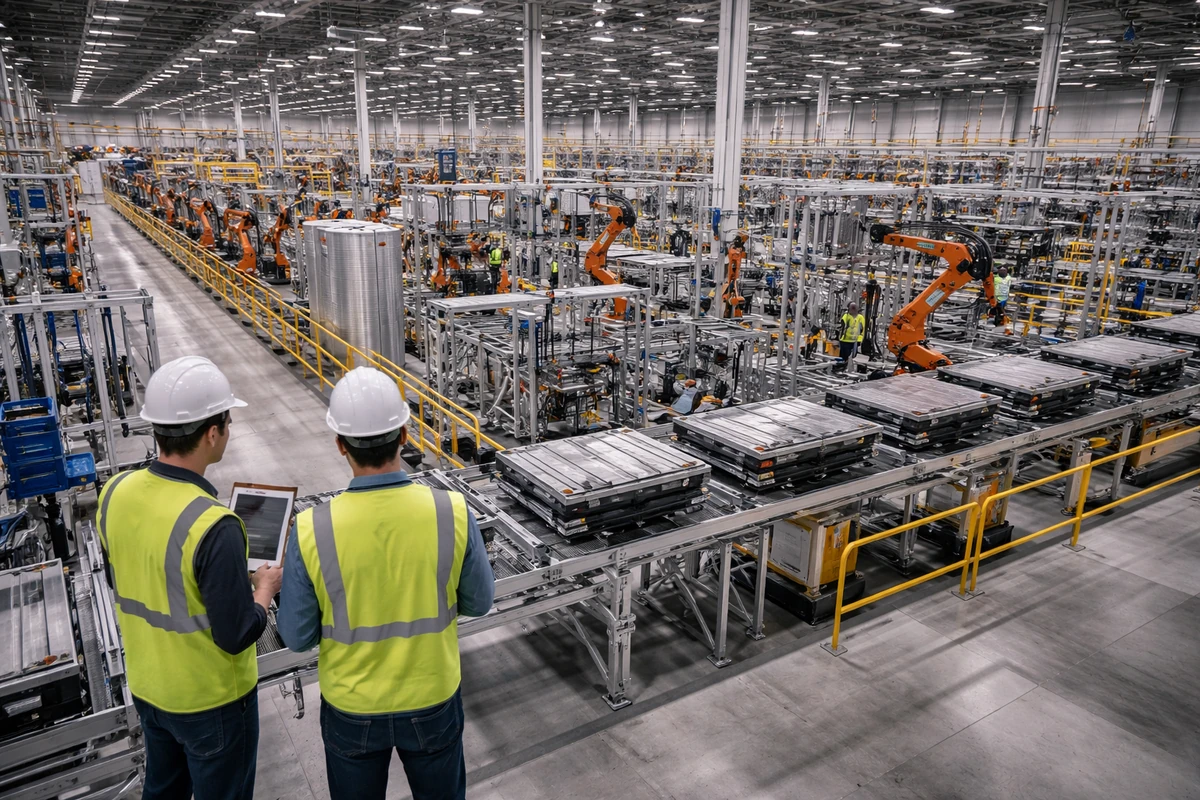
A delayed factory comes back into focus
A battery plant being built in Georgia by Hyundai Motor Group and South Korea’s LG Energy Solution is now ready to begin operations this month, according to comments from Hyundai President Jose Munoz, a sign that one of the most closely watched foreign manufacturing projects in the American South has moved past a major disruption. On its face, that may sound like an ordinary update on a construction schedule. In reality, it is a revealing snapshot of how the United States is trying to rebuild its industrial base while also enforcing immigration rules that can abruptly disrupt the very projects policymakers say they want.
The factory matters well beyond corporate earnings calls or ribbon-cutting politics. It sits at the crossroads of several big American stories: the Biden-era and post-Biden push to onshore advanced manufacturing, the race to secure electric vehicle supply chains, the South’s emergence as a battery-and-auto corridor, and the growing tension between labor demand and immigration enforcement. When a single immigration raid can stall construction on a multibillion-dollar industrial site, it underscores how vulnerable even the most strategically important projects remain to the realities of workforce availability and legal compliance.
Munoz said at the Semafor World Economy gathering in Washington on April 14 that last year’s Immigration and Customs Enforcement action did not alter Hyundai’s strategic plan. He also said the joint venture plant was prepared to start operating this month. That message was aimed at more than investors. It was also a declaration that Hyundai and LG do not intend to scale back their U.S. manufacturing ambitions because of a temporary shock, even one serious enough to interrupt work and raise concerns that the project could be delayed by several months.
For American readers, the broader point is familiar even if the company names are not. Think of this as a 21st-century version of the old Detroit supply-chain problem, only with batteries instead of transmissions, and with immigration paperwork playing a role once occupied mostly by steel deliveries, rail bottlenecks or union disputes. In today’s EV economy, batteries are not just one component among many. They are the central technology around which vehicle cost, range, production planning and national industrial policy increasingly revolve.
That is why the Georgia update landed as more than a plant opening. It is evidence that a project shaken by enforcement action, worker detentions and construction delays has been pushed back onto schedule closely enough to avoid a deeper strategic setback. For Hyundai, LG and Georgia officials who have sold the state as a premier destination for advanced manufacturing, that matters a great deal.
Why a Korean battery plant in Georgia is international news
This story begins with South Korean companies, but it is fundamentally about the United States. Hyundai and LG Energy Solution are part of a wave of East Asian manufacturers that have poured money into American auto and battery production, especially in Southern states that offer land, tax incentives, port access and a business climate often viewed as more accommodating than the industrial Midwest. Their projects have become central to Washington’s vision of building a domestic EV supply chain that is less dependent on China and less vulnerable to geopolitical shocks.
South Korean firms, in particular, have emerged as some of the most important foreign investors in America’s clean-energy and advanced-manufacturing buildout. Samsung, SK, Hyundai and LG are now deeply tied to the U.S. semiconductor, battery and auto sectors. That makes developments involving their factories news not only in Seoul but also in Washington, Atlanta and Detroit. What happens at one of these sites can affect American jobs, regional development, trade politics and the availability of EVs assembled in the United States.
The Georgia plant is especially significant because it is part of a broader strategy Hyundai has been building in the state. The company has already made Georgia a focal point of its American EV push, with vehicle manufacturing and battery production designed to work in tandem. That is the key strategic concept here: localization. In the auto industry, localization means producing major components close to the market where the final product is sold. Americans may know the logic from Japanese automakers’ expansion into the South and Midwest beginning in the 1980s. Build close to customers, reduce shipping risk, navigate trade politics more effectively, and gain more control over production timing.
For EVs, localization is even more important because batteries are heavy, expensive and difficult to treat as an afterthought. If you can build the battery pack near the assembly plant, you lower logistical risk and improve your ability to respond to demand. That is why a delay at a battery facility is not just a construction problem. It can ripple across vehicle production plans, supplier contracts and sales forecasts.
So when this Georgia site was hit by enforcement action last year, it became a case study in a bigger question: Can the United States attract and sustain advanced industrial investment while keeping the execution side of these projects stable enough to match the boldness of the announcements? America has become very good at unveiling huge factory projects. The harder part is getting them built and staffed on time.
The immigration raid exposed a hidden weakness in modern manufacturing
Last year’s immigration enforcement action interrupted construction at the joint venture plant and created uncertainty over how long the disruption would last. Reports at the time suggested the completion schedule could slip by two or three months. That may not sound dramatic to outsiders, but in industrial planning terms, a few months can be costly. Equipment installation, testing, safety certification, pilot runs and the transition to volume production all depend on carefully sequenced labor and engineering work. Lose continuity in one stage, and delays can pile up in others.
Battery plants may represent cutting-edge manufacturing, but they still depend heavily on people, especially during construction and startup. Before a highly automated factory begins churning out cells or packs, it must be assembled, calibrated, checked and commissioned by teams that often include specialized contractors and technicians. Some of those workers bring niche experience from similar projects abroad. Replacing them quickly is not always possible.
Munoz said previously that most of the workers who had been detained later obtained visas again and returned to help with construction. That detail is important because it suggests the issue was not simply a shortage of labor in the abstract. It was a problem of legal work authorization, administrative status and the ability to maintain a stable, lawful workforce through a complex buildout. In other words, the disruption was not just about labor supply. It was about whether the right labor could remain on the site continuously enough to keep the project moving.
That is a crucial distinction for American audiences. In many policy debates, immigration is discussed in broad ideological terms: border security, asylum, legal pathways, deportation or politics in Congress. At the factory level, however, immigration rules become something much more concrete. They determine whether a specialized installer can return to finish a phase of work, whether a project manager must resequence an entire timeline, and whether a governor promising jobs at a new industrial park can deliver those jobs on the expected schedule.
The Georgia episode also reveals a paradox that has become more visible across the country. States and localities aggressively recruit global manufacturers with subsidies, infrastructure upgrades and public praise. Yet the labor ecosystem those projects rely on can be fragile, especially in industries where construction, technical installation and startup often involve internationally mobile workers. Even when companies insist they are committed to compliance, enforcement actions can expose just how interdependent modern manufacturing is with cross-border flows of talent and contract labor.
For Korean companies operating in the United States, this is not merely a legal issue but also a cultural and managerial one. South Korean conglomerates are accustomed to highly coordinated execution and tight production timetables. In Korea, the term “chaebol” is often used to describe large family-influenced conglomerates such as Hyundai, Samsung and LG that operate across multiple industries and place enormous emphasis on planning, scale and operational discipline. American readers can think of them as sprawling industrial groups with influence somewhat analogous to a mix of General Electric in its heyday, a major automaker and a global consumer electronics giant all rolled into one. That culture prizes follow-through. A sudden enforcement action that disrupts carefully staged work would be seen not just as a temporary inconvenience, but as a direct challenge to execution itself.
Why timing matters so much in the EV battery business
In a traditional factory story, a short delay might be manageable. In the battery business, timing is more unforgiving. Batteries sit at the center of EV economics. Their cost determines whether automakers can price vehicles competitively. Their supply determines whether assembly lines run. Their location can affect eligibility for government incentives and influence whether consumers see a vehicle as truly “made in America.”
That is why startup schedules at battery plants are watched so closely by markets, suppliers and policymakers. The first months are not just about turning the lights on. They are about yield rates, quality control and proving that a facility can reliably produce cells or battery components at commercial scale. If a launch slips, automakers may need contingency plans, including sourcing from farther away or delaying their own production targets.
The reported risk of a two- to three-month delay at the Georgia site was therefore more than a minor timetable issue. It threatened to complicate the synchronized localization strategy Hyundai and LG have pursued in the United States. In a joint venture, the challenge is even greater because two corporate systems have to stay aligned: one focused on the carmaker’s needs and production rhythm, the other on the battery maker’s process discipline, chemistry expertise and ramp-up milestones.
For U.S. officials and consumers, the stakes are easy to understand. Imagine if a chip plant meant to support a domestic electronics boom was suddenly stalled during commissioning, or if a new aircraft supplier fell behind just as a major defense contract was about to scale up. That is the level of sensitivity battery factories now carry in the EV era. They are foundational infrastructure for a sector Washington has identified as strategically important.
The fact that the Georgia plant is now ready to start suggests Hyundai and LG succeeded in preventing a temporary disruption from becoming a structural breakdown. In supply-chain language, they restored continuity. In business language, they preserved momentum. And in political language, they gave U.S. officials a chance to point to another major factory project that, despite turbulence, is still moving toward production rather than retreat.
Munoz’s “U.S.A.” message was about more than patriotism
At the Washington event, Munoz said his top priority was “U.S.A.” and framed the American market as the proving ground for broader global success. That line was easy to hear as a bit of stagecraft tailored to a U.S. audience. But it also carried a strategic meaning that should not be missed.
For global automakers, the United States is not just another destination market. It is one of the world’s most important battlegrounds for scale, regulation, brand strength and policy signaling. If a company can build efficiently in the United States, navigate federal and state rules, manage labor and political pressures, and satisfy American consumers, it gains credibility that can travel well elsewhere. Conversely, if it stumbles badly in America, that can raise doubts about its ability to execute in other high-stakes markets.
That helps explain why Hyundai’s response to the Georgia disruption was not to publicly reconsider the investment but to double down rhetorically on the U.S. strategy. Pulling back would have sent the wrong message not just in Washington, but to suppliers, dealers, workers and financial markets. It would also have undermined Hyundai’s broader effort to position itself as one of the winners in the global EV transition.
Still, Munoz’s remarks also highlighted how difficult the U.S. operating environment can be. The country offers extraordinary advantages: a vast consumer market, generous state-level incentives, energy resources, world-class universities and a political push for industrial rebuilding. But it also presents a patchwork of legal, labor, environmental and immigration risks that can complicate execution. Succeeding in America means more than making a competitive car. It means managing local communities, regulators, workforce pipelines and public expectations, all while staying on budget and on schedule.
That is one reason the Georgia plant has become such a telling example. It embodies both the opportunity and the complexity. The same United States that wants a domestic battery ecosystem also subjects employers and contractors to strict enforcement. The same Southern states that market themselves as business-friendly also have to grapple with labor shortages and the legal scrutiny surrounding who is allowed to work on high-profile industrial projects. The same public that cheers factory announcements may not always appreciate how much international labor, expertise and bureaucratic coordination are required before a plant can actually produce anything.
The deeper American paradox: Welcome the investment, scrutinize the workforce
The most important lesson from the Georgia case may be that the United States is trying to do two things at once, and not always smoothly. On one hand, it is encouraging foreign and domestic companies to invest billions in advanced manufacturing. On the other, it is maintaining or intensifying forms of enforcement that can destabilize the labor arrangements those projects sometimes depend on. Each policy has its own logic. Together, they can collide on the factory floor.
That tension is not unique to Hyundai and LG. It is part of a broader reality for American manufacturing in sectors where speed matters and skilled labor is scarce. Policymakers can approve subsidies and celebrate new plants, but they cannot assume execution will take care of itself. Industrial policy is not only about tax credits or national security rhetoric. It is also about predictable permitting, reliable infrastructure, lawful workforce planning and administrative systems that allow employers to know the rules and comply without seeing critical projects derailed by avoidable uncertainty.
For Georgia, the stakes are local as well as national. The state has become one of the South’s most prominent destinations for EV and battery investment, part of a regional transformation that has seen areas once known primarily for agriculture, logistics or traditional manufacturing market themselves as hubs for the next generation of transportation technology. Governors and economic development officials have pitched the region as the new frontier of American auto production, much as Alabama, Tennessee and South Carolina did in earlier waves of foreign auto investment.
But a modern battery corridor requires more than incentives and land. It requires electricians, engineers, chemical specialists, construction crews, logistics networks and a legal framework that companies can navigate with confidence. If workforce-related disruptions repeatedly push back commissioning schedules, the economic narrative becomes harder to sustain. Investors may still come, but they will price in more risk. Suppliers may still expand, but more cautiously. Communities may still welcome the jobs, but with more skepticism about when they will actually materialize.
What happened in Georgia does not suggest that the U.S. model is broken. The project is moving ahead, and that alone is significant. But it does show that America’s manufacturing revival is not just about winning announcements. It is about making the buildout work in practice, under real legal and labor constraints.
What this means for Korean companies and for the U.S. economy
For South Korean companies, the lesson is likely straightforward: the United States remains too important to ignore, but operating there requires far more sophisticated on-the-ground risk management than a simple investment pledge can capture. That means deeper attention to contractors, visas, worker documentation, legal compliance and contingency planning. It may also mean a greater emphasis on developing local labor pipelines so projects are less exposed to interruptions involving hard-to-replace personnel.
For the United States, the lesson is broader. If Washington and the states want resilient domestic supply chains in batteries, semiconductors and other strategic industries, they need to think beyond groundbreaking ceremonies. They need systems that allow these projects to be completed and staffed lawfully, efficiently and with fewer sudden shocks. Otherwise, the country risks undermining some of its own industrial ambitions by failing to support the messy middle stage between announcement and full-scale production.
The Georgia battery plant’s readiness this month is therefore more than a corporate milestone. It is a reminder that industrial policy lives or dies in execution. Factories are not built by press release. They are built by sequences of permits, shipments, labor deployments, inspections and technical expertise that have to line up almost perfectly. In the EV age, where battery capacity is strategic and delays can reverberate through entire vehicle programs, those details matter even more.
Hyundai and LG appear to have weathered a serious setback without abandoning their U.S. course. That resilience will be welcomed in Georgia and watched closely across the auto industry. But the episode should also prompt a more sober conversation in American policymaking circles. If the country truly wants to lead in the industries of the future, it must reconcile the push for massive industrial investment with the practical realities of how those factories get built and who is legally available to build them.
For now, the immediate takeaway is clear. A project once thrown off balance by enforcement action is back on track and poised to begin operations. That is good news for Hyundai, LG, Georgia and the broader U.S. EV supply chain. Yet it is also a cautionary tale. The race to build America’s clean-energy manufacturing base will not be won solely through subsidies or slogans. It will also depend on whether the country can align investment strategy, labor systems and law enforcement in a way that keeps the lights on, the workers in place and the factories running.
Comments
Post a Comment